
Dangote Buys 25% of Kenya Pipeline for $335 Million and Plans $1.5 Billion Expansion
Ready
Dangote Industries has acquired about 25 percent of Kenya Pipeline Company for roughly US$335 million and plans another US$1.5 billion of network investment. Combined with its planned 700,000 barrel per day Lamu refinery, the deal gives the group a major position across refining, storage and inland fuel distribution in East Africa.
Aliko Dangote has acquired about a quarter of Kenya Pipeline Company for roughly US$335 million and says his group intends to invest another US$1.5 billion expanding the network, giving Africa’s largest private industrial group a major position in the infrastructure that moves fuel from Kenya’s coast into the country and across much of East and Central Africa. The transaction comes less than a month after Dangote Industries broke ground on a 700,000 barrel per day refinery in Lamu, creating the outlines of an integrated petroleum business in which the group could eventually participate in refining fuel at the coast, storing it, moving it through Kenya’s pipeline system and distributing it into inland regional markets.
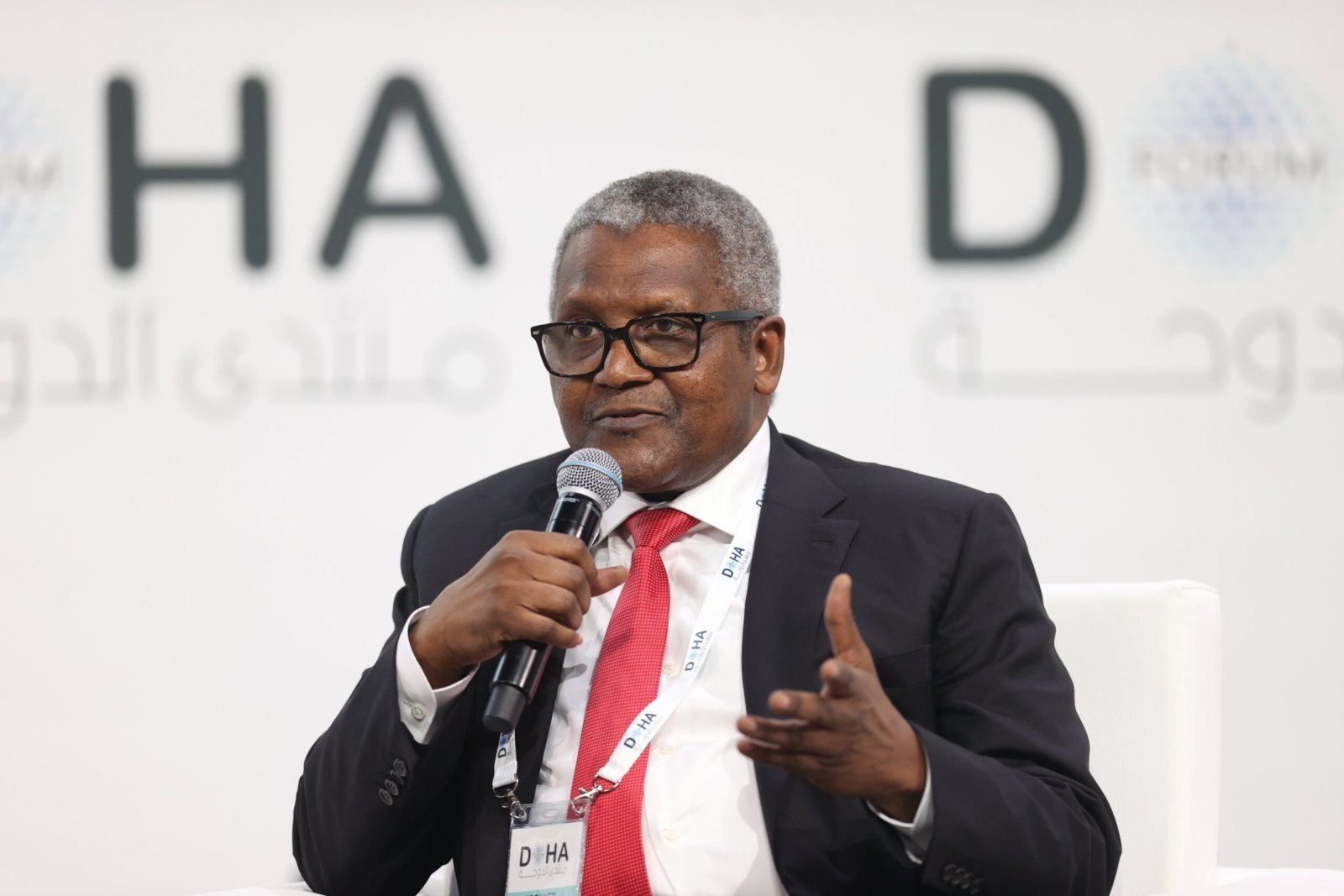
Dangote disclosed the purchase at the Financial Times Africa Summit in London on October 21, saying his group had bought 25 percent of Kenya’s petroleum products pipeline network. Kenyan market reporting places the precise interest at 24.76 percent and values the block at approximately KSh42.5 billion. The acquisition gives Dangote one of the largest private shareholdings in a company that sits at the centre of Kenya’s downstream petroleum system.
Kenya Pipeline operates about 1,342 kilometres of pipelines connecting Mombasa with Nairobi, Nakuru, Eldoret and Kisumu, alongside depots, storage and loading facilities with combined annual handling capacity of roughly 14 billion litres. The system supplies Kenya’s domestic market while also supporting petroleum movements into Uganda, Rwanda, Burundi, eastern Democratic Republic of Congo and South Sudan, giving the company a regional importance that extends well beyond Kenya.
Dangote’s additional US$1.5 billion expansion commitment may ultimately prove more consequential than the equity purchase itself. If implemented, the investment would increase the capacity and strategic reach of infrastructure through which the group could eventually distribute refined products from its planned Lamu refinery into inland East African markets.
The Pipeline Deal Makes More Sense When Read With Lamu
The Kenya Pipeline acquisition follows the September 30 groundbreaking of the Dangote East Africa Petroleum and Petrochemicals project in Lamu, where the group is developing a refinery with planned capacity of 700,000 barrels per day. The Kenyan government has presented the project as a major industrial anchor for Lamu, with potential links to transport, logistics, petrochemicals, storage and wider manufacturing.
The commercial logic becomes clearer when the refinery and pipeline investments are considered together. A refinery of that size needs access to markets beyond Kenya if it is to operate at high utilisation. Kenya alone does not consume anything close to 700,000 barrels per day of refined petroleum products, meaning a substantial share of future output would have to serve regional or international markets. KPC already provides the main inland route through which petroleum products move from the coast into western Kenya and onward towards several neighbouring countries.
The western corridor is especially important. KPC has been increasing throughput on the Nairobi to Eldoret route as fuel demand rises in western Kenya and neighbouring markets. If Dangote’s proposed US$1.5 billion expansion includes additional storage, pipeline capacity or new regional links, the group could strengthen the commercial case for supplying East Africa from Lamu rather than relying entirely on imported refined products arriving through existing coastal terminals.
It is still too early to describe the refinery and KPC network as a formally integrated system. Kenya Pipeline remains a common user infrastructure company serving several petroleum marketers, and Dangote has not published a detailed plan showing how Lamu will connect to the existing pipeline network. The commercial relationship between the two investments is nevertheless difficult to ignore. Dangote is building major refining capacity on the Kenyan coast while simultaneously acquiring a significant position in the infrastructure that moves petroleum inland.
Kenya Pipeline Is More Than a Pipeline
The strategic value of the acquisition also comes from the wider asset base controlled by Kenya Pipeline Company. Beyond the pipelines themselves, KPC operates large storage facilities, loading terminals and depots across the country and controls Kenya Petroleum Refineries Limited in Mombasa.
KPRL’s refinery has been idle for years, but its assets remain strategically important because of their location and storage capacity. KPC’s control over these facilities gives the company a substantial position across coastal storage, inland petroleum movement and product distribution infrastructure.
For Dangote, the investment therefore provides exposure not only to pipeline tariffs but to a wider logistics platform that forms part of the backbone of Kenya’s fuel economy.
KPC is also a profitable infrastructure business. The company reported net profit of about KSh11.58 billion in the financial year to June 2026, up 13 percent from the previous year. This means Dangote’s stake has an investment rationale even without the Lamu refinery. A 24.76 percent shareholding gives the group exposure to an established petroleum infrastructure company with a strong market position, regional throughput and a significant asset base.
The transaction follows Kenya’s partial privatisation of KPC earlier in 2026, when the government sold a majority stake through an initial public offering while retaining a significant public shareholding. Dangote’s acquisition represents a major shift in the ownership structure by bringing one of Africa’s largest industrial groups directly into a company responsible for strategic national infrastructure.
Kenya Could Become the Centre of Dangote’s East African Fuel Strategy
Dangote has already signalled that his interest in petroleum distribution extends beyond Kenya. The group has discussed storage, pipeline and distribution investments in several African markets as it builds the downstream network required to support its expanding refining business.
East Africa is commercially attractive because several inland economies remain heavily dependent on imported fuel routed through Kenya and Tanzania. Uganda, Rwanda, Burundi, South Sudan and eastern DRC all depend to varying degrees on coastal corridors to meet petroleum demand. The region’s expanding transport, mining, construction and industrial sectors are likely to increase diesel, jet fuel and other refined product consumption even as governments gradually increase investment in electrification and cleaner energy.
Kenya’s location gives Dangote access to one of the region’s most established petroleum logistics corridors. If the Lamu refinery reaches its planned capacity and if pipeline infrastructure is expanded accordingly, Kenya could become an important production and distribution centre for Dangote’s East African petroleum business.
That would also intensify competition between regional corridors. Tanzania continues to invest in ports, storage and petroleum infrastructure and already serves several landlocked markets through Dar es Salaam. Uganda is developing its own oil industry and refinery plans, while the Democratic Republic of Congo represents a large and growing downstream market. Dangote’s investment could strengthen Kenya’s position within this competition by adding both private capital and large scale refining capacity.
The $1.5 Billion Expansion Still Needs Detail
The largest unanswered question is how the proposed US$1.5 billion will be spent. Dangote has publicly stated the investment commitment, but a detailed project list has not yet been released showing which pipelines, storage facilities, depots or regional extensions will receive the capital.
That matters because Kenya Pipeline already has significant infrastructure and has recently undertaken upgrades to improve throughput. The next phase of investment could therefore focus on bottlenecks, storage capacity, regional connections or infrastructure specifically associated with moving products from Lamu.
The physical connection between Lamu and the existing KPC network will be particularly important. KPC’s current pipeline system is centred on Mombasa, while the Dangote refinery is being developed further north in Lamu. Kenya’s LAPSSET plans have long included petroleum infrastructure linking Lamu with inland markets, but no detailed public plan has yet shown exactly how the Dangote refinery would connect to the existing national system.
If part of the US$1.5 billion is ultimately used to establish that connection, the investment would move beyond a financial stake in Kenya Pipeline and begin physically integrating Dangote’s coastal refining capacity with inland East African demand.
Kenya Has Given Dangote a Position Across the Fuel Chain
The acquisition changes Dangote’s position in East Africa because the group is no longer approaching the region only as a future refiner. By acquiring 24.76 percent of KPC and committing additional capital to its expansion, Dangote is also becoming an owner of the infrastructure through which much of the region’s petroleum already moves.
If the Lamu refinery reaches its planned 700,000 barrel per day capacity and the pipeline expansion is implemented, the group would have exposure to several stages of the petroleum chain, including refining, storage, pipeline transportation and access to inland distribution markets.
That does not mean Dangote will control Kenya’s fuel system. Kenya Pipeline remains a common user infrastructure company serving multiple petroleum marketers, and regulatory oversight will remain important. But the combination of a large refinery and a significant stake in the country’s dominant pipeline operator creates clear strategic advantages.
For Kenya, the opportunity lies in attracting private capital into infrastructure that already serves a regional market while anchoring a major refinery at Lamu. The challenge will be ensuring that ownership of strategic infrastructure does not weaken competition or give a major petroleum producer preferential access over rival marketers.
The most important developments to watch next are therefore where the US$1.5 billion is actually deployed, how the Lamu refinery is connected to the existing KPC network, what governance rights accompany Dangote’s 24.76 percent stake and how Kenyan regulators manage the relationship between infrastructure ownership and competition in the petroleum market.
FAQ
How much of Kenya Pipeline Company did Dangote buy?
Dangote acquired approximately 24.76 percent of Kenya Pipeline Company, commonly rounded to 25 percent.
How much did the Kenya Pipeline stake cost?
The transaction is valued at about KSh42.5 billion, equivalent to roughly US$335 million.
How much more does Dangote plan to invest in Kenya Pipeline?
Dangote has said his group plans to invest another US$1.5 billion in expanding KPC’s network and related infrastructure.
How large is Kenya Pipeline Company’s network?
KPC operates about 1,342 kilometres of pipeline and has capacity to handle around 14 billion litres of petroleum products annually.
Which regional markets does Kenya Pipeline serve?
The system supports petroleum supplies into Kenya as well as Uganda, Rwanda, Burundi, South Sudan and eastern Democratic Republic of Congo.
How large is Dangote’s planned Lamu refinery?
The refinery is planned at approximately 700,000 barrels per day.
Does Dangote now control Kenya Pipeline Company?
No. A roughly 25 percent stake gives Dangote significant ownership, but it does not give the group control of the company.
Is the Lamu refinery already connected to Kenya Pipeline?
No detailed public connection plan has yet been released. The relationship between the refinery and the pipeline network will be one of the most important developments to watch as both investments progress.
 Uchumi360
Business Intelligence
Uchumi360 covers business, investment, and economic policy across East, Central, and Southern Africa.
For the serious reader
You read to the end. That places you in a small group.
Uchumi360 is built for readers who demand precision over speed, structure over sentiment, and analysis that holds uncomfortable conclusions rather than softening them. If this work sharpens how you think about Africa's economy, help us keep building the infrastructure behind it.
Institutional Partners
Commission intelligence. Shape the conversation.
Uchumi360 works with development finance institutions, investment firms, sovereign bodies, and strategic organisations across the coverage region. Institutional partnership unlocks:
- Commissioned sector and country intelligence reports
- Branded research series under your institution's authority
- Exclusive data briefings for internal strategy teams
- Speaking and editorial presence at Uchumi360 events
- Co-published investment outlooks for your markets
Support Our Work
Independent analysis has a cost. Help us bear it.
Uchumi360 does not carry advertising. It does not take editorial direction from sponsors. Every article is produced without commercial compromise. Your contribution funds the reporting, research, and editorial infrastructure that keeps this analysis free from influence.
Secure checkout: One-time and monthly support are processed securely. Add payment credentials to enable checkout here.
Stay Connected
Keep up with every new insight.
Follow our latest analysis, policy coverage, and market intelligence as soon as it is published. If you need something specific, reach out directly and we will point you to the right research.
