
Tanzania’s East Africa Foods Raises $40 Million to Build Regional Food Supply Infrastructure
Ready
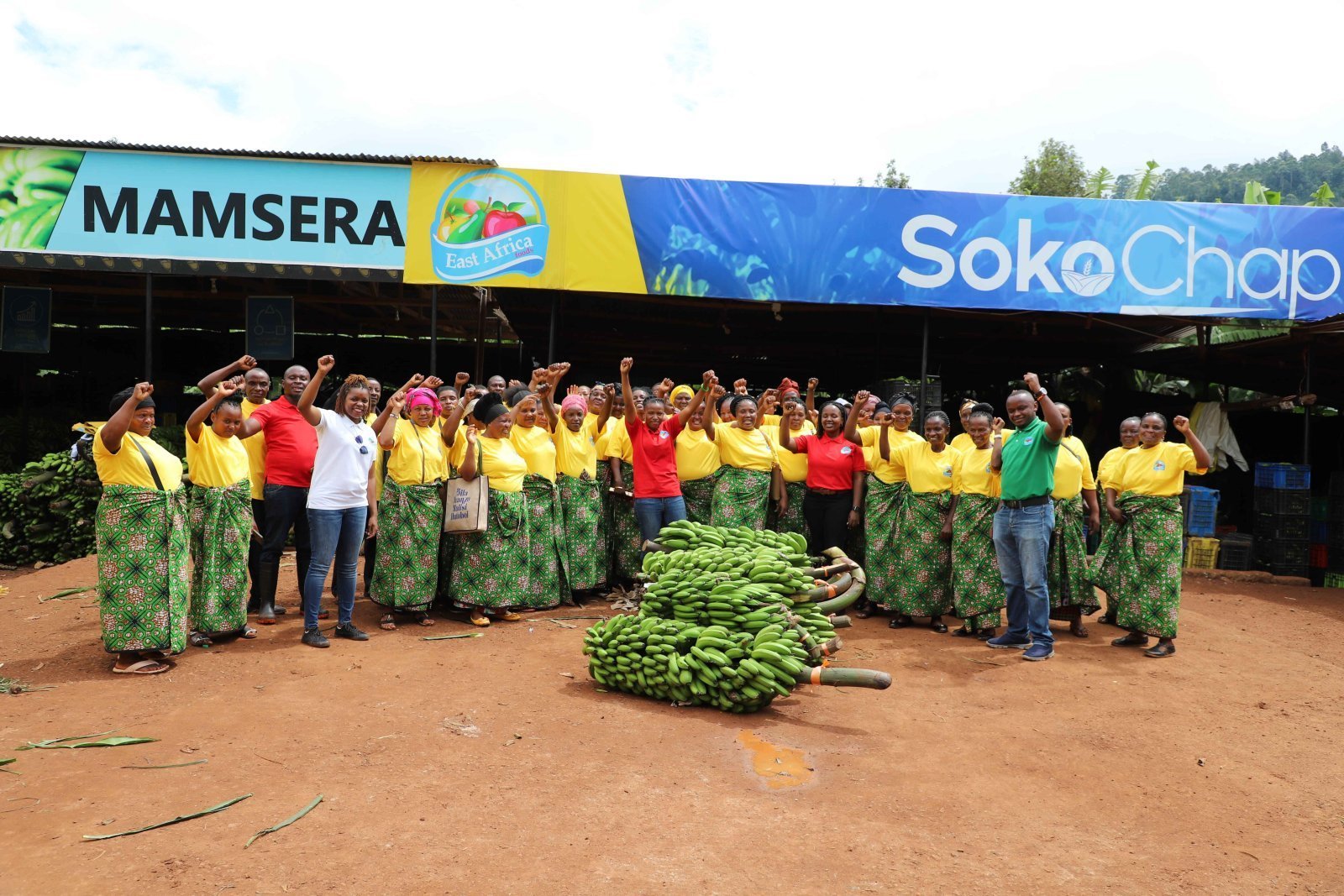
Tanzania’s East Africa Foods has raised about US$40 million, including a US$26 million Series B led by PIDG through InfraCo alongside FMO and Oikocredit. The company will use the capital to expand storage, processing, logistics and digital infrastructure as it grows from more than 28,000 registered farmers towards 100,000 and expands further into Kenya.
Tanzanian AgTech and food logistics company East Africa Foods has raised approximately US$40 million to expand the physical and digital infrastructure connecting smallholder farmers to urban markets, in one of the larger recent growth capital raises by a Tanzanian agribusiness technology company. The financing includes a US$26 million Series B equity round led by the Private Infrastructure Development Group through InfraCo, alongside FMO and Oikocredit, with existing investors ARAF, Goodwell, Africa Eats and FINCA also reinvesting. The equity round forms part of a broader capital raise of approximately US$40 million that also includes debt funding from the Schmidt Family Foundation. PIDG says its own equity commitment is less than US$12 million within a total project cost of approximately US$38.68 million, and that the transaction received competition and regulatory clearances through COMESA, Tanzania’s Fair Competition Commission and the Zanzibar Fair Competition Commission before completion.
The significance of the transaction is larger than the usual venture capital story because East Africa Foods is not primarily building a consumer app or digital marketplace. Its model depends on combining software with collection centres, storage, processing facilities, cold chain systems, trucks and distribution infrastructure that physically move food from farms into cities. The company currently sources produce from more than 28,000 registered smallholder farmers and supplies more than 10,000 urban retailers across Tanzania and Kenya, while also selling products under brands including Onja and Golden Banana. PIDG says the new financing will support additional collection and fulfilment centres, milling, curing and ripening facilities, new long haul vehicles and the expansion of the digital systems used to manage inventory, sourcing and distribution. The company is ultimately attempting to solve a problem that sits between agricultural production and retail demand: farmers can produce enough food, but fragmented aggregation, weak storage, unreliable transport and poor market information mean that a meaningful share of that production loses value before reaching consumers.
Founder and Chief Executive Officer Elia Timotheo described that gap directly, arguing that the loss of food after harvest should be treated as an infrastructure problem rather than simply a farming problem. “A third of what our farmers grow never reaches anyone’s table,” he said in announcing the transaction, before explaining that East Africa Foods has spent the past three years building the sourcing network, fleet, storage capacity and technology between smallholder farms and urban shelves. PIDG similarly estimates that as much as 40 percent of food produced in Kenya and Tanzania can be lost before reaching consumers, with much of the loss occurring after harvest because aggregation, grading, storage and transport are insufficient. EAF says its own network has already reduced food losses by about one third, which means the commercial proposition is closely tied to recovering economic value that would otherwise disappear between production and consumption.
The Investment Treats Food Distribution as Infrastructure
This distinction is important because agricultural policy across East Africa has historically concentrated heavily on what happens before or during production: improved seeds, fertiliser, irrigation, extension services, credit and farm mechanisation. All of those interventions can increase yields, but higher farm output does not automatically translate into higher farmer incomes or lower consumer prices if the system between the farm and the market remains inefficient. Fresh produce is particularly unforgiving because value deteriorates quickly when farmers cannot aggregate enough volume, buyers arrive late, storage is inadequate or transport breaks down. A farmer can therefore become more productive while still losing a significant share of the economic benefit through spoilage, distress sales or weak bargaining power immediately after harvest.
East Africa Foods is effectively attempting to industrialise this middle layer. Produce is sourced directly from farmers, consolidated into larger volumes, graded, stored, processed where necessary and then distributed to retailers using a combination of physical infrastructure and data. The technology matters because inventory information, demand forecasting and route planning can reduce unnecessary movements and allow the company to match supply with urban demand more accurately, but the software only has value because it operates alongside warehouses, vehicles, processing facilities and farmer collection networks. That is why PIDG classifies the business under agri infrastructure and bulk storage and logistics rather than treating it simply as a technology investment. Its portfolio description says the investment will finance collection and fulfilment centres, milling, curing and ripening facilities and a new long haul fleet, while the digital platform coordinates these assets.
The model addresses one of the central structural weaknesses of African agriculture. Smallholder production is geographically dispersed while urban demand is increasingly concentrated in large cities. Individual farmers rarely produce enough volume to supply major retailers consistently, yet retailers need predictable quantities, quality and timing. Informal intermediaries bridge part of that gap, but fragmented chains can involve multiple transactions in which quality deteriorates, information becomes weaker and margins accumulate between producer and consumer. A company capable of aggregating production from tens of thousands of farmers and distributing it through a structured network can reduce some of those transaction costs while giving retailers a more reliable supply base. The economic opportunity therefore comes from making the chain itself more productive rather than necessarily producing more food.
$40 Million Is a Large Bet on Scaling a Tanzanian Model
The size of the financing also changes the scale at which East Africa Foods can attempt this. FMO’s earlier disclosure from 2024 described EAF as sourcing from more than 8,800 smallholder farmers and focused primarily on Tanzania, with a US$2.5 million approved investment supporting logistics infrastructure and software development. PIDG’s 2026 announcement now describes more than 28,000 registered farmers and more than 10,000 urban retailers, indicating that the company has expanded materially over the intervening period. The new target is to reach 100,000 smallholder farmers over the next several years, with 45 percent expected to be women, while PIDG also anticipates that as many as 50,000 informal vendors could benefit from a more efficient supply chain.
That means the new capital is not simply extending the existing Tanzanian business. It is financing the attempt to replicate the operating system at a much larger geographic scale. Claire Jarratt, PIDG’s Head of Investment Management for InfraCo, said strengthening the company’s position in Tanzania while expanding its data-driven model into Kenya could help attract additional finance into food supply infrastructure and improve regional food security. FMO’s Peter Byrde made a similar argument, saying the combination of logistics, storage, processing and digital systems can demonstrate that agri logistics is commercially scalable and potentially attract larger volumes of private investment into a sector that has historically struggled to secure long-term growth capital.
That wider financing question is important. Agriculture employs large numbers of people across East Africa, but businesses operating between farmers and consumers frequently sit in an uncomfortable position for investors. They require warehouses, trucks, working capital and processing equipment, making them more capital intensive than conventional software businesses, while they also face agricultural supply risk, price volatility and thin margins. Pure venture capital may therefore be insufficient, while conventional bank lending can be difficult for businesses whose asset base and cash flows are still expanding. East Africa Foods’ financing structure reflects that reality: equity from development and impact investors is combined with debt, allowing the company to finance both growth and physical infrastructure rather than forcing every expansion requirement into a single capital instrument.
Kenya Is the First Test of Whether the Model Can Travel
The Kenyan expansion will be especially important because scaling across borders is substantially harder than expanding within one domestic market. Agricultural supply chains are shaped by local crop patterns, farmer organisations, road quality, wholesale markets, consumer demand, retail structures, regulations and seasonal cycles. Technology can be replicated relatively easily, but the physical operating network must be rebuilt market by market. Collection centres need to be positioned close enough to production, transport routes need to be redesigned, farmers have to be onboarded and retailers must trust a new supplier. What works operationally in Dar es Salaam or around Tanzanian production zones will not automatically produce the same economics in Nairobi or another regional city.
Kenya is nevertheless a logical first regional market because it combines a large urban consumer base with extensive smallholder agriculture and a sizeable informal retail system. It also allows East Africa Foods to test whether infrastructure, processes and software developed in Tanzania can operate in another large East African economy before the company moves further afield. PIDG says the company intends ultimately to explore markets beyond Tanzania and Kenya, but the commercial credibility of that regional strategy will depend heavily on whether the Kenyan operation can reach sufficient volume without creating disproportionate logistics and working capital costs.
There is also a strategic advantage in building across neighbouring countries rather than expanding into distant African markets immediately. Agricultural production and consumption patterns in East Africa overlap, and regional trade can help smooth seasonal shortages and surpluses. A larger sourcing network could eventually allow a distributor to move products across borders when one market is undersupplied and another has excess production, although such a model would still depend on efficient customs, phytosanitary controls, border procedures and regional transport. If East Africa Foods becomes genuinely regional rather than simply operating separate national businesses, its technology could increasingly function as a coordination layer across a broader food market.
The Real Economic Test Is Whether Farmers Capture More Value
The impact case ultimately depends on farmer economics rather than only the number of farmers registered on the platform. Smallholders frequently sell immediately after harvest because they need cash and lack storage, which weakens their bargaining position when local supply is at its highest. Better aggregation, storage and predictable purchasing can reduce some of that pressure by giving farmers more structured access to buyers, but the value created in the supply chain still has to be distributed in a way that leaves producers better off.
PIDG says the expansion is expected to provide participating farmers with higher and more predictable incomes, stronger climate resilience and better access to markets, while the company will extend training in climate smart production. These outcomes are plausible because reduced losses mean more of each harvest can be sold and improved market coordination can make demand more predictable. But the strongest future evidence will be farm level data showing changes in prices received, rejection rates, payment times, volumes sold and income after joining the network. Reaching 100,000 farmers would demonstrate scale. Showing that those farmers consistently earn more would demonstrate economic impact.
The same principle applies on the retailer side. More than 10,000 urban retailers already receive produce through the network, and PIDG expects up to 50,000 informal vendors eventually to benefit from lower costs and more efficient supply management. For these businesses, the value proposition is not simply access to food but consistency. Informal retailers often operate with little storage and limited working capital, making stockouts, price volatility and spoilage costly. A distributor that can supply reliable quality in predictable quantities can reduce the amount of capital tied up in inventory and make retail pricing more stable. If those efficiencies become large enough, part of the gain can potentially reach consumers through more reliable availability and lower distribution losses.
Reducing Food Loss Could Be as Important as Increasing Production
The financing also highlights a broader policy point for East Africa: increasing agricultural production is not always the cheapest way to increase the amount of food available for consumption. If a significant share of existing production is lost after harvest, investment in storage, aggregation, cooling and logistics can effectively increase usable food supply without requiring additional land, fertiliser or water. Recovering one tonne of food that would otherwise spoil can produce many of the same food security benefits as growing an additional tonne, while avoiding part of the environmental cost associated with additional production.
This becomes increasingly important as climate pressure affects agricultural systems. East African governments will need to raise food availability while coping with variable rainfall, extreme weather and rapidly growing urban populations. Reducing post harvest losses therefore operates simultaneously as an agricultural productivity policy, a food security intervention and a climate measure because the land, water, fertiliser and energy used to produce food are wasted when the food itself never reaches a consumer. PIDG explicitly links its EAF investment to climate resilient infrastructure and says the company’s storage, drying, cooling, packaging and inventory systems reduce both food losses and associated emissions.
For Tanzania, the transaction is also relevant to the debate around building larger domestic companies capable of expanding across East Africa. East Africa Foods was founded in Tanzania in 2013 and developed its core sourcing and distribution systems there before moving towards Kenya. If the new capital allows it to establish a significant regional platform, it would represent a different kind of Tanzanian corporate expansion from the large acquisitions being made by established industrial groups. Instead of buying an existing regional company, EAF is attempting to export an operating model developed locally and build infrastructure around it in new markets.
The Uchumi360 Insight
The most important part of East Africa Foods’ US$40 million capital raise is not the size of the Series B round or the fact that several international development investors have backed a Tanzanian company. It is what the investors have decided qualifies as infrastructure.
Food infrastructure is often imagined as irrigation schemes, large warehouses or wholesale markets built by governments. East Africa Foods is making the case that the missing infrastructure can also be a privately operated network combining trucks, collection centres, storage, processing, data and thousands of small farmers and retailers. None of those components is especially remarkable on its own, but their coordination determines whether agricultural production actually becomes commercially usable food.
That is why Timotheo’s description of post harvest loss as an infrastructure problem is economically important. East Africa does not always lose food because farmers cannot grow enough. It also loses food because production and consumption are poorly connected. Building another farm does not solve that problem if the road, warehouse, buyer and market information are still missing.
The next stage will test whether East Africa Foods can turn a Tanzanian solution into a regional one. Scaling from 28,000 registered farmers towards 100,000, entering Kenya and eventually additional African markets will require far more than deploying software. The company will have to reproduce the operational discipline behind sourcing, grading, storage, transport and retailer distribution across different agricultural systems while maintaining margins in a business where physical movement remains expensive.
If it succeeds, the larger implication may be that one of East Africa’s most important agricultural technologies is not a new farming technique at all. It is the infrastructure that makes sure what farmers already produce reaches somebody willing to buy it.
FAQ
How much did East Africa Foods raise?
East Africa Foods raised approximately US$40 million in total. The financing includes US$26 million in Series B equity and additional investment and debt financing, including debt from the Schmidt Family Foundation.
Who invested in East Africa Foods?
The Series B was led by PIDG through InfraCo alongside FMO and Oikocredit. Existing investors ARAF, Goodwell, Africa Eats and FINCA also reinvested.
Who founded East Africa Foods?
East Africa Foods was founded by Tanzanian entrepreneur Elia Timotheo, who serves as Chief Executive Officer.
How many farmers does East Africa Foods work with?
PIDG says the company currently sources from more than 28,000 registered smallholder farmers and intends to reach approximately 100,000 over the next several years, with 45 percent expected to be women.
What will the $40 million be used for?
The capital will finance new processing, storage and logistics capacity, collection and fulfilment centres, vehicles, milling and ripening facilities, farmer training and further development of the company’s digital platform.
Where does East Africa Foods operate?
The company was built in Tanzania and is expanding into Kenya, with longer term ambitions to enter additional African markets.
Why is East Africa Foods considered an infrastructure investment?
Its business combines physical assets such as storage, processing facilities, collection centres and trucks with technology that coordinates sourcing, inventory and distribution. PIDG classifies the company under agri infrastructure and bulk storage and logistics.
 Uchumi360
Business Intelligence
Uchumi360 covers business, investment, and economic policy across East, Central, and Southern Africa.
For the serious reader
You read to the end. That places you in a small group.
Uchumi360 is built for readers who demand precision over speed, structure over sentiment, and analysis that holds uncomfortable conclusions rather than softening them. If this work sharpens how you think about Africa's economy, help us keep building the infrastructure behind it.
Institutional Partners
Commission intelligence. Shape the conversation.
Uchumi360 works with development finance institutions, investment firms, sovereign bodies, and strategic organisations across the coverage region. Institutional partnership unlocks:
- Commissioned sector and country intelligence reports
- Branded research series under your institution's authority
- Exclusive data briefings for internal strategy teams
- Speaking and editorial presence at Uchumi360 events
- Co-published investment outlooks for your markets
Support Our Work
Independent analysis has a cost. Help us bear it.
Uchumi360 does not carry advertising. It does not take editorial direction from sponsors. Every article is produced without commercial compromise. Your contribution funds the reporting, research, and editorial infrastructure that keeps this analysis free from influence.
Secure checkout: One-time and monthly support are processed securely. Add payment credentials to enable checkout here.
Stay Connected
Keep up with every new insight.
Follow our latest analysis, policy coverage, and market intelligence as soon as it is published. If you need something specific, reach out directly and we will point you to the right research.
