
Tanzania's Mbeya Is About to Become One of Only Four Places on Earth That Produces Ferroniobium
Ready
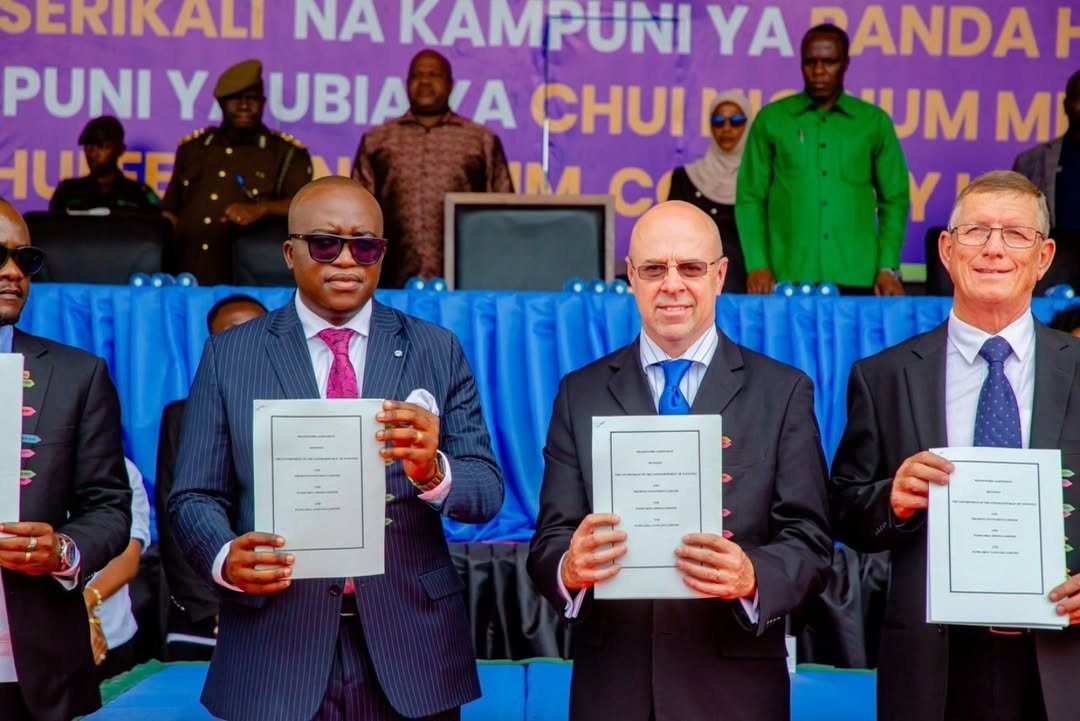
The Panda Hill niobium agreement is being covered as a mining deal. It is more precisely described as Tanzania's most advanced attempt yet to enter a global industrial supply chain not as a raw material supplier but as a finished product manufacturer. The ferroniobium smelter at the centre of the project would be Africa's first and the world's fourth built in forty years. That context changes the story entirely.
The Metal That Nobody Talks About and Everybody Uses
Niobium does not feature in the critical minerals conversation the way lithium, cobalt, and graphite do. It does not appear in electric vehicle battery chemistry. It is not the subject of geopolitical supply chain anxiety in the way that rare earth elements are. It does not have the cultural weight of gold or the energy transition narrative of copper. And yet it is present, invisibly but essentially, in a larger proportion of the world's most critical infrastructure than almost any other metallic element.
Niobium's primary application is steel strengthening. When added to steel in small quantities, typically less than 0.1 percent by weight, it produces high-strength low-alloy steel with tensile properties dramatically superior to conventional carbon steel. This niobium-strengthened steel is used in oil and gas pipelines because it can withstand the pressure differentials and corrosion environments that conventional steel cannot. It is used in automotive structural components because it reduces vehicle weight while maintaining crash performance standards. It is used in shipbuilding, in bridge construction, in railway infrastructure, and increasingly in the electric vehicle manufacturing sector where lightweight, high-strength structural components reduce vehicle mass and extend battery range. The aerospace industry uses niobium-containing superalloys in jet engine components that must maintain mechanical integrity at temperatures that would destroy conventional steel.
The global niobium market is defined by a concentration of supply that has no parallel in any other major industrial metal. Brazil's CBMM, Companhia Brasileira de Metalurgia e Mineração, supplies approximately 80 percent of global niobium demand from its Araxá mine in Minas Gerais state. A second Brazilian producer, Niobec, accounts for approximately 11 percent. Canada's Niobec mine contributes around 6 percent. Together, Brazil and Canada supply essentially all of the world's niobium, and a single Brazilian company supplies more than three quarters of it. This is a supply concentration that makes the cobalt market, where the DRC produces 70 percent of global output, look diversified by comparison.
Tanzania's Panda Hill carbonatite complex in Mbeya Region contains one of the world's most significant undeveloped niobium deposits outside Brazil and Canada. The agreement signed between the Tanzanian government and Panda Hill Tanzania Limited, backed by Houston and London-based private equity firm Denham Capital, positions Tanzania to become the world's fourth major niobium producer, supplying approximately 4 percent of global demand at planned production of roughly 100,000 tonnes per year. In a market this concentrated, a new producer supplying 4 percent of global demand is not a marginal entrant. It is a structural addition to a supply base that has not changed meaningfully in decades.
The Ferroniobium Smelter: Why This Is Not a Mining Story
The Panda Hill project's most significant detail is not its production volume, its investment size, or even its employment projections. It is the ferroniobium furnace and smelter complex that sits at the centre of the project's capital structure and that represents Tanzania's most ambitious attempt yet to participate in a global industrial supply chain as a finished product manufacturer rather than a raw material supplier.
Ferroniobium is the industrial form in which niobium is primarily consumed by steelmakers. It is produced by combining niobium oxide concentrate with iron and aluminium in a smelting process that produces an alloy typically containing 60 to 70 percent niobium by weight. This alloy is the form that steel producers use when they add niobium to their steel production. It is a finished industrial material, not a mineral concentrate or an intermediate chemical product. A steelmaker in Germany, Japan, or the United States that buys ferroniobium from Mbeya is buying a finished input for its production process, not a raw material that requires further conversion before it can be used.
This distinction is the same distinction that the OPEC analysis, the critical minerals value chain articles, and the Manono lithium analysis that Uchumi360 has published consistently identify as the difference between resource extraction and industrial participation. Tanzania currently exports gold in doré form, graphite in flake concentrate, and most other minerals in raw or semi-processed states. The ferroniobium smelter at Panda Hill would produce a finished industrial alloy for direct sale to global steelmakers, capturing both the mining margin and the smelting and processing margin that currently accrues to the Brazilian facilities that dominate global ferroniobium production.
The capital structure of the project reflects the processing ambition. Panda Hill has costed the mine development at approximately USD 53 million. The beneficiation facility, furnace, and smelter complex has been costed at approximately USD 134 million. The processing infrastructure costs more than twice the mine itself. In most African mining projects, the processing component is either absent, representing pure concentrate export, or represents a minority of total capital expenditure. Panda Hill inverts that ratio, placing the processing investment at the centre of the project's economics rather than treating it as a secondary consideration.
Only three ferroniobium facilities of comparable scale exist globally: two in Brazil operated by CBMM and Mineração Catalão, and one in Canada. The Mbeya plant, if constructed as designed, would be Africa's first ferroniobium facility and only the fourth such smelter built anywhere in the world in the past forty years. That is a genuinely remarkable industrial statement for a country that is more typically described in the context of extraction ambitions rather than processing achievements.
The US Trade Dimension: Why Denham Capital and the American Angle Matter
The United States trade dimension of the Panda Hill deal was emphasised as a central pillar of its significance by Tanzania's Minister for Minerals Anthony Mavunde, and it deserves analytical attention beyond the diplomatic framing in which it was presented.
Panda Hill Tanzania Limited is backed by Denham Capital, a private equity firm with offices in Houston, London, Boston, and Perth that specialises in energy and resources investments. Denham's involvement places the project within the architecture of US-aligned critical minerals investment that has been a consistent theme of Uchumi360's critical minerals analysis. The broader context, in which the United States is actively seeking to diversify critical mineral supply chains away from Chinese dominance and is deploying development finance, diplomatic support, and private capital to support that diversification, is directly relevant to a niobium project that would supply ferroniobium to US and allied country steelmakers.
Niobium is designated as a critical mineral by the United States government precisely because of the supply concentration risk that CBMM's dominance represents. A supply disruption in Brazil's niobium output, whether from natural disaster, regulatory change, labour action, or any other cause, would immediately affect global steel production in ways that cascade through automotive, infrastructure, aerospace, and defence manufacturing. The Minerals Security Partnership and the broader allied country critical minerals strategy that the US has been building since 2022 includes niobium in its priority mineral list. A US-backed company developing ferroniobium production capacity in a stable, aligned East African country is consistent with that strategic agenda and likely to benefit from the development finance and offtake support that accompanies strategic supply chain investments.
The value-addition model's relevance to the US trade relationship is specific and commercially meaningful. A Tanzania that exports ferroniobium to US steelmakers is a Tanzania that appears in US manufacturing supply chains as a finished material supplier rather than as a raw material source. That commercial relationship is more durable, more value-creating, and more diplomatically significant than a raw mineral export relationship because it embeds Tanzania into the production processes of US industrial firms in a way that creates genuine mutual dependency rather than simply a buyer-seller commodity transaction.
The Local Procurement Commitment: 4.5 Trillion Shillings Over the Mine's Life
One of the most economically significant numbers attached to the Panda Hill project is not the investment figure or the production volume. It is the local procurement projection: 70 percent local procurement during production, a life-of-mine local procurement spend of USD 1.77 billion, approximately TZS 4.5 trillion, and annual local procurement estimated at more than USD 60 million.
These numbers represent the mechanism through which a mining project becomes an industrial development project rather than an enclave economy. A mine that imports its equipment, its services, its food, its security, and its logistics from offshore suppliers is a revenue generator for the state through taxes and royalties, but it creates limited domestic economic linkage beyond the direct employment it provides. A mine that procures 70 percent of its operational requirements from Tanzanian suppliers is an anchor customer for a domestic supply chain that encompasses construction, engineering services, transport and logistics, maintenance, equipment rental, catering, security, and a range of professional and technical services that build Tanzanian business capacity.
The Mbeya location is significant for this supply chain development logic. Mbeya is Tanzania's third largest city and the economic centre of the Southern Highlands region, which has historically been less integrated into Tanzania's primary investment corridors than the Dar es Salaam coastal zone and the northern tourist economy. A major mining and processing operation with USD 60 million in annual local procurement would fundamentally alter Mbeya's economic profile, creating demand for services and supplies that currently do not exist at the scale required to support them commercially. The positioning of Mbeya as a durable industrial services hub, as Panda Hill's own projections describe it, reflects a realistic assessment of the compound economic effect of sustained high-volume procurement over a 30-plus year operating life.
The 1,600 construction jobs and 600 permanent operational positions represent direct employment. The 7,000 estimated total direct and indirect beneficiaries represent the wider economic footprint of those positions through household spending, local business activity, and the supply chain employment that procurement volume generates. These are projections rather than outcomes, and the gap between mining project employment projections and actual employment delivery is a consistent feature of the sector that warrants monitoring as the project moves from agreement to construction. But the structural logic of large-scale, long-duration procurement creating supply chain depth is sound, and Mbeya's position as the host city of Africa's only ferroniobium facility would give it an industrial identity that no other intervention currently available to the Southern Highlands could provide.
The Governance Structure: 16 Percent State Equity and What It Means
Treasury Registrar Nehemiah Mchechu's description of the state equity structure for Panda Hill provides the clearest statement of Tanzania's current approach to government participation in major mining projects, and it deserves examination as a policy model rather than simply a project-specific arrangement.
The agreed government shareholding is 16 percent, held through the Office of the Treasury Registrar on behalf of Tanzanian citizens. Mchechu explicitly described this as equity that does not require upfront capital injection by the state, a structure in which the government's shares are contributed through the value of the mineral resource rather than through cash investment. This carried interest model, where the state receives equity without writing a cheque, has become a standard feature of modern mining fiscal frameworks precisely because it aligns state interests with project success without requiring fiscal expenditure that smaller economies may not have available.
The 16 percent equity position gives the Tanzanian state a direct financial interest in the project's profitability rather than purely a royalty and tax claim on its revenue. At projected production levels and current ferroniobium prices, a 16 percent equity stake in a project with a 30-plus year operating life represents a potentially substantial long-term asset for Tanzania's sovereign balance sheet. The Shareholder Agreement signed by the Deputy Attorney General and the Treasury Registrar formalises the oversight rights that accompany this equity, including access to financial information, participation in governance decisions at the board level, and the ability to monitor compliance with the project's environmental, social, and economic commitments.
Minister Mavunde's framing of the Panda Hill deal as demonstrating a deliberate policy direction that Tanzania should not only host extraction but secure ownership participation and visible development outcomes from its resources is consistent with the approach Tanzania has been building toward across its mining policy framework. The combination of state equity, processing requirements, local procurement obligations, and community benefit commitments embedded in the Panda Hill agreements represents a more complete attempt to capture value from a mining project than Tanzania's earlier generation of mining agreements typically provided.
The reference to President Samia Suluhu Hassan's direction that Tanzania's minerals should increasingly be value-added domestically places the Panda Hill ferroniobium smelter directly within the country's highest-level economic policy framework. This political commitment at the presidential level matters for project continuity: a processing facility that has explicit presidential endorsement as a demonstration of national minerals policy is less vulnerable to the regulatory uncertainty and policy reversal that has historically disrupted major mining projects in Tanzania and across the region.
The 2017 Pause and What the Resumption Signals
Panda Hill Tanzania Limited's General Manager Dennis Cook's acknowledgement that the project was close to construction in 2017 before changes in mining laws prompted a pause is a detail worth dwelling on, because it places the current agreement in the context of Tanzania's mining sector regulatory history and signals something important about the current operating environment.
The 2017 mining law reforms under President John Magufuli were among the most significant regulatory interventions in Tanzania's resource sector in the post-independence period. They included mandatory government equity in mining projects, restrictions on the export of unprocessed minerals, renegotiation of existing development agreements, and an assertive stance toward international mining companies that created considerable investor uncertainty. Several major projects stalled during this period, and Tanzania's reputation as a mining investment destination took damage that required years of subsequent policy work to repair.
The fact that Panda Hill, a US-backed project with processing ambitions and significant capital requirements, has concluded a new framework agreement with the current administration and is moving toward construction represents a meaningful signal about the normalization of Tanzania's mining investment environment. Cook's statement that the company has since worked closely with the government to conclude the new framework reflects a negotiating process that has evidently produced terms acceptable to both a commercially sophisticated private equity-backed investor and a government with explicit value-addition requirements. The co-existence of those requirements in a concluded agreement is itself evidence that Tanzania's mining policy framework has found a formulation that can attract serious capital while retaining the value-addition and state participation objectives that the policy priority requires.
The refreshed capital and operating cost estimates, the integration of grid electricity into the operating model, and the updated ferroniobium marketing work that Cook identified as the immediate next steps are the project management priorities that will determine how quickly the 21 to 24-month construction window can begin. Grid electricity integration is particularly significant: the Julius Nyerere Hydropower Station's additional generation capacity means that grid power is now a more credible and cost-competitive energy option for the Panda Hill smelter than it would have been in 2017, when diesel generation would have been the most reliable alternative. Lower energy costs improve the ferroniobium smelter's operating economics and strengthen the investment case for the processing component that makes the project strategically distinctive.
What Panda Hill Means for Tanzania's Industrial Trajectory
The Panda Hill agreement, read in full analytical context, is the most significant single development in Tanzania's minerals sector since the Julius Nyerere Hydropower Station improved the country's energy position for industrial investment. It is significant not primarily because of the investment quantum, the USD 700 billion shillings total commitment, or the employment projections, though both are material. It is significant because it represents the most concrete and commercially specific implementation yet of the principle that Tanzania's mineral wealth should generate processing value on Tanzanian soil rather than simply providing raw material inputs for processing elsewhere.
The ferroniobium smelter that Panda Hill proposes to build in Mbeya would be a genuinely unprecedented industrial asset for Tanzania and for Africa. It would produce a finished industrial alloy, not a concentrate or an intermediate product, for sale directly to steelmakers in the United States, Europe, Asia, and Africa. It would make Mbeya the production location for a material that global infrastructure development depends on and that virtually no country outside Brazil currently produces. It would create a supply chain development anchor for the Southern Highlands region over a multi-decade operating horizon. And it would demonstrate, in the most commercially specific terms available, that Tanzania's stated commitment to mineral value addition is not aspirational language but implementable policy.
The test of whether Panda Hill delivers on this potential is in execution. The Special Mining Licence process, the capital cost refresh, the ferroniobium marketing and offtake agreements, the construction contracting, and the operational ramp-up over the 21 to 24-month build period are the specific milestones between the signed framework agreement and the operating smelter. Each of these milestones carries execution risk that agreement signing does not eliminate.
But the agreement itself is a material development. It places Tanzania in a specific and rare category of African mining jurisdictions that have concluded agreements requiring domestic processing of strategic minerals into finished industrial products, with the capital commitment and governance structure to make that processing requirement credible rather than aspirational.
In a region and a sector where the gap between announcement and delivery defines the difference between investment narrative and economic reality, Panda Hill's history of being close to construction before the 2017 pause, and its subsequent return to a concluded agreement framework, suggests a project with the resilience and commercial foundation to navigate the remaining steps from signature to smelter. Whether it does will be one of the most important industrial stories in Tanzania's economic history.
___________________________________________________________________________________
Sources: Daily News Tanzania reporting on Panda Hill Tanzania Limited signing, March 2026. Minister for Minerals Anthony Mavunde press briefing statements. Panda Hill Tanzania Limited company documentation and capital cost projections. Treasury Registrar Nehemiah Mchechu Shareholder Agreement statements. Denham Capital portfolio and investment focus documentation. CBMM Brazil niobium production and market share data. International Energy Agency Critical Minerals Report 2024. US Geological Survey Mineral Commodity Summaries, Niobium. US Critical Minerals List designation documentation. Minerals Security Partnership Framework. Tanzania Investment and Special Economic Zones Authority data 2025.
_______________________________________________________________________________________
Uchumi360 covers business, investment, and economic policy across East, Central, and Southern Africa.
 Uchumi360
Business Intelligence
Uchumi360
Business Intelligence
Uchumi360 covers business, investment, and economic policy across East, Central, and Southern Africa.
For the serious reader
You read to the end. That places you in a small group.
Uchumi360 is built for readers who demand precision over speed, structure over sentiment, and analysis that holds uncomfortable conclusions rather than softening them. If this work sharpens how you think about Africa's economy, help us keep building the infrastructure behind it.
Institutional Partners
Commission intelligence. Shape the conversation.
Uchumi360 works with development finance institutions, investment firms, sovereign bodies, and strategic organisations across the coverage region. Institutional partnership unlocks:
- Commissioned sector and country intelligence reports
- Branded research series under your institution's authority
- Exclusive data briefings for internal strategy teams
- Speaking and editorial presence at Uchumi360 events
- Co-published investment outlooks for your markets
Support Our Work
Independent analysis has a cost. Help us bear it.
Uchumi360 does not carry advertising. It does not take editorial direction from sponsors. Every article is produced without commercial compromise. Your contribution funds the reporting, research, and editorial infrastructure that keeps this analysis free from influence.
Secure checkout: One-time and monthly support are processed securely.
Stay Connected
Keep up with every new insight.
Follow our latest analysis, policy coverage, and market intelligence as soon as it is published. If you need something specific, reach out directly and we will point you to the right research.
