
Tanzania Says Its $42 Billion LNG Project Is Finally Close To An Agreement
Ready
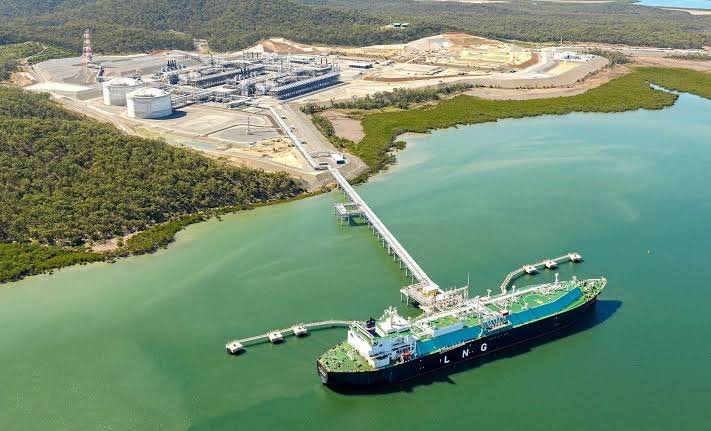
Tanzania says negotiations over its US$42 billion LNG project are nearing completion after years of delays, bringing the country closer to a development designed to commercialise 47.13 trillion cubic feet of offshore gas. Final investment decisions and actual capital deployment must still follow the agreements.
Tanzania says negotiations over its long delayed US$42 billion liquefied natural gas project are approaching completion, potentially moving the country closer to one of the largest industrial investments ever proposed in Africa after more than a decade of offshore discoveries, negotiations and repeatedly shifting timelines. Finance Minister Khamis Mussa Omar said this week that the government expects the remaining agreements to be finalised within the coming months, while Tanzania Petroleum Development Corporation had already indicated in September that negotiations over the project’s principal commercial, taxation and revenue sharing terms had been completed and that the process had entered its final legal stage. Reuters
The proposed development is designed to commercialise approximately 47.13 trillion cubic feet of offshore natural gas and create a large LNG export industry on Tanzania’s southern coast. Shell and Equinor are leading the development alongside ExxonMobil, Pavilion Energy, MedcoEnergi and the state owned TPDC. Equinor operates Block 2, where it has previously reported discoveries containing more than 20 trillion cubic feet of gas in place, while Shell leads the development associated with Blocks 1 and 4. TPDC confirms that these offshore resources are intended to feed a common LNG development in Lindi, where the state corporation holds the project land. Reuters
The scale is exceptional relative to Tanzania’s economy. The IMF estimates Tanzania’s nominal GDP at approximately US$94.9 billion in 2026, meaning the US$42 billion headline project cost is equivalent to roughly 44 percent of one year of national economic output. That comparison should not be interpreted as meaning the project would increase GDP by 44 percent. Construction expenditure would be distributed across several years, a substantial share of specialised equipment and services would be imported, and the eventual capital requirement may differ from the current estimate. The comparison nevertheless demonstrates why Tanzania LNG is fundamentally different in scale from a conventional foreign investment project.
More Than A Decade Of Gas Discoveries Has Yet To Produce A Final Investment Decision
Tanzania’s offshore gas story began long before the current negotiations. Equinor began exploration drilling in Block 2 in 2011 and eventually made nine discoveries from 15 exploration wells, while Shell and predecessor companies accumulated large discoveries in Blocks 1 and 4. By the middle of the previous decade, Tanzania had already established that it possessed enough offshore gas to justify consideration of a large export project, but turning geology into an investable industrial development proved substantially more difficult than discovering the resource itself.
The government and investors subsequently spent years negotiating the commercial and legal framework required to support a project whose development would involve offshore wells, subsea systems, pipelines, processing infrastructure, liquefaction trains, storage facilities and marine export infrastructure. The central difficulty has been establishing terms that provide Tanzania with an acceptable fiscal and economic return while still allowing the international investors to finance a development costing tens of billions of dollars in a global LNG market where competing projects are simultaneously seeking buyers and capital.
By September 2026, TPDC Managing Director Mussa Makame said negotiations covering project scale, taxation, commercial arrangements and revenue sharing had been completed, leaving legal teams to finalise the Host Government Agreements and supporting legislation before government review, ratification and parliamentary approval. The Finance Minister’s latest comments therefore represent further movement in a process that is already considerably more advanced than it was a year ago, but they do not mean construction is about to begin automatically.
The distinction between an agreement and an investment decision remains central. Once the government and investors complete the legal framework, Shell, Equinor and their partners would still need to make their final investment decisions based on the economics of the project, financing conditions, LNG demand, construction costs and expected returns. Only after that stage would procurement, contracting and full scale capital deployment begin. Tanzania is therefore approaching an important legal and commercial milestone, but the US$42 billion should still be understood as the estimated cost of a proposed project rather than capital already committed to the Tanzanian economy.
A Project This Large Would Reach Far Beyond The LNG Plant
The economic significance of Tanzania LNG extends far beyond the liquefaction facility itself because developing offshore gas at this scale requires an entire industrial system. Offshore production wells and subsea infrastructure must be built, pipelines must connect the fields to the coast, processing and liquefaction facilities must be constructed, storage and marine loading infrastructure must be installed, and thousands of engineering, logistics, construction and professional services contracts would be required before the first LNG cargo could leave Tanzania.
That is where the domestic economic consequences will be determined. A US$42 billion project can generate an enormous headline investment figure while producing a considerably smaller domestic multiplier if most specialised engineering, equipment, fabrication, professional services and labour are imported. Tanzania’s eventual gain will therefore depend heavily on how much of the supply chain local companies can enter, whether Tanzanian workers acquire technical skills that remain useful beyond construction, and whether the country develops firms capable of supplying future petroleum, energy and industrial projects rather than participating only at the lowest value end of procurement.
Local content consequently becomes an economic question rather than simply a regulatory requirement. The project could create substantial demand for transport, accommodation, catering, fabrication, construction materials, professional services, maintenance and logistics, but the more technically sophisticated contracts will require capabilities that Tanzanian firms may not yet possess at the scale demanded by an LNG development. The effectiveness of local content policy will therefore be measured by whether it helps domestic companies move into more complex engineering and service categories rather than merely reserving peripheral contracts for local suppliers.
Government revenue will be shaped by an equally complicated set of variables. LNG exports could create a substantial new source of foreign exchange, taxation and state income, but the eventual amounts will depend on production volumes, operating costs, debt structures, gas prices, depreciation, fiscal terms and the final revenue sharing arrangements negotiated between Tanzania and the project companies. The US$42 billion number is consequently a measure of estimated capital requirements, not a forecast of government earnings.
Domestic Gas Could Matter As Much As LNG Exports
The project’s long term economic impact may also depend on what Tanzania chooses not to export. Although Tanzania LNG is principally structured around supplying international LNG markets, the government says part of the offshore gas will be available for domestic use, creating the possibility of using the resource in electricity generation, industrial production and other energy applications rather than converting every commercially available molecule into LNG for export. Reuters reported that part of the project’s gas is intended for the domestic market.
This distinction matters because gas can generate economic value through two different channels. Exporting LNG would generate foreign exchange and fiscal revenue, helping Tanzania diversify an export base still heavily dependent on gold, tourism, agricultural commodities and manufactured goods. Supplying competitively priced gas domestically could produce a different return by lowering energy costs and supporting industries whose economics depend on reliable thermal energy or gas feedstock.
Fertiliser, cement, ceramics, glass, steel and other energy intensive industries could benefit if Tanzania can deliver adequate gas through the necessary infrastructure at commercially competitive prices. Gas can also support electricity generation as part of a more diversified system combining the country’s large hydropower capacity with geothermal, solar, wind and other generation sources. The government is currently targeting installed generation capacity of about 8,000 MW by 2030, reflecting the substantial increase in electricity demand expected as Tanzania industrialises and urbanises.
The industrial implication is more consequential than simply replacing imported fuels. If gas allows Tanzania to manufacture products that are currently imported, process more minerals and agricultural commodities locally, or attract industries that require large volumes of reliable energy, part of the resource value would appear in manufacturing output and employment rather than only in LNG export receipts. That would give the project an economic legacy less dependent on the duration of offshore gas production itself.
Tanzania Is Becoming More Important To East Africa’s Energy Geography
The LNG negotiations are progressing at the same time that Tanzania’s position in East Africa’s physical energy infrastructure is expanding. Uganda is approaching commercial oil exports through the East African Crude Oil Pipeline, which stretches approximately 1,443 kilometres from the Lake Albert oilfields to a marine terminal near Tanga. EACOP reported in early October that construction was approximately 93 percent complete and that first oil was expected in early 2027.
Most of that pipeline lies inside Tanzania, giving the country a role in Uganda’s petroleum export infrastructure even though the crude originates outside its borders. Tanzania simultaneously possesses its own natural gas resources, large hydropower capacity, Indian Ocean ports and transport corridors serving several landlocked economies. A functioning LNG export project would add another major energy flow to that geography, increasing Tanzania’s importance not simply as a producer but as infrastructure through which regional energy reaches global markets.
The LNG project also sits within a broader government effort to attract private capital into export generating industries. Finance Minister Omar has said Tanzania is also progressing discussions around critical mineral investments, while the government continues to promote private investment across energy and infrastructure. Reuters For a country financing an increasing share of its budget domestically and seeking to create employment for a rapidly growing population, large investments capable of generating their own foreign exchange are particularly attractive because they can expand productive capacity without relying entirely on sovereign borrowing.
The Most Important Risk Is Treating An Advanced Negotiation As A Completed Investment
Tanzania has reached advanced stages of LNG negotiations before, which makes precision particularly important when interpreting the latest statements. Commercial, taxation and revenue sharing discussions appear substantially advanced, and TPDC says the process is now concentrated on legal documentation and approvals, but the investors have not yet announced final investment decisions and construction has not begun.
This distinction affects how the project should be represented in investment data and economic forecasts. Tanzania cannot count US$42 billion as realised foreign direct investment simply because the negotiating parties agree on a project cost estimate. Even after final investment decisions are made, capital would be deployed over several years, while part of the expenditure would leave Tanzania again through imports of specialised machinery, engineering services and other project inputs. The economic effect would therefore arrive progressively through construction, local procurement, employment, taxes and eventually gas production rather than as a single US$42 billion injection.
There is also a global market risk that Tanzania cannot control. LNG projects require enormous upfront expenditure and are designed to operate for decades, so investors need confidence that global demand and long term contractual revenues will support the project through several commodity cycles. Tanzania is competing for capital with LNG developments in the United States, Qatar, Mozambique and other producing regions, while renewable energy expansion and decarbonisation policies are changing long term assumptions about fossil fuel demand. The competitiveness of Tanzania LNG will therefore depend not only on the size of its reserves but on development costs, fiscal stability, financing, construction execution and the ability to secure long term buyers.
The Economic Test Begins After The Agreement
Completing the agreements would end one of the longest periods of uncertainty surrounding a major Tanzanian investment project, but it would only resolve the framework under which the companies can decide whether to invest. The larger economic questions concern what happens after that point: how much construction and procurement Tanzanian companies can capture, how many workers move into skilled technical roles, what proportion of gas is available for domestic industries, how government revenue is structured and whether those revenues are eventually converted into productive assets rather than simply absorbed into recurrent expenditure.
These questions determine whether Tanzania LNG becomes primarily an export project or a broader industrial development. A gas producing country can earn substantial foreign exchange without fundamentally changing the structure of its economy if most technology, services and manufactured inputs remain imported. A more ambitious outcome would use offshore gas to develop Tanzanian engineering firms, industrial suppliers, energy intensive manufacturing and skills that remain economically useful long after the construction period is finished.
At an estimated US$42 billion, the project is large enough to materially change Tanzania’s investment profile and potentially its external accounts once exports begin. Relative to an economy the IMF currently estimates at about US$95 billion, there are few private investments Tanzania could pursue with comparable scale.
The latest statements from government and TPDC suggest Tanzania is closer to resolving the legal and commercial negotiations than it has been for years. The milestone to watch now is not the headline project value but whether the remaining agreements are completed, approved and followed by final investment decisions from the companies expected to finance and build it. Only then will Tanzania’s largest proposed energy investment begin moving from negotiation into committed capital.
FAQ
How much is Tanzania’s LNG project worth?
The proposed development is currently estimated at approximately US$42 billion. The figure represents the estimated scale of the project rather than money already invested in Tanzania.
How large is Tanzania’s offshore gas resource?
The government says the LNG development would commercialise approximately 47.13 trillion cubic feet of offshore gas. Equinor says its Block 2 discoveries contain more than 20 trillion cubic feet of gas in place.
Which companies are involved?
The project involves Shell, Equinor, ExxonMobil, Pavilion Energy, MedcoEnergi and Tanzania Petroleum Development Corporation. TPDC participates on behalf of the Tanzanian government.
Where will the LNG facility be built?
The proposed onshore facility is planned for the Lindi region in southern Tanzania, with TPDC confirming the selected project area around Likong’o and Mtomkavu.
Has the US$42 billion investment already been approved?
Not yet in the sense of a final investment decision. The government says negotiations are close to completion, while TPDC says commercial, tax and revenue sharing negotiations have progressed to the final legal stage. Final agreements and subsequent investment decisions are still required.
Will all of the gas be exported?
No. The project is principally intended to produce LNG for international markets, but part of the gas is expected to remain available for domestic use.
 Uchumi360
Business Intelligence
Uchumi360
Business Intelligence
Uchumi360 covers business, investment, and economic policy across East, Central, and Southern Africa.
For the serious reader
You read to the end. That places you in a small group.
Uchumi360 is built for readers who demand precision over speed, structure over sentiment, and analysis that holds uncomfortable conclusions rather than softening them. If this work sharpens how you think about Africa's economy, help us keep building the infrastructure behind it.
Institutional Partners
Commission intelligence. Shape the conversation.
Uchumi360 works with development finance institutions, investment firms, sovereign bodies, and strategic organisations across the coverage region. Institutional partnership unlocks:
- Commissioned sector and country intelligence reports
- Branded research series under your institution's authority
- Exclusive data briefings for internal strategy teams
- Speaking and editorial presence at Uchumi360 events
- Co-published investment outlooks for your markets
Support Our Work
Independent analysis has a cost. Help us bear it.
Uchumi360 does not carry advertising. It does not take editorial direction from sponsors. Every article is produced without commercial compromise. Your contribution funds the reporting, research, and editorial infrastructure that keeps this analysis free from influence.
Secure checkout: One-time and monthly support are processed securely. Add payment credentials to enable checkout here.
Stay Connected
Keep up with every new insight.
Follow our latest analysis, policy coverage, and market intelligence as soon as it is published. If you need something specific, reach out directly and we will point you to the right research.
