
China’s Zero Tariff Opening To Africa: Opportunity Or Another Raw Materials Trap?
Ready
China’s decision to grant zero tariff access across all tariff lines to 53 African countries creates a major opening for African exporters, but the larger question is whether the continent will use it to expand raw material exports or to build stronger manufacturing, processing and regional value chains.
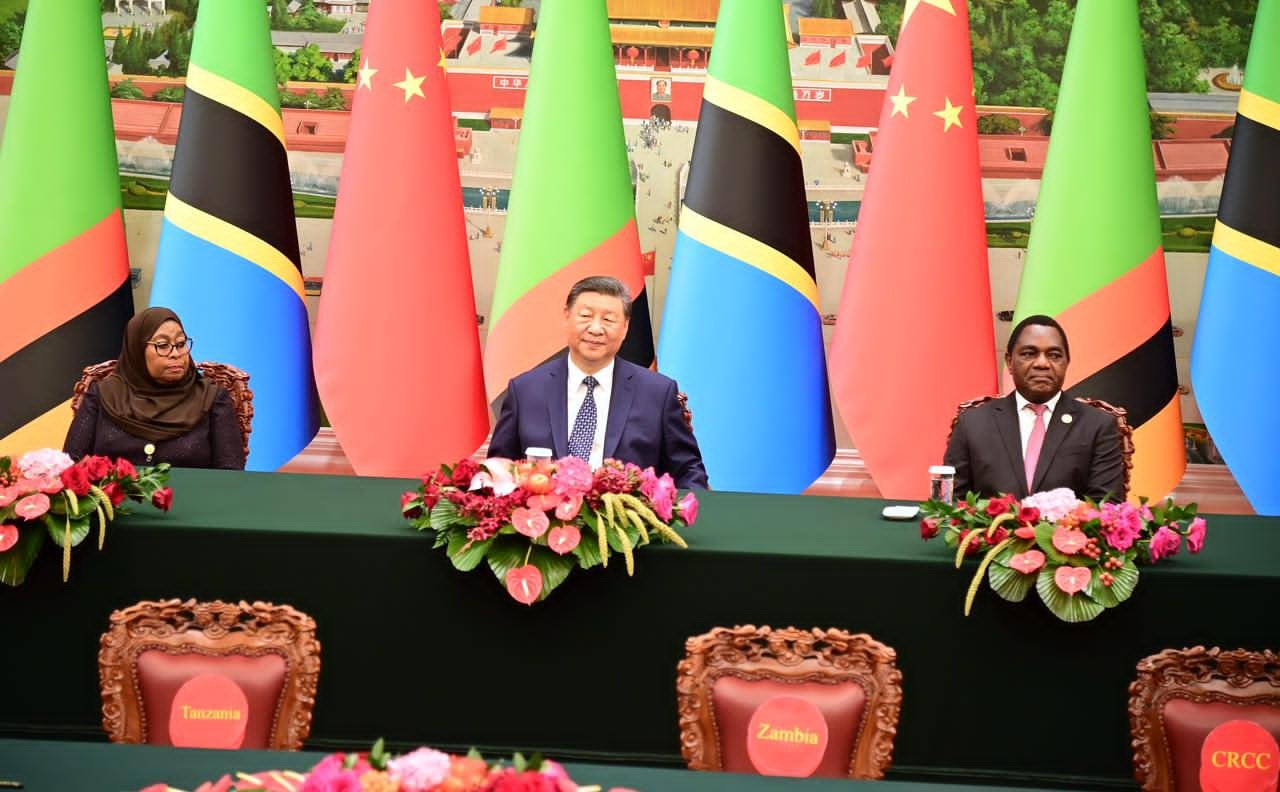
China’s decision to grant zero tariff treatment across 100 percent of tariff lines to 53 African countries marks one of the most significant changes in the continent’s trade relationship with a major economy in recent years. Announced by President Xi Jinping in February 2026 and implemented from 1 May, the policy extends duty free access to African countries that maintain diplomatic relations with Beijing, leaving Eswatini outside the arrangement. China has presented the initiative as covering all product categories without quotas or political conditions. The scale of the opening is substantial because China is already Africa’s largest trading partner and one of the world’s largest consumer markets. Yet the real importance of the policy lies less in the removal of tariffs itself than in whether African economies can use that access to change the composition of what they sell to China and capture a larger share of value before goods leave the continent.
The announcement needs to be understood against Africa’s much longer history of engagement with the international trading system. For decades, African countries have sought greater access to major external markets through the World Trade Organization, European trade agreements and the United States African Growth and Opportunity Act. These arrangements created important commercial opportunities, but they also exposed a recurring tension between gaining access to foreign markets and retaining enough domestic policy space to support industrial development. The issue has never simply been whether African goods could enter Europe, the United States or other markets at lower tariffs. It has also been whether the terms attached to that access limited the ability of governments to protect emerging industries, use export taxes, regulate imports, support domestic processing or pursue broader industrial strategies. China’s new offer is significant because, under this particular measure, African countries receive access to the Chinese market without being required to undertake an equivalent opening of their own markets.
Africa’s Long Search For Better Terms In Global Trade
The structural weakness from which many African countries enter global trade remains considerable. According to UNCTAD, 32 of the world’s 44 Least Developed Countries are in Africa. These economies generally have narrower export bases, smaller industrial sectors, shallower capital markets and weaker negotiating capacity than advanced economies, making improved access to international markets potentially important for foreign exchange earnings, employment and investment. Yet market access by itself does not resolve the underlying development problem if the goods entering those markets remain concentrated in low value primary commodities. A country that exports larger quantities of unprocessed minerals or agricultural products may earn more foreign exchange without materially improving productivity, industrial capacity or its position within global value chains. The central issue is therefore not merely how much Africa trades, but what Africa trades and how much value is retained before that trade takes place.
The World Trade Organization illustrates this problem clearly. Established in 1995 as the successor to the General Agreement on Tariffs and Trade, the WTO was designed to provide a rules based framework for global trade, reduce tariffs and non tariff barriers and offer a formal mechanism for settling disputes. Its member driven structure and consensus based decision making create a formal appearance of equality, but economic and institutional asymmetries remain significant. Large industrial economies enter negotiations with specialised legal teams, sector experts, extensive diplomatic missions and highly organised domestic business constituencies, while poorer countries may operate with much smaller delegations responsible for multiple negotiating tracks at once. In practice, the ability to participate formally is not always the same as the ability to shape outcomes, particularly when negotiations involve highly technical questions around intellectual property, subsidies, sanitary standards, services, digital trade and rules of origin.
The same imbalance is visible in dispute settlement. WTO members are, in principle, entitled to challenge one another where they believe trade rules have been breached, but the cost of litigation, the technical complexity of cases and the limited commercial effect of retaliation by a small economy against a much larger one create practical constraints. Even when a poorer country prevails legally, the effectiveness of countermeasures can be limited by the simple fact that withdrawing concessions against a major economy may inflict more economic pain on the smaller country than on the larger trading partner. The formal equality of the system therefore exists alongside large differences in economic power, administrative capacity and the ability to absorb the costs of prolonged disputes.
TRIPS, Doha And The Question Of Policy Space
The Agreement on Trade Related Aspects of Intellectual Property Rights became one of the clearest examples of how global trade rules can intersect with domestic development priorities. TRIPS established minimum standards for intellectual property protection, including pharmaceutical patents, based partly on the argument that companies require protection for the large research and development costs involved in producing new technologies and medicines. Developing countries, however, raised concerns that stronger patent protections could also constrain access to affordable medicines, particularly during public health emergencies. Those tensions eventually contributed to the 2001 Doha Declaration on TRIPS and Public Health, which affirmed the right of WTO members to use flexibilities in the agreement to protect public health.
The wider Doha Development Agenda was intended to give developing country concerns greater prominence within the multilateral trading system, particularly on agriculture, subsidies, market access and special treatment for poorer countries. Yet the negotiations failed to deliver the scale of reform many developing economies had expected, especially in relation to agricultural support in advanced economies. This matters because agriculture remains one of the sectors in which many African countries have a comparative advantage, but one where access to developed markets is often shaped not only by tariffs but by subsidies, standards and domestic support programmes. The experience reinforced a broader lesson for African trade policy: the commercial benefits of integration depend heavily on the rules that accompany it and the space countries retain to build productive capacity of their own.
The European EPA Debate Was Ultimately About Industrialisation
The European Union’s Economic Partnership Agreements produced a similar debate in a different form. These agreements were designed to replace earlier preferential arrangements with reciprocal trade agreements compatible with WTO rules. In East Africa, the regional EPA was never brought into force collectively. Kenya later negotiated a bilateral Economic Partnership Agreement with the European Union, which entered into force on 1 July 2024.
Tanzania’s resistance to the earlier EAC agreement was articulated particularly forcefully by former President Benjamin William Mkapa. Writing in 2016, Mkapa argued that the proposed agreement risked opening Tanzania’s market to European competition before domestic industries had developed sufficient productive strength, while also restricting policy instruments that could be used to support industrialisation. His critique centred on the possibility that the EPA would reinforce an existing trading pattern in which East African economies exported primary products while importing manufactured goods from Europe. He also objected to restrictions surrounding export taxes, which can be used by governments to discourage the export of unprocessed raw materials and encourage domestic processing.
The debate was therefore much broader than tariffs. It concerned sequencing. Tanzania and other developing economies were being asked to liberalise significant parts of their industrial markets while still attempting to build firms capable of competing with European producers that had deeper access to capital, technology, established brands and mature industrial networks. Mkapa’s argument was that the benefits of market access should not be assessed separately from the industrial consequences of reciprocal liberalisation. A country may gain better access to Europe for agricultural or primary exports while simultaneously exposing emerging manufacturers to more intense competition at home.
That argument is especially relevant to regional integration because manufactured goods account for an important share of intra African trade. African firms frequently find regional markets more accessible than distant developed markets because production standards, distribution networks and consumer preferences are closer to their own capabilities. If regional markets are opened too quickly to highly competitive external manufacturers, governments may weaken precisely the industrial base they are attempting to develop through integration. This is one reason the AfCFTA and the continent’s regional economic communities matter. They provide African firms with a larger market in which to build scale before competing more aggressively in global markets.
AGOA Demonstrated Both The Value And The Limits Of Preferential Access
The African Growth and Opportunity Act provides another useful comparison. Introduced by the United States in 2000, AGOA granted eligible Sub Saharan African countries duty free access to the American market for thousands of product lines. In several countries the programme generated meaningful commercial gains, particularly in apparel and manufacturing. Lesotho became one of the best known examples, using preferential access to attract investment into textiles and garments and turning the sector into one of the country’s largest sources of private employment and export earnings.
But AGOA access has always been conditional. Beneficiary countries are required to demonstrate progress toward market oriented economic policies, rule of law and the reduction of barriers to United States trade and investment. Those conditions became highly significant when African industrial policy conflicted with American commercial interests.
The East African Community’s attempt to phase out imports of used clothing and footwear is one of the clearest examples. In 2016, EAC governments sought to reduce second hand clothing imports as part of a broader effort to develop local textile and apparel industries. The American Secondary Materials and Recycled Textiles Association objected and petitioned the United States government, arguing that the policy threatened American businesses and jobs. The United States subsequently reviewed the AGOA eligibility of Rwanda, Tanzania and Uganda. Tanzania and Uganda altered their positions, while Rwanda maintained its restrictions and in 2018 had its AGOA apparel benefits suspended. The USTR explicitly linked the decision to Rwanda’s refusal to remove barriers affecting used clothing imports.
The dispute was significant because it exposed the tension between preferential access and industrial policy. From the American perspective, Washington was enforcing the eligibility conditions attached to a unilateral trade preference and defending the interests of a domestic industry. From the East African perspective, governments were attempting to reduce dependence on imported used clothing and create space for domestic textile production. The disagreement was therefore not simply about second hand clothes. It concerned the extent to which access to a foreign market could influence industrial policy inside African economies.
South Africa’s poultry dispute raised a similar question. The United States initiated an out of cycle review of South Africa’s AGOA eligibility over barriers affecting American poultry, pork and beef. In late 2015, the Obama administration warned that agricultural benefits could be suspended unless South Africa met specified benchmarks. South Africa subsequently agreed to measures that reopened its market to American agricultural products. The United States presented the outcome as the removal of unfair barriers, while South African concerns centred on domestic producers and the pressures created by increased competition.
Taken together, these episodes illustrate why China’s 2026 offer warrants close attention. Preferential access can create genuine export opportunities, but the conditions attached to it can also influence domestic economic policy. The absence of equivalent reciprocal obligations under China’s current zero tariff measure therefore gives African governments greater room to decide how quickly and in which sectors they liberalise their own markets.
China’s Offer Is Different, But It Does Not Automatically Change Africa’s Position
China’s new trade policy is striking because of its breadth. Beginning on 1 May 2026, all 53 African countries with diplomatic relations with Beijing became eligible for zero tariff treatment across 100 percent of tariff lines, with Chinese officials stating that the arrangement applies without quotas or political conditions. This creates a materially different starting point from agreements in which preferential access is exchanged for reciprocal liberalisation or tied closely to domestic policy conditions.
For African governments attempting to industrialise, that flexibility is potentially valuable because access to the Chinese market does not, under this measure, require them to dismantle their own tariff structures to the same extent. Governments retain more freedom to protect selected industries, support domestic processing and sequence liberalisation according to national or regional industrial priorities. In principle, an African country could continue using tariffs or industrial incentives to support domestic production while exporting qualifying goods to China duty free.
The commercial opportunity is significant because China is already deeply embedded in African trade. Bilateral commerce has grown dramatically over the past quarter century, from relatively modest levels around the beginning of the 2000s to hundreds of billions of dollars annually. The problem is that the composition of this trade remains uneven. African exports to China are still heavily concentrated in minerals, hydrocarbons and agricultural commodities, while Chinese exports to Africa include machinery, electronics, vehicles, industrial equipment and a broad range of finished consumer goods. The resulting imbalance is not principally a tariff problem. It reflects differences in industrial capacity, financing, infrastructure, technology, logistics and scale.
Zero tariffs can therefore remove a barrier at the Chinese border without addressing the constraints that prevent an African firm from reaching that border competitively. Production remains dependent on reliable electricity, efficient ports and transport corridors, affordable working capital, consistent standards, certification, packaging, commercial intelligence and the ability to supply large orders reliably. These constraints are often more important than the tariff itself. The economic significance of China’s decision will consequently depend on whether African governments and businesses use the new access as a reason to strengthen domestic productive capacity rather than treating it simply as an opportunity to increase commodity shipments.
The Raw Materials Risk Remains
The most immediate danger is that the zero tariff policy increases the volume of African exports without changing their composition. China already has strong demand for copper, cobalt, lithium, crude oil, iron ore, agricultural commodities and other raw materials. Preferential access may reinforce incentives to expand extraction and primary production because those are the sectors in which many African countries can increase exports most quickly.
That outcome would not be commercially insignificant. Higher exports can increase foreign exchange earnings, improve fiscal revenues and support investment. But it would represent a limited structural gain if the continent continues to export goods at the lowest stages of processing while importing increasingly sophisticated finished products. Africa has experienced this pattern for decades with multiple trading partners. Trade volumes expand, commodity exports grow and foreign investment rises, yet manufacturing remains shallow and a large share of the value contained in African resources is created after those resources leave the continent.
The more valuable outcome would be for improved Chinese market access to influence investment decisions inside Africa. Producers should have stronger incentives to process agricultural commodities, refine minerals, develop packaged food products and move into intermediate manufacturing if a large external market can be accessed at zero tariff. This is where the development potential of the arrangement lies. The measure becomes more important when it changes production structures rather than simply trade volumes.
Coffee offers a simple illustration. African producers will gain more from China’s market expansion if they export a larger share of roasted, packaged and branded coffee rather than relying predominantly on green beans. Cocoa producing economies can capture more value through cocoa butter, powder, chocolate and food ingredients. Cotton producing countries can move further into yarn, textiles and garments. Mineral producers can increase returns through beneficiation, refining and industrial inputs before attempting to enter more sophisticated manufacturing. Fisheries, horticulture, meat processing, timber and other sectors present similar opportunities. The principle is consistent across industries: market access has greater developmental value when it encourages movement into higher value production.
The AfCFTA Should Shape Africa’s Response
Africa’s response should not be organised solely through 53 separate national strategies. The size and complexity of the Chinese market make regional coordination increasingly important. Many African economies are too small to build complete industrial value chains independently, but regional production can combine resources, capital, infrastructure and manufacturing capabilities across borders.
The African Continental Free Trade Area provides the broader framework, while regional organisations such as the EAC, COMESA, ECOWAS and SADC can identify sectors in which cross border production networks are economically viable. A textile value chain, for example, does not require cotton production, spinning, weaving, garment manufacturing, packaging and logistics to take place in the same country. Mineral value chains can similarly connect extraction, refining, chemical processing and industrial manufacturing across several economies. Food processing can combine agricultural production in one market with processing, packaging, cold storage and port infrastructure in another.
This matters because the alternative is a fragmented continental response in which dozens of countries compete to supply China with similar unprocessed commodities. Regional production can create scale, improve bargaining power and allow African firms to specialise within larger value chains. It would also strengthen the AfCFTA by ensuring that increased trade with China does not come at the expense of intra African production.
African governments should also invest far more heavily in commercial intelligence. China should not be treated as a single homogeneous market. It contains provinces and cities with consumer markets larger than those of many countries, each with different income levels, tastes, distribution systems and industrial demand. African embassies, export promotion agencies, commodity boards and private sector associations need the capacity to identify where specific African products can compete, what standards they must meet, how distribution networks operate and which Chinese companies are seeking suppliers. Preferential tariffs have little value if African exporters lack the information and institutional support required to convert them into actual sales.
The Outcome Will Depend More On African Policy Than Chinese Policy
China’s zero tariff initiative provides African countries with a wider commercial opening than they previously enjoyed, but the policy should not be confused with an industrial strategy. Beijing can remove tariffs on African imports, but it cannot determine whether African countries invest in processing plants, improve electricity supply, finance manufacturers, enforce regional standards, develop export logistics or build firms capable of competing in Chinese markets. Those decisions remain African.
The strongest test of the policy will therefore not be the headline value of China Africa trade five or ten years from now. It will be whether the composition of African exports changes. If bilateral trade grows substantially but exports remain dominated by crude oil, copper, cobalt, iron ore, coffee, cocoa and other primary products, the continent will have expanded its commercial relationship with China without fundamentally altering its place in the global economy. If, by contrast, African exports increasingly consist of processed foods, manufactured goods, refined minerals, industrial inputs and products created through regional value chains, the zero tariff arrangement will have contributed to a more significant structural shift.
There is therefore reason for optimism, but not complacency. China has created a large preferential opening without requiring reciprocal tariff liberalisation under this specific measure, and that gives African governments greater room to combine external market access with domestic industrial policy. What matters now is whether that room is used strategically.
The most important distinction is between access and capability. Africa now has greater access to the Chinese market. Its next task is to build the capability to sell China more of what Africa makes, rather than simply more of what Africa extracts.
 Uchumi360
Business Intelligence
Uchumi360
Business Intelligence
- https://www.southcentre.int/question/why-the-epa-is-not-beneficial-to-tanzania/
- https://www.thecitizen.co.tz/tanzania/news/national/reasons-for-my-rejection-of-epa-remain-mkapa-2518498
Uchumi360 covers business, investment, and economic policy across East, Central, and Southern Africa.
For the serious reader
You read to the end. That places you in a small group.
Uchumi360 is built for readers who demand precision over speed, structure over sentiment, and analysis that holds uncomfortable conclusions rather than softening them. If this work sharpens how you think about Africa's economy, help us keep building the infrastructure behind it.
Institutional Partners
Commission intelligence. Shape the conversation.
Uchumi360 works with development finance institutions, investment firms, sovereign bodies, and strategic organisations across the coverage region. Institutional partnership unlocks:
- Commissioned sector and country intelligence reports
- Branded research series under your institution's authority
- Exclusive data briefings for internal strategy teams
- Speaking and editorial presence at Uchumi360 events
- Co-published investment outlooks for your markets
Support Our Work
Independent analysis has a cost. Help us bear it.
Uchumi360 does not carry advertising. It does not take editorial direction from sponsors. Every article is produced without commercial compromise. Your contribution funds the reporting, research, and editorial infrastructure that keeps this analysis free from influence.
Secure checkout: One-time and monthly support are processed securely. Add payment credentials to enable checkout here.
Stay Connected
Keep up with every new insight.
Follow our latest analysis, policy coverage, and market intelligence as soon as it is published. If you need something specific, reach out directly and we will point you to the right research.
