
Kenya’s China Trade Deficit Jumps 44% to KSh218.8 Billion as Imports Hit a Quarterly Record
Ready
Exports to China grew by almost 60 per cent in the second quarter, but imports increased to KSh225.86 billion, driven partly by solar wafers. The figures show why tariff access alone will not rebalance the relationship without greater production, processing and export capacity.
Kenya’s quarterly merchandise-trade deficit with China widened by 44.3 per cent to KSh218.81 billion in the three months to June 2026, as imports from the Asian manufacturing powerhouse continued to grow much faster in absolute terms than Kenyan exports.
Data in the Kenya National Bureau of Statistics’ second-quarter balance-of-payments report show that imports from mainland China rose by 44.7 per cent to KSh225.86 billion, from KSh156.04 billion in the corresponding quarter of 2025.
Kenya’s exports to China increased more rapidly in percentage terms, rising by almost 60 per cent to KSh7.05 billion from KSh4.41 billion. The additional KSh2.64 billion in export revenue, however, was overwhelmed by a KSh69.82 billion increase in imports. Kenya consequently imported about KSh32 in Chinese goods for every KSh1 earned from exports to China.
The figures do not mean every import is economically harmful. KNBS attributed much of the increase to purchases of solar wafers, which are semiconductor slices used in photovoltaic-cell production. Imports of machinery, renewable-energy equipment and communications technology can raise productive capacity, reduce energy costs and support new industries.
The data do not, however, establish how many of the imported solar wafers will be processed in Kenya, incorporated into locally manufactured products or distributed elsewhere. That distinction matters. Imports that support local assembly, installation, servicing and manufacturing can generate employment and future exports. Imports that arrive as finished products with limited local participation provide consumers with equipment but create fewer domestic industrial linkages.
A quick analysis of the KNBS figures points to a wider shift in the composition of Chinese supplies, from low-cost household products towards solar technology, industrial machinery, telecommunications equipment and commercial vehicles. The changing import basket reflects China’s growing competitiveness in sectors that are increasingly central to East Africa’s industrial and energy transition.
For Kenyan businesses, this creates both opportunity and competitive pressure. Lower-cost machinery and energy equipment can reduce the capital required to start or expand production. Solar technologies can help commercial and industrial users reduce exposure to electricity interruptions and high peak-period costs.
At the same time, local manufacturers may struggle to compete with Chinese companies that benefit from scale, sophisticated supply chains, technology investment and comparatively affordable financing. Kenya’s industrial-policy challenge is therefore not simply to restrict imports. It is to use imported equipment and components to build domestic production, assembly, maintenance and export capability.
The bilateral deficit sits within a broader deterioration in Kenya’s external accounts. KNBS reported that the country’s overall merchandise-trade deficit expanded by 47.9 per cent to KSh481.93 billion in the second quarter. Imports on a balance-of-payments basis rose to KSh920.62 billion, while exports increased by only 3.6 per cent to KSh438.70 billion.
Kenya’s current-account deficit consequently widened to KSh252.54 billion, from KSh69.37 billion in the second quarter of 2025. Higher import spending, increased dividend and interest outflows and a decline in remittances all contributed. The services account remained in surplus, providing a partial offset.
The current account and the bilateral China goods deficit are different measures and should not be treated as directly interchangeable. The current account incorporates trade with all countries, services, primary income and transfers. Nevertheless, the rapid growth in Chinese imports is one of the forces increasing Kenya’s demand for foreign currency.
The external position remained financeable during the quarter. KNBS recorded net financial inflows of KSh244.1 billion and an overall balance-of-payments surplus of KSh40.6 billion. That means the widening current-account gap did not translate into an immediate balance-of-payments crisis. It does, however, leave Kenya more dependent on continued investment, borrowing and other capital inflows to meet its external financing needs.
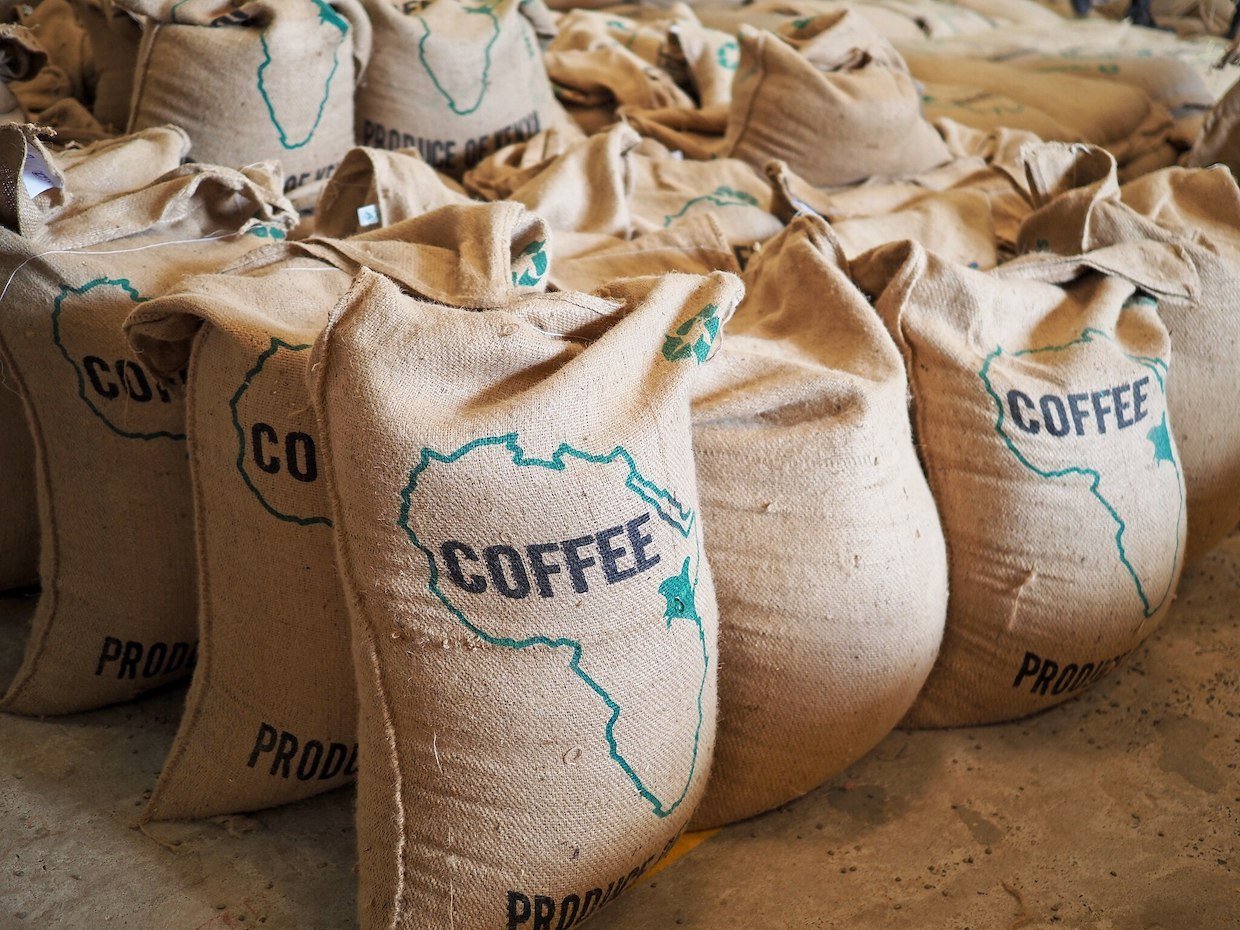
On the export side, increased shipments of coffee and copper waste and scrap helped raise Kenya’s receipts from China. The growth is welcome, but the product mix illustrates the value-addition challenge. Scrap and primary agricultural products generally capture less value than processed metals, roasted and branded coffee, finished foods or manufactured goods.
Kenya is seeking to change that balance through an Early Harvest Arrangement signed with China in March 2026. The arrangement provides duty-free treatment for Kenyan products and has already been used to promote shipments of avocados, avocado oil, coffee, green beans, hides and skins.
The two governments use different headline descriptions of its coverage. Kenya’s State Department for Trade says the arrangement gives Kenyan products zero-duty access to approximately 98.2 per cent of Chinese tariff lines. China’s Ministry of Commerce says zero-tariff treatment applies to 100 per cent of tariff lines for Kenya. Exporters should therefore rely on the applicable product schedules, rules of origin and customs requirements rather than headline percentages when assessing eligibility.
Removing a tariff does not by itself create export supply. Kenyan producers must still meet Chinese sanitary and technical standards, aggregate sufficient volumes, maintain consistent quality and secure reliable logistics and distribution partners. For perishable agricultural products, cold-chain capacity, inspection procedures and predictable shipping times can be more consequential than the tariff.
The agreement’s effectiveness should therefore be judged by the value and diversity of actual exports, not the number of nominally eligible tariff lines. The Q2 figures provide an early baseline: exports are growing, but the increase remains small relative to Kenya’s expanding demand for Chinese goods.
There is also an industrial opportunity on the import side. Kenya could negotiate for more local assembly, component production, repair services, training and technology transfer around solar equipment, electric mobility, telecommunications and industrial machinery. Chinese companies using Kenya as an East African production or distribution base could give the trade relationship stronger domestic linkages and create exports to neighbouring markets.
For investors, the most informative indicators will be Kenya’s third- and fourth-quarter exports to China, the products accounting for the growth, the share of Chinese equipment incorporated into local production and the amount of associated Chinese direct investment. The shilling, foreign-exchange reserves, financial inflows and the wider current-account deficit also warrant attention.
The trade gap is not simply evidence that Kenya imports too much. It shows that the country has not yet built enough export capacity to match the scale and sophistication of what it buys. The economically durable response is to convert tariff access into sales and imported technology into local production.
 Uchumi360
Business Intelligence
Uchumi360 covers business, investment, and economic policy across East, Central, and Southern Africa.
For the serious reader
You read to the end. That places you in a small group.
Uchumi360 is built for readers who demand precision over speed, structure over sentiment, and analysis that holds uncomfortable conclusions rather than softening them. If this work sharpens how you think about Africa's economy, help us keep building the infrastructure behind it.
Institutional Partners
Commission intelligence. Shape the conversation.
Uchumi360 works with development finance institutions, investment firms, sovereign bodies, and strategic organisations across the coverage region. Institutional partnership unlocks:
- Commissioned sector and country intelligence reports
- Branded research series under your institution's authority
- Exclusive data briefings for internal strategy teams
- Speaking and editorial presence at Uchumi360 events
- Co-published investment outlooks for your markets
Support Our Work
Independent analysis has a cost. Help us bear it.
Uchumi360 does not carry advertising. It does not take editorial direction from sponsors. Every article is produced without commercial compromise. Your contribution funds the reporting, research, and editorial infrastructure that keeps this analysis free from influence.
Secure checkout: One-time and monthly support are processed securely. Add payment credentials to enable checkout here.
Stay Connected
Keep up with every new insight.
Follow our latest analysis, policy coverage, and market intelligence as soon as it is published. If you need something specific, reach out directly and we will point you to the right research.
