

Tanzania Has the Minerals the World Needs. Whether It Captures Their Value Is a Different Question Entirely.
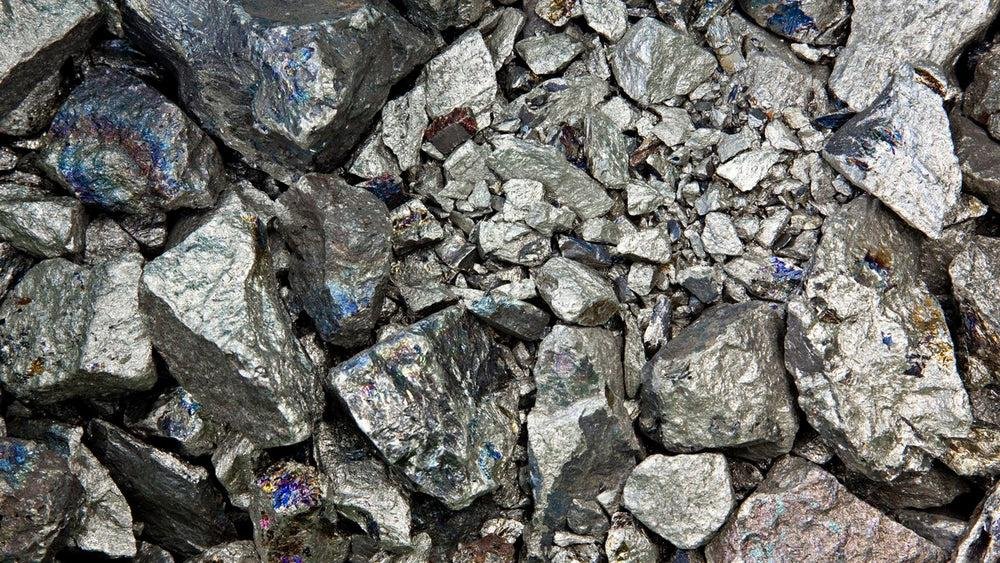
Through STAMICO, Tanzania has opened exploration licences across lithium, graphite, nickel, cobalt, and rare earth deposits that place it within the most strategically contested resource geography on earth. The geological endowment is real. The timing is extraordinary. The structural question that exploration licences cannot answer is the one that will define whether Tanzania becomes a critical minerals economy or simply a critical minerals supplier.
The Moment Tanzania Is Entering
The global energy transition has created a resource demand cycle unlike anything the mining industry has experienced since the industrial revolution. Lithium, graphite, nickel, cobalt, and rare earth elements have moved from specialist commodities traded in relatively thin markets to system-critical inputs whose supply security is now a matter of explicit geopolitical strategy for the United States, the European Union, Japan, South Korea, and China. The International Energy Agency estimates that achieving global climate targets will require a tripling of critical mineral supply by 2030 relative to current production levels. The gap between that demand trajectory and committed mine supply is one of the most significant resource constraints facing the energy transition, and it is a gap that existing producing regions cannot close without substantial new investment in exploration and development.
Tanzania is entering this market at the precise moment when the geopolitical premium on critical mineral supply diversification is at its highest in history. Western governments and manufacturers are actively seeking supply chains outside Chinese processing dominance. African Development finance is being directed toward critical minerals projects with explicit supply chain diversification objectives. Junior and major mining companies are deploying exploration capital into frontier geologies they would not have prioritised five years ago.
The Tanzania Investment and Special Economic Zones Authority registered 915 investment projects in 2025 with approved capital of USD 10.95 billion, almost triple the USD 3.7 billion registered in 2021. While the sectoral breakdown of 2025 investment has not yet been released, the mining and energy sectors have historically been among the primary recipients of Tanzania's inward investment, and the critical minerals demand environment suggests that the exploration portfolio being promoted through STAMICO is attracting a level of investor attention that previous years' geological surveys did not generate.
The question that this moment requires answering is not whether Tanzania has the minerals. The geological evidence suggests it does. The question is whether Tanzania enters the critical minerals economy as a value chain participant or as a raw material supplier, and whether the exploration partnerships being negotiated through STAMICO now are structured to ensure that the answer to that question reflects Tanzania's long-term development interest rather than the short-term preferences of the capital seeking access to its geology.
The Geological Portfolio: What Tanzania Actually Has
Tanzania's critical minerals endowment spans multiple geological belts and mineral types, giving it a portfolio breadth that few African jurisdictions can match. Understanding what each component of that portfolio represents, and where it sits in the global supply chain context, is essential for assessing the investment thesis with appropriate precision.
The lithium prospects within the Hombolo-Magali geological belt near Dodoma represent Tanzania's most directly battery-economy-relevant exploration opportunity. The belt hosts pegmatite formations containing lepidolite and spodumene, the lithium-bearing minerals that serve as the primary hard rock sources for battery-grade lithium production. The geological setting, Archean rock formations intruded by granitic bodies, is consistent with lithium mineralisation patterns found in producing pegmatite deposits globally, including the major Australian spodumene producers at Greenbushes and Pilgangoora that currently supply a substantial portion of the world's battery lithium. The Dodoma prospects remain at early exploration stage, meaning that drilling results will determine whether the electromagnetic and geochemical indicators translate into resource continuity and grade sufficient for commercial development.
The graphite licences, across which STAMICO has conducted airborne geophysical surveys, have returned strong electromagnetic conductance anomalies indicative of graphite mineralisation at depth. Graphite occupies a unique position in the battery supply chain because it is the single largest component by weight in a lithium-ion battery, forming the anode material that stores and releases energy through lithiation and delithiation cycles. Tanzania already has a proven graphite endowment through the Mahenge deposit in Morogoro, operated by Graphex Technologies, which ranks among the world's largest natural flake graphite resources by tonnage and grade. The STAMICO exploration licences extend the known graphite geography and suggest that Tanzania's graphite endowment may be substantially larger than current production-stage resources indicate.
The rare earth element potential in the Songwe region of southwestern Tanzania is geologically anchored in the Panda Hill carbonatite complex. Carbonatite-hosted rare earth deposits are among the most economically significant rare earth geology types globally, exemplified by the Mountain Pass deposit in the United States and the Lynas Corporation's Mt Weld deposit in Australia. The Songwe rare earth project has attracted development-stage attention from investors given its carbonatite setting, though the processing complexity of rare earth separation and the concentrated nature of the global rare earth processing industry, currently dominated by China's separation and refining capacity, creates value chain challenges that are discussed in more detail below.
The nickel and cobalt prospects in northwestern Tanzania, within the Karagwe-Ankole geological belt, derive much of their strategic significance from their geological proximity to the Kabanga nickel sulphide deposit. Kabanga is consistently described as one of the world's largest undeveloped high-grade nickel sulphide resources, with grades that place it among the most economically attractive undeveloped nickel assets globally. Nickel sulphide deposits are particularly valued relative to the laterite nickel deposits that dominate Indonesia's production, because sulphide ores are amenable to conventional smelting and refining processes that produce battery-grade nickel sulphate at lower energy and processing cost than the high-pressure acid leaching required for laterite processing.
The Timing Advantage and Who Is Competing for It
Tanzania's geological endowment has existed for decades. What has changed is the geopolitical context that determines how that endowment is valued and by whom it is pursued.
For the past fifteen years, China has systematically built dominant positions across the critical minerals value chain, from upstream mine ownership in the DRC, Zambia, and elsewhere, through midstream processing and refining capacity concentrated in China, to downstream battery cell manufacturing that supplies the global electric vehicle industry. Chinese companies process an estimated 60 percent of the world's lithium, more than 70 percent of cobalt, and a substantial proportion of graphite, rare earths, and nickel at the refining and processing stages that convert raw ore into battery-grade materials.
This dominance is now the primary strategic vulnerability that Western governments and manufacturers are attempting to address. The United States Inflation Reduction Act creates financial incentives for electric vehicles using battery materials sourced outside Chinese-controlled supply chains. The European Union's Critical Raw Materials Act establishes supply chain diversification targets that require European manufacturers to reduce dependence on single-country processing dominance. Japan and South Korea, whose battery and automotive manufacturers are among the world's largest consumers of critical minerals, have parallel supply chain diversification programmes supported by development finance and government-to-government agreements.
Tanzania sits at the intersection of this demand for supply chain diversification and a geological endowment that spans most of the minerals those diversification programmes require. The exploration licences STAMICO is promoting are therefore not competing solely in a commercial mining investment market. They are competing in a geopolitical capital allocation market where strategic considerations supplement commercial return calculations and where development finance institutions, export credit agencies, and government-backed investment vehicles are willing to accept lower return thresholds than purely commercial capital requires.
This geopolitical premium is Tanzania's timing advantage, and it is not permanent. As the global exploration pipeline for critical minerals develops, as producing assets come online in Australia, Canada, Argentina, and elsewhere in Africa, and as the urgency of supply chain diversification moderates from crisis-level to manageable, the premium that frontier exploration assets command in Tanzania's geological belts will normalise toward conventional commercial mining economics. The window in which Tanzania can leverage its exploration portfolio into development agreements that include processing requirements, technology transfer, and value chain participation on terms reflecting the current geopolitical premium is open now and will not remain open indefinitely.
The Competition Tanzania Faces Across the Continent
Tanzania is not the only African country that has recognised the critical minerals opportunity and moved to attract exploration and development capital. Understanding the competitive landscape is essential for assessing how Tanzania's portfolio differentiates itself and where it faces the most direct competition for the same investor attention.
Zambia and the DRC form the most immediately competitive geography for battery metals exploration and development capital. The Zambian Copperbelt and the DRC's Katanga province together constitute the world's most important cobalt and copper producing region, and both countries are actively promoting new exploration and development investment. The USD 2.3 to 2.5 billion Mingomba copper project in Zambia, backed by KoBold Metals with investment from Jeff Bezos and Bill Gates, represents the scale and profile of capital that is entering the region's copper and cobalt geography. Tanzania's nickel and cobalt prospects in the Karagwe-Ankole belt are geologically distinct from the DRC and Zambian copper-cobalt geology, but they compete for the same pool of battery metals investment capital.
Zimbabwe has emerged as one of Africa's most active lithium producing jurisdictions, with multiple lithium projects in various stages of development and production. Zimbabwe's Bikita and Arcadia lithium projects have attracted Chinese investment and are producing spodumene concentrate, giving Zimbabwe a first-mover production advantage that Tanzania's Dodoma lithium prospects, still at exploration stage, cannot yet match. Tanzania's response to this competition is to leverage the quality of its geological indicators and its more stable political and regulatory environment, both of which are genuine differentiators, but neither of which substitutes for the resource definition work that drilling will need to confirm.
Mozambique and Madagascar are the established graphite producers in the regional context, with Mozambique's Balama deposit operated by Syrah Resources representing one of the world's largest graphite production operations. Tanzania's graphite prospects, while promising, enter a market where Mozambique and Madagascar have already established supply relationships with battery manufacturers and downstream processors. Competing for a share of that market requires Tanzania to offer either geological differentiation, processing integration, or commercial terms that give buyers a reason to develop supply relationships with a new producer.
The rare earth competition is perhaps the most complex. China's dominance of rare earth processing is so deeply embedded in global supply chains that new rare earth producers face not just the challenge of mine development but the challenge of accessing processing capacity for separated rare earth oxides and metals that does not currently exist at commercial scale outside China. Lynas Corporation's investment in processing capacity in Malaysia and Australia, and the United States government's efforts to rebuild domestic rare earth processing, represent the beginning of a structural change in this landscape, but it is a change measured in decades rather than years. Tanzania's Songwe rare earth potential can attract exploration and early development capital in the current environment, but the pathway from ore in the ground to battery magnet in an electric vehicle runs through processing infrastructure that the global industry is only beginning to build outside Chinese control.
The Value Chain Question: The Gap That Exploration Licences Cannot Close
The promotional framing of Tanzania's critical minerals portfolio consistently describes the geological opportunity and stops there. The analytical framing requires engaging with the structural question that determines whether Tanzania's minerals generate transformative economic value or simply extend the region's long history of supplying raw materials to industrial value chains controlled elsewhere.
Tanzania currently exports graphite in natural flake concentrate form. The transformation of natural flake into spherical graphite, the battery-grade anode material that commands the price premium relevant to electric vehicle supply chains, involves a purification and shaping process that requires technical capability and capital investment that the graphite industry has concentrated almost entirely in China. The margin differential between flake graphite concentrate and battery-grade spherical graphite is substantial, and Tanzania's position at the upstream end of this processing chain means the country captures extraction value but not the industrial processing premium.
The lithium value chain presents an identical structural challenge at larger scale. Spodumene concentrate, the first-stage product from hard rock lithium mining, must be converted through a multi-step chemical process into lithium hydroxide or lithium carbonate before it is usable in battery manufacturing. Australia, which produces the majority of the world's spodumene, has historically exported concentrate to China for processing, capturing mining margins but surrendering the downstream chemical processing value to Chinese converters. The United States, European Union, and Australian government programmes currently attempting to develop lithium conversion capacity outside China are doing so precisely because the value chain structure that Tanzania's future lithium production would enter, absent deliberate policy intervention, would replicate the Australian experience of resource export without processing value capture.
The nickel value chain through Kabanga, if the project advances to development, is structured differently and more promisingly from a value capture perspective. Lifezone Metals, the development company associated with Kabanga, has promoted a hydrometallurgical processing approach that would produce battery-grade nickel sulphate, cobalt sulphate, and copper in Tanzania rather than exporting concentrate or matte for overseas refining. If this processing model is implemented at scale, Kabanga could represent one of the most complete battery minerals value chains developed on African soil, from ore extraction through to battery-ready output. That model, if it succeeds, would be a genuine template for how Tanzania's other critical minerals projects should be structured, and it is the benchmark against which the processing terms in STAMICO's exploration partnerships need to be assessed.
The rare earth value chain is structurally the most challenging for any African producer, for the reasons described above. The Songwe project's ability to generate value beyond ore extraction depends on the development of separation and processing infrastructure, either domestically or through partnership with the processing facilities being developed in the United States, Australia, and Malaysia, that would convert Tanzanian rare earth ore into the separated oxides and metals that technology manufacturers require. This is a decade-scale infrastructure challenge, not a project-level business decision, and Tanzania's engagement with the global rare earth processing buildout needs to be coordinated at the government-to-government level alongside the commercial exploration partnerships that STAMICO is currently promoting.
What STAMICO's Exploration Partnerships Need to Get Right
The exploration licences STAMICO is promoting are the entry point for the capital and technical expertise that Tanzania needs to convert its geological endowment into confirmed resources and eventually into producing operations. The terms of those exploration partnerships will significantly shape the development trajectory of each deposit and the economic value Tanzania ultimately captures.
The negotiating leverage available to Tanzania at the exploration stage is real but time-limited. An exploration licence holder that discovers a major deposit at depth has strong incentives to reach a development agreement on terms acceptable to the host government before committing the substantial capital required for feasibility studies, project financing, and construction. After a final investment decision is reached and construction capital is committed, the leverage shifts dramatically toward the investor, whose sunk costs create pressure for project completion on the terms agreed rather than renegotiation.
Tanzania's exploration partnerships should therefore incorporate, at the front end, the development conditions that the government's long-term economic interest requires. Processing requirements that mandate in-country beneficiation at defined stages of development, rather than simple concentrate export. Technology transfer obligations that build Tanzanian technical capacity in the processing technologies relevant to each mineral. Joint venture structures that give the state mining company a meaningful equity stake in development rather than purely royalty and tax exposure. Local content requirements that distinguish between genuine skills and supply chain development and nominal compliance through low-value service contracts.
These requirements are not unusual in the global mining negotiating environment. Canada's provincial mining frameworks, Australia's development conditions, and the DRC's revised mining code all incorporate versions of processing and beneficiation requirements. The countries that have implemented them most effectively have done so at the exploration and licence stage, before the geological and commercial parameters that determine investor leverage are fully established.
Tanzania's policy framework has signalled awareness of the beneficiation imperative through its mining regulations and through the processing model being promoted for Kabanga. The test of whether that awareness is being translated into exploration partnership terms that reflect it is in the specific conditions attached to STAMICO's licence offers, not in the policy documents that describe the government's aspirations.
The Bottom Line
Tanzania's critical minerals portfolio is geologically credible, strategically timed, and commercially relevant to the most significant industrial demand cycle of the twenty-first century. The combination of lithium in Dodoma, graphite across multiple licence areas, rare earths in Songwe, and nickel and cobalt in the Karagwe-Ankole belt gives the country a mineral diversity that few African jurisdictions can match across the battery economy supply chain.
The geopolitical environment that makes this portfolio strategically valuable is extraordinary and will not persist indefinitely at its current intensity. The window in which Tanzania can leverage its geological endowment and political stability into exploration and development agreements that reflect the full strategic premium of critical mineral supply chain diversification is open now.
Whether Tanzania uses that window to build a critical minerals economy, with processing capacity, technology transfer, and value chain participation that generates industrial employment and durable fiscal revenue, or whether it uses it to add another layer to an extractive sector that supplies inputs to value chains controlled elsewhere, will be determined by the quality of the agreements STAMICO is negotiating today.
The minerals are in the ground. The capital is available. The geopolitical incentive for Western and allied investment is stronger than it has ever been. The gap between Tanzania becoming a critical minerals economy and Tanzania becoming a critical minerals supplier is not geological. It is a policy and negotiating challenge that the current moment provides a unique opportunity to resolve in Tanzania's favour.
_______________________________________________________________________________________
Sources: Tanzania State Mining Corporation (STAMICO) Exploration Licence Portfolio Documentation. Tanzania Investment and Special Economic Zones Authority (Tiseza) Investment Data 2025. Graphex Technologies Mahenge Graphite Project Disclosures. Lifezone Metals Kabanga Nickel Project Documentation. International Energy Agency Critical Minerals Report 2024. United States Geological Survey Mineral Commodity Summaries 2024. European Union Critical Raw Materials Act Implementation Framework. Minerals Security Partnership Programme Documentation. African Development Bank Critical Minerals Strategy 2024. World Bank Critical Minerals for Climate Action Report 2023.
_______________________________________________________________________________________
Uchumi360 covers business, investment, and economic policy across East, Central, and Southern Africa.
