
The Most Radical Part of Vision 2050 Is Not The Economy. It Is That Tanzania Finally Has a Long-Term National Strategy.
Ready
Tanzania's Long Term Perspective Plan 2026/27–2050/51 addresses a structural failure common across African development planning: strategies typically follow five-year electoral cycles rather than the multi-decade timelines industrialisation actually requires. The plan makes each Five Year Development Plan a building block toward one long-term destination rather than an independent programme, paired with a delivery framework designed to track implementation across successive administrations. This mirrors how Japan, South Korea, China and Singapore industrialised, over decades and multiple governments, not single administrations, and matters to investors because policy stability, not just incentives, determines whether long-horizon investment actually arrives. The real test is discipline: writing a 25-year strategy is easy, maintaining it through shocks, governments and shifting priorities is not.
Most developing countries plan in five-year cycles, not because five years is enough time to transform an economy, but because governments change, budgets change, and political priorities change with them. The result across much of Africa has often been development as a series of disconnected projects rather than a continuous national journey, each administration effectively restarting the clock.
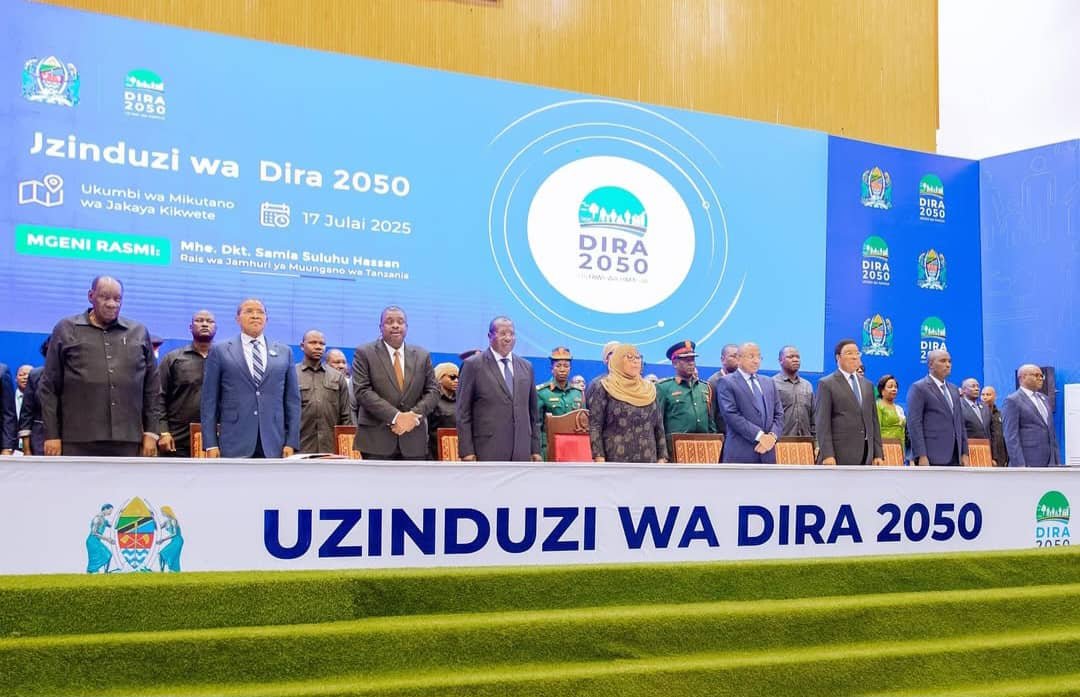
Tanzania's Long Term Perspective Plan 2026/27–2050/51 attempts to address that specific problem directly. It establishes a single national framework meant to guide the country's economic transformation for 25 years, aligning every Five Year Development Plan within that horizon toward one long-term destination rather than treating each as a standalone programme. That structural choice may end up being one of the more significant institutional reforms inside Vision 2050, even though it gets less attention than the trillion-dollar target.
The five-year trap
Infrastructure is rarely completed within a single political cycle. Industrialisation takes decades. Universities take generations to produce scientists and engineers at scale. Cities evolve over half a century. Yet development planning across much of Africa has tended to follow electoral calendars rather than these economic realities, with each new administration launching new priorities, renaming projects, adjusting policy and reorganising institutions in ways that fragment progress rather than accumulate it.
Vision 2050 is designed to break that specific cycle. Instead of letting each Five Year Development Plan operate as an independent programme competing with its predecessor for relevance, the Long Term Perspective Plan makes each one a deliberate building block toward a single national objective that spans well beyond any one government's term.
Separating national strategy from political cycles
One of the plan's clearest structural messages is that development should outlive the governments implementing it. The Long Term Perspective Plan sets the long-term destination. Five Year Development Plans become implementation phases within it, not independent strategies. Annual budgets become financing instruments for that longer plan rather than standalone fiscal exercises. The newly launched National Framework for Delivery and Performance Management of Development Plans provides the monitoring system tracking implementation across successive administrations, which is the mechanism meant to hold the whole structure together across leadership changes.
Together, this creates something Tanzania hasn't had at this scale before: a development architecture explicitly built to survive political transition rather than reset with it.
Building in layers across generations
Viewed through this framework, Vision 2050 resembles the construction of a cathedral more than a building: one generation lays foundations, the next expands infrastructure, another strengthens industries, another develops research institutions, another commercialises innovation, each contributing to the same national project rather than starting a new one.
That's the pattern behind most countries that industrialised successfully. Japan's transformation lasted decades. South Korea's industrial rise extended across multiple governments. China's economic reforms evolved over forty years. Singapore's logistics strategy took generations to mature fully. None of these were completed inside a single administration's term, and Vision 2050's structure reflects the same underlying philosophy rather than assuming Tanzania can compress that timeline.
Predictability as an investment strategy
Long-term planning changes investor behaviour in a specific, practical way. Businesses rarely commit billions of dollars based on short-term policy announcements that might reverse with the next election. They invest when they believe national priorities will hold. Manufacturers planning factories meant to operate for thirty years need confidence that transport corridors, electricity systems, industrial zones and regulatory institutions will keep expanding along the timeline the investment assumes.
Vision 2050 attempts to supply that confidence by defining Tanzania's long-term direction explicitly, reducing uncertainty about where the country intends to invest over the coming decades. For investors weighing where to commit long-horizon capital, that predictability often matters as much as any tax incentive on offer.
Institutions outweighing individuals
A further consequence of genuine long-term planning is that institutions gradually matter more than the individuals occupying office at any given moment. Development stops depending primarily on who holds public office and starts depending on whether institutions keep implementing agreed national priorities regardless of who's in charge. That's the specific logic behind pairing the vision with a national delivery framework built around performance indicators, scorecards, digital monitoring and institutional accountability: strong institutions are what let a strategy outlive any single leader who championed it.
The harder part is discipline, not drafting
Writing a 25-year strategy is comparatively easy. Following it consistently is considerably harder. Economic shocks will happen. Governments will change. Technologies will evolve in ways the plan didn't anticipate. Regional competition will intensify. Future administrations will inevitably face pressure to introduce new priorities that pull attention away from the existing plan.
Vision 2050's success will depend less on the quality of the document itself and more on Tanzania's ability to maintain strategic discipline across decades despite all of that pressure. Countries that industrialise successfully rarely cycle through dozens of different visions. They pursue one vision consistently, adjusting execution without abandoning the underlying direction.
Planning like an emerging industrial economy
The most important signal inside Vision 2050 may not be the trillion-dollar target at all. It may be the underlying belief that national transformation requires patient, sequential, coordinated planning extending well beyond electoral cycles. That philosophy places Tanzania closer to the long-term planning traditions of several successful emerging economies than to the shorter policy cycles common across much of the developing world.
Whether that philosophy actually succeeds depends entirely on implementation over the next 25 years. But the institutional ambition behind attempting it at all is notable on its own terms, independent of whether every target gets hit.
The Uchumi360 insight
The greatest strength of Vision 2050 may not be what it plans to build. It may be the amount of time it's given itself to build it. Countries rarely become prosperous because they think five years ahead. They become prosperous because they keep building toward the same future for 25 years without losing sight of it along the way.
FAQ
What problem is the Long Term Perspective Plan trying to solve? The tendency for African development planning to follow five-year electoral cycles rather than the multi-decade timelines industrialisation actually requires, fragmenting progress across successive governments.
How do Five Year Development Plans fit into this structure? They become implementation phases within the 25-year Long Term Perspective Plan, rather than independent strategies each administration designs from scratch.
Which countries followed a similar long-term planning approach? Japan, South Korea, China and Singapore all industrialised across decades and multiple governments rather than within single administrations.
Why does long-term planning matter to investors specifically? Because long-horizon investment, factories built to run thirty years, depends on confidence that national priorities and infrastructure plans will remain stable, which is what a 25-year framework is designed to signal.
 Uchumi360
Business Intelligence
Uchumi360
Business Intelligence
Uchumi360 covers business, investment, and economic policy across East, Central, and Southern Africa.
For the serious reader
You read to the end. That places you in a small group.
Uchumi360 is built for readers who demand precision over speed, structure over sentiment, and analysis that holds uncomfortable conclusions rather than softening them. If this work sharpens how you think about Africa's economy, help us keep building the infrastructure behind it.
Institutional Partners
Commission intelligence. Shape the conversation.
Uchumi360 works with development finance institutions, investment firms, sovereign bodies, and strategic organisations across the coverage region. Institutional partnership unlocks:
- Commissioned sector and country intelligence reports
- Branded research series under your institution's authority
- Exclusive data briefings for internal strategy teams
- Speaking and editorial presence at Uchumi360 events
- Co-published investment outlooks for your markets
Support Our Work
Independent analysis has a cost. Help us bear it.
Uchumi360 does not carry advertising. It does not take editorial direction from sponsors. Every article is produced without commercial compromise. Your contribution funds the reporting, research, and editorial infrastructure that keeps this analysis free from influence.
Secure checkout: One-time and monthly support are processed securely. Add payment credentials to enable checkout here.
Stay Connected
Keep up with every new insight.
Follow our latest analysis, policy coverage, and market intelligence as soon as it is published. If you need something specific, reach out directly and we will point you to the right research.
