
Tanzania Cannot Reach a USD 1 Trillion Economy While Importing Most of What It Consumes. The Structure Must Change Before the Target Becomes Credible.
Ready
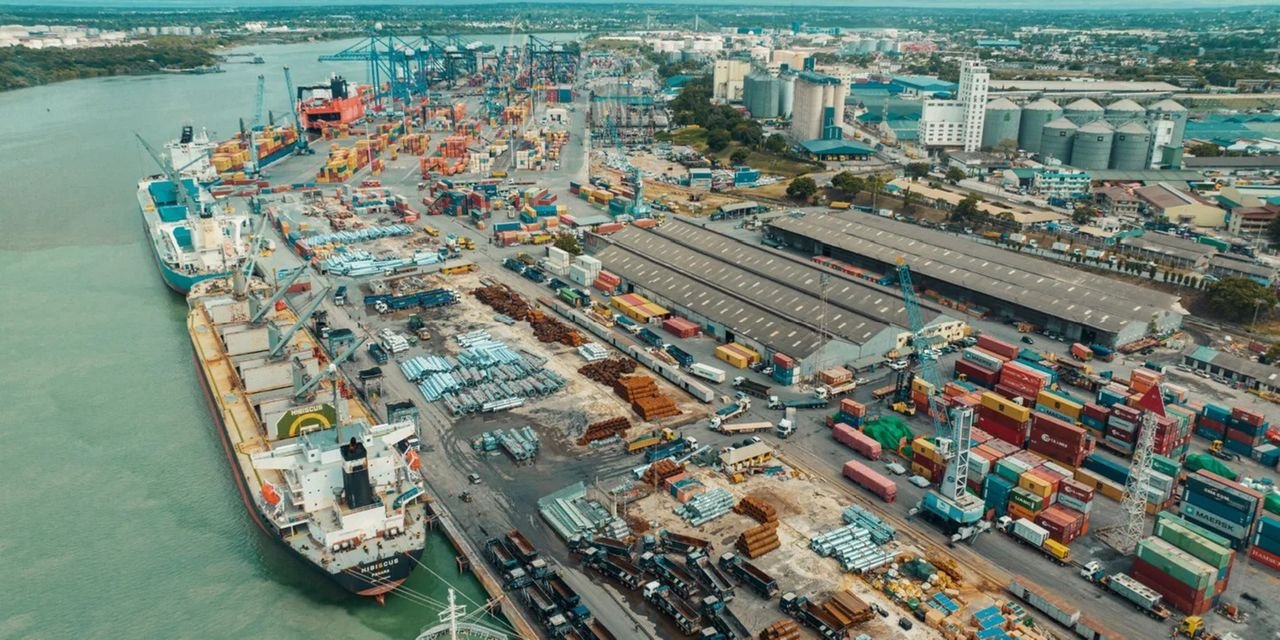
Tanzania's ambition of becoming a USD 1 trillion economy by 2050 is economically possible under one condition that the national development conversation is not yet confronting with sufficient analytical honesty: the country must fundamentally change the structure of what it produces. Infrastructure expansion alone will not create a trillion-dollar economy. Population growth alone will not. Digital transformation alone will not. Natural resources alone will not. A trillion-dollar economy requires productive depth, and productive depth is structurally impossible if Tanzania continues importing most of the goods it consumes while exporting primarily raw materials and low-complexity products outward, because a country that imports most of what it consumes is effectively exporting the jobs, engineering capability, industrial learning, technological accumulation, and manufacturing margins that large economies require to function sustainably. The uncomfortable gap between Tanzania's stated ambition and its current productive structure is not a planning failure. It is a sequencing failure, and the sequence must begin with industrial production before the target becomes structurally credible rather than rhetorically ambitious.
Tanzania's ambition of becoming a USD 1 trillion economy by 2050 is economically possible, and the infrastructure investment, energy expansion, and regional logistics development that Uchumi360 has documented across its 2026 coverage provides genuine evidence that the physical foundation for that ambition is being constructed more seriously than at any previous point in Tanzania's modern economic history. But the ambition's credibility depends on a condition that the national development conversation is not yet confronting with the analytical honesty its structural implications demand: the country must fundamentally change the structure of what it produces. Infrastructure expansion alone will not create a trillion-dollar economy. Population growth alone will not. Digital transformation alone will not. Natural resources alone will not. A trillion-dollar economy requires productive depth, and productive depth is structurally impossible if Tanzania continues importing most of the goods it consumes while exporting primarily raw materials and low-complexity products outward, because an economy that imports most of what it consumes is effectively exporting the jobs, engineering capability, industrial learning, technological accumulation, and manufacturing margins that distinguish production economies from consumption economies whose GDP reflects the value created elsewhere and distributed domestically rather than the value created and retained within the economy's own productive system.
According to Bank of Tanzania economic data, Tanzania's manufacturing sector contributes approximately 8 to 9% of GDP, far below the 20 to 30% manufacturing share historically associated with the rapid middle-income transitions that Vision 2050's USD 1 trillion target implies as the structural destination. According to the United Nations Industrial Development Organisation's data, Africa as a whole accounts for less than 3% of global manufacturing output despite representing approximately 18% of the global population, a divergence that persists across economies at different institutional development levels and that reflects structural patterns in how capital is allocated rather than any deficiency in entrepreneurial capability or market demand. Tanzania's population is expanding rapidly, urbanisation is accelerating, consumer markets are growing, and the infrastructure investment programme that the SGR, port modernisation, and energy expansion represent is creating the logistics and energy foundation that industrial production requires. Demand conditions are becoming stronger. But a large economy cannot emerge sustainably if production capacity consistently lags behind consumption growth, because the gap between consumption and domestic production is filled by imports whose expansion imposes foreign exchange pressure, limits domestic industrial learning, and channels the manufacturing margins and engineering capability accumulation that productive depth generates into the external economies that supply the imports rather than into Tanzania's own productive system.
Why consumption growth without production growth undermines the trillion-dollar target
The structural dynamic that makes Tanzania's import-consumption pattern incompatible with the trillion-dollar ambition is not primarily a trade balance accounting issue but a productive complexity generation issue whose consequences compound over the multi-decade horizon that Vision 2050 encompasses. According to Harvard Growth Lab Economic Complexity Index research, economies become wealthy not by producing more things but by producing more sophisticated things whose manufacture generates the engineering learning, supply chain depth, quality management institutional development, and technical workforce capability that compound into the productive sophistication that sustains high income levels across economic cycles rather than depending on commodity price conditions or external capital inflows. An economy importing most manufactured goods effectively outsources this complexity generation to the manufacturing economies that supply the imports, leaving the domestic economy as a distribution channel for foreign productive systems rather than as a productive system in its own right.
The foreign exchange dimension of import dependence is the most immediately visible constraint, but it is not the deepest one. According to Bank of Tanzania balance of payments data, Tanzania's current account position reflects the structural gap between export earnings concentrated in raw material categories and import expenditure concentrated in manufactured goods, machinery, and industrial inputs, a pattern whose sustainability depends on the external capital inflows and commodity price conditions that have supported it rather than on the domestic productive capacity that would allow it to adjust without external financing. According to IMF research on structural transformation and current account sustainability across developing economies, countries whose import dependence is structural rather than cyclical face recurrent foreign exchange pressure whose resolution through currency adjustment imposes inflation costs on domestic consumers and increases the cost of the machinery imports that industrial investment requires, creating a self-reinforcing cycle in which import dependence makes the industrial investment required to reduce import dependence more expensive. Tanzania cannot reach USD 1 trillion while importing most of what it consumes not only because the arithmetic of the trade balance constrains external account sustainability, but because the productive learning that manufacturing generates is the mechanism through which the economy develops the complexity required to sustain income at the trillion-dollar level without the commodity price dependence and external capital dependence that extraction and trade-oriented growth consistently create.
What Tanzania's import composition reveals about the industrial opportunity
Tanzania imports substantial volumes of products that could theoretically be produced domestically with sufficient industrial coordination and policy alignment, and the import composition is analytically important because it identifies the specific categories where domestic production capacity development would simultaneously reduce import dependence, generate domestic industrial learning, create formal wage employment, and build the supply chain relationships that industrial clustering produces. According to Tanzania Revenue Authority import statistics, construction materials, processed foods, fertilisers, industrial chemicals, packaging materials, consumer products, machinery components, pharmaceuticals, and manufactured household goods constitute significant shares of Tanzania's import bill, each representing a category where domestic demand is established, where the transport cost and logistics infrastructure improvements that the SGR and port modernisation are delivering improve the relative economics of domestic production versus importation, and where the energy foundation that the Julius Nyerere Hydropower Project has strengthened makes production economically viable for manufacturing operations that were energy-constrained in the previous generation of the country's industrial development.
Fertiliser production is among the most immediately compelling import substitution opportunities, because Tanzania's natural gas reserves provide the nitrogen feedstock that urea and ammonia fertiliser manufacturing requires, and because the agricultural sector's fertiliser import dependence creates a direct pathway between domestic fertiliser production and the food security, agricultural productivity, and rural income objectives that development policy consistently identifies as priorities. According to the Tanzania Petroleum Development Corporation, Tanzania holds approximately 57 trillion cubic feet of proven natural gas reserves, and the Mtwara to Dar es Salaam pipeline infrastructure provides the physical basis for connecting gas supply to industrial chemical production without the additional infrastructure investment that starting from zero would require. A Tanzanian fertiliser production facility using domestic natural gas feedstock would simultaneously reduce the fertiliser import bill, improve agricultural input price stability for smallholder farmers whose fertiliser costs track international commodity prices rather than domestic production costs, and generate the industrial chemical engineering capability whose adjacent applications extend to petrochemicals, pharmaceuticals, and industrial materials processing.
Processed food manufacturing represents a second immediately actionable import substitution category whose domestic demand scale, existing distribution infrastructure, and agricultural raw material supply make industrial investment commercially viable with policy support that removes the comparative profitability advantage that fully manufactured imports currently hold over domestically produced alternatives. Tanzania's agricultural sector produces the raw material inputs for processed food categories including vegetable oils, grain products, dairy, fish products, and horticultural value-added goods, but the majority of processing that converts those agricultural outputs into consumer-ready products occurs in importing countries whose food manufacturing industries capture the margin that domestic processing would retain. Construction materials, including cement, steel, basic chemicals, and building products whose production economics improve significantly with reliable energy access and logistics infrastructure, represent a third category whose import substitution potential is substantial and whose domestic demand from the infrastructure investment programme itself, the SGR construction, the port expansion, the energy infrastructure development, creates anchor demand that reduces the market risk component of domestic production investment.
The regional comparison that identifies Tanzania's relative position
The East African regional comparison situates Tanzania's productive structure challenge within a pattern that confirms its structural character while also identifying the policy differentiations whose outcomes demonstrate that the pattern is not immutable. Kenya's manufacturing sector contributes approximately 7 to 8% of GDP according to Kenya National Bureau of Statistics data, below Tanzania's despite Kenya's more developed financial system, deeper capital markets, and more active investment ecosystem, confirming that financial sophistication without industrial policy alignment does not automatically generate manufacturing depth. Rwanda's Vision 2050 equivalent, the National Strategy for Transformation, identifies manufacturing and industrial processing as explicit priorities backed by Rwanda Development Bank financing instruments whose long-tenor lending terms are better calibrated to industrial investment requirements than commercial banking alternatives, and the RDB's Annual Report 2025 documents manufacturing employment multipliers that confirm the sector's disproportionate contribution to formal employment relative to its GDP share. Ethiopia's industrial park strategy, executed through Hawassa and successor facilities according to Ethiopian Investment Commission data, demonstrates that deliberate anchor manufacturing investment generates the supplier development, logistics demand, and technical workforce development that industrial complexity requires, though political economy disruption has limited the strategy's ability to sustain the momentum that the initial industrial park development generated.
Uganda's manufacturing sector, contributing below 10% of GDP according to Uganda Bureau of Statistics data, reflects the same structural constraint that Tanzania faces: abundant natural resources coexisting with manufacturing underdevelopment because the industrial policy, patient capital deployment, and financial system alignment required to convert resource endowment into manufacturing depth have not been consistently applied at the required scale or across the required horizon. Zambia's experience is the regional cautionary case: copper export revenues that have fluctuated with commodity price cycles without generating the downstream manufacturing and processing investment that would have converted mineral wealth into industrial complexity, producing the debt sustainability challenges and economic vulnerability that commodity-dependent growth without productive diversification consistently generates across the multi-decade horizon that Vision 2050 encompasses for Tanzania.
Why the policy alignment question cannot be deferred
The policy alignment that production-led growth requires, across finance, industrial strategy, energy pricing, procurement, and technical education simultaneously, is the decision Tanzania has not yet made with the comprehensive commitment that its productive structure ambitions demand, and the deferral of that decision becomes more costly with each year that the consumption-production gap widens and the window created by the current infrastructure investment and resource endowment opportunity narrows. Factories do not emerge automatically from market demand alone. They emerge when productive investment becomes systematically safer and more profitable than import dependency, which requires the deliberate alteration of the incentive structures that currently make importing more financially rational than manufacturing for the traders, investors, and entrepreneurs whose capital allocation decisions collectively determine whether Tanzania's productive structure changes or remains concentrated at the commercial and extractive layers of the economy.
According to Tanzania's Public Procurement Act, procurement preferences for locally manufactured goods are legally permissible within defined parameters, and their systematic application across government purchasing of construction materials, food products, pharmaceuticals, and basic manufactured goods would create domestic demand anchors that reduce the revenue uncertainty during the early production phase that most discourages manufacturing investment. Industrial energy pricing for manufacturing facilities in designated industrial zones, calibrated to the cost structure of Tanzania's now substantial hydropower generation rather than to the full cost recovery tariff that applies to commercial and residential consumers, would directly reduce the energy cost component of manufacturing economics that import competition does not face because its production energy costs are embedded in the import price. The EAC Common External Tariff framework's provisions for sensitive product protection create the policy space for transitional tariff measures that make specific domestic manufacturing categories commercially viable during the industrial learning phase without requiring unilateral departures from Tanzania's regional trade commitments.
The Development Bank of Tanzania's industrial lending capacity, the pension sector's long-horizon capital deployment toward manufacturing investment, and the blended finance structures that combine concessional first-loss capital with commercial bank lending toward industrial transactions all represent financial system components whose strategic alignment toward manufacturing production would alter the capital allocation calculus that currently directs entrepreneurial energy toward importation rather than production. Tanzania's entrepreneurs are not the constraint, as Uchumi360's May 2026 analysis of the industrial capital challenge documented: the commercial capability, market knowledge, and distribution infrastructure that the trading class has accumulated represents precisely the foundation that manufacturing investment requires as its commercial complement, and converting that foundation into productive industrial activity requires the financial system alignment and policy environment whose deliberate construction is the decision Tanzania has not yet made with the urgency that the trillion-dollar target demands.
Large economies are not built by how much they buy. They are built by how much they know how to make, and Tanzania's current productive structure answers that question in a way that is incompatible with the ambition it has formally committed to. The infrastructure investment is real. The energy surplus is real. The mineral endowment is real. The entrepreneurial energy is real. What must become equally real is the systematic policy commitment to domestic production capacity that every economy which crossed into major economic power status built before or during that transition rather than attempting to arrive at the destination without completing the journey.
FAQ
Why is the trillion-dollar target incompatible with Tanzania's current productive structure? Because a trillion-dollar economy requires productive depth, meaning the ability to produce sophisticated goods domestically at scale, and productive depth is structurally impossible if Tanzania continues importing most of what it consumes. According to Bank of Tanzania data, manufacturing contributes approximately 8 to 9% of GDP, far below the 20 to 30% associated with rapid middle-income transitions. An economy whose consumption consistently exceeds domestic production exports the industrial learning, engineering capability, and manufacturing margins that large economies require to the external economies supplying its imports rather than retaining them within its own productive system.
What specific import categories represent the most actionable domestic production opportunities? Construction materials, processed foods, fertilisers, industrial chemicals, packaging materials, pharmaceuticals, and manufactured household goods all represent categories where domestic demand is established, transport cost improvements from the SGR and port modernisation improve domestic production economics, and Tanzania's energy surplus makes manufacturing investment viable. Fertiliser production using domestic natural gas is among the most immediately compelling because the feedstock advantage is substantial and the agricultural sector impact is direct. Processed food manufacturing converting Tanzania's agricultural output into consumer-ready products captures processing margin currently accruing to importing country food manufacturers.
How does import dependence constrain the trillion-dollar target beyond trade balance accounting? According to IMF research on structural transformation, countries whose import dependence is structural face recurrent foreign exchange pressure whose resolution through currency adjustment increases machinery import costs, making the industrial investment required to reduce import dependence more expensive. More fundamentally, according to Harvard Growth Lab Economic Complexity Index research, manufacturing generates industrial learning, supply chain depth, and engineering capability accumulation that compounds into productive sophistication over time. An economy outsourcing most manufacturing to importing economies outsources this complexity generation, leaving the domestic economy as a distribution channel for foreign productive systems rather than as a productive system generating sustainable income growth.
What policy alignment is required to shift Tanzania's productive structure? Simultaneous alignment across finance, industrial strategy, energy pricing, procurement, and technical education. The Development Bank of Tanzania's industrial lending capacity requires expansion. Pension fund capital requires regulatory framework evolution allowing long-horizon manufacturing investment. Procurement preferences for locally manufactured goods under Tanzania's Public Procurement Act should be systematically applied. Industrial energy pricing for manufacturing facilities in designated zones should be calibrated to hydropower generation costs. Transitional tariff protection for specific domestic manufacturing categories within EAC framework provisions creates the market space that early-stage manufacturing requires to develop competitive cost structures before being exposed to full import competition.
How does Tanzania's situation compare to regional peers? Kenya's manufacturing contributes approximately 7 to 8% of GDP despite more developed financial markets, confirming that financial sophistication without industrial policy alignment does not generate manufacturing depth. Rwanda's industrial policy explicitly prioritises manufacturing through RDB financing instruments calibrated to industrial investment requirements. Ethiopia's industrial park strategy demonstrated that anchor manufacturing investment generates supplier development and technical workforce development that industrial complexity requires. Zambia's copper export dependence without downstream manufacturing investment is the cautionary regional case: commodity revenue without productive diversification produces debt vulnerability and economic fragility across the multi-decade horizon that Vision 2050 encompasses for Tanzania.
 Uchumi360
Business Intelligence
Uchumi360
Business Intelligence
- Bank of Tanzania, economic data on manufacturing sector GDP share and balance of payments data
- Available at bot.go.tz
- United Nations Industrial Development Organisation, World Manufacturing Production statistics
- Africa manufacturing below 3% of global output
- Available at unido.org
- Harvard Growth Lab, Economic Complexity Index
- Productive complexity and income relationship research
- Available at growthlab.hks.harvard.edu
- IMF, research on structural transformation and current account sustainability across developing economies
- Available at imf.org
- Tanzania Revenue Authority, import statistics by category
- Available at tra.go.tz
- Tanzania Petroleum Development Corporation, natural gas reserve data
- Available at tpdc.go.tz
- Tanzania Electric Supply Company, operational records
- 4,000 MW capacity figure
- Available at tanesco.co.tz
- Standard Chartered Bank, SGR financing announcement, 28 April 2026
- Available at sc.com
- Kenya National Bureau of Statistics, manufacturing GDP share data
- Available at knbs.or.ke
- Rwanda Development Board, Annual Report 2025
- Manufacturing employment multipliers and RDB financing instruments
- Available at rdb.rw
- Ethiopian Investment Commission, Hawassa Industrial Park and successor facility data
- Available at invest.gov.et
- Uganda Bureau of Statistics, manufacturing GDP share data
- Available at ubos.org
- Tanzania Public Procurement Act and associated procurement preference regulations
- Available at ppra.go.tz
- Korean Development Institute, South Korea industrialisation and manufacturing GDP trajectory
- Available at kdi.re.kr
- National Bureau of Statistics of China, manufacturing GDP and industrial development data
- Available at stats.gov.cn
Uchumi360 covers business, investment, and economic policy across East, Central, and Southern Africa.
For the serious reader
You read to the end. That places you in a small group.
Uchumi360 is built for readers who demand precision over speed, structure over sentiment, and analysis that holds uncomfortable conclusions rather than softening them. If this work sharpens how you think about Africa's economy, help us keep building the infrastructure behind it.
Institutional Partners
Commission intelligence. Shape the conversation.
Uchumi360 works with development finance institutions, investment firms, sovereign bodies, and strategic organisations across the coverage region. Institutional partnership unlocks:
- Commissioned sector and country intelligence reports
- Branded research series under your institution's authority
- Exclusive data briefings for internal strategy teams
- Speaking and editorial presence at Uchumi360 events
- Co-published investment outlooks for your markets
Support Our Work
Independent analysis has a cost. Help us bear it.
Uchumi360 does not carry advertising. It does not take editorial direction from sponsors. Every article is produced without commercial compromise. Your contribution funds the reporting, research, and editorial infrastructure that keeps this analysis free from influence.
Secure checkout: One-time and monthly support are processed securely.
Stay Connected
Keep up with every new insight.
Follow our latest analysis, policy coverage, and market intelligence as soon as it is published. If you need something specific, reach out directly and we will point you to the right research.
