
Tanzania Launches New Industrial Policy, Targeting Microchips, Vehicle and Defence Manufacturing
Ready
Tanzania has identified semiconductor production, vehicle manufacturing, defence equipment, industrial machinery and critical mineral processing among its strategic industrial priorities under the Sustainable Industrial Development Policy of 2025. The government aims to develop advanced manufacturing capabilities and increase domestic production of industrial inputs, building on a sector that contributed 7% of GDP in 2023. The policy also records the expansion of formal factory employment and existing processing capacity while acknowledging continued dependence on imported machinery, technology, chemicals and other manufactured products.
Tanzania has identified microchip production, vehicle manufacturing, defence equipment, industrial machinery and critical mineral processing among its strategic industries under the Sustainable Industrial Development Policy of 2025, as the government seeks to expand manufacturing beyond its reported 7% contribution to GDP in 2023. The policy introduces a new industrial development framework aligned with Tanzania's National Development Vision 2050, prioritising advanced manufacturing, domestic processing of raw materials and industries capable of supplying inputs to other sectors.
Tanzania has adopted a new industrial development policy that identifies semiconductor production, vehicle manufacturing, defence equipment, chemicals, industrial machinery and critical mineral processing among the industries the government intends to develop as part of its long term economic strategy. The Sustainable Industrial Development Policy of 2025, issued by the Ministry of Industry and Trade, replaces the country's 1996 to 2020 industrial framework and establishes priorities intended to increase the manufacturing sector's contribution to national output, employment, exports and domestic production of industrial goods. The policy places greater emphasis on industries capable of producing intermediate goods, machinery and technologies used by other manufacturers, reflecting the government's ambition to expand Tanzania's participation in higher value industrial activities.
The policy also provides a detailed assessment of Tanzania's industrial performance over the previous three decades, recording an increase in manufacturing's contribution to GDP from 1.1% in 1996 to 7.0% in 2023. The value of manufactured output rose from TZS 254.3 billion in 1996 to approximately TZS 13.18 trillion in 2023, while employment in formal manufacturing establishments with more than ten workers increased from 63,317 people in 1999 to 374,485 in 2022. These figures demonstrate the expansion of the country's manufacturing activities since the introduction of the earlier policy, although the government acknowledges that Tanzania continues importing substantial quantities of machinery, industrial equipment, chemicals, medical products and other manufactured goods that could form part of a more developed domestic industrial base.
The new policy introduces a more explicit focus on industries that can influence the productive capacity of the wider economy. Manufacturers of machinery, electronic components, chemicals and industrial equipment supply essential inputs to other businesses, allowing them to increase production, improve efficiency and develop products that would otherwise depend on imported components. The government also identifies mineral processing as a priority, particularly as Tanzania seeks to increase the domestic value generated from its iron ore, nickel, graphite and other mineral resources. These priorities establish the basis for a manufacturing strategy in which industrial investment is expected to contribute beyond the immediate output of individual factories by supporting production across agriculture, mining, construction, transport, energy and related sectors.
Tanzania Identifies Microchips, Vehicles and Defence Equipment as Strategic Industries
The government's definition of strategic industries provides an indication of the type of industrial investment being prioritised. According to the policy, strategic industries include those producing goods used in the manufacture of other products, industries capable of generating at least 2,000 direct jobs, activities involved in adding value to rare minerals and industries whose products are predominantly intended for export, with the definition identifying an export threshold exceeding 80% of output. These characteristics provide the framework through which the government intends to distinguish strategically important manufacturing activities from other forms of industrial production.
The priority industries identified in the policy include the design and manufacture of machinery and equipment, production of essential chemicals, microchip manufacturing, processing of rare minerals, textile and garment production, manufacture of defence equipment and vehicle manufacturing. The document also identifies opportunities in pharmaceutical production, medical equipment, electronics, communications equipment, machinery incorporating artificial intelligence, agricultural implements and equipment used in processing agricultural, livestock, fishery and forestry products. The breadth of these activities demonstrates the government's intention to expand Tanzania's industrial capabilities into sectors that require more specialised production technologies, technical expertise and capital investment than conventional processing industries.
Semiconductor manufacturing represents one of the more technologically demanding priorities included in the policy. Microchips are used in telecommunications equipment, vehicles, computers, industrial control systems, medical devices and other electronic products, making semiconductor technology an input into a wide range of modern manufacturing activities. Establishing semiconductor production requires specialised industrial infrastructure, highly trained engineers, access to technical knowledge, reliable electricity, substantial investment and commercial relationships with producers and customers within international supply chains. The policy identifies microchips as a strategic industry but does not announce a specific semiconductor fabrication project, investment amount, production capacity or implementation timetable.
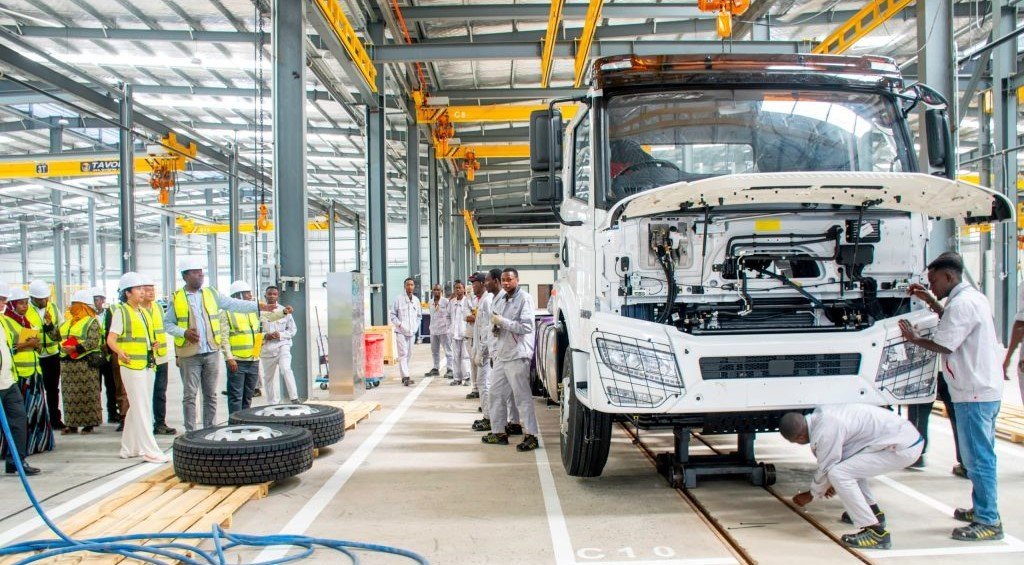
Vehicle manufacturing is another identified priority, building on industrial activities already established in Tanzania. According to the government's assessment, 13 vehicle assembly establishments were developed during the implementation of the previous industrial policy, including 11 involved in assembling freight trailers and two assembling goods vehicles such as trucks and tippers. The distinction illustrates the existing structure of Tanzania's vehicle assembly industry, where activity has concentrated on particular commercial transport products rather than comprehensive domestic manufacture of passenger vehicles, engines, electronic systems and automotive components.
Expanding from vehicle assembly into more extensive automotive manufacturing would require increased local production of components, machinery, metal products, electrical systems and other inputs. The economic contribution of vehicle manufacturing is influenced by the proportion of materials and components sourced domestically, the scale of production and the ability of manufacturers to serve markets beyond the country in which the assembly plant operates. Tanzania's proposed emphasis on machinery, metals, chemicals and electronic components could therefore contribute to the development of automotive manufacturing capabilities where investments are coordinated across related industries.
The inclusion of defence equipment reflects another category of strategic industrial production. The policy identifies the manufacture of defence equipment among industries that the government intends to develop, alongside sectors associated with national security and advanced technology. Such manufacturing can involve engineering, metal fabrication, electronics, specialised materials and other technical capabilities that overlap with civilian industrial production. The document establishes the sector as a policy priority without identifying specific new defence manufacturing facilities or approved investment projects.
Manufacturing Contributed 7% of GDP in 2023 Despite Expansion in Industrial Output
The government's industrial ambitions emerge from an economy in which manufacturing has expanded substantially in nominal output and employment but continues to account for a relatively modest share of total GDP. The 2025 policy records that manufacturing's GDP contribution increased from 1.1% in 1996 to 7.0% in 2023, while the reported value of manufactured goods rose from TZS 254.3 billion to approximately TZS 13.18 trillion over the same period. The increase in monetary output reflects the expansion of industrial activity over nearly three decades, although the figures are reported in the policy without a constant price adjustment and therefore should not be interpreted as measuring an equivalent increase in real manufacturing output.
The document also records an increase in formal manufacturing employment among establishments with more than ten workers, from 63,317 employees in 1999 to 374,485 in 2022. This represents substantial growth in industrial employment, particularly as production expanded across food processing, textiles, construction materials, sugar, cement, leather and other manufacturing activities. Nevertheless, the policy identifies limited industrial employment as an ongoing concern, reporting a national labour force of approximately 25.86 million people and indicating that only about 4% were employed in industrial activities under the measure used in its assessment.
The gap between manufacturing's economic potential and the employment currently generated by the sector has implications for Tanzania's long term development priorities. Industrial production can support higher productivity by allowing workers to operate machinery, produce larger quantities of goods and participate in more specialised production processes. Manufacturing also creates demand for transport, packaging, maintenance, professional services and other supporting activities, allowing industrial investment to generate economic activity beyond factory premises. The scale of these benefits depends on the industrial products being manufactured, domestic sourcing arrangements, investment in technology and the ability of businesses to compete in domestic and export markets.
The government's earlier industrial development programme recorded several investments in processing and manufacturing capacity. According to the 2025 policy, eight textile and garment factories were established, with reported annual capacity to spin 36,742 tonnes of yarn, weave 145 million metres of fabric, knit 7,920 tonnes and produce 43 million garments. Three sugar factories were established and four improved, with combined annual production capacity of approximately 460,200 tonnes. The cement industry recorded 11 new factories and improvements to three existing facilities, providing reported combined production capacity of approximately 9.11 million tonnes annually. Additional investments included leather processing, fish processing, edible oil production, fertiliser manufacturing, glass production and marble processing.
These investments demonstrate the diversity of Tanzania's existing industrial activities, particularly in sectors that process agricultural commodities, mineral resources and construction materials. However, the government acknowledges that the country continues exporting relatively limited quantities of value added products and experiences inefficiencies in processing resources from agriculture, livestock, fisheries, mining and forestry. The policy attributes these problems partly to shortages of specialised skills, inadequate industrial infrastructure and limited access to capital, all of which influence the ability of manufacturing businesses to increase output and develop products with greater commercial value.
The distinction between processing raw materials and manufacturing more sophisticated products is central to Tanzania's industrial strategy. A country may possess substantial agricultural or mineral resources while still importing machinery, equipment, chemicals and components used to process those resources. For example, a manufacturing industry that produces construction materials may still depend on imported specialised machinery and replacement parts, while agricultural processing factories may require foreign equipment for packaging, refrigeration, milling and quality control. Developing domestic production capabilities in machinery and industrial inputs can reduce some of these dependencies while creating additional opportunities for engineering services, technical employment and local suppliers.
Critical Minerals and Industrial Machinery Become Central to Tanzania's Manufacturing Strategy
Tanzania's mineral resources occupy an important position in the new policy because the government intends to increase domestic processing and develop industries that use locally available raw materials. The document identifies iron ore, nickel and graphite among the resources that could support industrial development, alongside agricultural commodities, livestock products, forestry resources and other materials. The emphasis on mineral processing reflects the commercial value of moving beyond the extraction and export of raw resources towards the manufacture of intermediate and finished industrial products.
The opportunities identified by the government include production of iron and steel, stainless steel, industrial machinery, chemicals, components for energy generation and other materials required by manufacturers. Iron and steel production can support the manufacture of construction materials, machinery, vehicles and engineering equipment, while nickel and graphite have applications in industrial processing and certain battery technologies. Developing these industries would increase the range of products Tanzania can manufacture domestically and potentially strengthen commercial connections between mining companies and other industrial producers.
The policy refers to the Mchuchuma and Liganga integrated iron and steel development project and the Engaruka soda ash project among strategic industrial initiatives pursued under the earlier framework. These projects illustrate the government's longstanding interest in developing industries that produce basic materials used by other manufacturers. Iron and steel are inputs into construction, transport equipment, machinery and numerous industrial products, while soda ash is used in glass manufacturing, chemicals and other processing industries. The government places these activities within a broader strategy of building industrial capacity through the development of locally available natural resources.
The commercial value of these investments extends into the structure of Tanzania's manufacturing supply chains. A machinery manufacturer, for example, requires access to suitable metals, precision engineering equipment, skilled technicians, reliable power and customers with sufficient demand for the products. A vehicle assembly operation requires components, spare parts, maintenance services, transport infrastructure and access to markets capable of supporting sustained production. Where these inputs are imported individually, the cost and complexity of manufacturing may remain high despite the presence of a domestic factory. Increasing local production of industrial inputs can reduce some of these costs and provide additional markets for domestic suppliers.
The government's focus on machinery manufacturing also reflects efforts to develop existing industrial institutions. The policy reports improvements at the Kilimanjaro Machine Tools Company, including the development of capabilities to manufacture machinery for processing forestry, agricultural and livestock products and produce selected components for mining and construction equipment. It also records the rehabilitation of six SIDO technology development centres and a TEMDO workshop, with modern equipment installed to support the manufacture of machinery used in agriculture, construction and mineral processing. These investments provide an existing institutional foundation for the government's wider objective of developing industrial engineering and technology capabilities.
However, the policy acknowledges that existing strategic industries continue relying on older technologies, limiting their ability to compete with products manufactured in more technologically advanced markets. It identifies inadequate capital, specialised skills and industrial infrastructure as additional constraints, while continued dependence on imported machinery, replacement parts, pharmaceuticals, medical equipment and other industrial products demonstrates the scale of manufacturing activities that remain outside Tanzania's domestic production capacity. The revised framework therefore places greater emphasis on technological development, industrial research and the establishment of industries capable of supplying more complex goods.
Industrial Financing, Research and Export Markets Will Shape Implementation
The new policy identifies access to industrial financing as an essential requirement for expanding manufacturing capacity and establishing strategic industries. It commits the government, working with other stakeholders, to facilitating financing for industrial development through an Industrial Development Fund and other sources, alongside investment in appropriate infrastructure, skilled labour and protection of invested capital through insurance arrangements. These commitments recognise the financial requirements of industries that must purchase expensive equipment, construct specialised facilities and develop technical expertise before they can begin commercial production.
The capital requirements of strategic industries differ considerably from those of smaller processing businesses. Semiconductor production, industrial chemical manufacturing, vehicle manufacturing and advanced machinery production can require substantial investment in equipment, quality assurance, engineering systems and research. Their commercial viability depends on reaching production volumes sufficient to recover these costs while maintaining competitive prices and consistent product quality. Access to financing must therefore be accompanied by reliable electricity, suitable industrial land, transport infrastructure and a sufficiently developed market for the goods being produced.
Research and technology development are also identified as central priorities. The policy reports that industrial research institutions and related organisations developed and distributed 620 technologies and established 12 incubation programmes intended to support innovators in developing commercial applications. Institutions named in the document include the Tanzania Engineering and Manufacturing Design Organisation, Tanzania Industrial Research and Development Organisation, the Centre for Agricultural Mechanisation and Rural Technology, universities and specialised research bodies. These institutions are expected to contribute to industrial development by improving technological capabilities and supporting the application of research within manufacturing.
The government nevertheless acknowledges that industrial research and innovation remain limited because of inadequate research infrastructure, insufficient investment, shortages of researchers and weak relationships between industrial producers and research institutions. These constraints become more consequential as industrial priorities move towards advanced electronics, specialised equipment and other technology intensive activities. Research programmes and training institutions must be capable of supporting the technical requirements of manufacturers, while businesses need incentives to invest in production improvements and the development of commercially useful technology.
Export competitiveness represents another priority because larger manufacturing industries generally require access to markets beyond their immediate domestic customer base. Tanzania's participation in the East African Community, Southern African Development Community and African Continental Free Trade Area provides a framework for expanding regional trade, while commercial relationships with Asian and European markets create additional opportunities for manufactured exports. The 2025 policy records that Tanzania's overall exports in 2023 included approximately $1.41 billion to EAC markets, $1.73 billion to SADC markets, $1.50 billion to the European Union, $2.92 billion to Asia and $80.4 million to the United States. These figures describe broader export markets and should not be treated as exclusive measures of manufactured exports.
The government's assessment also identifies shortcomings in market access, including limited marketing expertise, difficulties meeting international product standards, inadequate production capacity and weaknesses in distribution. These constraints affect manufacturers seeking to serve larger customers and compete in international markets, particularly where buyers require consistent product quality, reliable delivery schedules and conformity with technical standards. The new policy commits to improving market infrastructure, strengthening product quality and helping manufacturers take advantage of trade arrangements available through regional and international agreements.
Tanzania's geographical position offers access to several regional markets through the Port of Dar es Salaam, railway connections and road transport corridors serving neighbouring countries. Improvements in transport infrastructure, including investments in the Standard Gauge Railway and other regional connections, can support manufacturing by reducing the cost of moving raw materials and finished goods between industrial centres and customers. The commercial benefits depend on the ability of manufacturers to produce competitively priced products at volumes sufficient to serve domestic demand and export markets.
Tanzania's Industrial Ambitions Will Depend on the Development of Productive Capacity
The Sustainable Industrial Development Policy of 2025 represents a shift in Tanzania's stated industrial priorities towards advanced manufacturing, strategic production capabilities and greater domestic processing of natural resources. Its emphasis on microchips, vehicles, defence equipment, chemicals and machinery reflects the government's intention to move into industries that support other productive sectors, create opportunities for technical employment and reduce dependence on imported industrial inputs.
The policy also establishes a broader institutional framework for implementation. It assigns responsibilities to the ministry responsible for industrial development and other public institutions involved in finance, investment, energy, transport, mining, agriculture, education, science and technology. Regional and local government authorities are expected to support industrial development through planning and provision of suitable industrial areas, while research institutions and private businesses are assigned roles in technology development, investment and production. The government also commits to reviewing existing laws and developing specific industrial legislation where necessary to support implementation.
The government's assessment of the previous industrial policy provides a measurable starting point for evaluating future progress. Manufacturing contributed 7% of GDP in 2023, formal industrial employment expanded substantially over the preceding decades, and Tanzania developed production capacity across cement, sugar, textiles, leather and other industries. At the same time, the country continued depending on imported machinery, pharmaceutical products, industrial chemicals, electronic equipment and other goods that the new policy now identifies as opportunities for domestic manufacturing.
The scale of the industrial transition envisaged by the policy will depend on the establishment of commercially competitive factories, the development of local suppliers and the availability of the technical capabilities required by more sophisticated manufacturing activities. Industries producing machinery, components and advanced materials can contribute to the wider economy by supplying inputs to other manufacturers, supporting domestic engineering expertise and creating new markets for Tanzanian businesses.
Tanzania's new policy provides a framework for pursuing those investments as part of the National Development Vision 2050. Its economic results will be reflected in the manufacturing capacity established, the value of goods produced, the growth of industrial employment and the extent to which Tanzanian companies increase their participation in domestic and international industrial supply chains.
FAQ
What industries does Tanzania's new industrial policy prioritise? The 2025 policy identifies microchips, vehicle manufacturing, defence equipment, industrial machinery, essential chemicals, rare mineral processing, textiles and garments among the country's strategic industries.
Is Tanzania planning to manufacture semiconductor microchips? The government has identified microchip production as a strategic industrial priority under its 2025 policy. The document establishes the policy direction but does not announce a specific semiconductor fabrication facility or investment timetable.
How much does manufacturing contribute to Tanzania's GDP? The government's 2025 industrial policy reports that manufacturing contributed 7.0% of GDP in 2023, compared with 1.1% in 1996.
How many people work in Tanzania's manufacturing sector? The policy reports that employment in formal manufacturing establishments with more than ten workers increased from 63,317 in 1999 to 374,485 in 2022.
Does Tanzania have vehicle manufacturing facilities? The government reports the establishment of 13 vehicle assembly establishments, including 11 involved in assembling freight trailers and two assembling commercial goods vehicles such as trucks and tippers.
Which critical minerals could support Tanzania's industrial development? The policy identifies resources including iron ore, nickel and graphite as potential inputs for industrial processing and manufacturing activities.
What is the Industrial Development Fund proposed in the policy? The policy identifies an Industrial Development Fund and other financing sources as mechanisms through which the government intends to facilitate investment in industrial development.
How does the industrial policy relate to Tanzania's Vision 2050? The policy aligns Tanzania's industrial development priorities with the National Development Vision 2050, which aims to develop a more competitive, inclusive and industrially productive economy.
 Uchumi360
Business Intelligence
Uchumi360 covers business, investment, and economic policy across East, Central, and Southern Africa.
For the serious reader
You read to the end. That places you in a small group.
Uchumi360 is built for readers who demand precision over speed, structure over sentiment, and analysis that holds uncomfortable conclusions rather than softening them. If this work sharpens how you think about Africa's economy, help us keep building the infrastructure behind it.
Institutional Partners
Commission intelligence. Shape the conversation.
Uchumi360 works with development finance institutions, investment firms, sovereign bodies, and strategic organisations across the coverage region. Institutional partnership unlocks:
- Commissioned sector and country intelligence reports
- Branded research series under your institution's authority
- Exclusive data briefings for internal strategy teams
- Speaking and editorial presence at Uchumi360 events
- Co-published investment outlooks for your markets
Support Our Work
Independent analysis has a cost. Help us bear it.
Uchumi360 does not carry advertising. It does not take editorial direction from sponsors. Every article is produced without commercial compromise. Your contribution funds the reporting, research, and editorial infrastructure that keeps this analysis free from influence.
Secure checkout: One-time and monthly support are processed securely. Add payment credentials to enable checkout here.
Stay Connected
Keep up with every new insight.
Follow our latest analysis, policy coverage, and market intelligence as soon as it is published. If you need something specific, reach out directly and we will point you to the right research.
