
Tanzania Needs $3.6 Trillion in Investment to Reach a $1 Trillion Economy by 2050
Ready
Tanzania needs $3.6 trillion in cumulative investment between 2026 and 2050 to deliver Dira 2050 and reach a $1 trillion economy, according to the country's Long Term Perspective Plan and independent analysis by ODI. Seventy percent of that, roughly $2.5 trillion, is expected to come from private capital rather than government spending, a figure senior officials have called central to the plan rather than optional. Tanzania's own Minister of State for Planning and Investment has put the underlying logic bluntly: if a project can make money, why should taxpayers build it? The answer to that question, and whether Tanzania can actually build the institutions capable of attracting $2.5 trillion in private capital over 25 years, is what will determine whether Dira 2050 becomes a real economy or remains a planning document.
DAR ES SALAAM — Tanzania has put a precise, and genuinely enormous, number on what Dira 2050 will actually cost: $3.6 trillion in cumulative investment between 2026 and 2050 to build a $1 trillion economy, according to the country's Long Term Perspective Plan, a figure independently confirmed by the ODI think tank's own analysis of the same planning assumptions. That's more than five times the size of Tanzania's projected economy at the start of the planning period, and it fundamentally changes what Dira 2050 is actually asking of the country. Tanzania isn't simply being asked to grow faster. It's being asked to mobilise private capital at a scale it has never previously approached, while simultaneously deepening domestic financial markets, attracting substantially more foreign investment, and building institutions capable of preparing projects that investors can actually finance.
How Much Will Tanzania Need to Finance Dira 2050?
The Long Term Perspective Plan puts total investment requirements between 2026 and 2050 at approximately $3.6 trillion, though the exact figure varies slightly depending on the source and date, ODI's analysis independently arrives at roughly the same figure, while a March 2026 report from the Tanzania Investment and Consultant Group cites $3.7 trillion under similar assumptions. The requirement rises sharply across each of Tanzania's five-year development plans. FYDP IV, covering 2026/27 to 2030/31, requires roughly Sh477 trillion, about $183 billion, confirmed directly by Finance Minister Ambassador Khamis Mussa Omar in his June 2026 budget speech. FYDP V requires an estimated $289 billion, FYDP VI rises to $542 billion, FYDP VII requires $988 billion, and FYDP VIII, the final stretch toward 2050, carries the largest single requirement at $1.58 trillion.
The plan assumes an investment ratio of about 35% of GDP throughout the period, which is what produces the exceptionally large cumulative figure. That structure also reveals something important: Tanzania's financing needs grow largest precisely as the economy itself grows largest, meaning the later stages of Dira 2050 cannot be financed using today's institutions and financing volumes. The country will need a financial system capable of mobilising capital at a genuinely different scale than it operates at now.
Where Will the $3.6 Trillion Actually Come From?
The proposed financing structure places private capital firmly at the centre. Of the total investment requirement, roughly 70%, about $2.5 trillion, is expected from private sources, a figure Tanzania's government has repeated consistently across multiple public forums since Dira 2050's formal launch on 1 July 2026. Government development resources are expected to contribute around 22%, while public and statutory corporations are expected to provide the remaining 8%.
The private-sector component itself is expected to come from multiple distinct channels rather than one source. Public-private partnerships are assigned the largest single share at 25%, or roughly $626.8 billion. The domestic financial sector, banks, development finance institutions, capital markets, pension funds, insurance companies, leasing and digital finance combined, is expected to provide 15%, equivalent to $376.1 billion. Another 15% is expected from other private sources including impact investment, blended finance, climate finance and financial innovation. Foreign direct investment is assigned 12%, equivalent to roughly $300.8 billion, while corporate retained earnings and domestic reinvestment account for 8%, or $200.6 billion. Private equity and venture capital, domestic joint ventures, diaspora financing, and international private capital markets each account for a further 5%.
That structure matters because it demonstrates Tanzania cannot reach its investment target simply by increasing bank lending or attracting more foreign investors alone. Different parts of the economy will require genuinely different forms of capital, deployed through different institutions, on different timelines.
Which Sectors Will Require the Most Investment?
Infrastructure carries by far the largest single financing requirement. Transport, roads, railways, ports, airports, pipelines and telecommunications require an estimated $895.4 billion between 2026 and 2050, representing 25% of the total investment requirement on its own. Energy is next, requiring $537.3 billion for hydropower, natural gas and renewable energy expansion, matched by an identical $537.3 billion requirement for industrial development and manufacturing. Agricultural modernisation and value addition require $358.2 billion, and human capital development and healthcare infrastructure each require another $358.2 billion. Digital economy and ICT infrastructure require $107.5 billion, while environmental protection and climate resilience account for roughly $179.1 billion.
That distribution explains why private financing sits at the centre of the plan: many of the largest requirements sit in sectors where commercially structured projects can genuinely attract domestic and international investors, rather than sectors that depend purely on public spending. It also means Tanzania will need to match specific financing instruments to specific sectors rather than treating its entire economy as one undifferentiated investment category.
Can Tanzania Really Attract $20 Billion in FDI by 2050?
The financing strategy proposes a dramatic increase in foreign direct investment. Tanzania's current inward FDI stock stood at $21.7 billion in 2026, with annual flows rising from $0.94 billion in 2020 to $1.72 billion in 2024, a meaningful trend but still far short of what Dira 2050 requires. The proposed target raises annual FDI to $8.4 billion by 2031 and eventually $20 billion by 2050, a target that would require a fundamental change in how Tanzania approaches investment promotion.
The strategy explicitly argues for moving beyond generic investment promotion toward targeted efforts focused on industrialisation, exports, productivity and global value chains, identifying industrial and export zones, policy certainty, business environment reform, bankable infrastructure projects and reform of major state-owned enterprises as necessary conditions for attracting large investors. The emphasis on anchor investors is particularly significant: rather than attempting to attract large numbers of disconnected projects, Tanzania could concentrate on a smaller number of major investors capable of creating entire supply chains around them, effectively making FDI part of industrial policy rather than simply a measure of raw capital inflows.
Why Are Public-Private Partnerships So Important to This Plan?
PPPs are expected to become one of the largest single sources of private financing under Dira 2050. The strategy proposes moving six to eight PPP projects forward by 2030, with an eventual ambition for PPPs to contribute 10% of GDP, a substantial increase from Tanzania's historical experience with this financing model.
The challenge isn't simply identifying candidate projects. Tanzania needs a pipeline of projects that are technically prepared, financially viable and genuinely capable of attracting investors, backed by contracts that provide credible risk allocation and institutions capable of managing long-term relationships with private operators. The strategy draws lessons specifically from Türkiye and other comparator countries here, emphasising clear project pipelines, bankable contracts, credible risk-sharing mechanisms and strong dedicated PPP institutions. This is precisely where development partners could play their most useful role, not as another source of project finance, but in project preparation, risk mitigation and institutional strengthening.
Can Special Economic Zones Attract the Investment Tanzania Needs?
Tanzania's financing strategy places considerable weight on special economic zones. FYDP IV proposes five new SEZs, including the Bagamoyo area and the Dodoma Critical Minerals Technological Hub, built on a model of industrial locations fully serviced before investors ever arrive, rather than developed reactively afterward. Dar es Salaam, Bagamoyo, Tanga, Dodoma and Mtwara are identified as potential locations, each linked directly to ports and major trade corridors, with reliable electricity, water, transport and logistics treated as basic prerequisites rather than benefits to be added later.
That logic follows the experience of countries like Vietnam, Morocco and Ethiopia, where industrial zones have been used deliberately to attract FDI and build manufacturing capacity from the ground up. For Tanzania, the real test will be whether these SEZs become genuine production and export platforms, or simply designated areas that collect fiscal incentives without generating the manufacturing density the plan actually needs.
Does Tanzania Have Enough Domestic Capital to Do This Itself?
This is one of the most difficult questions the strategy has to answer honestly. Tanzania has already moved away from its historical dependence on official development assistance, with domestic tax revenue becoming the backbone of development finance and domestic private investment and FDI growing steadily more important. But domestic financial markets remain considerably too shallow for the scale of investment Dira 2050 envisages.
The strategy identifies limited financial capacity among social security funds and companies, low bank deposits, and heavy concentration of bank and institutional investment in government securities as genuine constraints. The proposed response is to deepen domestic capital markets, expand equity and bond financing, increase pension and insurance fund participation in productive investment, strengthen development finance institutions, and expand digital finance. This shift matters directly: if domestic institutional investors continue concentrating heavily on government securities rather than productive private investment, the private sector will keep struggling to access the long-term capital industrialisation and infrastructure actually require, regardless of how ambitious the overall plan is on paper.
What Role Will International Capital Markets Play?
International capital markets are expected to supplement domestic resources rather than replace them. The proposed International Financial Centre in Dar es Salaam is expected to facilitate at least $1 billion in net portfolio inflows by 2031, roughly a tenfold increase from Tanzania's current experience attracting portfolio flows. Proposed financing instruments include international bonds, local currency bonds, diaspora bonds and green bonds, though international investors will require a genuine pipeline of investable projects before any of these instruments can function at scale, which is precisely why the financing strategy links international capital market development directly to PPP preparation and broader infrastructure investment. The objective isn't simply to borrow internationally. It's to create financial instruments through which international institutional investors can meaningfully participate in Tanzania's long-term growth.
Can State-Owned Enterprises Become a Genuine Source of Capital?
State-owned enterprises are expected to play a larger financing role under Dira 2050, but that requires substantial improvements in governance and commercial performance first. The FYDP IV framework proposes increasing public and statutory corporations' contribution to GDP from 5% to 10% by 2030, alongside an expectation that they contribute roughly 8% of annual financing overall. The proposed approach includes improving corporate governance, increasing returns, reducing fiscal transfers, and allowing commercially viable SOEs to access capital markets directly, potentially through listings on the Dar es Salaam Stock Exchange or direct bond issuance.
That would fundamentally change SOEs' role, from entities that primarily receive public resources into institutions that can also mobilise capital for productive investment in their own right. But that transition depends entirely on governance reform actually happening first; investors won't provide long-term capital simply because an institution happens to be state-owned.
What Can Tanzania Learn From Countries That Reached $1 Trillion?
The financing strategy examines ten comparator countries, including Ethiopia, Kenya, Indonesia, Malaysia, Rwanda, Saudi Arabia, South Africa, Türkiye and Vietnam, and finds genuinely different financing models across them. Indonesia expanded its production base across numerous commodities while strengthening domestic financing institutions and sovereign wealth mechanisms. Saudi Arabia used natural resource revenue and sovereign wealth investment to diversify into tourism, technology, artificial intelligence and industrial development. South Korea combined export-driven industrialisation with government-directed infrastructure and technology investment channelled through development banks. Türkiye offers lessons around PPPs and major infrastructure projects despite periods of real financial volatility. Vietnam demonstrates the value of aligning FDI directly with industrial and export policy, while Malaysia shows how domestic pension and insurance funds can provide stable long-term capital for infrastructure and industry.
The common lesson isn't that Tanzania should copy any single country's model wholesale. It's that every successful financial transition required institutions genuinely matched to that country's specific financing instruments and development priorities, rather than importing a template wholesale.
Is Tanzania's $1 Trillion Target Actually Achievable?
The financing strategy argues that it's ambitious but genuinely possible. Tanzania would need nominal GDP growth of approximately 10-11% annually to reach a $1 trillion economy by 2050. Between 2012 and 2023, inflation averaged 4.3% annually while real economic growth averaged 6%, meaning nominal growth of around 10% becomes achievable specifically if Tanzania can sustain real growth of roughly 6% consistently, a demanding but not unprecedented combination; TICGL's independent analysis points to China's 10%+ growth sustained over two decades and Indonesia's 5.2% real growth sustained over nearly two decades as historical precedents worth studying, though neither is a guarantee Tanzania can replicate the conditions that produced them.
The arithmetic depends heavily on productivity, not investment volume alone. Population growth currently runs around 3% and is expected to decline toward 2%, meaning labour productivity itself would need to grow by approximately 3-4% annually to make the overall target work. That requires more than simply spending more money: infrastructure has to actually reduce the cost of moving goods, energy has to genuinely support reliable production, digital infrastructure has to improve real business efficiency, agriculture has to move toward higher productivity and value addition, manufacturing has to create meaningfully higher-value production, and human capital investment has to produce a workforce capable of operating a considerably more sophisticated economy than Tanzania's current one. The quality of the investment will matter as much as its sheer quantity.
What Has to Change Before the Money Can Actually Follow?
The financing strategy identifies several reforms that will ultimately determine whether these numbers become reality or remain aspirational. Tanzania needs stronger PPP institutions and standardised contracts, deeper domestic capital markets with greater pension and insurance fund participation, a genuinely targeted FDI policy linked directly to industrial and export priorities, and blended finance and project preparation facilities capable of reducing the risks that currently keep private investors away from commercially viable but complex projects.
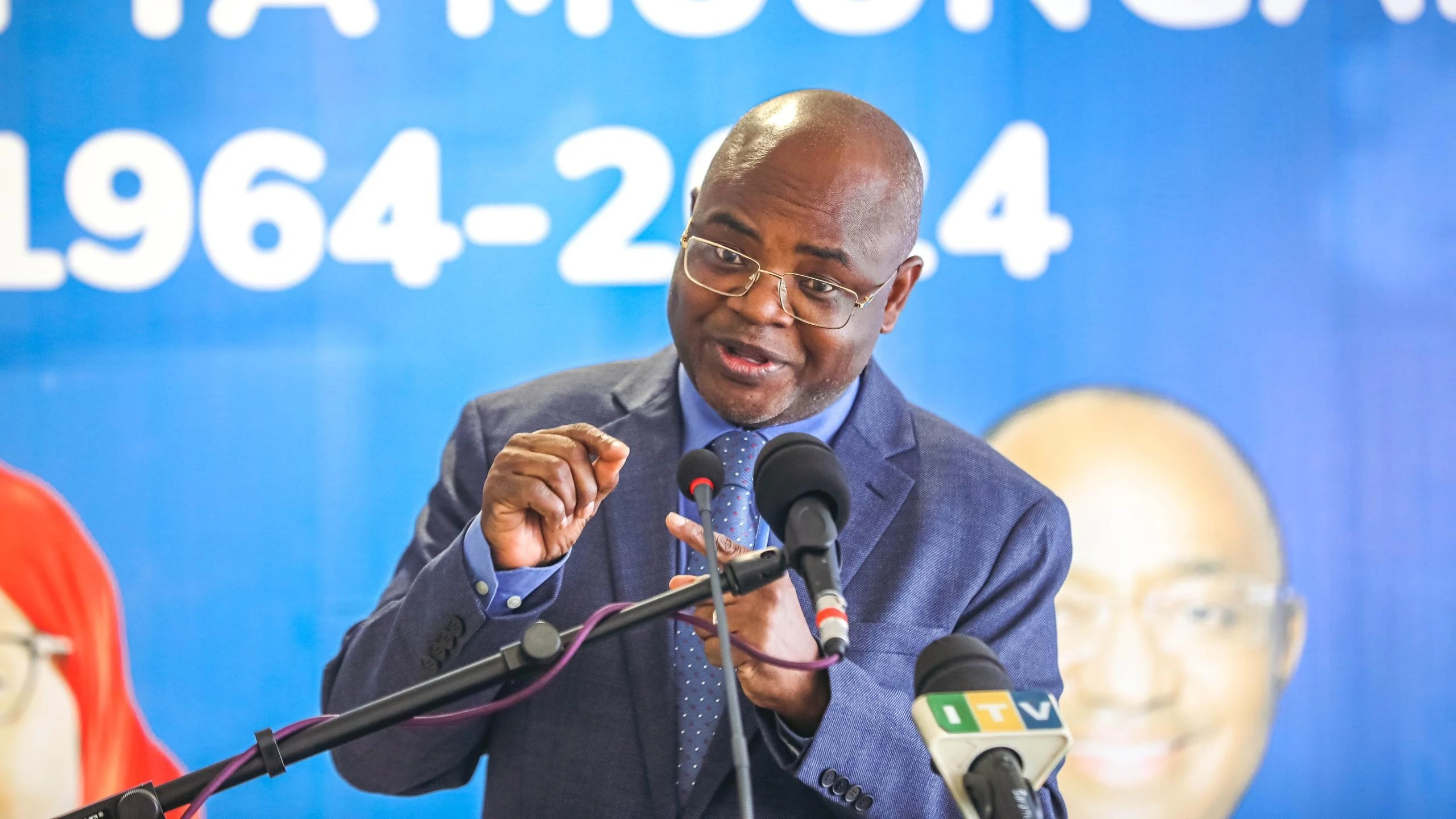
Fiscal discipline remains essential throughout. The experience of comparator countries shows heavy dependence on government and state-owned enterprise borrowing can accelerate infrastructure investment in the short term while creating debt and contingent liability problems that surface later, a trap Tanzania's own Minister of State for Planning and Investment, Prof Kitila Mkumbo, addressed directly at the Songwe Dira 2050 Forum, telling investors and officials that government should concentrate its limited resources specifically on areas where private capital is unlikely to go, rather than continuing to finance projects the private sector could build and operate profitably on its own. The strategy also places rule of law and transparency at the centre of private investment mobilisation: if 70% of Dira 2050's financing is genuinely expected to come from private sources, investor confidence itself becomes a development variable Tanzania has to actively manage, not a background condition it can take for granted. The private sector cannot simply be ordered to provide $2.5 trillion. It has to be given real, credible reasons to invest it.
Will the Financing Strategy Actually Determine Whether Dira 2050 Becomes Real?
Tanzania has now set out a genuinely clear financial challenge for itself. It needs roughly $3.6 trillion in investment over the next 25 years, with 70% expected from private capital, infrastructure alone requiring nearly $895 billion, and energy and manufacturing each requiring a further $537 billion. The country also wants FDI to rise from its current $21.7 billion stock toward $20 billion in annual flows by 2050, PPPs to become a major infrastructure financing source, special economic zones to anchor industrialisation, Dar es Salaam to develop into a genuine international financial centre, and state-owned enterprises to contribute more effectively to overall investment.
These targets are mutually dependent in ways that make partial success considerably harder than it might first appear. A large PPP pipeline requires genuine project preparation capacity. Project preparation requires institutional capacity that doesn't yet fully exist. International investors require credible contracts and real risk allocation before they'll commit capital. Manufacturing investment requires reliable power, logistics and industrial land simultaneously available. Domestic capital markets require both institutional investors with capital to deploy and credible investment opportunities to deploy it into. FDI requires policy certainty and commercially attractive production conditions that have to be built, not simply announced.
The financing strategy therefore exposes Dira 2050's central reality plainly: Tanzania doesn't face a shortage of development ambition. It faces the considerably harder task of building a financial system capable of actually financing that ambition at the scale it demands. The $1 trillion economy is the destination Dira 2050 has set. The $3.6 trillion financing requirement is the road Tanzania has to build first, and it won't get there by simply finding more money somewhere. It will get there by building the institutions that make more money willing to invest in the first place.
FAQ
How much investment does Tanzania actually need to achieve Dira 2050? Approximately $3.6 trillion cumulatively between 2026 and 2050, according to Tanzania's Long Term Perspective Plan and independently confirmed by ODI's analysis, though some estimates from the same planning cycle run as high as $3.7 trillion.
How much of that financing is expected from the private sector? Roughly 70%, or about $2.5 trillion, with government development resources covering approximately 22% and state-owned enterprises the remaining 8%.
How much FDI does Tanzania want to attract by 2050? The strategy proposes raising annual FDI flows from $1.72 billion (2024) to $8.4 billion by 2031 and eventually $20 billion by 2050, against a current FDI stock of $21.7 billion.
Which sector requires the most investment under Dira 2050? Infrastructure, at approximately $895.4 billion between 2026 and 2050, roughly a quarter of the total requirement, followed by energy and manufacturing at $537.3 billion each.
What is Tanzania's public-private partnership target? The strategy proposes moving six to eight major PPP projects forward by 2030, with an eventual ambition for PPPs to contribute 10% of GDP.
What annual growth rate does Tanzania need to reach a $1 trillion economy by 2050? Approximately 10-11% nominal GDP growth annually, achievable if Tanzania sustains real economic growth of roughly 6%, supported by labour productivity growth of 3-4% annually as population growth slows.
What is the single biggest challenge in actually financing Dira 2050? Building the institutions, deeper capital markets, credible PPP contracts, targeted FDI policy and project preparation capacity required to mobilise private capital at this scale, rather than simply identifying enough individual projects to fund.
 Uchumi360
Business Intelligence
Uchumi360
Business Intelligence
Uchumi360 covers business, investment, and economic policy across East, Central, and Southern Africa.
For the serious reader
You read to the end. That places you in a small group.
Uchumi360 is built for readers who demand precision over speed, structure over sentiment, and analysis that holds uncomfortable conclusions rather than softening them. If this work sharpens how you think about Africa's economy, help us keep building the infrastructure behind it.
Institutional Partners
Commission intelligence. Shape the conversation.
Uchumi360 works with development finance institutions, investment firms, sovereign bodies, and strategic organisations across the coverage region. Institutional partnership unlocks:
- Commissioned sector and country intelligence reports
- Branded research series under your institution's authority
- Exclusive data briefings for internal strategy teams
- Speaking and editorial presence at Uchumi360 events
- Co-published investment outlooks for your markets
Support Our Work
Independent analysis has a cost. Help us bear it.
Uchumi360 does not carry advertising. It does not take editorial direction from sponsors. Every article is produced without commercial compromise. Your contribution funds the reporting, research, and editorial infrastructure that keeps this analysis free from influence.
Secure checkout: One-time and monthly support are processed securely. Add payment credentials to enable checkout here.
Stay Connected
Keep up with every new insight.
Follow our latest analysis, policy coverage, and market intelligence as soon as it is published. If you need something specific, reach out directly and we will point you to the right research.
