
Tanzania's Future Will Be Determined by Energy, Logistics, and Minerals. The Aid Framework That Defined Its Global Positioning Is Becoming Obsolete.
Ready
For decades, much of Africa's economic story was framed through the language of aid, with development assistance, debt relief, poverty reduction programmes, humanitarian financing, and budget support positioning the continent globally as a recipient economy whose growth and stability depended on external institutional support rather than on the strategic value that the continent's geography, resources, and demographic scale create for the global industrial systems whose competitive future is being determined now. That framework is beginning to weaken, not because Africa's developmental challenges have disappeared or because the external capital that infrastructure financing and social investment require has become unnecessary, but because the global economy itself is reorganising around a different set of strategic priorities whose intersection with Tanzania's specific asset combination is creating a repositioning whose implications extend well beyond the development conversation that has historically defined Tanzania's relationship with the international economy. Energy security, critical minerals, industrial supply chains, logistics corridors, and geopolitical competition over the resources required for the next phase of global manufacturing and technological expansion have moved to the centre of every major economy's strategic planning framework simultaneously, and Tanzania sits at the intersection of several of those systems in ways whose commercial and geopolitical significance the aid framework was not designed to capture and cannot adequately describe.
Tanzania holds natural gas reserves confirmed at 57 trillion cubic feet by TPDC data, electricity generation capacity above 4,000 megawatts per TANESCO records, graphite at Mahenge and Epanko whose battery anode material significance Benchmark Mineral Intelligence analysis documents, nickel deposits advancing alongside energy transition battery chemistry demand, helium at Rukwa whose semiconductor and medical applications make supply security a priority for industrial economies, Indian Ocean port access, and SGR logistics connectivity extending toward the Central Corridor's landlocked markets. The global economy is reorganising around energy security, critical minerals, and industrial supply chain resilience at the precise moment that Tanzania's asset combination positions it as a supplier of several of the most strategically consequential inputs to that reorganisation. This article identifies what the shift from aid framework to strategic economic framework means for Tanzania's negotiating position, examines the Gulf state precedents whose resource governance and institutional discipline comparisons are analytically instructive without being directly replicable, assesses the risk that strategic asset relevance without industrial depth produces resource dependency rather than economic transformation, and argues that the country's next decade is decisive because the window in which strategic asset value can be converted into productive capability is determined by the pace of the global industrial reorganisation rather than by Tanzania's own development timeline.
The world is not only searching for places to assist anymore. It is searching for places it cannot afford to ignore. Tanzania is entering the second category, and the policy frameworks the country applies to that transition will determine whether the shift produces industrial transformation or a more geopolitically relevant version of resource dependency.
For decades, much of Africa's economic story was framed through the language of aid, and the framing shaped the terms on which the continent engaged with international institutions, bilateral donors, and private capital in ways whose consequences extended beyond the specific transactions the framework governed into the psychological and institutional orientation of African governments toward their own assets, resources, and strategic positioning. Development assistance, debt relief, poverty reduction programmes, humanitarian financing, and budget support positioned the continent globally as a recipient economy whose growth and stability depended on external institutional support rather than on the strategic value that Africa's geography, resources, and demographic scale create for the global industrial systems whose competitive future is being determined now. That framework is beginning to weaken, not because Africa's developmental challenges have disappeared or because the external capital that infrastructure financing and social investment require has become unnecessary, but because the global economy itself is reorganising around a different set of strategic priorities, energy security, critical minerals, industrial supply chains, logistics corridors, and geopolitical competition over resources, whose intersection with Tanzania's specific asset combination is creating a repositioning whose implications the aid framework was not designed to capture.
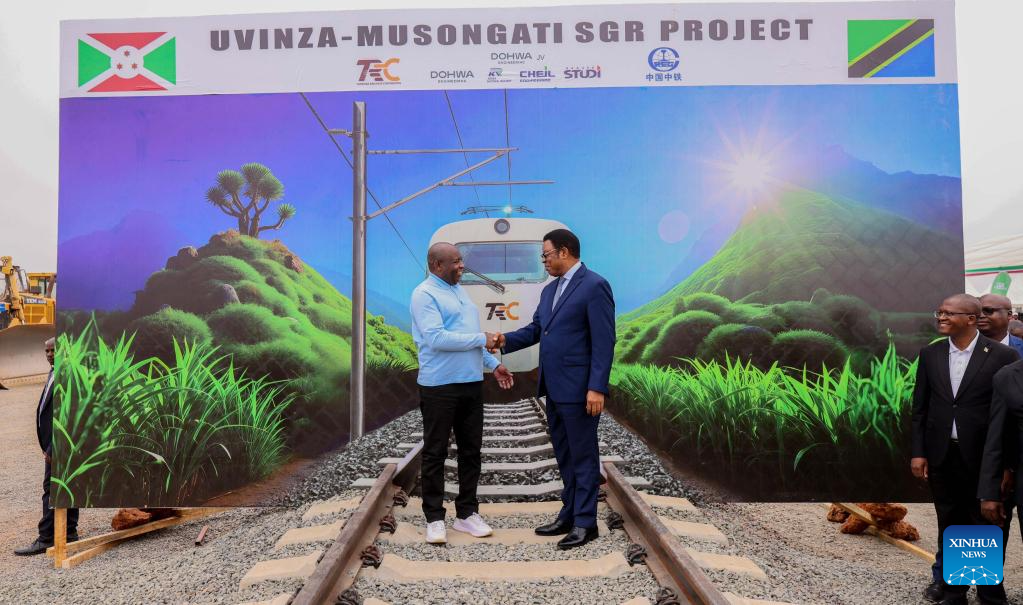
Tanzania sits at the intersection of several systems the world now urgently needs simultaneously, and the convergence of that need with Tanzania's specific asset endowment is creating the conditions for a fundamental shift in the terms on which Tanzania engages with the international economy. According to Tanzania Petroleum Development Corporation data, Tanzania holds approximately 57 trillion cubic feet of proven natural gas reserves whose domestic industrial applications and export LNG potential have attracted Equinor, ExxonMobil, and Shell into the USD 42 billion LNG negotiations that Uchumi360 documented in its analysis of Tanzania's energy transition. According to Tanzania Electric Supply Company operational records, installed electricity generation capacity has crossed approximately 4,000 megawatts following the Julius Nyerere Hydropower Project commissioning, creating an energy surplus whose industrial investment significance Uchumi360 documented in its May 2026 energy analysis. Tanzania's graphite deposits at Mahenge and Epanko, nickel projects advancing alongside energy transition battery chemistry demand, helium reserves in the Rukwa Basin whose state participation agreement Uchumi360 documented in its May 2026 critical minerals coverage, and the SGR logistics infrastructure whose USD 2.33 billion financing Standard Chartered arranged in April 2026 according to the bank's official announcement together describe a country whose strategic asset combination is becoming consequential for the industrial powers competing over the resources and supply chains that will determine who controls the next phase of the global technology and energy economy.
Why the global reorganisation changes Tanzania's strategic position
The specific events and policy decisions that have reorganised the global economy around the strategic priorities whose intersection with Tanzania's assets is creating the repositioning are recent enough and consequential enough to deserve precise identification rather than general reference to geopolitical change. Europe's energy security crisis following Russia's invasion of Ukraine in 2022 permanently altered how governments across the European Union and the wider Western alliance think about energy supply concentration, with the German industrial economy's experience of gas supply disruption demonstrating that energy dependence on politically unreliable suppliers creates strategic vulnerability whose commercial and social costs justify the premium of supply chain diversification even at economic efficiency cost. According to the IEA's World Energy Outlook 2023, the European response to the Ukraine crisis produced the fastest deliberate diversification of a continental energy supply system in the history of modern energy markets, with European buyers committing to long-term LNG supply contracts whose offtake commitment creates demand for new supply sources that Tanzania's reserves are commercially positioned to serve if the Final Investment Decision is reached within the window that the committed offtake demand remains commercially actionable.
The United States and China's competition over semiconductor supply chains, battery systems, rare earth processing, and critical mineral access has elevated the USGS-documented mineral reserves of African countries from commodity market data points into strategic intelligence whose significance is now formally incorporated into the national security planning frameworks of both major powers and their allies. According to the US CHIPS Act implementation documentation and the European Commission's Critical Raw Materials Act adopted in 2024, both the United States and European Union have established formal frameworks for securing critical mineral supply from stable non-Chinese sources with explicit financing instruments that Tanzania's graphite, nickel, and rare earth assets qualify for under both frameworks. Zambia's public rejection of US health-minerals conditionality linkage, which Uchumi360 documented in its May 2026 analysis of Foreign Minister Haimbe's 4 May statement, and Tanzania's own diversified approach to its LNG, SGR, and critical minerals financing structures all reflect African governments' growing awareness that the strategic asset competition among external powers creates negotiating leverage whose exercise requires the institutional capacity and political will to negotiate on the merits of each agreement rather than accepting the package deals whose terms conflate development needs with resource sovereignty.
What the Gulf state precedents reveal and what they do not
Qatar's transformation from a relatively small Gulf economy into one of the world's richest states per capita and one of its most geopolitically consequential is the most precisely relevant precedent for understanding what Tanzania's energy and resource assets make possible under conditions of effective governance and deliberate industrial strategy, and also for understanding the specific conditions that produced the transformation rather than simply describing its outcome. According to Qatar Energy's development history, Qatar's LNG development combined export revenue generation with deliberate construction of the petrochemical, aluminium, steel, and logistics industries that gas feedstock and energy abundance made commercially viable, using the Qatar Investment Authority, whose assets according to its published fund documentation exceed USD 450 billion, as the sovereign wealth management vehicle that converted hydrocarbon revenue from a consumption fund into a productive investment vehicle. The geopolitical influence that Qatar's energy position generates, across aviation through Qatar Airways, sovereign investment through QIA, diplomatic positioning through Al Jazeera and international sports hosting, and gas supply leverage over European industrial economies, reflects the institutional discipline and strategic coherence that effective resource governance produces rather than the automatic consequence of resource endowment whose transformation into influence required decades of deliberate institutional construction.
The UAE's transformation through ports, aviation, logistics, and financial services integration is equally instructive and more directly applicable to Tanzania's logistics corridor ambitions. According to Dubai Ports World's corporate history, Dubai's logistics dominance was not achieved through geographic inevitability but through the systematic institutional investment in port efficiency, customs modernisation, free zone governance, and commercial services ecosystem development that made Dubai a preferred gateway for global capital accessing regional markets despite competing alternatives whose geographic proximity to production and consumption centres would otherwise have made them commercially comparable. Tanzania's logistics strategy requires equivalent institutional investment alongside the physical infrastructure whose construction the SGR financing and port expansion represent, because the difference between a logistics capable economy and a logistics dominant one is determined by the institutional performance whose quality the world's most commercially sophisticated shipping lines, freight forwarders, and logistics investors evaluate before committing supply chain relationships that are expensive to restructure once established.
Tanzania will not become a Gulf state, and the comparison should not create expectations whose mismatch with Tanzania's institutional development stage produces the planning failures that over-optimistic resource development projections have generated across African hydrocarbon history. But the principle that strategic assets change negotiating power is as applicable to Tanzania's position in the global critical minerals and LNG supply competition of 2026 as it was to Qatar's position in the global LNG supply competition of the 1990s, and the institutional decisions that Tanzania makes about sovereign wealth management, domestic gas utilisation, mineral processing requirements, and logistics efficiency investment in the current decade will determine whether Tanzania's strategic asset relevance produces the institutional strengthening and industrial development that effective resource governance generates or the resource dependency that extraction without productive diversification consistently produces.
The risk that strategic relevance without industrial depth produces
The risk that strategic asset relevance without industrial depth creates is not hypothetical but documented across enough African hydrocarbon and mineral economies to treat as a structural pattern rather than an exceptional outcome. Nigeria's oil sector is the most extensively documented case: six decades of petroleum production whose geopolitical relevance to Western energy security and whose commercial significance to the oil majors who operated Nigerian fields did not prevent the structural failures, manufacturing underdevelopment, and import dependency that made the Nigerian economy vulnerable to oil price cycles despite its strategic importance. According to World Bank Nigeria Economic Update analyses, Nigeria's hydrocarbon revenues generated fiscal income and foreign exchange without generating the downstream industrial development, technical workforce depth, or supply chain complexity that would have made the growth durable across commodity price cycles and whose absence has created recurrent fiscal pressure when oil prices decline. Angola's oil boom, documented in World Bank Angolan economic assessments, produced urban development and consumption growth whose geographic concentration reflected the enclave character of petroleum development rather than the broad-based industrial transformation that Vision 2050 equivalents across African resource economies consistently target.
The mechanism through which strategic asset relevance without industrial depth produces resource dependency rather than economic transformation is the same mechanism that Uchumi360's industrial series has documented throughout: the financial systems, governance frameworks, and industrial policies that should convert resource revenues into productive investment in manufacturing, processing, and supply chain development instead direct capital toward consumption, real estate, and the import-distribution commercial activity that resource revenues finance most immediately. According to UNCTAD's Economic Development in Africa Report 2023, the pattern of resource revenue expanding without proportionate manufacturing development is one of the continent's most consistent structural failures, reflecting the institutional and policy gaps whose closure requires the deliberate governance and industrial strategy decisions that are harder and slower to execute than the infrastructure investments whose construction timelines are measured in years rather than the institutional development timelines measured in decades.
What Tanzania's specific asset combination makes possible if the governance matches the opportunity
Tanzania's positioning at the intersection of energy security, critical minerals, and logistics corridor strategic priorities creates a negotiating leverage whose exercise requires the institutional capacity and policy coherence that Uchumi360 has consistently identified as the binding complement to physical infrastructure investment. The LNG project's industrial potential depends on the domestic gas utilisation policy that determines how much of Tanzania's gas feedstock serves industrial production within Tanzania, the sovereign wealth management architecture that converts export revenues into long-horizon productive investment rather than fiscal consumption, and the local content enforcement that ensures the project's construction and operational supply chain generates domestic industrial activity rather than simply providing employment for international contractor workforces. The critical minerals opportunity depends on the processing requirements that Tanzania embeds in its mineral licensing frameworks before development capital is committed, the farm-out partner selection criteria that ensure processing investment is embedded in joint venture commercial architecture rather than deferred to post-production negotiation, and the industrial financing instruments that make domestic processing commercially viable for investors whose capital is mobile and whose location decisions respond to the total commercial proposition rather than to the geological quality of the deposit alone.
The logistics dominance strategy depends on the institutional investment in port efficiency, customs procedure streamlining, and logistics services ecosystem development that converts physical infrastructure investment into the commercial performance advantage that attracts trade flow concentration. According to Tanzania Ports Authority operational data, Dar es Salaam's current handling efficiency lags comparable regional facilities in vessel turnaround time and cargo dwell time, and the physical berth capacity expansion that the Julius Nyerere Port programme represents will not automatically resolve the institutional performance gap whose closure requires the operational management improvement, customs reform, and commercial services development that strategic logistics investment demands alongside the physical construction.
The countries through which the world's major industrial powers cannot afford to route their strategic supply chains are not simply the countries with the largest mineral reserves or the most ambitious infrastructure investment programmes. They are the countries that have built the institutional quality, regulatory consistency, and commercial performance standards that make routing supply chains through their territory reliably cheaper and more commercially rational than the alternatives. Tanzania's strategic asset combination creates the precondition for that status. The institutional development, industrial policy discipline, and governance quality whose simultaneous advancement with the physical infrastructure programme determines whether the precondition produces the outcome constitute the decade's most consequential set of decisions for Tanzania's long-term economic trajectory and regional positioning.
The aid framework that has defined Tanzania's global economic identity for decades is becoming obsolete not because Tanzania's development challenges are resolved but because the world's definition of what Tanzania represents is changing around those challenges. The world is searching for energy supply security, critical mineral access, logistics corridor reliability, and stable geopolitical partnerships at the same time that Tanzania holds significant assets in each of those categories. That convergence creates the leverage that strategic assets historically produce when governments have the institutional capacity and political will to use it. Whether Tanzania uses it to build industrial depth, sovereign wealth, and productive complexity, or whether it allows the strategic relevance to translate into a more geopolitically sophisticated version of the resource dependency that the aid framework was inadequate to describe, is the defining question of the country's next decade.
FAQ
Why is the aid framework described as becoming obsolete for Tanzania? Because the global economy is reorganising around strategic priorities, energy security, critical minerals, industrial supply chains, and logistics corridors, whose intersection with Tanzania's specific assets is creating a different kind of international engagement than the development assistance framework was designed to manage. Tanzania is being negotiated with by the United States, European Union, and China as a supplier of strategically consequential assets rather than as a recipient of development financing, and the terms of that negotiation require a strategic economic framework rather than the development framework whose assumptions about Tanzania's role in the global economy no longer accurately describe its strategic position.
What makes Tanzania's asset combination strategically significant? The convergence of 57 trillion cubic feet of natural gas per TPDC data, electricity generation above 4,000 megawatts per TANESCO records, graphite and nickel deposits in the energy transition supply chain, helium at Rukwa for semiconductor and medical applications, Indian Ocean port access, SGR Central Corridor logistics connectivity, and relative political stability in a region where instability constrains comparable assets. According to the US CHIPS Act, EU Critical Raw Materials Act, and the IEA's supply chain diversification analysis, all of these categories are formal priorities for the major industrial powers whose demand for alternative supply sources is creating the negotiating leverage that Tanzania's asset combination enables.
What does the Qatar precedent teach Tanzania? Qatar transformed LNG revenues into sovereign wealth exceeding USD 450 billion per QIA documentation, constructed downstream petrochemical, aluminium, and logistics industries that gas feedstock enabled, and converted energy market positioning into broad geopolitical influence. The specific lesson is that resource governance decisions, domestic industrial utilisation policy, sovereign wealth management architecture, and logistics ecosystem investment made alongside the export revenue generation determined whether the gas produced institutional strengthening and industrial development or simply revenue that was consumed without the compounding productive returns that the QIA's sovereign investment model generated. Tanzania will not become Qatar, but the governance principle applies: strategic assets change negotiating power only when the institutional framework converts the leverage into productive capability rather than allowing it to dissipate through consumption and import dependence.
What is the risk of strategic relevance without industrial depth? According to World Bank analyses of Nigeria and Angola, resource economies that generate geopolitical relevance through strategic assets without building domestic industrial capability create sophisticated versions of resource dependency whose geopolitical profile is higher than conventional commodity dependency but whose development outcomes, manufacturing underdevelopment, import dependence, and vulnerability to commodity price cycles, are structurally similar. According to UNCTAD's Economic Development in Africa Report 2023, the pattern of resource revenue expanding without manufacturing development is one of Africa's most consistent structural failures. Tanzania's strategic relevance creates the opportunity for a different outcome but does not guarantee it without the industrial policy, financial system alignment, and governance discipline whose implementation is the binding complement to physical infrastructure and resource endowment.
What specific institutional decisions will determine Tanzania's trajectory? The LNG domestic gas utilisation policy determining how much of Tanzania's gas serves industrial production within Tanzania. The sovereign wealth management architecture converting LNG export revenues into long-horizon productive investment. The processing requirements embedded in critical mineral licensing frameworks before development capital is committed. The port efficiency and customs reform investment that converts physical port expansion into logistics performance advantage. The Development Bank of Tanzania's industrial lending capacity expansion providing long-tenor manufacturing financing. These are the institutional decisions whose quality determines whether Tanzania's strategic asset relevance produces industrial transformation or remains a more geopolitically prominent version of the resource export dependency that the aid framework was inadequate to describe.
 Uchumi360
Business Intelligence
Uchumi360
Business Intelligence
- Tanzania Petroleum Development Corporation
- Available at tpdc.go.tz
- Tanzania Electric Supply Company, operational records
- 4,000 MW capacity figure
- Available at tanesco.co.tz
- Standard Chartered Bank, SGR financing announcement, 28 April 2026
- Available at sc.com
- IEA, World Energy Outlook 2023
- European LNG demand diversification post-Ukraine conflict data
- Available at iea.org
- US Department of Commerce, CHIPS Act implementation documentation
- Available at commerce.gov
- European Commission, Critical Raw Materials Act 2024
- Available at ec.europa.eu
- Qatar Energy and Qatar Investment Authority documentation
- Available at qia.qa
- Dubai Ports World, corporate history and logistics development documentation
- World Bank, Nigeria Economic Update series
- Available at worldbank.org
- World Bank, Angola economic assessment reports
- Available at worldbank.org
- UNCTAD, Economic Development in Africa Report 2023
- Available at unctad.org
- Benchmark Mineral Intelligence, Tanzania graphite and critical minerals supply chain data
- Tanzania Ports Authority, handling efficiency and dwell time data
- Available at tanzaniaports.go.tz
- Reuters, Zambia Foreign Minister Haimbe statement on US health-minerals conditionality, 4 May 2026
- Available at reuters.com
Uchumi360 covers business, investment, and economic policy across East, Central, and Southern Africa.
For the serious reader
You read to the end. That places you in a small group.
Uchumi360 is built for readers who demand precision over speed, structure over sentiment, and analysis that holds uncomfortable conclusions rather than softening them. If this work sharpens how you think about Africa's economy, help us keep building the infrastructure behind it.
Institutional Partners
Commission intelligence. Shape the conversation.
Uchumi360 works with development finance institutions, investment firms, sovereign bodies, and strategic organisations across the coverage region. Institutional partnership unlocks:
- Commissioned sector and country intelligence reports
- Branded research series under your institution's authority
- Exclusive data briefings for internal strategy teams
- Speaking and editorial presence at Uchumi360 events
- Co-published investment outlooks for your markets
Support Our Work
Independent analysis has a cost. Help us bear it.
Uchumi360 does not carry advertising. It does not take editorial direction from sponsors. Every article is produced without commercial compromise. Your contribution funds the reporting, research, and editorial infrastructure that keeps this analysis free from influence.
Secure checkout: One-time and monthly support are processed securely. Add payment credentials to enable checkout here.
Stay Connected
Keep up with every new insight.
Follow our latest analysis, policy coverage, and market intelligence as soon as it is published. If you need something specific, reach out directly and we will point you to the right research.
