
China's Zero-Tariff Access for Kenyan Avocados Is Not a Trade Concession. It Is a Supply Chain Acquisition Strategy.
Ready
China's zero-tariff framework for African agricultural exports, of which Kenya's 6.9 tonne avocado shipment is an early illustration, represents Beijing's most sophisticated instrument yet for deepening economic integration with African food producers at the precise moment when diversified food supply chains have become a strategic priority for the world's second-largest economy. The framework creates genuine opportunities for African agricultural exporters in Kenya, Tanzania, Uganda, Rwanda, and across the continent, expanding market access and foreign exchange earnings for farmers who have historically been constrained by phytosanitary requirements, logistics costs, and tariff structures that made African produce uncompetitive in Asian markets. It simultaneously risks deepening Africa's structural position as a raw commodity supplier unless processing capacity, cold-chain infrastructure, and consumer brand development expand alongside export volumes. This article identifies what China's zero-tariff policy is actually designed to achieve, what Kenya's avocado industry reveals about the structural challenge it presents, how the regional comparative picture across East Africa illuminates the policy response required, and why the 6.9 tonnes matter not for what was shipped but for the system that shipment represents.
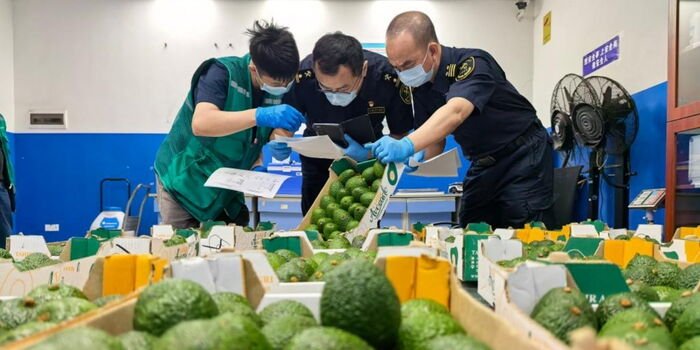
China imported 6.9 tonnes of Kenyan avocados under its expanded zero-tariff access framework for African agricultural exports, and the volume is small enough that a single supermarket chain in Shanghai would clear it in a week. The significance is elsewhere. According to China's Ministry of Commerce, Beijing has been progressively expanding its zero-tariff framework for African countries as part of the commitments made at the Forum on China-Africa Cooperation, with the most recent expansion covering a wider range of agricultural commodities from a larger number of African nations than any previous iteration of the programme. The framework does not exist because China has developed a sudden appreciation for Kenyan horticulture. It exists because China needs diversified agricultural supply chains, because its domestic food security planning has identified import dependency concentration as a strategic vulnerability, and because deepening trade integration with African food producers serves Beijing's long-term supply chain positioning in ways that are commercially rational and geopolitically deliberate simultaneously. The 6.9 tonnes are the first data point in a supply chain relationship whose architecture is being designed in Beijing and whose consequences will be felt across every agricultural economy in sub-Saharan Africa.
Kenya's avocado industry provides the clearest available illustration of what happens to African agricultural exports when market access barriers begin to loosen, and it is a complicated illustration whose positive and negative dimensions both deserve analytical attention. According to the Kenya National Bureau of Statistics, avocado exports have grown to become one of Kenya's most significant horticultural revenue sources, generating hundreds of millions of dollars annually and expanding rapidly as Kenyan producers have responded to rising European and Middle Eastern demand with investment in production volume, variety selection, and basic post-harvest handling. According to the Kenya Horticultural Exporters Association, Kenya is now among the top five avocado exporters globally by volume, with production concentrated in Murang'a, Kisii, and Meru counties where smallholder farmers have shifted significant acreage toward avocado cultivation in response to the price signals that export demand has created. The industry's growth is genuine and its benefits to smallholder farming households are real. It is also an industry whose downstream value, the avocado oil processing, the packaged food products, the cold-chain logistics infrastructure, and the consumer brand positions that carry the majority of the commodity's total value chain return, is controlled overwhelmingly by European and increasingly by Chinese companies rather than by Kenyan enterprises.
What China's zero-tariff framework is actually designed to achieve
Beijing's zero-tariff policy for African agricultural exports is best understood not as a trade concession but as a supply chain acquisition instrument whose design reflects China's specific food security vulnerabilities and its strategic approach to addressing them through commercial integration rather than domestic production expansion alone. According to the Food and Agriculture Organisation's most recent State of Food and Agriculture report, China is the world's largest food importer by value in several commodity categories, and its domestic agricultural production is constrained by land availability, water scarcity, and the environmental costs of intensive farming at the scale required to feed 1.4 billion people. Chinese agricultural planners, as documented in research published by the International Food Policy Research Institute, have been systematically developing overseas agricultural supply chain relationships across Southeast Asia, South America, and increasingly Africa as a structural complement to domestic production, using trade agreements, investment in logistics infrastructure, and preferential market access frameworks to embed Chinese commercial relationships in the agricultural supply chains of food-exporting countries.
The zero-tariff framework for African exports advances that strategy by reducing the price at which African agricultural commodities enter Chinese markets, increasing the volume that African producers can competitively supply, and creating the commercial relationships between African exporters and Chinese importers that, once established at scale, become the foundation for deeper supply chain integration including Chinese investment in African agricultural processing, cold-chain infrastructure, and logistics. According to the FOCAC 2021 Dakar Action Plan, whose implementation Beijing has been pursuing across multiple African bilateral relationships, China committed to importing USD 300 billion worth of African products over three years, with agricultural commodities identified as a priority category alongside minerals and energy. The zero-tariff framework is the trade policy instrument that makes that import commitment commercially viable, because tariff-inclusive African agricultural exports have historically been unable to compete with South American, Southeast Asian, and domestic Chinese production on price in Chinese consumer markets.
The phytosanitary and logistics constraints that zero-tariff alone does not solve
Market access in the form of zero-tariff rates is a necessary but insufficient condition for African agricultural exports to achieve meaningful volume in Chinese markets, because the constraints that have historically limited African agricultural export competitiveness extend well beyond tariff costs into phytosanitary compliance requirements, cold-chain logistics infrastructure, and the regulatory certification capacity of African agricultural export institutions. According to the World Bank's Enabling the Business of Agriculture report, African agricultural exporters face non-tariff barriers in Asian markets that in several documented cases impose costs equivalent to tariff rates of 20% to 40% on the effective price of exported commodities, independent of the formal tariff rate applicable to the shipment. Phytosanitary inspections that identify pest or disease contamination result in shipment rejection whose cost falls entirely on the exporter, creating a risk premium that makes African agricultural exports to distant markets more expensive to finance than their tariff-inclusive price implies.
Kenya's avocado export experience with European markets is instructive for what the China relationship will require. According to the Kenya Plant Health Inspectorate Service, Kenyan avocado exporters have had to invest significantly in post-harvest handling protocols, cold-chain management, and traceability systems to meet European Union phytosanitary standards, investments whose capital cost has been borne primarily by the larger commercial exporters rather than by the smallholder farmers who produce the majority of Kenya's avocado volume. China's phytosanitary requirements for imported avocados, while potentially less stringent than the EU's in some categories, will still require Kenyan exporters to demonstrate compliance with Chinese General Administration of Customs standards, a certification process that the Kenya Agricultural and Livestock Research Organisation and KEPHIS will need to support systematically rather than on a shipment-by-shipment basis if the zero-tariff access is to translate into export volumes that reflect the market's actual potential.
The regional picture and what Tanzania, Uganda, and Rwanda reveal about the opportunity
The Kenyan avocado story is the most immediate illustration of China's zero-tariff framework's implications, but the regional picture across East Africa reveals both the breadth of the opportunity and the consistency of the structural challenge that constrains African agricultural exporters from capturing more than the raw commodity share of the value chains they supply. Tanzania's agricultural export base, which includes cashew nuts, sesame, tea, coffee, and increasingly horticultural products from the highland regions of Kilimanjaro, Arusha, and Mbeya, presents the same fundamental value chain question as Kenya's avocado industry: whether market access expansion translates into processing investment and brand development or simply into larger volumes of raw commodity export. According to the Tanzania Revenue Authority's trade statistics, Tanzania exports the majority of its cashew nut production as raw nuts rather than as processed kernels, despite processing being technically feasible domestically and commanding a price premium of approximately 40% to 60% over raw nut export prices, according to the International Nut and Dried Fruit Council's commodity data.
Uganda's coffee sector presents the regional benchmark for what processing investment alongside export volume growth can deliver. According to the Uganda Coffee Development Authority, Uganda has been progressively increasing its share of roasted and processed coffee exports relative to raw green bean exports, with the value of processed coffee exports growing faster than the volume of total coffee exports as a result of the premium that finished product commands over commodity. Rwanda's single-origin specialty coffee programme, documented in the Rwanda Development Board's agricultural export reports, demonstrates that African agricultural producers can occupy premium market positions in global consumer markets through quality investment, traceability infrastructure, and brand development rather than competing solely on commodity volume. Both the Ugandan and Rwandan examples are partial and their scale remains limited relative to their potential, but they establish that the structural challenge of moving up the agricultural value chain is not insurmountable for East African producers and that the policy and institutional investments required to do so are identifiable rather than theoretical.
Mozambique's sesame and Tanzania's sesame export trajectories illustrate the same dynamic from the commodity dependence side. According to the Food and Agriculture Organisation's FAOSTAT data, both countries export the substantial majority of their sesame production as unprocessed seed, with Japan, China, and India as the primary destination markets, despite the fact that sesame oil and sesame-derived food products command retail prices in those same markets that are multiples of the raw seed export price. The zero-tariff framework that China is extending to African agricultural exporters will increase the volume of raw sesame Tanzania and Mozambique ship to Chinese markets without automatically creating the processing investment that would allow either country to capture the oil extraction and food manufacturing margin that Chinese and Japanese companies currently collect on African raw material inputs.
The structural challenge China's policy makes more urgent rather than resolving
China's zero-tariff framework does not resolve Africa's agricultural value chain problem. It accelerates it. By making African raw commodity exports more price-competitive in Chinese markets, the framework increases the commercial incentive to scale raw commodity production in response to Chinese demand, which deepens the supply chain relationships between African producers and Chinese processors rather than creating the conditions for African processing investment to develop. This is not a reason to reject the market access that the framework offers. It is a reason to design the policy response to it with the specific structural risk in mind, embedding processing requirements, agro-industrial zone development, and value chain integration conditions into the agricultural export expansion strategy rather than treating market access as an unambiguous benefit whose downstream consequences will take care of themselves.
The model that several Southeast Asian agricultural exporters have used to navigate equivalent market access opportunities with Chinese buyers is the most relevant reference point for African policymakers designing their response to the zero-tariff framework. According to research published by the Asian Development Bank Institute, Thailand's cassava processing industry developed in direct response to Chinese demand for cassava starch, with Thai government policy embedding processing investment requirements into the export licensing framework in ways that ensured Chinese demand stimulated domestic Thai manufacturing rather than simply extracting raw cassava root. Vietnam's coffee processing investment, which has made Vietnam the world's second-largest coffee exporter by value despite producing a robusta variety that commands lower commodity prices than premium arabica, reflects a similar deliberate policy of using export market access as a demand signal for domestic processing investment rather than as a ceiling on the value chain position Vietnamese producers occupy.
Kenya has the most developed institutional framework among East African agricultural exporters for capturing this dynamic, with the Agriculture and Food Authority and the Kenya Export Promotion and Branding Agency providing the regulatory and commercial development infrastructure through which export value chain upgrading can be pursued. But the institutional framework has not yet produced the processing investment at scale that Kenya's avocado industry's export volume growth implies should be following. According to the Kenya Investment Authority, foreign direct investment in Kenyan agro-processing has grown but remains concentrated in primary processing, sorting and packing for fresh export, rather than in the secondary processing, oil extraction, food manufacturing, and consumer brand development that capture the majority of the value chain return from horticultural commodities.
What Beijing's agricultural strategy signals about the decade ahead
China's zero-tariff framework for African agricultural exports is part of a broader reconfiguration of how Beijing manages its food security through international supply chain integration that has been developing across the past decade and that the post-COVID supply chain disruption experience has accelerated significantly. According to research published by the Chatham House Food and Environment Programme, China's approach to food security differs fundamentally from that of most other large food-importing economies in that it combines domestic production support with deliberate overseas supply chain relationship building rather than relying primarily on spot market purchases from global commodity trading systems. The zero-tariff framework for African exports is one instrument in that broader strategy, and it is designed to create the sustained commercial relationships between African agricultural producers and Chinese importers that give Beijing reliable supply chain access independent of the price volatility and geopolitical disruptions that spot market dependence creates.
The implication for African governments is that China's interest in their agricultural exports is strategic and durable rather than opportunistic and episodic, which means the market access the zero-tariff framework creates is more reliable than equivalent access through bilateral trade relationships with partners whose food security planning is less deliberate. It also means that the supply chain relationships Beijing is building with African agricultural producers through the zero-tariff framework are designed to serve Chinese food security objectives across a multi-decade horizon, which makes the terms on which Africa enters those relationships, specifically whether as raw commodity suppliers or as processed product exporters with brand positions in Chinese consumer markets, consequential in ways that individual shipment volumes do not capture.
Agriculture is re-entering geopolitics. The FAO's 2023 State of Food Security report documents how the combination of climate disruption, supply chain concentration risk, and the weaponisation of food trade in recent geopolitical conflicts has elevated agricultural supply chain security to a strategic priority for governments across the income spectrum. African countries that hold structural advantages in agricultural production, including climatic diversity, land availability, and the demographic youth that provides agricultural labour supply, are sitting on assets whose geopolitical value is rising at the same time as their economic development requires the foreign exchange earnings that agricultural export expansion provides. The question that Beijing's 6.9 tonnes of Kenyan avocados poses to every agricultural economy in East and Southern Africa is whether the market access being offered will be used to build the agro-industrial capacity that converts those structural advantages into retained economic value, or whether it will be accepted as a permanent settlement of Africa's position at the raw commodity end of the global food economy. That question is not answered in the shipment. It is answered in the policy that follows it.
FAQ
What is China's zero-tariff framework for African agricultural exports? China's zero-tariff framework is a trade policy instrument through which Beijing grants preferential market access to agricultural exports from African countries, eliminating import duties that would otherwise make African produce less price-competitive in Chinese markets relative to domestic Chinese production and imports from other regions. The framework has been progressively expanded as part of China's Forum on China-Africa Cooperation commitments, with the most recent expansion covering a wider range of commodities and countries than previous iterations. The 2021 FOCAC Dakar Action Plan committed China to importing USD 300 billion worth of African products over three years, with agricultural commodities identified as a priority category.
Why is Kenya's avocado industry significant for this analysis? Kenya's avocado industry illustrates both the opportunity and the structural challenge that China's zero-tariff framework presents simultaneously. The industry has grown to generate hundreds of millions of dollars annually and has made Kenya one of the top five avocado exporters globally, demonstrating that African agricultural producers can scale production rapidly in response to market access. It also illustrates that production scaling without processing investment leaves the majority of the value chain return, avocado oil extraction, packaged food manufacturing, cold-chain logistics, and consumer branding, in the hands of European and Chinese companies rather than Kenyan enterprises.
How does this relate to Tanzania, Uganda, and Rwanda? Tanzania's cashew nut sector exports the majority of its production as raw nuts despite a 40% to 60% price premium available for processed kernels, according to International Nut and Dried Fruit Council data. Uganda has been progressively increasing processed coffee exports and capturing a higher value share as a result. Rwanda's single-origin specialty coffee programme demonstrates that premium market positioning is achievable for African agricultural producers. All three cases illustrate versions of the same structural challenge that China's zero-tariff framework makes more urgent: whether market access is used to scale raw commodity exports or to invest in the processing capacity that captures a larger share of the value chain.
Is China's zero-tariff policy beneficial for African agricultural exporters? It creates genuine benefits in the form of expanded market access, higher export volumes, increased foreign exchange earnings, and better pricing leverage through market diversification. It also creates a structural risk: by making African raw commodity exports more price-competitive in Chinese markets, the framework increases the commercial incentive to scale raw production in response to Chinese demand, deepening supply chain relationships between African producers and Chinese processors rather than creating the conditions for African processing investment to develop. The net outcome depends on whether African governments design their policy response to use market access as a demand signal for domestic agro-industrial investment rather than treating it as an unambiguous benefit.
What policy response should African agricultural exporters pursue? The Southeast Asian precedent is instructive. Thailand's cassava processing industry developed in direct response to Chinese demand by embedding processing requirements into the export licensing framework, ensuring Chinese demand stimulated domestic manufacturing rather than simply extracting raw material. African agricultural export policy should pursue the equivalent: using China's zero-tariff access as the demand anchor around which domestic agro-processing investment, cold-chain infrastructure development, and consumer brand building are systematically pursued, rather than accepting the market access on the terms Beijing's supply chain strategy prefers.
 Uchumi360
Business Intelligence
Uchumi360
Business Intelligence
China Ministry of Commerce, FOCAC zero-tariff framework documentation.
FOCAC 2021 Dakar Action Plan. USD 300 billion African import commitment cited from official FOCAC documentation. Available at focac.org.
Kenya National Bureau of Statistics, agricultural export statistics.
Kenya Horticultural Exporters Association, avocado export data.
Kenya Plant Health Inspectorate Service, phytosanitary compliance documentation. Cited as the regulatory body responsible for export certification.
Food and Agriculture Organisation, State of Food and Agriculture report, most recent edition. China food import dependency data. Available at fao.org.
Food and Agriculture Organisation, FAOSTAT. Tanzania and Mozambique sesame export data. Available at faostat.fao.org.
International Food Policy Research Institute, research on Chinese overseas agricultural supply chain development.
World Bank, Enabling the Business of Agriculture report. Non-tariff barrier cost equivalence figures for African agricultural exporters require specific edition reference before publication.
International Nut and Dried Fruit Council, cashew nut commodity data. Price premium for processed versus raw cashew cited from INC commodity reports. Available at nutfruit.org.
Uganda Coffee Development Authority, processed coffee export data. Available at ugandacoffee.go.ug.
Rwanda Development Board, agricultural export reports. Single-origin specialty coffee programme data. Available at rdb.rw.
Asian Development Bank Institute, research on Thailand cassava processing and Chinese demand.
Kenya Investment Authority, foreign direct investment in agro-processing data. Available at invest.go.ke.
Chatham House Food and Environment Programme, research on China's food security strategy. Available at chathamhouse.org.
FAO, State of Food Security and Nutrition in the World 2023. Available at fao.org.
Uchumi360 covers business, investment, and economic policy across East, Central, and Southern Africa.
For the serious reader
You read to the end. That places you in a small group.
Uchumi360 is built for readers who demand precision over speed, structure over sentiment, and analysis that holds uncomfortable conclusions rather than softening them. If this work sharpens how you think about Africa's economy, help us keep building the infrastructure behind it.
Institutional Partners
Commission intelligence. Shape the conversation.
Uchumi360 works with development finance institutions, investment firms, sovereign bodies, and strategic organisations across the coverage region. Institutional partnership unlocks:
- Commissioned sector and country intelligence reports
- Branded research series under your institution's authority
- Exclusive data briefings for internal strategy teams
- Speaking and editorial presence at Uchumi360 events
- Co-published investment outlooks for your markets
Support Our Work
Independent analysis has a cost. Help us bear it.
Uchumi360 does not carry advertising. It does not take editorial direction from sponsors. Every article is produced without commercial compromise. Your contribution funds the reporting, research, and editorial infrastructure that keeps this analysis free from influence.
Secure checkout: One-time and monthly support are processed securely.
Stay Connected
Keep up with every new insight.
Follow our latest analysis, policy coverage, and market intelligence as soon as it is published. If you need something specific, reach out directly and we will point you to the right research.
