
Ruto Arrives in Tanzania With a Refinery Proposal, a Pipeline Discussion, and a Parliamentary Address That No Kenyan President Has Made Before.
Ready
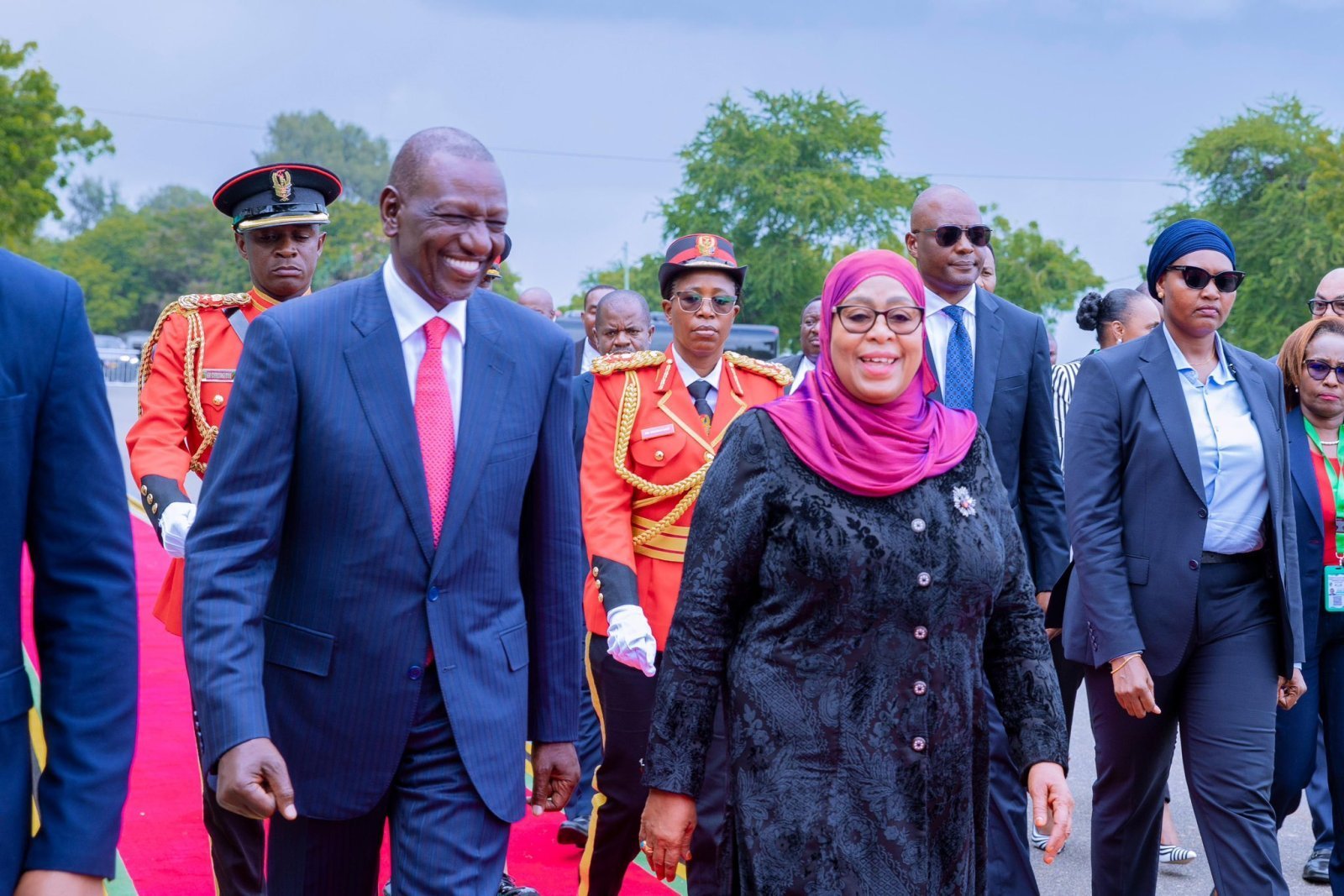
Kenya's President Ruto is in Tanzania for a two-day visit that culminates in a historic address to Tanzania's Parliament on 5 May 2026, the first by a sitting Kenyan president. The visit's economic agenda centres on a proposed regional oil refinery in Tanga, with Aliko Dangote having committed to build the facility if East African governments support it, and Ruto publicly confirming that Kenya, Uganda, Tanzania, and South Sudan have agreed in principle to pursue a single large refinery rather than competing national facilities. This article identifies what the Dangote commitment changes about this proposal's credibility relative to all previous failed East African refinery discussions, why the Uganda tension over Museveni's separate Hoima refinery plan matters for the regional coordination logic, what the parliamentary address signals beyond its diplomatic symbolism, and whether the political alignment that exists at the summit level in May 2026 is structurally different enough from previous alignments to survive the implementation phase.
Kenya's President William Ruto arrived in Dar es Salaam on 4 May 2026 for a two-day state visit to Tanzania, and the timing, the programme, and the economic agenda he brings with him place this visit in a different category from the routine bilateral engagements that East African heads of state conduct several times a year. According to The Citizen, Ruto will hold bilateral talks with President Samia Suluhu Hassan on 4 May before both leaders co-chair high-level discussions involving government delegations from both countries, witness the signing of multiple memoranda of understanding, and participate in a business forum bringing together investors and business leaders from Kenya and Tanzania. On 5 May, Ruto will travel to Dodoma to address Tanzania's Parliament at 11am, an event that Tanzania's Deputy Speaker Daniel Sillo described in his announcement to lawmakers on 29 April as historic, and that is historic in a specific and measurable sense: according to reporting by Kenyans.co.ke and TRT Afrika, no Kenyan president has addressed Tanzania's Parliament before. The visit is a reciprocal gesture, arriving nearly five years after President Samia Suluhu Hassan addressed Kenya's Parliament on 5 May 2021 during the early months of her presidency.
The diplomatic symbolism of the parliamentary address is real and should not be dismissed, because a head of state addressing another country's legislature makes a public commitment to the bilateral relationship that is harder to reverse than a communiqué signed in a state house and that creates political accountability in both countries' domestic systems for the agenda advanced during the visit. But the economic substance of the Ruto visit was established before it began, at the Africa We Build Summit in Nairobi on 23 April 2026, when Aliko Dangote told the assembled heads of state, including Ruto and Uganda's Yoweri Museveni, according to Nairobi Wire's reporting: "I can give commitment to the two presidents who were here. If they will support the refinery, we'll build an identical one to the one we have in Nigeria." The refinery Dangote referenced is his USD 20 billion facility in Lagos, the largest single-train refinery in Africa at 650,000 barrels per day capacity, which began commercial operations in 2023 after more than a decade of construction and financing work that he led and funded primarily through private capital. The commitment he made in Nairobi on 23 April is therefore not a speculative expression of interest from a developer without a track record. It is a proposal from the only person who has built a refinery of this scale in Africa in the past two decades, made publicly in front of the heads of state whose political support the project requires.
What Ruto confirmed at the Mining Conference on 28 April
Five days after Dangote's Nairobi commitment, Ruto used the Kenya Mining Investment Conference and Expo on 28 April to confirm, according to Nairobi Wire and My Engineers, that Kenya, Uganda, Tanzania, and South Sudan had already reached agreement in principle on the regional refinery approach. "We have made the decision that we are going to do this together. We are going to harness the synergies of Kenya, Uganda, Tanzania, and South Sudan, possibly working together, so that we can have one big refinery here," Ruto stated. He framed the decision explicitly within an industrialisation logic rather than a purely energy security logic, telling the conference: "In our region, we are thinking of how all the assets that we have, whether it is the oil that we have, we must use them to industrialise our countries. We cannot continue to export or to be exporters of raw materials." Kenya pledged up to Kenyan shilling 500 billion in sector investment, according to the same reporting.
The industrial logic Ruto invoked is analytically sound and connects directly to the structural argument that Uchumi360's April 2026 coverage of Tanzania's trader-to-industrialist conversion thesis identified as the central challenge for the region's economic transformation ambitions. East Africa currently exports crude oil from Uganda and, by December 2026 according to Nairobi Wire, potentially from Kenya's Turkana Basin where Gulf Energy, which took over operations from Tullow Oil, is preparing the first batch from the South Lokichar Basin's over 560 million barrels of recoverable reserves. It simultaneously imports refined petroleum products, paying the refining margin and the shipping cost that local processing would eliminate, and absorbing the price volatility and supply disruption risk that dependence on external refining capacity creates. A regional refinery processing Ugandan, Kenyan, South Sudanese, and potentially Congolese crude into products consumed domestically across East Africa closes that loop in a way that no individual country in the region can sustain at scale alone.
Why Tanga and what EACOP already established
According to TRT Afrika, the proposed refinery site in Tanga is located approximately 340 kilometres north of Dar es Salaam, and its selection reflects an infrastructural logic that Tanzania's positioning within East Africa's energy system has been building toward since the East African Crude Oil Pipeline project was confirmed. According to The Citizen's prior reporting on EACOP, the pipeline connecting Uganda's Lake Albert oilfields to the Tanzanian coast terminates at Tanga, establishing the port city as the designated exit point for landlocked Ugandan crude. A refinery sited at Tanga therefore sits at the end of existing crude supply infrastructure rather than requiring a new pipeline to connect it to production, which materially changes both the project's capital requirement and the credibility of its feedstock security argument relative to a greenfield site requiring entirely new logistics.
Tanga's coastal position on the Indian Ocean also provides import crude flexibility, the ability to source crude from external markets during periods when regional production is insufficient for refinery throughput, and export access for refined products destined for regional markets or, if the refinery achieves the scale Dangote's Nigerian model implies, for international markets. The combination of EACOP crude supply, Kenyan Turkana crude through a Mombasa-Tanga pipeline link whose discussions Reuters and Bloomberg have reported, and import crude optionality gives a Tanga refinery a feedstock diversification profile that reduces its commercial risk relative to a facility dependent on a single source.
The Uganda tension is real and needs to be addressed before the project advances
The regional refinery narrative that has emerged from the Nairobi summits and the Ruto Tanzania visit contains an unresolved tension that most coverage has treated as peripheral but that is analytically central to the project's governance viability. According to Nairobi Wire, Uganda's President Museveni separately unveiled a roadmap for a USD 4 billion national refinery in Hoima City at approximately the same time that Dangote was proposing the Tanga facility, creating an apparent conflict between Uganda's domestic refinery ambition and the regional shared facility model that Ruto, Samia, and Dangote are advancing. Media reports characterised the Dangote proposal as a headache for Uganda's Hoima plans, and Ruto publicly dismissed that framing at the Mining Conference, saying: "There was no headache, for heaven's sake. There was no headache. How does three countries coming together to build one piece of infrastructure amount to a headache?"
Ruto's dismissal is politically useful and analytically insufficient. Uganda's interest in a domestic refinery is driven partly by energy sovereignty considerations, partly by the employment and industrial base arguments that domestic processing at Hoima would generate for Uganda's western regions, and partly by the financing commitments that Ugandan state institutions have already made toward the Hoima project. A regional refinery in Tanga that processes Ugandan crude and distributes refined products back to Uganda addresses the energy supply objective but does not deliver the domestic industrial base that Hoima's proponents are seeking. The governance architecture of the Tanga refinery, specifically how Uganda's crude contribution is priced, how product allocation across the participating countries is structured, and how the employment and industrial spillover benefits are distributed geographically, will determine whether Uganda's political system ultimately supports the regional model or reverts to pursuing the national alternative. That architecture has not yet been publicly described in sufficient detail to assess whether the regional model can hold Uganda's political commitment through the implementation phase that the Ruto Tanzania visit is advancing toward.
What bilateral trade between Kenya and Tanzania actually looks like
The commercial foundation beneath the energy and infrastructure agenda of the Ruto visit is a bilateral trade relationship whose scale is often underappreciated in the diplomatic framing that surrounds high-level visits. According to The East African, bilateral trade between Kenya and Tanzania has surpassed USD 1 billion, with Kenya primarily exporting refined petroleum, soap, and packaged medications to Tanzania, and Tanzania exporting agricultural produce including maize and rice, raw materials, and energy commodities to Kenya, according to TRT Afrika. Both countries are simultaneously the other's largest or near-largest bilateral trade partner within the EAC, which creates a commercial interdependence that is being consolidated rather than created by the agreements being signed during the Ruto visit.
The non-tariff barrier elimination agenda that formed a central element of the Kenya-Tanzania-Rwanda corridor analysis in Uchumi360's May 2026 coverage applies directly to this bilateral relationship. According to the Daily News' analysis of the Ruto parliamentary visit's economic context, harmonising regulations and improving regional trade efficiency would benefit traders, manufacturers, transporters, and SMEs in both countries in ways that the MOU signing alone cannot deliver without the sustained regulatory coordination that follows summit-level political commitment. Kenya and Tanzania are the two largest economies in the East African Community, and the gap between the trade volume their bilateral relationship generates and the trade volume their combined economic weight implies is a direct function of the non-tariff barriers, policy misalignments, and institutional friction that the agreements being signed in Dar es Salaam on 4 May are intended to begin addressing systematically rather than case by case.
What the parliamentary address signals beyond its diplomatic symbolism
A Kenyan president addressing Tanzania's Parliament for the first time in the diplomatic history of the two countries is an event whose significance is not exhausted by the bilateral relationship it celebrates. According to The Star's analysis of the visit's diplomatic context, a sitting president addressing another country's legislature signals a level of bilateral trust, political alignment, and strategic intent that is not routine protocol and that creates a form of public political accountability for the agenda advanced that communiqués and MOU signing ceremonies do not. The last comparable gesture in the other direction, Samia's address to Kenya's Parliament in May 2021 immediately after she assumed Tanzania's presidency, was framed as a reset of a relationship that had been strained under her predecessor, and it established the diplomatic foundation for the deepening of ties that the 2026 Ruto visit is now building upon.
The content of Ruto's address to Tanzania's Parliament on 5 May, which has not been delivered as of the time of publication, is expected to cover the regional integration agenda that his administration has made central to its external economic diplomacy, including the refinery proposal, the corridor infrastructure agenda, the non-tariff barrier elimination commitments, and the broader EAC development strategy that Ruto advanced during his tenure as EAC Heads of State Summit chair, which he handed over to Museveni in Arusha in March 2026 according to Tuko. The address will be delivered to an institution whose political significance in Tanzania has been growing with the country's democratic development, and a Kenyan president making the case for regional economic integration directly to Tanzanian legislators, rather than only to their president, embeds the bilateral agenda in Tanzania's domestic political conversation in a way that strengthens its durability across political cycles.
What the Dangote factor changes about this iteration of the regional refinery proposal
East Africa has discussed a regional oil refinery at various points across the past two decades, and those discussions have not produced a refinery. The structural reason is not political will at the summit level, which has been present in multiple previous iterations of the conversation, but the financing fragility of a model that depends on coordinated public sector capital commitments from multiple governments with different fiscal positions, different political cycles, and different domestic priorities competing for the same budget resources. Regional infrastructure projects whose viability depends on sustained public financing coordination among sovereign governments are inherently vulnerable to the kind of unravelling that occurs when one partner's fiscal situation changes, when elections alter a government's priorities, or when bilateral tensions on unrelated issues spill into the financing negotiations.
Dangote's involvement introduces a private capital model whose implementation logic is fundamentally different. According to Nairobi Wire's reporting of the Africa We Build Summit, Dangote's Lagos refinery was a private commercial asset whose financing, construction, and operational management were driven by commercial return calculations rather than government budget allocations, and whose delivery at 650,000 barrels per day was achieved precisely because the decision-making was concentrated rather than distributed across multiple sovereign stakeholders. If Dangote Group leads the Tanga refinery's development on a comparable private capital basis, with government participation structured as equity stakes and offtake commitments rather than primary financing obligations, the project's vulnerability to the public financing coordination failures that have ended previous regional refinery proposals is substantially reduced.
The specific terms of Dangote's Tanga proposal have not been publicly disclosed in sufficient detail to assess whether the implementation model matches the private capital logic of his Lagos facility or whether it requires a level of government financing commitment that would reintroduce the coordination fragility of previous attempts. Verifying those terms against official disclosures from Dangote Group, Kenya's State Department for Energy, and Tanzania's Ministry of Energy is the most important analytical step that must precede any definitive assessment of whether this iteration of the regional refinery conversation is structurally different from those that preceded it.
The visit is two days old as of today, 4 May 2026. The parliamentary address has not yet been delivered. The MOU texts have not yet been published. The refinery's governance and financing architecture has not yet been disclosed at a level of detail that resolves the Uganda tension or confirms the private capital model. What exists is the strongest political alignment around a regional refinery that East Africa has produced since the concept was first seriously discussed, anchored by the continent's most credible private refinery developer and advanced by the first Kenyan president to address Tanzania's Parliament. Whether that alignment survives contact with implementation is the question that the region has answered wrongly before and must answer correctly this time.
FAQ
What is the purpose of Ruto's Tanzania visit on 4 and 5 May 2026?
According to The Citizen, President Ruto arrived in Tanzania on 4 May for bilateral talks with President Samia Suluhu Hassan, high-level delegation discussions covering trade, investment, infrastructure, and transport, MOU signing, and a business forum. On 5 May he will address Tanzania's Parliament in Dodoma at 11am, the first address to Tanzania's Parliament by a sitting Kenyan president.
What is the Dangote refinery proposal and where does it stand?
At the Africa We Build Summit in Nairobi on 23 April 2026, Aliko Dangote committed to building a refinery in Tanzania's Tanga region identical to his Lagos facility if the governments of Kenya, Tanzania, and Uganda formally support the project, according to Nairobi Wire. Ruto confirmed on 28 April at the Kenya Mining Investment Conference that Kenya, Uganda, Tanzania, and South Sudan had agreed in principle to pursue a single large regional refinery. Specific terms, financing structure, and governance architecture have not been publicly disclosed.
Why is there a tension between the Tanga proposal and Uganda's Hoima refinery plan?
President Museveni announced a separate USD 4 billion national refinery plan for Hoima City at approximately the same time as the Dangote Tanga proposal emerged, according to Nairobi Wire. The two proposals appear to compete for Uganda's crude oil as feedstock and for the domestic industrial base arguments that refinery investment generates. Ruto dismissed the conflict publicly, but the governance and product allocation terms of the Tanga regional model have not been disclosed in sufficient detail to confirm that Uganda's domestic industrial interests are accommodated within it.
What does bilateral trade between Kenya and Tanzania currently look like? According to The East African, bilateral trade between Kenya and Tanzania has surpassed USD 1 billion, with Kenya primarily exporting refined petroleum, soap, and packaged medications, and Tanzania exporting agricultural produce, raw materials, and energy commodities. Both countries are among the EAC's largest bilateral trade partners, and the non-tariff barrier elimination agenda advanced during the Ruto visit is designed to close the gap between current trade volumes and the volumes their combined economic weight implies.
Why does the parliamentary address matter beyond its diplomatic symbolism?
A head of state addressing another country's parliament makes a public commitment to the bilateral agenda that creates political accountability in both countries' domestic systems in ways that communiqués and MOU signing do not. It also embeds the bilateral agenda in Tanzania's domestic political conversation, strengthening its durability across political cycles. The gesture is explicitly reciprocal, arriving five years after Samia addressed Kenya's Parliament on 5 May 2021, a symmetry that both governments have acknowledged as deliberate.
 Uchumi360
Business Intelligence
Uchumi360
Business Intelligence
- The Citizen, reporting on Ruto's arrival in Tanzania, 4 May 2026
- Available at thecitizen.co.tz
- Kenyans.co.ke, reporting on the parliamentary address announcement, April 2026
- Historic first confirmed across multiple sources
- Nairobi Wire, reporting on Dangote's Africa We Build Summit commitment and Ruto's Mining Conference confirmation, April 2026
- The East African, reporting on Kenya-Tanzania bilateral trade and parliamentary address context
- Available at theeastafrican.co.ke
- TRT Afrika, reporting on Tanga's geographic position and Kenya-Tanzania trade composition
- Available at trtafrika.com
- Daily News Tanzania, analysis of the economic context of Ruto's parliamentary visit
- Available at dailynews.co.tz
- The Star Kenya, diplomatic context analysis of the parliamentary address
- Available at the-star.co.ke
- Tuko.co.ke, reporting on Ruto's EAC chairmanship handover and refinery context
- Available at tuko.co.ke
- Dangote Refinery Lagos, 650,000 barrel per day capacity figure
- Verified across Reuters, Bloomberg, and Financial Times coverage of the refinery's 2023 commissioning
- Gulf Energy Turkana crude timeline and South Lokichar Basin reserves
- Nairobi Wire reporting, April 2026
Uchumi360 covers business, investment, and economic policy across East, Central, and Southern Africa.
For the serious reader
You read to the end. That places you in a small group.
Uchumi360 is built for readers who demand precision over speed, structure over sentiment, and analysis that holds uncomfortable conclusions rather than softening them. If this work sharpens how you think about Africa's economy, help us keep building the infrastructure behind it.
Institutional Partners
Commission intelligence. Shape the conversation.
Uchumi360 works with development finance institutions, investment firms, sovereign bodies, and strategic organisations across the coverage region. Institutional partnership unlocks:
- Commissioned sector and country intelligence reports
- Branded research series under your institution's authority
- Exclusive data briefings for internal strategy teams
- Speaking and editorial presence at Uchumi360 events
- Co-published investment outlooks for your markets
Support Our Work
Independent analysis has a cost. Help us bear it.
Uchumi360 does not carry advertising. It does not take editorial direction from sponsors. Every article is produced without commercial compromise. Your contribution funds the reporting, research, and editorial infrastructure that keeps this analysis free from influence.
Secure checkout: One-time and monthly support are processed securely. Add payment credentials to enable checkout here.
Stay Connected
Keep up with every new insight.
Follow our latest analysis, policy coverage, and market intelligence as soon as it is published. If you need something specific, reach out directly and we will point you to the right research.
