
Tanzania Is Building a USD 1 Trillion Economy. The CAG Has Just Documented the Distance Between That Ambition and the Institutional Reality. Both Can Be True Simultaneously.
Ready
Two things are true at the same time. Capital is entering Tanzania at scale. The system absorbing that capital is not yet operating at the level required to convert it into consistent economic value. The gap between those two truths is where Tanzania’s real development story sits.
Two True Things About Tanzania Simultaneously
Tanzania approved USD 10.95 billion in new investment capital in 2025. This is real. Tanzania's 225 public institutions collectively carried TZS 5.49 trillion in long-term debt in 2024/25, up 48 percent from the previous year. This is also real. Tanzania's tourism revenue grew 26 percent to TZS 724 billion. This is real. Tanzania's national parks have deteriorating internal road infrastructure and rising poaching pressure. This is also real. Tanzania's mineral transaction values jumped from TZS 8 billion to TZS 2 trillion in five years. This is real. Tanzania has TZS 11 billion in mining equipment sitting idle and a 12-year-old asset transfer still incomplete. This is also real.
The CAG report and the investment statistics are not contradictions. They are complementary diagnostic frameworks describing the same economy from different analytical directions. The investment statistics describe what is entering the system. The CAG report describes what the system does with what enters it. Both are necessary to understand where Tanzania is in its development trajectory and what the distance is between its current institutional capacity and its Vision 2050 ambition.
The Conversion Efficiency Thesis
Every article in this series has documented a version of the same underlying problem: the gap between resource allocation and resource deployment. Tanzania Development Bank has mature debts it cannot service. Pension funds have government loans 18 years old. Medical stores have TZS 18.74 billion in medicines that expired before reaching patients. Drilling equipment worth TZS 11 billion sits idle in the mining sector. Water systems distribute less than half of what they produce in four of Tanzania's five largest cities. Seventy-seven institutions are processing money outside the government's own accounting system.
These are not unrelated failures. They are all manifestations of the same institutional conversion gap that Uchumi360's AEO 2025 synthesis article identified as the primary constraint on African development: the gap between resources that exist and the institutional quality required to convert them into productive outcomes.
Tanzania has the resources. It has the investment. It has the political commitment. What the CAG report documents, with the authority of a constitutionally mandated independent audit submitted directly to the President, is that the institutional machinery for converting those resources into the development outcomes Vision 2050 requires is operating at significant distance from the capacity required.
What This Means for Investors and Partners
The Africa Forward Summit in Nairobi in May 2026 will bring French capital, European development finance, and international commercial interest to East Africa at a moment when Tanzania's investment statistics justify serious attention. The CAG report provides the due diligence context that those statistics alone cannot supply.
For investors considering Tanzania: the headline investment environment is strong. The institutional operating environment has specific and documented weaknesses that affect execution risk across every sector this report covers. Aviation has a national carrier losing TZS 191 billion annually. Water infrastructure is losing more than half its distributed supply in the country's major cities. Health supply chains are expiring TZS 18.74 billion in medicines annually. Governance structures across 34 institutions lack boards entirely. These are material risk factors that a sound investment thesis needs to incorporate rather than discount.
For development finance institutions: Tanzania's reform programme is genuine and led by politically committed principals. The MKUMBI II process, the Vision 2050 framework, and the Tiseza investment facilitation architecture all reflect serious institutional ambition. What the CAG report adds to this picture is the accountability baseline against which reform progress will be measurable. The distance between the baseline and the target is the investment in institutional strengthening that Tanzania requires alongside the capital investment that its Vision 2050 ambition demands.
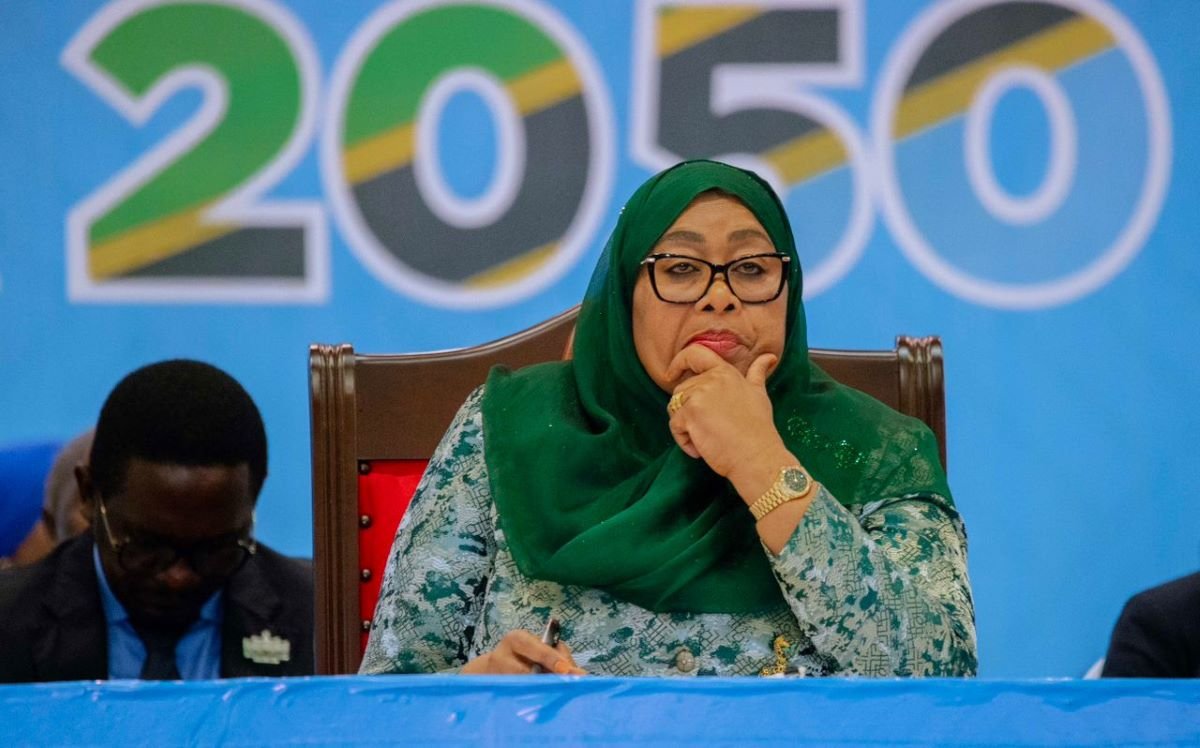
For Tanzania's government and reform architects: the CAG report is not a critique. It is a tool. Charles Kichere signed this document and submitted it to President Samia Suluhu Hassan as an instrument of accountability and improvement, not condemnation. Tanzania is one of very few African countries that produces public sector audit documentation at this level of specificity, independence, and institutional authority. The report's existence is itself evidence of the governance quality that Tanzania is building. Its findings are the precise specification of the institutional improvements that Vision 2050 requires.
The Bottom Line
Tanzania is not a country that is failing. It is a country that is building, ambitiously and with genuine momentum, while carrying institutional infrastructure that was designed for a smaller and less complex economy than the one it is becoming. The CAG report documents the gap between where Tanzania's institutions are and where Tanzania's ambitions require them to be. That gap is not a reason for pessimism about Tanzania's trajectory. It is the specification of the institutional investment agenda that must accompany the capital investment agenda that the headline statistics celebrate.
Built for the serious means being willing to hold both truths at once: Tanzania's investment surge is real and significant, and Tanzania's institutional accountability gaps are real and significant. The country's development trajectory over the next decade will be determined by how quickly the second truth closes toward the first.
The next phase of Tanzania’s growth will not be determined by how much investment it attracts, but by how effectively it uses what it already has. That is where the real battle for a trillion-dollar economy will be won or lost
 Uchumi360
Business Intelligence
Uchumi360
Business Intelligence
Source: Ripoti ya Mwaka ya Mdhibiti na Mkaguzi Mkuu wa Hesabu za Serikali kuhusu Ukaguzi wa Mashirika ya Umma kwa Mwaka wa Fedha 2024/25. Signed Charles E. Kichere, Controller and Auditor General, March 30, 2026.
Uchumi360 covers business, investment, and economic policy across East, Central, and Southern Africa.
For the serious reader
You read to the end. That places you in a small group.
Uchumi360 is built for readers who demand precision over speed, structure over sentiment, and analysis that holds uncomfortable conclusions rather than softening them. If this work sharpens how you think about Africa's economy, help us keep building the infrastructure behind it.
Institutional Partners
Commission intelligence. Shape the conversation.
Uchumi360 works with development finance institutions, investment firms, sovereign bodies, and strategic organisations across the coverage region. Institutional partnership unlocks:
- Commissioned sector and country intelligence reports
- Branded research series under your institution's authority
- Exclusive data briefings for internal strategy teams
- Speaking and editorial presence at Uchumi360 events
- Co-published investment outlooks for your markets
Support Our Work
Independent analysis has a cost. Help us bear it.
Uchumi360 does not carry advertising. It does not take editorial direction from sponsors. Every article is produced without commercial compromise. Your contribution funds the reporting, research, and editorial infrastructure that keeps this analysis free from influence.
Secure checkout: One-time and monthly support are processed securely.
Stay Connected
Keep up with every new insight.
Follow our latest analysis, policy coverage, and market intelligence as soon as it is published. If you need something specific, reach out directly and we will point you to the right research.
