
10 Biggest Oil Refineries Show Where Africa’s Refining Race Is Going
Ready
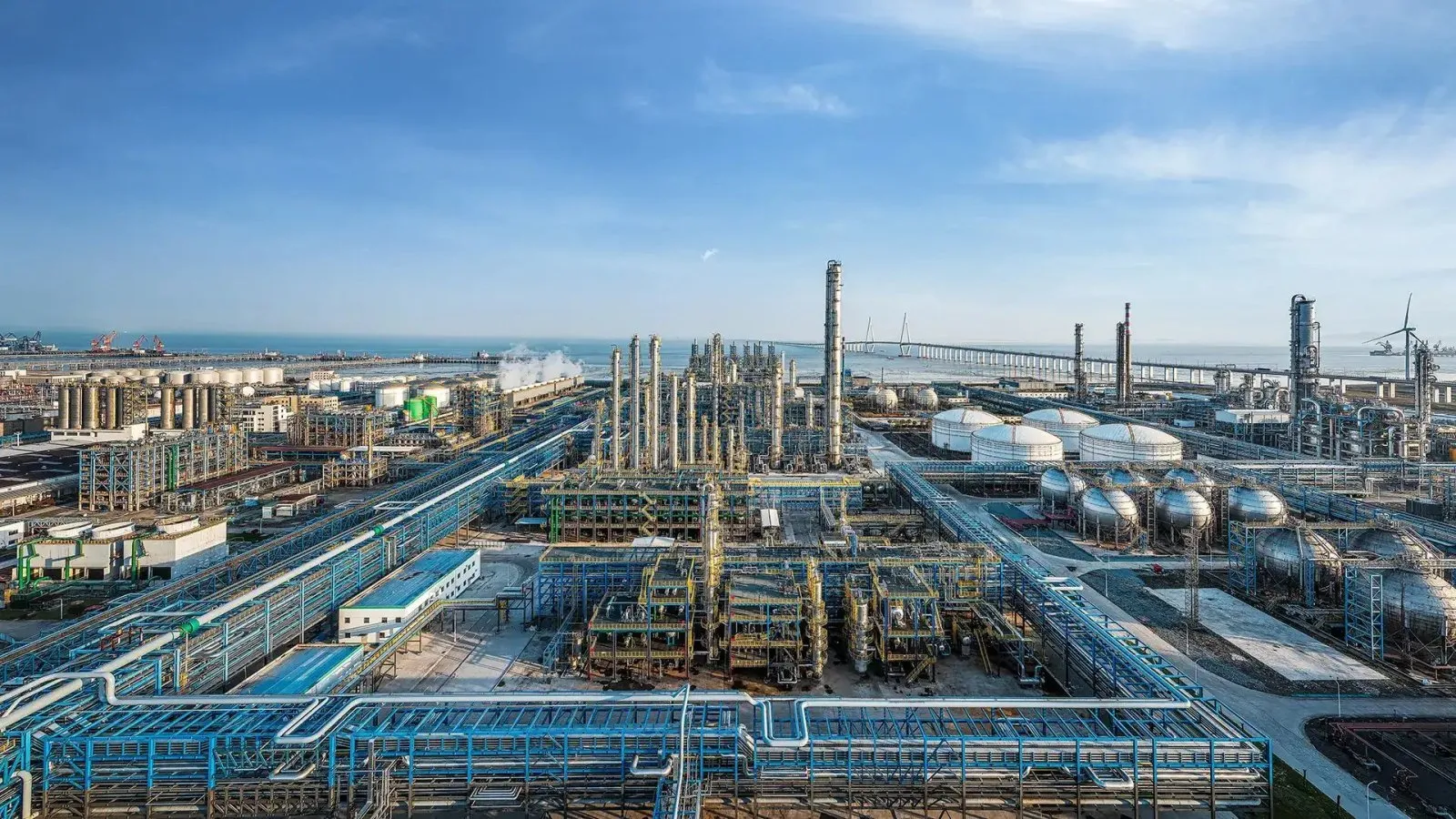
The world's largest refinery complex by total capacity is India’s Jamnagar, with about 1.24 million barrels per day, according to widely cited industry data. Venezuela’s Paraguaná complex follows at roughly 940,000 to 955,000 bpd, while major facilities in South Korea, the UAE, Kuwait and the United States also operate at more than 600,000 bpd. Dangote Refinery in Nigeria currently stands at about 650,000 bpd and is widely described by the operator and industry sources as the world’s largest single train refinery. That distinction separates Dangote from larger multi train complexes such as Jamnagar. Dangote is also pursuing an expansion to 1.4 million bpd, while its proposed Lamu refinery in Kenya is designed for 700,000 bpd. Together, these developments place Africa increasingly inside the global refining capacity conversation.
DAR ES SALAAM — The global refining map is dominated by a handful of enormous industrial complexes, but Africa has begun to produce a different kind of refining story. India’s Jamnagar refinery complex remains the largest by total listed capacity at about 1.24 million barrels per day, followed by Venezuela’s Paraguaná complex at roughly 940,000 to 955,000 barrels per day. The next tier includes Ulsan in South Korea at about 840,000 bpd, Ruwais in the United Arab Emirates at roughly 817,000 bpd, Yeosu in South Korea at about 730,000 bpd and Onsan in South Korea at about 669,000 bpd. Dangote Refinery in Nigeria currently sits at about 650,000 bpd, putting it among the largest individual refinery facilities in the world.
The ranking becomes more interesting when total refinery complexes are separated from individual processing trains. A refinery complex can contain several separate trains that collectively produce a very large headline capacity. Dangote was designed around a single crude distillation train, giving it a different engineering profile from multi train facilities. The company describes the Nigerian plant as the world's largest single train refinery, while Oil & Gas Journal reported the facility at 650,000 barrels per day when it was commissioned. In February 2026, the company reported that the refinery had reached its full designed capacity of 650,000 bpd.
The 10 largest refinery complexes show how concentrated refining capacity has become
| Rank | Refinery complex | Country | Capacity, bpd | Owner or operator |
| 1 | Jamnagar | India | 1,240,000 | Reliance Industries |
| 2 | Paraguaná | Venezuela | 940,000 to 955,000 | PDVSA |
| 3 | Ulsan | South Korea | 840,000 | SK Energy |
| 4 | Ruwais | UAE | 817,000 | ADNOC |
| 5 | Yeosu | South Korea | 730,000 | GS Caltex |
| 6 | Onsan | South Korea | 669,000 | S Oil |
| 7 | Dangote | Nigeria | 650,000 | Dangote Group |
| 8 | Port Arthur | United States | about 630,000 to 730,000 depending on source and capacity definition | Motiva / Saudi Aramco |
| 9 | Galveston Bay | United States | about 631,000 | Marathon Petroleum |
| 10 | Al Zour | Kuwait | 615,000 | KIPIC |
The figures are listed capacities and should not be interpreted as identical measures of actual daily throughput. Published refinery databases can differ because some report nameplate capacity, some use calendar day capacity and others update individual processing units at different times. Jamnagar, for example, is frequently listed at 1.24 million barrels per day in industry references, while newer datasets can give different figures. The table therefore provides a capacity comparison rather than a ranking of actual current production.
Africa's most important entry is built around a single train
Dangote's significance is clearer when the comparison is narrowed to single train facilities. The Nigerian refinery was designed to process about 650,000 barrels of crude oil per day through a single crude processing train. Dangote's own refinery materials describe it as the world's largest single train refinery, while Oil & Gas Journal identified it as the largest single train facility when it was commissioned.
The distinction has engineering and commercial implications. A single train concentrates a very large processing capacity into one integrated production system rather than distributing capacity across several parallel trains. That creates a different operating profile from a complex such as Jamnagar, where the headline capacity represents multiple processing systems operating within the same industrial site. The comparison therefore needs to be made carefully. Saying that Dangote is the world's seventh largest refinery by total complex capacity and saying that it is the world's largest single train refinery are different statements, and both can be true.
Dangote's position is also changing. The company currently presents the refinery's crude distillation capacity at 700,000 barrels per day on its latest facilities information, while its established design and widely reported operating figure has been 650,000 bpd. The company is also pursuing an expansion toward 1.4 million barrels per day. Engineers India Limited was appointed to provide project management consultancy and engineering, procurement and construction management services for the expansion, which would take the facility beyond Jamnagar's commonly cited 1.24 million bpd capacity if completed as planned.
The single train comparison produces a much shorter list
There is no universally maintained global ranking of the ten largest single train refineries because major industry databases generally catalogue refinery complexes and their individual processing units rather than publishing a standardized global single train league table. That limitation makes it difficult to present a definitive top 10 without making assumptions about what constitutes a train. The available evidence, however, clearly places Dangote at the top of the single train category at its current 650,000 bpd operating design, with the company now reporting 700,000 bpd current CDU capacity.
For that reason, the cleaner comparison is between facilities or major processing configurations for which publicly available capacity information is sufficiently clear:
| Facility or major processing configuration | Country | Capacity, bpd | Position or significance |
| Dangote Refinery | Nigeria | 650,000 | World's largest single train refinery under the widely cited 650,000 bpd design |
| Jamnagar refinery complex | India | 1,240,000 total | World's largest refinery complex, built from multiple processing units |
| Al Zour Refinery | Kuwait | 615,000 | One of the world's largest individual refinery facilities |
| Onsan Refinery | South Korea | 669,000 | Major large scale refinery complex |
| Port Arthur Refinery | United States | about 630,000+ | One of the world's largest refinery facilities |
This second table should not be read as a definitive ranking of single trains. It illustrates the problem with treating all large refineries as equivalent units. Dangote's 650,000 bpd is explicitly associated with a single train, while the other figures can represent larger refinery complexes or configurations whose internal train structure is not consistently disclosed in the same public sources.
Africa's refining story is now moving beyond Nigeria
The significance of Dangote extends beyond its position in the global rankings because the company is now attempting to reproduce the model in East Africa. On September 30, 2026, Kenya broke ground on the proposed Dangote East Africa Petroleum Refinery in Lamu County. The project is designed for 700,000 barrels per day and has been presented as a regional refinery intended to supply Kenya and wider East and Central African markets. Reuters reported that the project has an estimated value of $16 billion and is expected to be completed around 2030.
That proposed capacity would exceed the current 650,000 bpd figure associated with Dangote's Nigerian refinery. It would also make the Lamu project one of the largest proposed refining facilities anywhere in Africa. The project is being developed alongside the Lamu port and wider LAPSSET corridor, giving the refinery a potentially broader logistical role involving crude supply, refined petroleum distribution, storage, transport and industrial activity. Reuters reported that the proposed project would include a 1,000 MW power plant and serve markets extending across East Africa.
The geography is particularly relevant for Tanzania. East Africa currently relies heavily on imported refined petroleum products, and the region's fuel supply chains are connected to ports, storage terminals, pipelines, road networks and foreign exchange markets. A 700,000 bpd refinery at Lamu would therefore introduce a new source of refined products into a market where Kenya's Mombasa system and Tanzania's Dar es Salaam corridor have traditionally played major logistical roles. The competitive question will not be determined by refinery capacity alone. Freight costs, crude sourcing, product specifications, storage, pipelines, financing and access to inland markets will determine where the economics settle.
The bigger African question is who captures the value between crude and consumption
The numbers point to a wider industrial shift. Countries that export crude but import refined products effectively divide the petroleum value chain between production and consumption. Refining moves part of that value into processing, logistics, storage, petrochemicals, engineering, maintenance and industrial services. Dangote's Nigerian complex was explicitly designed as an integrated refining and petrochemical platform, with storage, marine access, pipelines, truck loading and power forming part of the wider facility.
That model is now being tested at a continental scale. Nigeria has already demonstrated that an African private investor can finance and construct a refinery at a scale comparable with major facilities in Asia and the Middle East. Kenya's proposed Lamu project would extend that model into East Africa, potentially creating another large regional supply centre. The outcome will depend on whether the new capacity is matched by competitive logistics and enough regional demand to keep large facilities commercially viable.
The refining race therefore has two separate measures. One is the number printed beside a refinery's name. The other is the amount of economic activity that the refinery can pull into its surrounding region. Africa's next phase of refining will be judged less by whether the continent can build large plants and more by whether those plants can connect crude production, energy supply, manufacturing, transport, petrochemicals and regional trade into commercially sustainable industrial systems. The refinery is where crude becomes fuel. The larger prize is where fuel becomes industry.
FAQ
What is currently the world's largest oil refinery? India's Jamnagar refinery complex is widely listed as the world's largest by total refining capacity, at about 1.24 million barrels per day in commonly cited industry data. Its capacity represents a large integrated complex containing multiple processing units rather than one single processing train.
What is the world's largest single train refinery? Dangote Refinery in Nigeria is widely described as the world's largest single train refinery. Its established design capacity is 650,000 barrels per day, although the company's latest facilities information now reports a 700,000 bpd current CDU capacity.
Why is a single train different from a refinery complex? A refinery complex can contain several processing trains operating within the same industrial site. A single train concentrates crude processing through one integrated production system, so the two capacity figures should not be compared as though they describe identical engineering configurations.
Could Dangote become the world's largest refinery? Dangote is pursuing an expansion toward 1.4 million barrels per day. If that expansion is completed at the stated capacity, it would exceed the commonly cited 1.24 million bpd capacity of India's Jamnagar complex.
How large is the proposed Lamu refinery in Kenya? The proposed Dangote East Africa Petroleum Refinery in Lamu is designed to process 700,000 barrels of crude oil per day. Reuters reported the project at an estimated $16 billion and described it as a regional facility intended to supply East and Central African markets.
What does the growth of African refining capacity mean for regional fuel markets? Large refineries can reduce dependence on imported finished petroleum products if they can produce competitively and connect efficiently to regional markets. The economic effect will depend on crude supply, refinery utilization, storage, pipelines, transport costs, foreign exchange conditions and demand across the countries they intend to serve.
 Uchumi360
Business Intelligence
Uchumi360
Business Intelligence
Uchumi360 covers business, investment, and economic policy across East, Central, and Southern Africa.
For the serious reader
You read to the end. That places you in a small group.
Uchumi360 is built for readers who demand precision over speed, structure over sentiment, and analysis that holds uncomfortable conclusions rather than softening them. If this work sharpens how you think about Africa's economy, help us keep building the infrastructure behind it.
Institutional Partners
Commission intelligence. Shape the conversation.
Uchumi360 works with development finance institutions, investment firms, sovereign bodies, and strategic organisations across the coverage region. Institutional partnership unlocks:
- Commissioned sector and country intelligence reports
- Branded research series under your institution's authority
- Exclusive data briefings for internal strategy teams
- Speaking and editorial presence at Uchumi360 events
- Co-published investment outlooks for your markets
Support Our Work
Independent analysis has a cost. Help us bear it.
Uchumi360 does not carry advertising. It does not take editorial direction from sponsors. Every article is produced without commercial compromise. Your contribution funds the reporting, research, and editorial infrastructure that keeps this analysis free from influence.
Secure checkout: One-time and monthly support are processed securely. Add payment credentials to enable checkout here.
Stay Connected
Keep up with every new insight.
Follow our latest analysis, policy coverage, and market intelligence as soon as it is published. If you need something specific, reach out directly and we will point you to the right research.
