
Kenya Plans to Extend Rironi–Mau Summit Highway to Kisii, Kisumu and Uganda Border
Ready
President William Ruto has announced plans to extend Kenya's KSh 184 billion Rironi to Mau Summit highway through Kericho and Kisii towards Kisumu and the Uganda border, potentially expanding one of the country's largest road investments into a major regional trade corridor. The proposal follows preparations for additional highway improvements towards Malaba, but the government has yet to disclose the new extension's construction budget, financing arrangements or final timetable, leaving questions about traffic demand, toll charges and the cost of expanding western Kenya's transport network.
President William Ruto has announced plans to extend Kenya's KSh 184 billion Nairobi to Mau Summit highway through Kericho, Kisii and Kisumu towards Malaba, expanding a major transport investment into western Kenya. The proposed extension could strengthen agricultural trade and freight connections with Uganda, but its construction cost, financing arrangements and implementation timetable remain to be established.
Kenya plans to extend its Rironi to Mau Summit highway expansion into western Kenya, with President William Ruto announcing that the upgraded dual carriageway will continue through Kericho and Kisii towards Kisumu and the Malaba border with Uganda. The proposal would expand the geographical reach of one of Kenya's largest ongoing road infrastructure investments, potentially improving transport between Nairobi, the Rift Valley, agricultural production centres and the country's principal overland trade routes into East Africa.
Speaking at Nyamaiya Stadium in Nyamira County on November 8, Ruto said the government had decided to extend the highway beyond Mau Summit to support economic activity in the western region. The announcement builds on the existing KSh 184 billion ($1.4 billion) Rironi to Mau Summit development, which is being implemented under a public-private partnership involving Chinese construction companies and Kenya's National Social Security Fund.
The president confirmed the intended destinations but did not announce a separate construction budget, signed financing agreement or final engineering design for the new extension. These details remain consequential because the existing investment covers the Nairobi to Mau Summit corridor, whereas extending the highway towards Kisii, Kisumu and Malaba would require additional construction and financing arrangements.
Ruto's announcement also follows earlier government efforts to prepare highway improvements beyond Mau Summit. In September, the president said Kenya had secured approximately KSh 300 million to support feasibility studies for proposed links towards Kisumu and Malaba, alongside a separate route through Eldoret. The Asian Infrastructure Investment Bank (AIIB) has been involved in preparing the Mau Summit to Malaba corridor for potential private investment, although the available project documentation does not establish that all the routes described in the November announcement form part of a single approved construction programme.
A KSh 184 Billion Highway Investment Could Become Part of a Larger Western Kenya Network
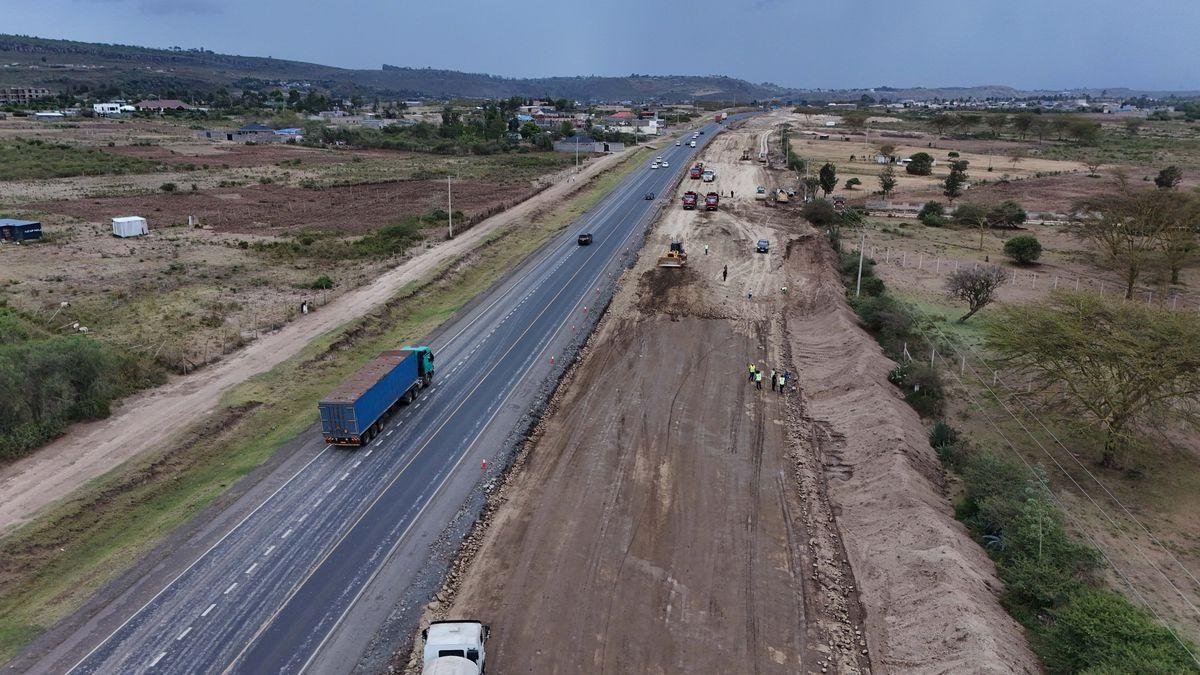
The current Rironi to Mau Summit programme covers approximately 233 kilometres of road improvements, including sections along the A8 highway and the alternative Rironi to Naivasha route through Mai Mahiu. The project is intended to expand road capacity, reduce congestion and improve the movement of passenger vehicles and heavy freight traffic between Nairobi and the Rift Valley.
The Kenya National Highways Authority has divided construction between two Chinese companies. China Road and Bridge Corporation (CRBC), working with Kenya's National Social Security Fund, is responsible for sections connecting Rironi with Gilgil and Naivasha. Shandong Hi-Speed Road and Bridge International is developing the remaining section towards Mau Summit.
The project includes four lane dual carriageway sections, additional lanes where traffic volumes are highest and an elevated road through Nakuru to reduce interference between local traffic and vehicles travelling across the region.
According to KeNHA's project details reported in July, the existing programme is valued at approximately KSh 184 billion, with construction financed through concession arrangements. The companies are expected to operate the upgraded road for an extended period to recover their investments before transferring it to the government.
EXISTING HIGHWAY PROGRAMME
KSh 184B
Reported project investment
233 km
Approximate road programme length
28 years
Planned operating period after construction
2027
Target completion year
These figures concern the existing Rironi to Mau Summit programme. They are not a confirmed budget or concession structure for the newly proposed extension.
The arrangement shifts a substantial portion of the immediate financing and construction responsibility to private concessionaires, although the government retains regulatory responsibilities and may face financial obligations under the project agreements.
The financing model also introduces direct costs for road users. KeNHA previously indicated that the upgraded highway would operate as a toll road, with an indicative charge of KSh 8 per kilometre for small vehicles. Higher charges may apply to heavier vehicles according to the eventual toll structure.
The government has not established whether equivalent tariffs would apply to the proposed extensions towards Kisii and Kisumu. Consequently, the financial consequences for transport companies, agricultural traders and motorists cannot yet be determined.
Extending the Highway Would Strengthen Agricultural and Regional Trade Links
The proposed route would connect several economically important parts of Kenya whose transport requirements extend beyond passenger travel.
Kericho is a major centre of tea production and processing, while Kisii and Nyamira support commercial agriculture, trading and manufacturing activities. Kisumu serves as a commercial centre on Lake Victoria, with road connections to Uganda and other markets in western Kenya.
Improved road capacity could lower journey times for agricultural products, reduce delays for freight operators and expand access to markets for businesses located away from the existing Nairobi to Nakuru highway.
The potential gains are particularly relevant to agricultural supply chains. Tea factories depend on reliable transport for processed exports, while traders handling perishable food products face losses when poor road conditions or prolonged congestion increase delivery times.
However, the financial benefits of road expansion depend on more than additional lanes. Transport costs include fuel, vehicle maintenance, insurance, loading, tolls and the cost of delays. If the government introduces toll charges to recover construction expenditure, freight operators will assess whether time and vehicle operating savings outweigh the additional charges.
That calculation will influence whether the proposed corridor attracts sufficient traffic to sustain its financing arrangements.
The extension also carries an important regional trade dimension. Malaba is one of the principal border crossings between Kenya and Uganda and forms part of the Northern Corridor, which connects the Port of Mombasa with Uganda, Rwanda, Burundi, South Sudan and eastern Democratic Republic of Congo.
The Northern Corridor transport programme identifies improved road connectivity and border efficiency as priorities for reducing transport costs and strengthening regional trade.
A completed dual carriageway reaching western Kenya could increase the reliability of freight movements towards Uganda, although its benefits would depend on continuing improvements to border processing, vehicle inspection, customs clearance and connecting roads.
Kenya Is Preparing Additional Road Investments Towards Malaba
The government's plans extend beyond the route described during Ruto's visit to Nyamira. In February 2026, Kenya's Public Private Partnerships Directorate, KeNHA and AIIB commenced preparation of a proposed upgrade of the Mau Summit to Eldoret to Malaba road.
The approximately 243 kilometre development is being assessed under a public private partnership model, with preliminary studies examining technical feasibility, environmental requirements, economic viability and potential financing arrangements.
The initial assessment was undertaken by Canadian consultancy CPCS and Kenya's Avatech Engineering. By October, the project had passed an initial viability assessment, allowing more detailed evaluation of construction costs, expected traffic volumes and possible toll arrangements.
The feasibility process has received external development finance support. In November 2025, the Multilateral Cooperation Center for Development Finance approved approximately $3.15 million, equivalent to KSh 408 million at the reported exchange rate, for the preparation of the Mau Summit to Malaba road upgrade, with AIIB involved in implementation.
This preparation funding should be distinguished from the cost of constructing the highway itself. Feasibility grants support studies and transaction preparation; they do not establish that sufficient capital has been secured to finance the full development.
Ruto's latest announcement introduces a further question about how the proposed routes would be organised. The previously documented Mau Summit to Malaba project follows the Eldoret corridor, while the president has now described extensions through Kericho and Kisii towards Kisumu and Malaba.
The routes serve overlapping regional markets but would involve different engineering requirements, travel patterns and commercial opportunities. The government has not publicly clarified whether they would proceed as separate investments, alternative alignments or complementary parts of a larger highway network.
That distinction will matter when Kenya determines construction priorities, financing commitments and which sections are commercially suitable for toll road concessions.
Highway Expansion Comes Alongside Plans to Extend the SGR
The road announcement also coincides with Kenya's plans to extend its Standard Gauge Railway from Naivasha towards Kisumu and the Ugandan border.
During the same November 8 address, Ruto said the government intended to extend the railway through Nyamira towards Kisumu and Malaba. The railway programme is part of Kenya's wider ambition to strengthen inland freight transport and improve connections with neighbouring countries.
Road and railway investments could support different transport requirements. Railways are generally better suited to moving large quantities of bulk cargo over long distances when sufficient freight volumes exist, while highways provide more flexible access for passenger vehicles, agricultural distribution and freight moving between multiple destinations.
The economic value of developing both modes will depend partly on how their services are coordinated. If railway improvements attract a greater share of long distance container and bulk freight, highways may experience lower pressure from heavy trucks while continuing to serve local and regional distribution.
Conversely, financing both road and rail projects requires credible demand estimates to avoid excessive infrastructure capacity relative to the available market.
The government has not published a consolidated financial assessment showing the combined investment requirements of the proposed western Kenya road extensions and the SGR expansion.
Financing and Traffic Demand Will Determine Whether the Extension Proceeds
The immediate challenge for the proposed Rironi to Mau Summit extension is converting the presidential announcement into a defined investment programme.
The existing highway development has identifiable contractors, financing arrangements and implementation responsibilities. The additional route towards Kisii and Kisumu has yet to reach the same level of publicly documented preparation.
An investment of this scale would require detailed traffic studies, engineering designs, land acquisition assessments, environmental approvals and financing agreements. If the government adopts a concession model, investors will also need to establish whether projected traffic and toll revenues can cover construction, maintenance and financing costs.
These questions are particularly relevant given Kenya's existing infrastructure financing obligations and the potential fiscal exposure associated with long duration public private partnerships.
Recent National Treasury reporting has identified substantial contingent liabilities associated with Kenya's highway concessions, including the existing Rironi to Mau Summit project. Such liabilities represent potential government obligations under specified contractual circumstances, rather than amounts automatically payable.
The distinction between an announced project and a financed construction programme is therefore essential. While the proposed highway extension could improve transport connections between Nairobi, agricultural production centres and neighbouring markets, its viability will depend on credible freight and passenger demand, manageable construction costs and an appropriate allocation of financing risks.
For Kenya, the commercial opportunity is clear. The Northern Corridor connects the Port of Mombasa to several landlocked economies that depend on efficient transport infrastructure for international trade. Improvements that reduce journey times and freight costs could strengthen Kenya's position as a regional logistics gateway.
The November 8 announcement expands that ambition into western Kenya. The next stage will require the government to establish the proposed route, publish its estimated cost and demonstrate how construction will be financed without placing unsustainable obligations on road users or public finances.
 Uchumi360
Business Intelligence
Uchumi360 covers business, investment, and economic policy across East, Central, and Southern Africa.
For the serious reader
You read to the end. That places you in a small group.
Uchumi360 is built for readers who demand precision over speed, structure over sentiment, and analysis that holds uncomfortable conclusions rather than softening them. If this work sharpens how you think about Africa's economy, help us keep building the infrastructure behind it.
Institutional Partners
Commission intelligence. Shape the conversation.
Uchumi360 works with development finance institutions, investment firms, sovereign bodies, and strategic organisations across the coverage region. Institutional partnership unlocks:
- Commissioned sector and country intelligence reports
- Branded research series under your institution's authority
- Exclusive data briefings for internal strategy teams
- Speaking and editorial presence at Uchumi360 events
- Co-published investment outlooks for your markets
Support Our Work
Independent analysis has a cost. Help us bear it.
Uchumi360 does not carry advertising. It does not take editorial direction from sponsors. Every article is produced without commercial compromise. Your contribution funds the reporting, research, and editorial infrastructure that keeps this analysis free from influence.
Secure checkout: One-time and monthly support are processed securely. Add payment credentials to enable checkout here.
Stay Connected
Keep up with every new insight.
Follow our latest analysis, policy coverage, and market intelligence as soon as it is published. If you need something specific, reach out directly and we will point you to the right research.
