
Ethiopia's Armed Opposition Alliance Adds a New Variable to an Already Fragile Economy
Ready
Ethiopia's currency has lost roughly 165% of its value against the dollar since a July 2024 IMF-mandated float, external debt sits at $28.9 billion, and a $10.5 billion IMF-World Bank programme is the main thing keeping the country's macroeconomic reforms on track. Into that already fragile picture, seven Ethiopian armed groups, including former enemies, announced on 20 September 2026 that they had formed a coalition aimed at removing the federal government. A specialist Horn of Africa risk consultancy has already named federal-regional political tension as "the single most influential variable for investment stability" in Ethiopia this year. This piece asks what that actually means in practical terms for anyone holding Ethiopian currency, financing Ethiopian trade, or running a business connected to its coffee, gold, textile or aviation sectors right now.
ADDIS ABABA — Ethiopia's economy was already navigating a genuinely difficult reform period when seven armed groups, some of them recent battlefield enemies, announced on 20 September 2026 that they had formed a coalition explicitly aimed at removing the federal government. For anyone with capital, trade exposure or operational presence connected to Ethiopia, the relevant question isn't really whether this development is politically dramatic, it clearly is, but what it actually changes about the specific economic and financial risks already sitting on the table.
What Was Actually Announced, in Brief?
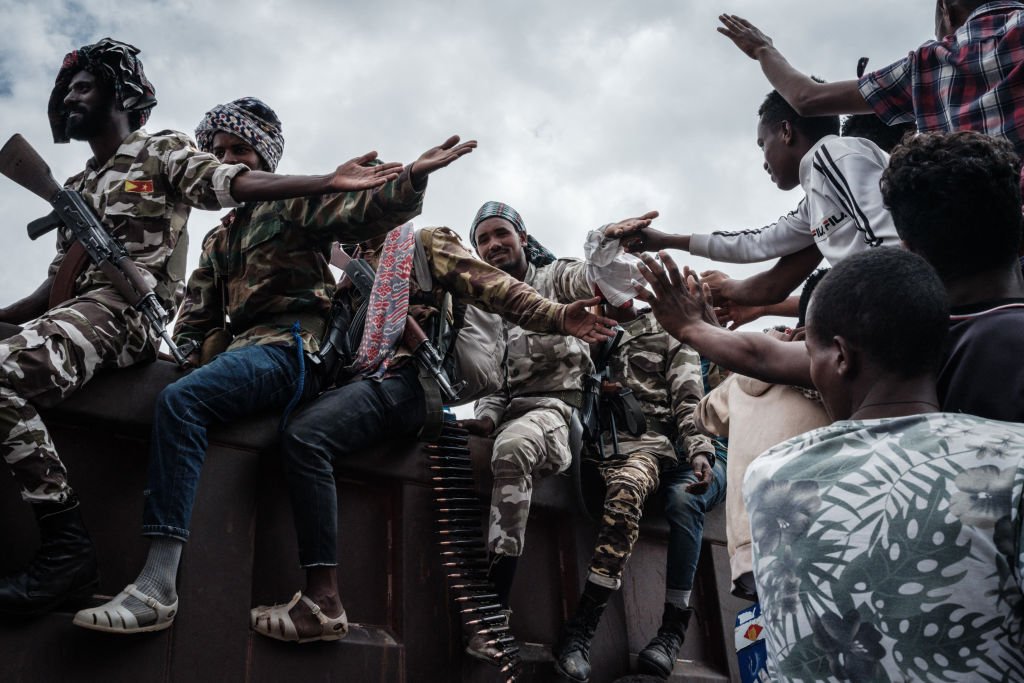
On 20 September 2026, the Tigray People's Liberation Front, the Amhara Fano National Movement, the Oromo Liberation Army, and four smaller regional groups representing Somali, Afar and Benishangul-Gumuz constituencies announced the formation of the Ethiopian Peoples' Forces Alliance for Survival, stating their objective as removing Prime Minister Abiy Ahmed's government and installing a transitional administration. Several of these groups were fighting each other as recently as 2022; Fano fought alongside federal forces against the TPLF during the 2020-2022 Tigray war before rising up against the federal government itself in 2023, while the OLA has separately fought federal forces in Oromia since 2018. Analysts remain genuinely divided on the coalition's near-term military coherence, one Horn of Africa specialist noted coordinated action could open "four to five fronts" for the government to manage simultaneously, while expressing doubt the alliance could sustain a prolonged campaign against a government with substantial drone capability.
What Was Ethiopia's Economic Position Before This Announcement?
This is the essential starting point, because the new alliance arrives inside an economy already managing serious, pre-existing macroeconomic strain rather than a stable baseline being disrupted for the first time. The National Bank of Ethiopia floated the birr in July 2024 under conditions attached to a $10.5 billion IMF-World Bank support package, ending a decade-long fixed exchange rate regime. The currency fell from around 57 to over 100 per dollar within days of the float, and the depreciation has continued since: by mid-2026, the birr traded at roughly 145-160 per dollar on the official market, a decline exceeding 165% from pre-float levels, with the parallel market running 15-20% weaker still. That official-parallel gap was supposed to close as the float matured; more than a year on, it persists, undermining one of the reform programme's central transparency objectives.
External public debt stood at $28.9 billion in 2024, leaving Ethiopia genuinely exposed to currency movements, since a weaker birr directly raises the local-currency cost of servicing dollar-denominated debt. The IMF's fifth programme review, completed 1 July 2026, released a further $464 million, with the Fund's own assessment describing late-2025 and early-2026 outcomes as showing strong growth, export performance, revenue mobilisation and reserve accumulation, alongside declining but not fully controlled inflation. Ethiopia's GDP is estimated at $150-160 billion, making it East Africa's largest economy by population if not yet by per-capita income, and the government has pursued genuine structural reform since 2018: partial privatisation of Ethio Telecom and Ethiopian Airlines, foreign bank market entry, AfCFTA membership, BRICS accession in January 2024, and a targeted World Trade Organization accession by March 2026.
Why Does One Risk Consultancy Say Political Risk Is the Single Biggest Variable Right Now?
Horn of Africa risk analysis firm ARC has been explicit on this point in its 2026 outlook: federal-regional political relations, not commodity prices, not global interest rates, not even the currency reform itself, represent "the single most influential variable for investment stability" in Ethiopia this year. The firm's analysis specifically tracks drone warfare trends, militia mobilisation patterns and the reorganisation of political actors as inputs that materially affect business planning, precisely the category of development the 20 September alliance announcement falls squarely into. That framing matters because it reorders how investors and lenders should actually be weighing Ethiopian risk: currency and debt metrics are visible and quantifiable, but the ARC assessment suggests the underlying political trajectory is currently the more decisive variable determining whether those metrics stabilise or deteriorate further.
What Does This Mean for the Birr and Ethiopia's IMF Programme Specifically?
A currency already down more than 165% since its float, with a persistent and unresolved gap between official and parallel rates, is particularly sensitive to exactly the kind of security deterioration a credible multi-front armed coalition represents. Renewed or expanded conflict typically pressures a currency through several direct channels simultaneously: reduced export earnings from affected regions, increased government security spending diverting resources from reserve accumulation, and reduced foreign investor willingness to hold local-currency assets, each of which would work directly against the stabilisation the IMF programme is designed to achieve. The Fund's own recent assessments have credited Ethiopia with strong export performance and reserve accumulation through early 2026; a materially destabilised security environment is precisely the kind of development that could reverse those specific gains, since the IMF's conditionality-linked disbursements depend on continued progress against targets that assume a reasonably functioning, revenue-generating state across the country's territory, not merely inside Addis Ababa.
What's the Exposure for Ethiopia's Coffee and Gold Export Sectors?
Ethiopia's export economy has undergone a genuinely significant structural shift this publication has tracked closely: gold overtook coffee as the country's leading export by value, with gold export earnings rising from just $27 million in 2018 to more than $1 billion currently, while coffee remains a roughly $3.1 billion pillar of agricultural exports in its own right. The Kurmuk Gold Project in Benishangul-Gumuz, expected to add roughly 290,000 ounces of annual gold production once operational, sits geographically inside one of the specific regions represented within the new alliance, the Benishangul Peoples' Liberation Movement and the Gumuz Peoples' Democratic Movement are both named members of the coalition. That doesn't mean the mine faces imminent direct threat, but it does mean a major, currently near-production mining investment sits inside a region whose own political representatives have just formally aligned against the federal government administering its licensing, security arrangements and export logistics.
Coffee production, concentrated substantially in Oromia and parts of the south, carries a parallel exposure to the OLA's ongoing insurgency there, an exposure that predates this specific alliance announcement but that a more coordinated, multi-front opposition effort could plausibly intensify if fighting in Oromia escalates alongside renewed activity in Tigray or Amhara.
What About Ethiopia's Privatisation and Foreign Investment Pipeline?
The IMF programme's structural conditions have pushed Ethiopia toward partial privatisation of major state assets, including Ethiopian Airlines and Ethio Telecom, alongside opening the banking sector to foreign entrants and encouraging broader foreign direct investment. Every one of those processes depends directly on investor confidence in Ethiopia's medium-term political stability, since privatisation transactions and foreign market entry decisions are priced against exactly the kind of political risk premium a credible anti-government armed coalition raises. Ethiopia's own Investment Climate Statement, cited by the US State Department, already characterised the country's environment as carrying severe risk before this announcement; a further deterioration in that assessment would plausibly slow foreign investor appetite for the privatisation transactions the IMF programme is counting on to help close Ethiopia's financing gap.
Does This Change the Calculus for Ethiopia's Regional Trade Position?
Ethiopia sits at the centre of several regional economic ambitions this publication has covered directly: its Grand Ethiopian Renaissance Dam electricity exports, its expressway construction pipeline linking Addis Ababa to Jimma, Hawassa and the Kombolcha-Dessie corridor toward the north, and its position within COMESA and the wider Horn of Africa trade architecture. Transport corridors damaged during the 2020-2022 Tigray war have still not fully recovered, and reconstruction needs in formerly conflict-affected areas remain a live demand on public finances even before accounting for any renewed fighting. A materially destabilised northern security environment specifically threatens the logistics routes connecting Addis Ababa to the Red Sea via Djibouti and any future access Ethiopia pursues through Eritrean ports, corridors this publication has separately noted Ethiopia has been actively trying to diversify and secure given its landlocked status.
What Should Businesses and Investors Actually Be Watching From Here?
The practical monitoring priorities differ meaningfully from the political question of whether Ethiopia might eventually fragment. The birr's official-parallel spread is a real-time indicator of market confidence worth tracking directly, a widening gap would signal deteriorating sentiment faster than most political commentary could. The IMF's subsequent programme reviews will reveal whether disbursement conditions remain on track despite the security deterioration, or whether the Fund begins flagging security-related risks to programme implementation explicitly. Specific sector exposure matters more than aggregate country risk: businesses and investors connected to mining in Benishangul-Gumuz, coffee production in Oromia, or logistics routes through Amhara and Tigray face materially different and more immediate exposure than those operating solely within Addis Ababa's industrial parks. And the privatisation pipeline itself, whether Ethiopian Airlines and Ethio Telecom transactions proceed on schedule or face delay, will function as a genuine real-time signal of how international investors are actually pricing this specific political development, considerably more informative than any single risk consultancy's written assessment.
None of this settles the underlying question of Ethiopia's political trajectory, which remains genuinely uncertain. But for anyone whose actual decisions depend on Ethiopian economic conditions rather than its constitutional debates, the relevant frame isn't whether the country eventually fragments. It's whether an already-strained currency, an IMF programme still finding its footing, and an export economy increasingly built around gold and coffee sourced from exactly the regions now represented in this new opposition alliance, can absorb a further deterioration in the one variable ARC has already identified as the most decisive: federal-regional political stability itself.
FAQ
How much has the Ethiopian birr actually depreciated? From around 57 per US dollar just before its July 2024 float to roughly 145-160 per dollar on the official market by mid-2026, a decline exceeding 165%, with the parallel market running a further 15-20% weaker.
Is Ethiopia currently under an IMF programme? Yes, a $10.5 billion IMF-World Bank support package tied to currency, subsidy and privatisation reforms since 2024. The programme's fifth review was completed 1 July 2026, releasing a further $464 million.
What does a risk consultancy say is the biggest threat to Ethiopian investment right now? Horn of Africa risk firm ARC has explicitly named federal-regional political relations, not currency or commodity risk, as "the single most influential variable for investment stability" in Ethiopia for 2026.
Which export sectors carry the most direct exposure to this new political development? Gold, now Ethiopia's leading export at over $1 billion annually and concentrated partly in Benishangul-Gumuz, where two of the alliance's seven member groups are based, and coffee, concentrated in Oromia, where the Oromo Liberation Army has fought federal forces since 2018.
Is Ethiopian Airlines' privatisation affected by this? Not directly or immediately, but privatisation transactions depend on investor confidence in medium-term political stability, and a deteriorating security outlook plausibly raises the risk premium investors would attach to any such transaction going forward.
What should investors and businesses actually monitor going forward? The birr's official-parallel exchange rate spread as a real-time confidence indicator, upcoming IMF programme review language on security risk, and whether Ethiopia's state privatisation transactions proceed on schedule or face delay.
 Uchumi360
Business Intelligence
Uchumi360
Business Intelligence
Uchumi360 covers business, investment, and economic policy across East, Central, and Southern Africa.
For the serious reader
You read to the end. That places you in a small group.
Uchumi360 is built for readers who demand precision over speed, structure over sentiment, and analysis that holds uncomfortable conclusions rather than softening them. If this work sharpens how you think about Africa's economy, help us keep building the infrastructure behind it.
Institutional Partners
Commission intelligence. Shape the conversation.
Uchumi360 works with development finance institutions, investment firms, sovereign bodies, and strategic organisations across the coverage region. Institutional partnership unlocks:
- Commissioned sector and country intelligence reports
- Branded research series under your institution's authority
- Exclusive data briefings for internal strategy teams
- Speaking and editorial presence at Uchumi360 events
- Co-published investment outlooks for your markets
Support Our Work
Independent analysis has a cost. Help us bear it.
Uchumi360 does not carry advertising. It does not take editorial direction from sponsors. Every article is produced without commercial compromise. Your contribution funds the reporting, research, and editorial infrastructure that keeps this analysis free from influence.
Secure checkout: One-time and monthly support are processed securely. Add payment credentials to enable checkout here.
Stay Connected
Keep up with every new insight.
Follow our latest analysis, policy coverage, and market intelligence as soon as it is published. If you need something specific, reach out directly and we will point you to the right research.
