
Ethiopia Opens $50 Million Gold Refinery as Record Exports Reshape the Sector
Ready
Ethiopia has opened a US$50 million national precious metals refinery in Addis Ababa with capacity to process more than 600 tonnes annually. The facility launches after recorded gold export earnings reached about US$5.5 billion in 2025/26 and is designed to process both Ethiopian and regional supply.
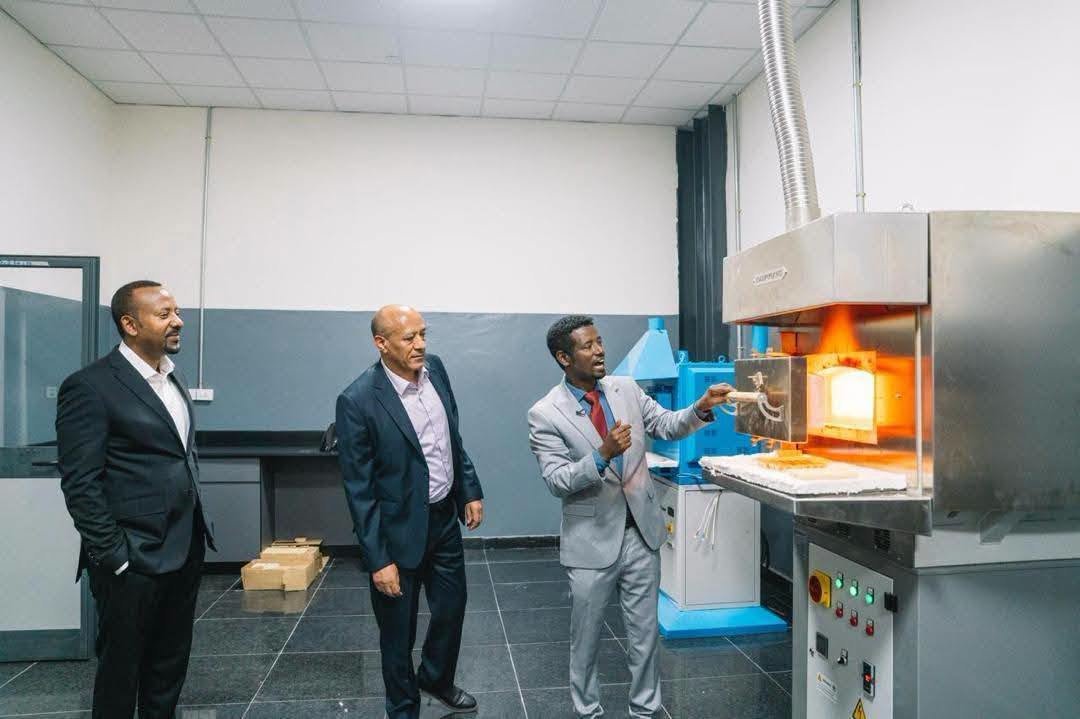
Ethiopia has opened its first National Precious Metals Refinery in Addis Ababa, giving the country domestic capacity to assay, refine and cast gold into export ready bullion at a time when gold has become one of its largest sources of foreign exchange. Prime Minister Abiy Ahmed inaugurated the facility on October 10 at the Bole Lemi Special Economic Zone. The refinery represents an initial investment of about US$50 million and is owned through a joint venture in which state owned Ethiopian Investment Holdings holds 51 percent and Dubai based Sam Precious Metals owns 49 percent.
The facility can process more than 600 tonnes of precious metals annually and produce cast and minted gold and silver bars in different purities. That capacity is substantially larger than Ethiopia’s current gold production, which the Ministry of Mines placed at about 44 tonnes in the 2025/26 fiscal year. The difference immediately explains why the government is presenting the refinery not only as domestic processing infrastructure but as a potential regional facility capable of attracting gold from neighbouring countries and other African producers.
The refinery is opening after an extraordinary increase in Ethiopia’s recorded gold exports. Prime Minister Abiy said gold generated about US$5.5 billion during the 2025/26 fiscal year, while subsequent Ministry of Mines figures placed earnings at around US$5.65 billion. Total merchandise exports exceeded US$11 billion, meaning gold alone accounted for roughly half of Ethiopia’s recorded export earnings.
That increase reflects several developments occurring at the same time. International gold prices rose sharply, formal export volumes increased and changes in Ethiopia’s foreign exchange and gold purchasing system helped redirect some production that had previously moved through informal channels into the official market. The rapid increase in recorded exports should therefore not be interpreted as evidence that underlying mine production expanded at the same rate. Part of the increase appears to reflect formalisation of existing production alongside higher prices and stronger official purchasing incentives.
A 600 Tonne Refinery Needs More Than Ethiopian Gold
The refinery’s scale is one of its most important commercial characteristics. Ethiopia produced about 44 tonnes of gold in 2025/26, while the new facility is designed to process more than 600 tonnes of precious metals each year. Even allowing for silver and other metals within the plant’s total capacity, domestic gold production alone would currently fill only a relatively small part of the refinery.
High utilisation will therefore require Ethiopia to attract significant third party supply from elsewhere in Africa. Prime Minister Abiy has explicitly invited neighbouring countries and regional mining companies to use Addis Ababa for refining, certification, value addition and sale of precious metals.
The commercial opportunity is clear. Large volumes of African gold are currently refined or traded through international centres outside the continent, particularly in the Gulf, Europe and other established bullion markets. Ethiopia is attempting to retain more of that activity within Africa by offering processing capacity closer to producing countries.
The challenge is that refining capacity alone will not turn Addis Ababa into a regional gold centre. Mining companies and traders will compare the cost, speed, reliability and credibility of the Ethiopian refinery with established alternatives. They will require confidence in assay accuracy, settlement systems, security, customs procedures, responsible sourcing controls and international acceptance of the bars produced.
The refinery therefore begins with physical capacity, but its regional ambitions will depend on commercial credibility.
Ethiopia’s Gold Boom Followed Major Changes in the Market
For years, Ethiopia struggled to channel artisanal gold into official markets because miners and traders could often obtain better returns through informal channels linked to the parallel foreign exchange market. The National Bank of Ethiopia responded by offering premiums above international gold prices in an attempt to attract supply into the formal system.
The foreign exchange reform introduced in July 2024 changed that arrangement significantly. Ethiopia moved away from the previous system in which gold purchasing incentives had to compensate suppliers for a heavily overvalued official exchange rate. The National Bank began using market based exchange rates while continuing to pay a more moderate premium to gold suppliers.
The premium did not disappear entirely. The International Monetary Fund was still reporting in 2026 that the National Bank paid miners above international prices and was preparing to phase that premium out over time while allowing greater private sector participation in gold settlement and purchasing.
The change nevertheless improved the relative attractiveness of official gold sales and contributed to a sharp rise in recorded exports. In the first half of the 2025/26 fiscal year, gold export earnings reached about US$2.56 billion compared with US$1.36 billion during the equivalent period a year earlier. Export volumes increased by almost 30 percent while average prices rose by about 45 percent.
Artisanal and small scale miners remain central to this expansion. Large industrial mining projects have not yet reached the production levels required to dominate national supply, meaning much of Ethiopia’s gold continues to come from smaller producers.
The refinery therefore sits at the end of a gold value chain that remains fragmented at the production stage. Improving refining capacity can strengthen the formal market, but maintaining official supply will still depend on competitive purchasing prices, effective regulation, access to finance and the ability of artisanal miners to sell through legal channels.
The State Has Retained Majority Ownership
The ownership structure gives the Ethiopian government a direct commercial interest in the refinery rather than limiting its role to regulation and taxation. Ethiopian Investment Holdings owns 51 percent of the venture while Sam Precious Metals holds 49 percent and brings technical expertise from the international precious metals industry.
The arrangement gives Ethiopia majority equity exposure to any profits generated by the business while bringing in an operator with experience in refining and bullion markets. It also reflects the government’s broader strategy of using Ethiopian Investment Holdings to manage commercially significant state assets through corporate structures rather than conventional government departments.
The economic return will nevertheless depend heavily on throughput. A refinery designed for hundreds of tonnes of annual processing needs enough material flowing through the plant to justify its operating and capital costs. With domestic gold production far below installed capacity, the success of the business will depend partly on whether Ethiopia can attract enough regional supply to keep the facility commercially active.
The refinery is therefore not simply a downstream addition to Ethiopia’s mining industry. It is also a regional trading proposition.
Domestic Refining Keeps More Activity Inside Ethiopia
Gold refining does not create most of the value contained in a bar of bullion because the majority of that value comes from the gold itself. The economic case for domestic refining lies instead in retaining more of the services and commercial activity surrounding the commodity.
Assaying, refining, casting, certification and bar production can now take place within Ethiopia rather than being performed overseas. The government has also pointed to the recovery of silver and other valuable material contained in unrefined gold, which can be separated and accounted for during the refining process.
Local processing can also improve the quality of information available to authorities. A central refinery can provide more consistent data on the purity, weight and value of gold entering formal export channels, helping improve export statistics, taxation and oversight of the sector.
These benefits should not be overstated before the refinery establishes an operating record. The facility has only just opened, so there is not yet evidence showing how much gold it will process, how much additional value will remain in Ethiopia or how significantly it will reduce informal trade. Those outcomes will depend on how the refinery is integrated with miners, traders, banks and regulators.
What has changed is that Ethiopia now possesses domestic infrastructure capable of performing functions that previously had to be carried out abroad.
The Challenge Is Building an Internationally Trusted Market
Ethiopia’s ambition goes beyond processing domestic production. The government wants Addis Ababa to become a regional precious metals hub serving miners from elsewhere in Africa.
That ambition creates regulatory obligations alongside commercial opportunities. Gold is highly portable, easy to convert into cash and difficult to trace once refined. Regional refining therefore requires strong systems for determining where gold originated, confirming that it was legally produced and ensuring that the metal is not connected to smuggling, money laundering or conflict financing.
Sam Precious Metals has responsible sourcing and chain of custody experience at its existing international operations, but accreditations held by the company elsewhere should not automatically be treated as certification of the new Ethiopian refinery. The Bole Lemi facility will have to establish its own record and secure the standards required by international buyers.
This is particularly important if Ethiopia wants its bullion to trade through the largest global markets. International acceptance depends on more than purity. Buyers need confidence in refinery governance, sourcing standards, technical consistency and the legal chain through which metal enters the facility.
The difference between a national refinery and a regional bullion centre will therefore be determined by standards and market participation rather than plant size alone.
Gold Has Become Central to Ethiopia’s Foreign Exchange Position
The refinery also matters because of gold’s growing role in Ethiopia’s external accounts. The country has spent years dealing with foreign exchange shortages that constrained imports, investment and industrial activity. Gold now provides one of the largest sources of export earnings available to the economy.
Recorded gold exports of about US$5.5 billion to US$5.65 billion in 2025/26 represented a dramatic increase from earlier years and accounted for roughly half of merchandise export earnings. That makes the management of the gold sector relevant to monetary policy and foreign exchange availability rather than only mining policy.
Formalising gold exports increases the amount of foreign currency that passes through official channels and improves the government’s visibility over one of its most valuable export sectors. A domestic refinery can reinforce that process if miners and traders continue choosing legal channels.
The key economic risk is assuming that recent export growth will continue automatically. Gold prices can fall, artisanal production can fluctuate and informal markets can return if official purchasing conditions become unattractive. The refinery does not remove those risks. It creates infrastructure that can make formal trade more efficient if the surrounding incentives remain competitive.
The Next Test Is Throughput
The inauguration establishes the industrial capacity. The next stage is proving that Ethiopia can fill it.
The most important numbers will no longer be the US$50 million construction cost or the nominal 600 tonne processing capacity. They will be the tonnes of precious metals actually refined each year, the share of Ethiopian gold processed domestically, the amount of supply attracted from neighbouring countries and the revenue generated from refining and related services.
The performance of the refinery will also show whether Addis Ababa can develop associated businesses around the plant. Bullion trading, jewellery manufacturing, banking services, logistics, insurance and precious metals financing could all expand if enough gold begins moving through the facility.
Ethiopia already has a substantial domestic gold industry and record official export earnings. What it has built at Bole Lemi is infrastructure intended to move the country from being primarily a producer and exporter towards participating more directly in the processing and trading stages of the market.
The scale of the refinery shows that Ethiopia is aiming beyond its existing production base. At around 44 tonnes of annual domestic gold output, a facility capable of processing more than 600 tonnes of precious metals has been built with a much larger regional market in mind.
Whether that ambition succeeds will become visible in how much metal actually moves through Addis Ababa and whether miners across Africa begin choosing Ethiopia over the established refining centres they use today.
FAQ
How much did Ethiopia’s new gold refinery cost? The refinery represents an initial investment of about US$50 million.
Who owns Ethiopia’s National Precious Metals Refinery? Ethiopian Investment Holdings owns 51 percent of the joint venture, while Sam Precious Metals owns 49 percent.
Where is the refinery located? The refinery is located in the Bole Lemi Special Economic Zone in Addis Ababa.
How much can the refinery process? The facility can process more than 600 tonnes of precious metals annually. The figure covers total precious metals capacity and should not be interpreted as 600 tonnes of Ethiopian gold production.
How much gold did Ethiopia produce in 2025/26? The Ministry of Mines reported about 44 tonnes of gold production during the fiscal year.
How much did Ethiopia earn from gold exports? Official figures place recorded gold export earnings at approximately US$5.5 billion to US$5.65 billion during the 2025/26 fiscal year.
Why is the refinery much larger than Ethiopia’s current production? The government intends the facility to process gold and other precious metals from neighbouring countries and other African producers as well as Ethiopian supply.
Did Ethiopia stop paying premiums for locally supplied gold after the 2024 foreign exchange reform? No. The pricing system changed significantly after the reform, but the National Bank continued paying a smaller premium above international prices and was still preparing to phase it out in 2026.
Will the refinery eliminate gold smuggling? No. The refinery can strengthen formal processing and valuation, but reducing informal gold trading will also depend on competitive official pricing, regulation, enforcement and the incentives facing miners and traders.
Is Ethiopia already a regional gold refining hub? Not yet. The country now has the physical refining capacity, but becoming a regional hub will depend on throughput, international certifications, responsible sourcing systems and whether African miners and traders choose to send significant volumes to Addis Ababa.
 Uchumi360
Business Intelligence
Uchumi360 covers business, investment, and economic policy across East, Central, and Southern Africa.
For the serious reader
You read to the end. That places you in a small group.
Uchumi360 is built for readers who demand precision over speed, structure over sentiment, and analysis that holds uncomfortable conclusions rather than softening them. If this work sharpens how you think about Africa's economy, help us keep building the infrastructure behind it.
Institutional Partners
Commission intelligence. Shape the conversation.
Uchumi360 works with development finance institutions, investment firms, sovereign bodies, and strategic organisations across the coverage region. Institutional partnership unlocks:
- Commissioned sector and country intelligence reports
- Branded research series under your institution's authority
- Exclusive data briefings for internal strategy teams
- Speaking and editorial presence at Uchumi360 events
- Co-published investment outlooks for your markets
Support Our Work
Independent analysis has a cost. Help us bear it.
Uchumi360 does not carry advertising. It does not take editorial direction from sponsors. Every article is produced without commercial compromise. Your contribution funds the reporting, research, and editorial infrastructure that keeps this analysis free from influence.
Secure checkout: One-time and monthly support are processed securely. Add payment credentials to enable checkout here.
Stay Connected
Keep up with every new insight.
Follow our latest analysis, policy coverage, and market intelligence as soon as it is published. If you need something specific, reach out directly and we will point you to the right research.
