
Uganda Bet $985 Million on 10 Boeing Jets. Its Current Fleet Is Down to Six.
Ready
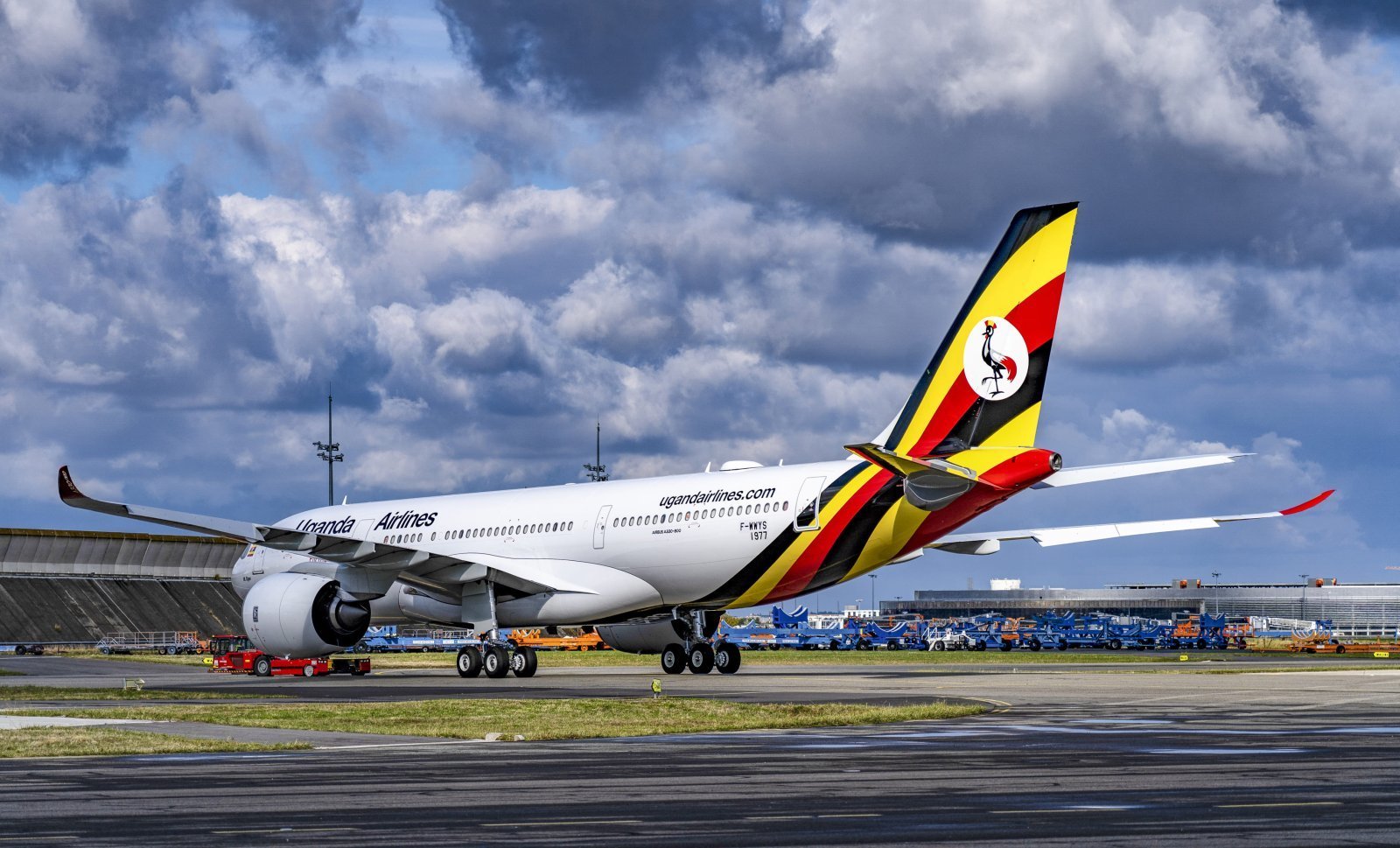
Uganda Airlines signed a framework agreement worth approximately $985 million (Shs 3.7 trillion) with Boeing at State House, Entebbe, on 10 June 2026, witnessed by President Yoweri Museveni, then converted part of that commitment into a firm order at the Farnborough Airshow on 21 July 2026, its first-ever direct Boeing purchase: four 787-9 Dreamliners for long-haul routes and four 737 MAX 8s for regional and medium-haul connectivity. Two converted freighters, a 767 and a 737, remain a separately described future acquisition rather than a firm part of the July order. The deal includes pilot type-rating training, technical support and a partnership with Soroti Flying School to build local aviation capacity. The context makes the bet riskier than the headline number suggests: CAPA's fleet database lists just six aircraft in active service at Uganda Airlines today, and the carrier's own capacity for the summer 2026 season is down 11.3% year on year, partly because it has had to wet-lease a Boeing 787 from Ethiopian Airlines after technical issues grounded its Airbus A330-800neo jets. Uganda is betting the new fleet turns Entebbe into a genuine regional hub; the immediate evidence is an airline currently flying less, not more.
ENTEBBE — Uganda has placed one of East Africa's most ambitious aviation bets in years, and it did so in two stages that matter for understanding exactly what's been committed and what hasn't.
What Actually Got Signed, and When
On 10 June 2026, Uganda Airlines and Boeing signed a framework agreement at State House, Entebbe, in the presence of President Yoweri Museveni, covering 10 aircraft, eight passenger jets and two converted freighters, valued at approximately $985 million, or Shs 3.7 trillion. That framework became a firm order six weeks later: at the Farnborough International Airshow on 21 July 2026, Uganda Airlines and Boeing formally announced the purchase of eight aircraft, four Boeing 787-9 Dreamliners and four 737 MAX 8s, explicitly described by both companies as the airline's first-ever direct Boeing aircraft purchase. The two converted freighters, a 767 and a 737, remain part of the partnership's stated ambition but are described as a future acquisition rather than a component of the July firm order.
"This commitment with Boeing marks a defining step in Uganda Airlines' growth journey and in our broader ambition to position Entebbe as a strategic aviation hub for the region," said CEO Ato Girma Wake at the announcement.
What the Aircraft Are For
The 787-9s, with a stated range up to 8,300 nautical miles, are designed to give Uganda Airlines long-haul reach into Europe, Asia and the Middle East for the first time under its own branding; the airline has previously flown long-haul only via a wet-leased Ethiopian Airlines 787-8. The 737 MAX 8s, ranging up to 3,500 nautical miles, are intended to strengthen medium-haul connectivity across Africa, the Middle East and India. Boeing says both types burn 20-25% less fuel than the aircraft they replace, a real operating-cost advantage if utilisation holds up. Beyond the airframes, the partnership includes pilot type-rating training, technical support, aircraft maintenance development, and collaboration with Soroti Flying School to build Uganda's domestic aviation training capacity, arguably the part of the deal with the longest-lasting economic value regardless of how the airline's own commercial fortunes turn out.
The Fleet the Order Is Actually Replacing
Here's where the ambition meets the current reality. CAPA's fleet database lists Uganda Airlines with just six aircraft in active service today: three Bombardier CRJ900 regional jets and a single Airbus A330-800, with one additional CRJ900 and one additional A330-800 currently listed as inactive. To keep operating through 2026, the airline has had to wet-lease a Boeing 737-800 and a 787-8 from Ethiopian Airlines, a direct consequence of technical issues that grounded part of its own A330-800neo fleet earlier in the year.
| Metric | Current Status |
| Active fleet | 6 aircraft (3 CRJ900, 1 A330-800) |
| Inactive fleet | 1 CRJ900, 1 A330-800 |
| Wet-leased capacity | Boeing 737-800 and 787-8, from Ethiopian Airlines |
| Summer 2026 seat capacity | ~231,000 seats, 23.1% of Uganda's total market |
| Year-on-year capacity change | Down 11.3% |
| Uganda's total departing seat capacity | ~999,000 seats, down 7.1% year on year |
| New Boeing order (firm, July 2026) | 4× 787-9, 4× 737 MAX 8 |
| New freighters (future acquisition) | 1× 767 converted, 1× 737 converted |
Sources: CAPA Fleet Database and OAG Schedules Analyser, as reported by Aviation Week, July 2026; Boeing and Uganda Airlines joint statements, June-July 2026.
Uganda Airlines remains the largest single operator from Uganda by departure seats even at this reduced scale, but its own capacity is contracting at a moment its government is committing nearly a billion dollars to expand it. That's not necessarily a contradiction, aircraft orders take years to deliver and the current dip may well reflect exactly the maintenance and reliability problems the new fleet is meant to solve, but it is the clearest evidence available right now of the operational gap between Uganda's aviation ambition and its current execution.
Why Uganda Wants This Anyway
The logic behind the bet is straightforward. Ugandans travelling internationally routinely connect through Addis Ababa, Nairobi or other regional hubs rather than flying direct, and every one of those connections generates economic activity, hotel stays, ground transport, cargo consolidation, aviation services jobs, in someone else's city rather than Uganda's. Works and Transport Minister Fred Byamukama has framed the expansion explicitly around reducing that reliance and improving direct connectivity for tourists, investors and businesses. The two freighters, even as a still-pending future acquisition, point at a genuinely underexploited opportunity: Uganda's coffee, flowers, fish and fresh produce exports depend heavily on fast, reliable air cargo, and a dedicated freighter operation could reduce the distance between Ugandan producers and international markets in a way passenger aircraft, with cargo as an afterthought in the belly hold, cannot.
A Crowded Market With No Room for a Symbolic Airline
Uganda isn't building this strategy in an empty market. Ethiopian Airlines has spent decades turning Addis Ababa into one of Africa's dominant international connecting hubs. Kenya Airways still operates Nairobi as a major regional gateway despite its own well-documented financial troubles. RwandAir has built Kigali into a smaller but genuinely international node, tied to Rwanda's broader tourism and conference ambitions. Somalia is separately working to revive its own long-dormant flag carrier. Entebbe is entering a contest over connecting passengers and cargo that's really a contest between cities and national economies, not just airlines.
That context is exactly why the fleet and capacity numbers above matter more than the $985 million headline figure. A larger fleet produces a larger cost base automatically, more pilots, engineers, cabin crew, insurance, fuel, airport charges and financing, whether or not the routes built around it actually carry enough passengers and cargo to justify the investment. Africa's aviation history includes plenty of governments that treated a national carrier as a prestige project first and a commercial enterprise second, producing expensive fleets, politically influenced route decisions and recurring public bailouts. A $985 million commitment raises the cost of repeating that pattern considerably.
What Actually Determines Whether This Works
The test Uganda Airlines now faces isn't whether the aircraft arrive. It's whether they fly full, frequently, on routes that can sustain commercial yields, while the airline simultaneously fixes the reliability problems that pushed it into wet-leasing capacity from a competitor in the first place. That means resolving several open questions at once: whether Entebbe can generate enough origin-and-destination passengers on its own, whether it can pull connecting traffic from Rwanda, eastern DRC, South Sudan and Tanzania away from established hubs, whether the airline can compete on price and schedule with Ethiopian, Kenya Airways, RwandAir and Gulf carriers already serving the same catchment, and whether route and scheduling decisions can be made on commercial grounds rather than political ones.
None of that is guaranteed by ordering eight Boeing jets, and the current 11.3% capacity decline is a reminder that Uganda Airlines is trying to solve a demand and reliability problem at the same moment it's making one of the largest capital commitments in its history. The aircraft can build the airline. Whether Entebbe becomes a hub depends entirely on the business Uganda builds around them, and that business, on the numbers available today, is currently flying less than it was a year ago.
FAQ
How much did Uganda actually commit to Boeing, and for what? A framework agreement signed in June 2026 valued the full commitment at approximately $985 million for 10 aircraft. That became a firm order in July 2026 for eight aircraft, four 787-9 Dreamliners and four 737 MAX 8s; two converted freighters remain a separately described future acquisition.
Is this Uganda Airlines' first Boeing purchase? Yes, its first-ever direct aircraft purchase from Boeing. The airline's existing wide-body fleet has been built around Airbus A330-800neo aircraft.
How big is Uganda Airlines' fleet right now? CAPA's fleet database lists just six aircraft in active service, three Bombardier CRJ900 regional jets and one Airbus A330-800, with the airline also wet-leasing a Boeing 737-800 and 787-8 from Ethiopian Airlines to maintain capacity.
Why is Uganda Airlines leasing aircraft from Ethiopian Airlines? Technical issues affected part of its own Airbus A330-800neo fleet earlier in 2026, forcing the airline to wet-lease replacement capacity, including a 787-8, from Ethiopian Airlines to sustain long-haul operations.
Is Uganda Airlines' traffic actually growing? Not currently. Its capacity for the summer 2026 season is down 11.3% year on year, even as the airline remains Uganda's largest operator by departure seats and the government commits new capital to fleet expansion.
What does Uganda need to do to make this investment pay off? Beyond taking delivery of the aircraft, the airline needs to resolve its current reliability problems, build sufficient origin and connecting passenger demand through Entebbe, develop a viable cargo business around the pending freighters, and keep route and scheduling decisions commercially, rather than politically, driven.
 Uchumi360
Business Intelligence
Uchumi360
Business Intelligence
Uchumi360 covers business, investment, and economic policy across East, Central, and Southern Africa.
For the serious reader
You read to the end. That places you in a small group.
Uchumi360 is built for readers who demand precision over speed, structure over sentiment, and analysis that holds uncomfortable conclusions rather than softening them. If this work sharpens how you think about Africa's economy, help us keep building the infrastructure behind it.
Institutional Partners
Commission intelligence. Shape the conversation.
Uchumi360 works with development finance institutions, investment firms, sovereign bodies, and strategic organisations across the coverage region. Institutional partnership unlocks:
- Commissioned sector and country intelligence reports
- Branded research series under your institution's authority
- Exclusive data briefings for internal strategy teams
- Speaking and editorial presence at Uchumi360 events
- Co-published investment outlooks for your markets
Support Our Work
Independent analysis has a cost. Help us bear it.
Uchumi360 does not carry advertising. It does not take editorial direction from sponsors. Every article is produced without commercial compromise. Your contribution funds the reporting, research, and editorial infrastructure that keeps this analysis free from influence.
Secure checkout: One-time and monthly support are processed securely. Add payment credentials to enable checkout here.
Stay Connected
Keep up with every new insight.
Follow our latest analysis, policy coverage, and market intelligence as soon as it is published. If you need something specific, reach out directly and we will point you to the right research.
