

Africa Is Moving Up the Chain. Control Has Not Followed.
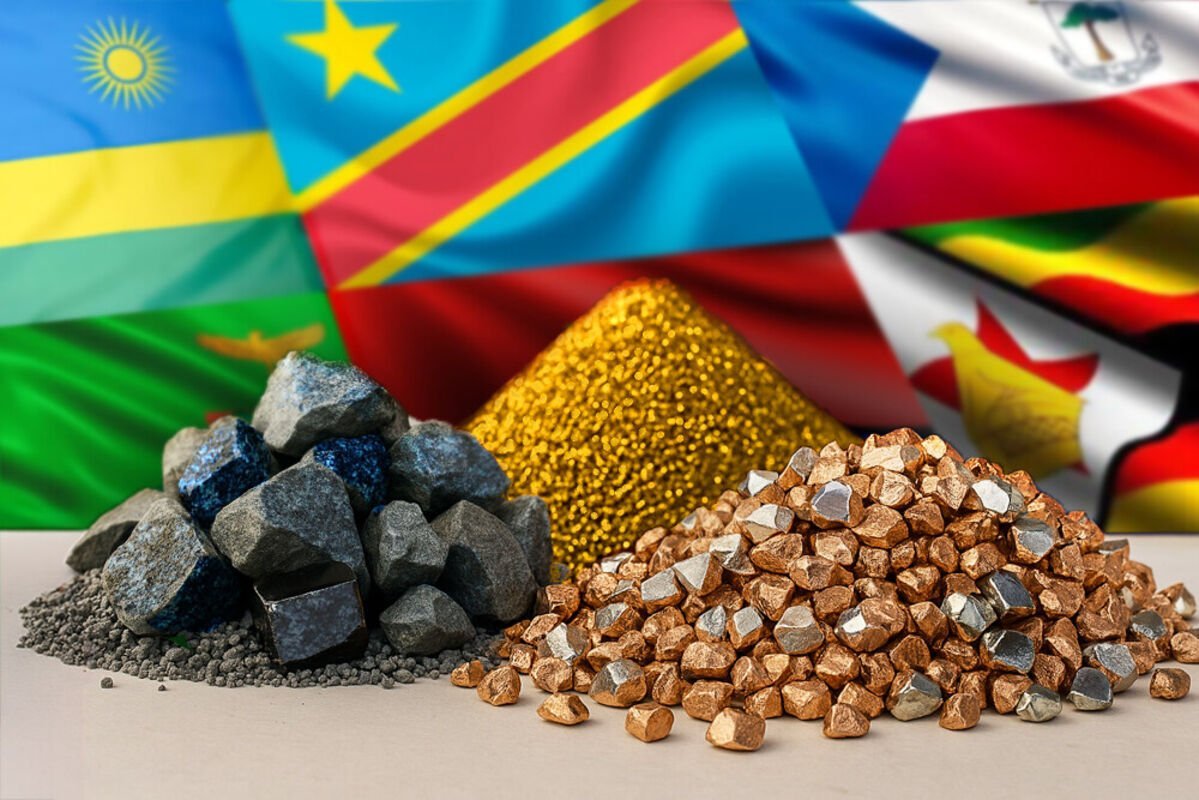
The continent's mineral endowment is becoming central to the global energy transition. But the architecture of ownership, processing, and financing tells a more complicated story about who will ultimately capture the value.
Africa is not a passive participant in the global critical minerals race. It is the arena in which that race is most actively being run. The continent holds approximately 30 percent of the world's known mineral reserves, including dominant global shares of cobalt, manganese, chromium, and platinum group metals, and increasingly significant deposits of lithium, graphite, and rare earth elements that are structurally essential to electric vehicle batteries, wind turbines, and grid-scale energy storage. As the energy transition accelerates demand for these inputs, the scramble to secure long-term supply has made Africa's geological endowment the subject of geopolitical competition at a scale not seen since the Cold War.
The exploration and licensing surge reflects this reality. South Africa has issued hundreds of new exploration licenses in recent years, targeting minerals beyond its traditional platinum and gold base. Namibia, which holds one of the world's most significant undeveloped uranium deposits and emerging lithium potential, has accelerated its project pipeline with deliberate speed. Ghana is repositioning its mining regulatory environment to attract capital beyond gold. Tanzania has moved aggressively to assert state participation in mining revenues through the Mining Act reforms of 2017 and 2022, increasing royalty rates and mandating local content in ways that signal a government serious about capturing a larger share of what its ground produces. Zambia, sitting atop the Copperbelt that supplies a significant portion of the world's copper and cobalt, has attracted renewed investor attention as copper prices respond to electrification demand projections. The Democratic Republic of Congo, which alone holds an estimated 70 percent of global cobalt reserves alongside the world's largest known deposits of coltan, remains the single most strategically critical mining jurisdiction on the planet.
Taken together, this activity represents a meaningful shift. Africa is not simply producing more. It is actively managing its positioning in supply chains that the world's largest economies have identified as strategic infrastructure.
The Control Architecture Has Not Shifted to Match
The production surge, however, is not the same as value chain control. These are different things, and conflating them is the central analytical error made by observers who look at Africa's mineral wealth and conclude that the continent is winning the transition race.
Value chain control in critical minerals has three structural components: ownership of extraction, ownership of processing and refining, and access to downstream manufacturing. Africa broadly controls the first. It does not control the second or third at any meaningful scale and the gap is not closing fast enough to matter in the current decade of transition.
Processing is where mineral value multiplies. Raw cobalt ore is worth a fraction of refined cobalt hydroxide, which is itself worth a fraction of cathode-grade cobalt sulphate used in battery manufacturing. The same logic applies to copper, lithium, and manganese. The countries that refine and process capture the majority of the economic value embedded in the mineral. By this measure, Africa is participating at the least lucrative stage of supply chains it is critical to supplying.
China understood this dynamic twenty years before the current transition debate began. Chinese firms have systematically acquired mining assets across the DRC, Zambia, and increasingly across the broader region, not primarily to secure raw material supply though that matters but to control the processing and refining nodes that convert raw ore into battery-grade material. Chinese companies now control an estimated 70 to 80 percent of cobalt refining capacity globally, almost entirely through investments made in African extraction anchored to Chinese processing infrastructure, predominantly located in China itself. The ore leaves the continent. The value-added work happens elsewhere. The economics flow accordingly.
The United States, the European Union, and increasingly India are now attempting to replicate and counter this architecture, deploying capital through vehicles like the US Development Finance Corporation, the EU's Global Gateway initiative, and bilateral agreements framed under the Minerals Security Partnership. But these efforts face a structural disadvantage: they are arriving late to an architecture that China spent two decades building, and they are competing in jurisdictions where Chinese financing, infrastructure construction capacity, and risk appetite are already embedded in operating relationships.
The DRC: The Clearest Case Study in Incomplete Transition
No country illustrates the tension between mineral endowment and value capture more sharply than the Democratic Republic of Congo. The DRC is, by geological measure, one of the wealthiest countries on earth. Its cobalt reserves alone are strategically essential to every major EV manufacturer and battery producer operating today. Its copper, coltan, and lithium deposits add layers of criticality that no other single jurisdiction can match.
Yet the structure of the DRC's mining economy is almost entirely extractive in the classical sense. The vast majority of cobalt and copper produced in the country leaves as concentrate or partially refined material, processed outside the continent and sold into global supply chains at values that dwarf what the DRC receives at the point of export. Glencore's Katanga Mining complex, the Chinese-operated Tenke Fungurume mine, and the constellation of smaller operations across the Copperbelt produce at industrial scale, but the economic architecture of those operations is designed to move material out, not to build processing capacity in.
The lithium race in the DRC is accelerating this pattern rather than correcting it. Both Chinese and US firms are deploying capital to secure lithium assets as the DRC's lithium potential only partially mapped becomes clearer. The competitive dynamic between these external actors is intense and increasingly geopolitical in character, with mining concessions becoming proxy battlegrounds for supply chain positioning. Local value capture in this context remains politically contested and practically limited. The DRC government has signaled ambitions for beneficiation the processing of raw minerals domestically before export but the gap between policy ambition and operational reality is wide, constrained by energy infrastructure deficits, institutional capacity, and the terms embedded in existing mining agreements that pre-date the current strategic environment.
The human dimension of this pattern is not incidental to the economics. The DRC's artisanal and small-scale mining sector, which produces a significant share of cobalt alongside industrial operations, operates largely outside formal value chains, exposed to price volatility, health hazards, and supply chain due diligence pressures from Western buyers who are simultaneously demanding ethical sourcing and seeking the cheapest possible critical mineral inputs. This contradiction is unresolved and structurally embedded.
Zambia and Tanzania: Policy Ambition Meets Structural Reality
Zambia and Tanzania represent a different version of the same challenge countries with clear policy intent to capture more value from their mineral endowment, operating in a structural environment that makes that intent difficult to execute at speed.
Zambia's copper sector is the most directly exposed to the energy transition of any single African mining economy. Copper is essential not just to EV batteries but to the entire electrical infrastructure buildout that the transition requires wiring, transformers, grid components, and charging infrastructure all depend on copper at scale that current global production is not yet positioned to meet. Projections from the International Energy Agency suggest that copper demand could exceed supply by the early 2030s if current investment trajectories hold. Zambia sits on approximately six percent of global copper reserves and has significant unexplored potential in its northwestern provinces.
The Zambian government has pursued a deliberate strategy of increasing state participation in the sector, including through ZCCM-IH, the state mining investment vehicle, and through royalty and tax reforms designed to increase the share of mineral revenue retained domestically. The reacquisition of Mopani Copper Mines from Glencore in 2021 signaled an assertive approach to resource nationalism that reflects a broader regional pattern. These are legitimate policy tools for improving value capture. But they exist in tension with the investment climate requirements needed to attract the capital necessary to expand production toward the levels that would actually capture the transition opportunity. The balance between resource nationalism and investor confidence is one that no copper-producing country has fully resolved.
Tanzania's mineral economy, anchored by gold but increasingly attentive to its graphite and nickel endowment both critical to battery supply chains faces a version of the same tension. The 2017 Mining Act reforms, while domestically popular as assertions of sovereignty over natural resources, created a period of investor uncertainty that slowed project development in the near term. The subsequent stabilization of the regulatory environment has allowed projects to move forward, but the episode illustrates how quickly policy signals can affect capital allocation decisions in a sector where project timelines are measured in decades and investment commitments are made against long-term regulatory assumptions.
Tanzania's graphite deposits, concentrated in the Lindi and Mtwara regions, are among the largest known in the world and have attracted significant interest from battery manufacturers and EV supply chain investors seeking to diversify away from Chinese graphite supply, which currently dominates global production. The strategic value of Tanzanian graphite is not theoretical it is immediate. But converting that strategic value into economic value requires processing capability that does not yet exist at scale domestically, and the financing structures being proposed largely replicate the extraction model rather than the beneficiation model.
The Beneficiation Question: Why It Is Hard and Why It Matters Anyway
Beneficiation processing minerals domestically before export is the policy instrument most consistently proposed as the mechanism for African value capture. It is the right answer to the right question. The challenge is that it is genuinely difficult to execute, and the structural barriers are more stubborn than policy rhetoric typically acknowledges.
Processing critical minerals at industrial scale requires reliable, affordable electricity at volumes that most African mining jurisdictions cannot currently supply. Cobalt refining, copper smelting, and lithium processing are energy-intensive operations where electricity cost is a primary determinant of competitiveness. The DRC, despite sitting on the Congo River which has the potential to generate more hydroelectric power than any other river on earth has an installed electricity generation capacity that cannot meet current industrial demand, let alone the additional demand that domestic processing would create. Zambia's hydroelectric-dependent grid is vulnerable to drought-induced power shortfalls that have periodically curtailed mining operations entirely. Tanzania's energy infrastructure, while improving, is not yet positioned to support large-scale mineral processing at competitive cost.
This means that beneficiation strategies are inseparable from energy infrastructure investment strategies and the financing requirements, project timelines, and institutional capacity demands of building both simultaneously are substantial. Countries that have successfully moved up mineral value chains Botswana in diamonds, to some degree Indonesia in nickel did so with either exceptional state capacity, exceptional natural resource rents, or both. Replicating those outcomes across a more complex mineral portfolio, in more institutionally constrained environments, with more competitive external pressure, is a harder problem.
None of this argues against beneficiation. It argues for realism about the sequencing, financing, and institutional requirements and against policy frameworks that treat beneficiation as a declaration rather than a decades-long investment programme.
Where Value Is Actually Being Created and Who Is Capturing It
The honest assessment of the current moment is this: Africa is creating enormous strategic value for the global energy transition, and the majority of the economic value generated by that strategic importance is being captured outside the continent.
The firms that are winning in this environment are not primarily African. They are the Chinese state-linked enterprises that built patient, integrated positions across extraction and processing over two decades. They are the Western majors Glencore, Rio Tinto, Anglo American that operate at the extraction end with capital structures and risk management capabilities that African state enterprises cannot currently match. They are the battery manufacturers and EV producers in China, Europe, and increasingly the United States that sit at the downstream end of supply chains and capture the largest margins.
African governments and private sector actors are not passive in this structure, and the policy tools available to them royalties, local content requirements, state equity participation, export processing zones are real instruments of value capture that have produced meaningful results in specific contexts. But deploying those tools effectively requires regulatory stability, institutional capacity, and long-term strategic consistency that is difficult to sustain across political cycles and in environments where immediate fiscal pressures compete with long-term industrial policy.
The most important structural shift that would change this picture is not more exploration licenses or higher royalty rates. It is the development of domestic processing capacity anchored in reliable energy supply, financed through instruments that do not simply replicate extraction-era dependency, and governed by agreements that require value addition as a condition of access rather than an aspiration attached to it. Several countries in the region are moving in this direction. None has yet crossed the threshold from aspiration to structural reality at scale.
The Strategic Implication for the Region
For the nine economies in Uchumi360's coverage Tanzania, Kenya, Uganda, Rwanda, Burundi, DRC, Mozambique, Zambia, and Malawi the critical minerals transition presents the most significant economic opportunity of the next two decades. It also presents the most significant risk of continued structural dependency if the transition from extraction to value chain participation is not actively engineered rather than passively hoped for.
The countries best positioned to capture value are those that can offer not just mineral access but processing capability, regulatory predictability, and energy infrastructure in combination. No single country in the region currently offers all three at scale. The regional integration agenda, most actively pursued through the African Continental Free Trade Area and the East African Community's industrial policy frameworks, offers the theoretical possibility of combining complementary strengths across borders. But the gap between regional policy architecture and actual cross-border industrial investment remains wide.
The window is not unlimited. The energy transition will require massive mineral inputs over the next fifteen to twenty years, and the supply chain architectures being built now the smelters, the refining facilities, the long-term offtake agreements will determine the structure of the industry for decades beyond that. Africa's geological endowment guarantees it a place in that structure. Whether it is the place of the extractor or the place of the processor is still being decided.
_______________________________________________________________________________________
Sources and data references: International Energy Agency Critical Minerals Market Review 2023; Mineral Security Partnership framework documentation; UNCTAD Commodity Dependence Report 2023; DRC Mining Registry data; Zambia ZCCM-IH annual reports; Tanzania Mining Commission FY2023/24 report; BloombergNEF Electric Vehicle Outlook 2024; Wood Mackenzie African Mining Outlook 2024.
_______________________________________________________________________________________
Uchumi360 is an economic intelligence platform covering East Africa, Central Africa, and the Southern African frontier. Analysis covers critical minerals, blue economy, mega projects, country economies, energy, macroeconomics, investment, mining, logistics, trade, financing, and more