

The African Development Bank Has a 40 Percent Problem. Understanding It Is Essential for Understanding How Africa Finances Its Own Development.
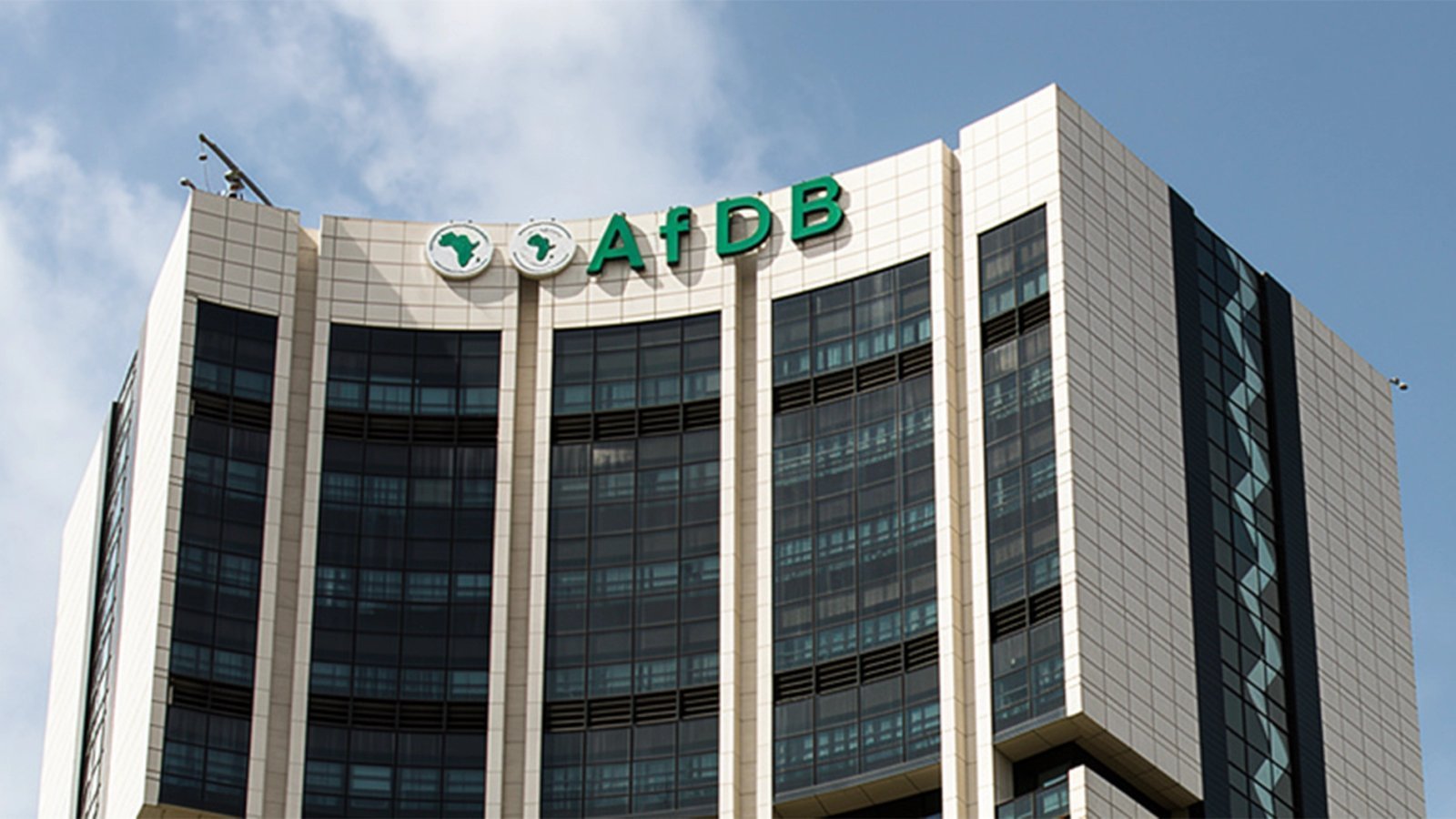
The AfDB's AAA Rating Belongs to Africa. The Guarantee Behind It Does Not. The African Development Bank was founded in 1964 as an exclusively African institution. By 1982, fiscal reality had forced it open to non-regional members. Today 54 African nations hold 60 percent of the bank's shares while 28 non-regional members, led by the United States, Japan, and Germany, hold the remaining 40 percent. The bank's AAA credit rating, the instrument that allows it to borrow cheaply and lend affordably across the continent, depends on the callable capital guarantees that those non-regional shareholders provide. This structural reality defines what the AfDB can do, how it prices risk, and who ultimately has leverage over its decisions. For every African government that borrows from the bank, and for every investor that assesses African sovereign risk using AfDB lending as a benchmark, understanding this structure is not optional.
The 1982 Decision and What It Actually Meant
The African Development Bank's founding in 1964 reflected the Pan-African ambition of the independence era: a continental financial institution owned and governed entirely by African states, deploying capital in service of African development priorities without the conditionalities and governance requirements that Bretton Woods institutions attached to their financing. For nearly two decades, membership was restricted to African regional members, preserving the bank's character as an institution whose mandate and ownership were aligned.
The 1980s changed this calculus definitively. The debt crises, structural adjustment pressures, and infrastructure deterioration that characterised Sub-Saharan Africa's lost decade created a financing gap that African member states' capital contributions could not close. The bank faced a choice between institutional purity and institutional effectiveness: maintain exclusive African ownership and operate with constrained capital, or open membership to non-regional members whose capital contributions and credit guarantees would expand the bank's financing capacity at the cost of its ownership concentration.
In 1982, the bank opened to non-regional members. This was a rational decision given the constraints of the moment, and it has enabled the AfDB to grow into the institution it is today, with a lending portfolio that funds infrastructure, agriculture, energy, and human capital development across the continent at a scale that would have been impossible with African capital alone. But it was also a structural transformation whose consequences extend well beyond the shareholder register and into the fundamental operating logic of the institution.
The current ownership structure, 60 percent African regional members and 40 percent non-regional members, creates a governance architecture in which major decisions require broad shareholder consensus that includes the non-regional shareholders. The United States, Japan, Germany, France, and the United Kingdom collectively hold a proportion of non-regional shares sufficient to exercise significant influence over the bank's strategic direction, capital adequacy policies, and senior leadership decisions. This influence is not exercised continuously or confrontationally in the normal course of the bank's operations. But it is structurally available, and its availability shapes the bank's operating framework in ways that are more pervasive than any specific instance of its exercise.
The AAA Rating: The Instrument and Its Architecture
The AfDB's AAA credit rating from Fitch, Moody's, and S&P is the single most important financial asset the institution possesses. It allows the bank to borrow on international capital markets at rates reflecting the highest possible creditworthiness, and to on-lend those funds to African member states at rates substantially below what those states could access independently. The spread between the AfDB's borrowing cost and its lending rate is the financial mechanism through which the bank's development mandate is operationalised. Without the AAA rating, the bank's cost of funds rises, its lending rates rise proportionally, and the concessional financing advantage that makes AfDB loans attractive to member states erodes.
The structural basis of the AAA rating is where the governance architecture becomes most analytically significant. The rating agencies' assessments of the AfDB's creditworthiness rest substantially on the callable capital commitments of its highly-rated non-regional shareholders. Callable capital is capital that shareholders have committed to provide to the bank in the event that it faces a financial crisis requiring recapitalisation, distinct from the paid-in capital that shareholders have already contributed to the bank's balance sheet. The AfDB's callable capital from non-regional members with AAA or AA-rated sovereign credit profiles provides the backstop that allows rating agencies to assign a rating above what the bank's own balance sheet characteristics would support independently.
This structure means that the AfDB's financial capacity to serve Africa is partially dependent on the creditworthiness of non-African governments and their willingness to maintain their callable capital commitments. A deterioration in the fiscal position of major non-regional shareholders, or a political decision by those shareholders to reduce or withdraw their callable capital commitments, would directly affect the AfDB's rating and therefore its borrowing costs and lending capacity. This dependency is not a theoretical vulnerability. It is a structural feature of the institution's financial architecture that constrains the bank's operating independence in specific and identifiable ways.
The most direct constraint is on risk appetite. Maintaining the AAA rating requires the bank to manage its balance sheet conservatively, avoiding loan concentrations, maintaining capital adequacy ratios that satisfy rating agency methodologies, and limiting its exposure to the highest-risk projects that African development most urgently needs financing for. The infrastructure projects, the industrial development investments, and the frontier market lending that would most dramatically advance African economic transformation often carry risk profiles that conservative AAA-rated institution balance sheet management cannot accommodate at the scale required. The bank must balance its development mandate against the financial management standards that its rating depends on, and the rating agency standards reflect the preferences of the international capital markets rather than the development needs of African member states.
The 2020 Episode: What Institutional Governance Looks Like Under Pressure
The 2020 governance episode involving AfDB President Akinwumi Adesina is documented institutional history that illustrates how the ownership structure's latent influence operates when activated under specific circumstances.
Following whistleblower allegations against President Adesina, the bank's internal ethics committee conducted an investigation and unanimously cleared him of the allegations. Under normal institutional governance, a unanimous ethics committee clearance would conclude the matter. Instead, the United States Treasury, the bank's second-largest shareholder, formally rejected the findings of the ethics committee and called for an independent external investigation by a former Irish president serving as a high-level panel chair.
The external investigation also cleared President Adesina. He was subsequently re-elected to a second term with strong African member state support. The immediate outcome therefore favoured the African consensus position.
But the episode's institutional significance lies less in its outcome than in what it demonstrated about the governance architecture. A unanimous internal ethics committee finding was publicly rejected by a single non-regional shareholder whose capital contribution gives it leverage over the institution's operations. African member states who supported the internal process found that their collective position could be overridden by the exercise of shareholder influence by a single external government. The bank's formal governance structures, its ethics committee process, its board procedures, operated as designed. And yet the outcome of that process was effectively suspended pending the satisfaction of a major non-regional shareholder.
For African governments assessing the AfDB's institutional independence, the episode provides a data point that is more revealing than any governance document or shareholder agreement. Formal structures and actual power distribution are not always the same thing, and the 2020 episode made visible a gap between them that institutional documents alone would not have revealed.
The Financing Dependency and Its Consequences for Africa
The structural dependency the AfDB's ownership and rating architecture creates has specific and measurable consequences for how African development is financed and therefore for how it proceeds.
The types of projects that the AfDB can finance at scale are constrained by the risk management requirements of AAA-rated institution balance sheet management. Large-scale industrial development projects, frontier infrastructure in the highest-risk operating environments, equity investments in early-stage industrial ventures, and the patient long-horizon capital that transformative development requires are systematically harder for the AfDB to finance at scale than the infrastructure projects with more predictable cash flows and more conventional risk profiles that its rating management framework can accommodate.
This constraint is not absolute. The AfDB has developed instruments, blended finance mechanisms, first-loss capital facilities, and risk-sharing arrangements with development finance institution partners, that extend its effective risk appetite beyond what its balance sheet alone would support. But these instruments are complex, slow to deploy, and dependent on the cooperation of the same non-regional shareholders whose capital commitments underpin the rating. The bank's ability to innovate its financing instruments is itself partially constrained by the governance architecture of its ownership structure.
The consequence for African member states is that the institution most explicitly mandated to serve their development needs cannot always provide the financing those needs most urgently require, on the terms those needs require, at the speed those needs require. This is not a failure of intent or of the bank's leadership. It is a structural outcome of the financing architecture that the 1982 decision established and that the AAA rating dependency perpetuates.
What African Capital Markets Could Change
The structural argument for building African domestic capital markets as the foundation for a genuinely autonomous continental development finance capacity is not simply a Pan-African aspiration. It is the logical conclusion of the institutional analysis above.
African pension funds collectively manage hundreds of billions of dollars in assets, predominantly invested in developed market securities that offer the liquidity and rating profiles that their fiduciary obligations require. African sovereign wealth funds, though smaller in aggregate than those of major oil-producing regions, represent growing pools of long-horizon capital that are currently deployed predominantly offshore. African insurance companies, commercial banks, and institutional investors collectively represent a domestic capital pool that, if mobilised for African infrastructure and development investment at even a modest proportion of its total assets, would substantially reduce Africa's dependence on external capital for its development financing.
The obstacles to this mobilisation are institutional rather than absolute. African pension funds cannot invest in AfDB bonds or African infrastructure projects at scale without the liquidity, the rating quality, and the governance standards that would satisfy their fiduciary obligations to their beneficiaries. Building those standards requires exactly the kind of institutional development, capital market deepening, and regulatory harmonisation that the AfCFTA framework, the African Union's capital market integration agenda, and the AfDB's own capital market development programmes are working toward.
This is the long-horizon path to the institutional independence that the structural analysis identifies as the gap between the AfDB's mandate and its operating constraints. It is not available immediately and it is not a simple policy choice. It requires decades of patient institutional development that generates the domestic capital base from which a genuinely autonomous continental development finance institution could eventually be capitalised.
In the interim, the AfDB remains what it is: a hybrid institution with an African mandate operating within a financial architecture that reflects the conditions of the 1982 compromise. Understanding that architecture clearly is the precondition for using the institution strategically rather than either celebrating it uncritically or dismissing it as captured by external interests.
The Honest Assessment
The AfDB is simultaneously Africa's most important development finance institution and an institution whose independence is structurally constrained by the capital relationships that make it effective. These two facts are not in contradiction. They are the defining tension of the institution's existence, and managing that tension productively rather than pretending it does not exist is the analytical task that African governments, policymakers, and development finance practitioners need to perform clearly.
The bank has delivered real value across the continent. Its infrastructure financing, its policy development support, its technical assistance programmes, and its role in mobilising co-financing from other development partners have contributed to African development outcomes that would have been more difficult to achieve without its existence. The alternative to the 1982 compromise was not a more powerful, more autonomous AfDB. It was a smaller, less capitalised institution with less capacity to serve the continent it was built for.
But the alternative to accepting the current structure as permanent and unalterable is not to abandon the AfDB. It is to build, deliberately and over time, the African capital market depth that would allow the institution's ownership and financing base to progressively shift toward the African character its mandate describes. Rwanda's World Bank blended finance package, Tanzania's investment surge attracting private capital at scale, the AfCRA's attempt to build African credit assessment capacity, and the domestic capital market development programmes across the coverage region are all, in different ways, contributions to the same long-horizon project: building the African financial system that would eventually make genuine institutional autonomy possible.
The AfDB is the most powerful tool Africa currently has for financing its own development. The structural constraints on its independence are real and consequential. Both of these things are true simultaneously, and holding both of them clearly is the starting point for engaging with the institution as it actually is rather than as its mandate describes or its critics condemn.
_______________________________________________________________________________________
Sources: African Development Bank Group Charter and Shareholder Structure Documentation. AfDB Annual Report 2024. Fitch Ratings AfDB Credit Assessment Documentation. Moody's AfDB Rating Rationale. AfDB Board of Governors Resolutions on Non-Regional Membership 1982. US Treasury Department Statements on AfDB Governance 2020. AfDB Ethics Committee Findings on President Adesina 2020. High-Level Independent Panel Report on AfDB Whistleblower Allegations 2020. African Union Capital Markets Integration Framework. AfCFTA Financial Services Protocol. African Pension Fund Asset Allocation Data, African Development Bank Research Department 2024. Data reflects information available to March 2026. Shareholder percentage figures and rating rationale details should be verified against latest AfDB Annual Report and rating agency publications before final publication.
_______________________________________________________________________________________
Uchumi360 covers business, investment, and economic policy across East, Central, and Southern Africa.
