

TAZARA and Lobito Are Not Competing Railways. They Are Competing Systems for Moving Africa's Critical Minerals to the World. Tanzania Needs to Understand the Difference.
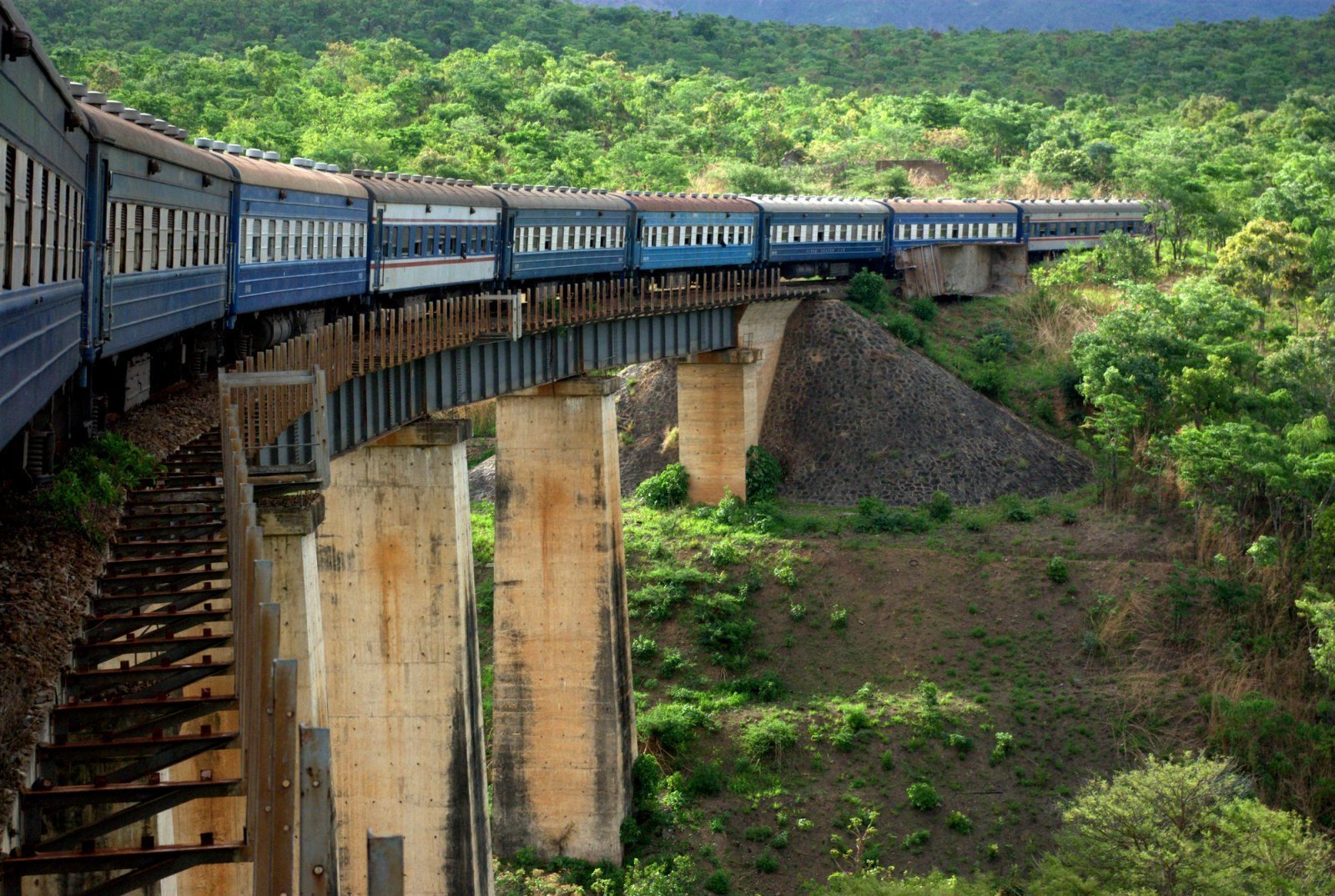
The rehabilitation of the Tanzania-Zambia Railway and the parallel development of the Lobito Corridor connecting Angola's Atlantic coast to the Copperbelt are routinely discussed as separate infrastructure projects with separate geopolitical sponsors. They are not separate. They are two integrated logistics systems competing for the same mineral export flows from the same producing region. Zambia is targeting over 3 million tonnes of copper annually by the early 2030s. The DRC continues scaling cobalt and copper output. The constraint on capturing the economic value of that production is not extraction capacity. It is logistics. And the corridor that delivers faster transit, lower cost, and higher reliability will capture the majority of the flow. For Tanzania, the TAZARA rehabilitation is not just an infrastructure investment. It is a position in one of the most consequential logistics competitions in African economic history.
The Logistics Constraint That Is Shaping the Critical Minerals Economy
The global energy transition has created a demand trajectory for copper, cobalt, and battery minerals that is restructuring the economics of mineral logistics at a pace that most infrastructure planning frameworks have not caught up with. The International Energy Agency projects copper demand increasing significantly over the next decade as electric vehicle manufacturing, grid infrastructure, and renewable energy systems all require copper in volumes that current global production cannot sustainably meet without the development of the Central African deposits that represent the largest untapped copper endowment globally.
Zambia's Copperbelt and the DRC's Katanga province together constitute this endowment's core. Zambia is targeting production of over 3 million metric tonnes annually by the early 2030s, more than triple its current output, through a combination of existing mine expansions, new project development, and the KoBold Metals investment that Uchumi360's critical minerals analysis documented as representing the most technologically sophisticated exploration and development approach yet applied to African copper geology. The DRC's Kamoa-Kakula project is targeting 800,000 tonnes per annum after its 2026 expansion, making it one of the largest copper operations globally. Combined with Zambia's production trajectory, the Central African Copperbelt is on course to produce volumes that would make it one of the most important single copper supply regions in the world by 2030.
The constraint on realising that production potential is not geological. It is logistical. Copper cathode, copper concentrate, and cobalt hydroxide are bulk commodities whose economics are highly sensitive to transport cost and reliability. A tonne of copper cathode that costs USD 100 to transport to port generates more revenue for the mine, the government, and the economy than the same tonne transported for USD 200. A tonne that arrives at port predictably and on schedule allows buyers to plan their manufacturing and inventory accordingly. A tonne that arrives late, damaged, or with uncertain transit times imposes costs on buyers that they price into the discount they offer sellers. Transport efficiency is not a peripheral consideration in the economics of Central African copper. It is one of the primary variables determining whether the production expansion that is underway generates the fiscal revenue, the private sector returns, and the economic development that Zambia and the DRC's governments are counting on.
Two Systems, One Objective, Fundamentally Different Architectures
The TAZARA railway, connecting Zambia's Kapiri Mposhi to Dar es Salaam across 1,860 kilometres, was built in the 1970s with Chinese financing and construction as a strategic infrastructure project designed to give Zambia a southern Africa sanctions-era alternative to South African and Rhodesian transport routes. It has operated well below its design capacity for most of its history, constrained by deferred maintenance, rolling stock deficiencies, management challenges, and the border crossing inefficiencies that multimodal freight encounters on this corridor. The rehabilitation programme, backed by approximately USD 1.4 billion in investment with Chinese financing as its primary source, aims to restore TAZARA to a functioning freight railway capable of carrying between 1.2 and 2.4 million tonnes of freight annually.
[VERIFICATION NOTE: The USD 1.4 billion rehabilitation figure and the capacity targets should be verified against the latest TAZARA rehabilitation project documentation and the Tanzania-Zambia intergovernmental agreement signed in 2024 before publication. Financing structure and timeline should also be confirmed.]
The Lobito Corridor, connecting Angola's Lobito Port to the DRC's Copperbelt and Zambia's mining regions via the Benguela Railway and connecting infrastructure, is being developed with US and European Union backing as an explicit strategic counter to Chinese infrastructure dominance in African logistics. The Lobito Atlantic Railway concession, awarded to a consortium including US-backed Ivanhoe Capital and the EU's Global Gateway programme, represents the most significant Western infrastructure investment in Africa in a generation and the most direct geopolitical challenge to China's position in the continent's logistics architecture.
These two projects are different in their architecture in ways that go beyond their geographic orientation. TAZARA is a rehabilitation of existing infrastructure, rebuilding what was built fifty years ago to a standard that the current freight volume opportunity requires. The Lobito Corridor is a combination of rehabilitation on the Benguela Railway's existing track and new infrastructure development on the connecting sections, structured as a private sector concession rather than a state-to-state infrastructure agreement.
This architectural difference has specific and significant implications for how each corridor performs over its operational life. State-to-state infrastructure agreements, like the TAZARA model, are better suited to providing universal service at regulated prices but have historically struggled with the maintenance discipline, operational efficiency, and commercial responsiveness that competitive freight markets require. Private sector concession models, like the Lobito structure, are better suited to operational efficiency and commercial responsiveness but create different questions about pricing, access, and the distribution of economic benefits between the concession holder and the host countries.
The Geopolitical Architecture Behind Each Corridor
It would be analytically incomplete to describe the TAZARA and Lobito competition purely in commercial and logistical terms without acknowledging the geopolitical architecture that each corridor represents. Both are infrastructure projects. Both are also expressions of competing visions of how Africa's critical mineral supply chains should be organised and who should control the infrastructure through which they flow.
TAZARA's rehabilitation, financed primarily through Chinese channels, extends and deepens the infrastructure relationship between China and the Central Corridor's mineral producing region that Uchumi360's China trade architecture analysis identified as one of the most consequential features of the current global trade system. Chinese infrastructure financing in Africa is not purely commercial. It is part of a strategic architecture through which China is embedding itself into the logistics systems that move African minerals to global markets, including to Chinese processing facilities. A rehabilitated TAZARA that efficiently moves Zambian copper to Dar es Salaam is also a TAZARA that efficiently moves Zambian copper into Chinese-controlled processing and trade systems through Dar es Salaam's port.
The Lobito Corridor, financed and structured by US and European partners, is explicitly designed to provide an alternative to this architecture. The Minerals Security Partnership, the US Development Finance Corporation's critical minerals mandate, and the EU's Global Gateway programme are all, in different ways, attempts to build the infrastructure through which Western and allied country supply chains can access African critical minerals without routing through Chinese-controlled logistics systems. The Lobito Corridor is the most concrete physical expression of this strategy, and its Atlantic orientation, connecting the Copperbelt to Lobito Port and from there to European and American markets via Atlantic shipping routes, reflects a deliberate effort to create a mineral export system that is structurally oriented toward Western markets.
For Zambia and the DRC, this geopolitical competition between infrastructure sponsors creates leverage that their individual negotiating positions with any single sponsor would not generate. A Zambia that can credibly threaten to route its copper exports through Lobito rather than Dar es Salaam has more negotiating power with Chinese infrastructure financiers on TAZARA's terms than a Zambia that has no alternative. A Zambia that can credibly use TAZARA as leverage in Lobito concession negotiations has more power to negotiate favourable terms with the Western consortium than a Zambia that is entirely dependent on the Lobito route. Playing these two systems against each other in a way that extracts the best terms from each is precisely the kind of resource leverage strategy that Uchumi360's critical minerals analysis has identified as the window that Africa's current geopolitical position opens.
Tanzania's Specific Position: Gateway or Industrial Anchor?
Tanzania's stake in the TAZARA competition is the most consequential dimension of this story for Uchumi360's analytical focus, and it requires more specific treatment than the general corridor competition analysis provides.
Tanzania is the eastern terminus of TAZARA and the host of Dar es Salaam Port, the Indian Ocean gateway through which Central Corridor mineral exports move to Asian markets. This geographic position gives Tanzania a structural role in the TAZARA logistics system that is not replicated in the Lobito architecture. Lobito moves minerals to the Atlantic, serving primarily European and American markets. TAZARA moves minerals to the Indian Ocean, serving primarily Asian markets, and specifically the Chinese, Japanese, South Korean, and Indian buyers who collectively consume the majority of Central African copper and cobalt production.
The question that Tanzania's government, its investment promotion agencies, and its industrial policy framework need to answer is the same question Uchumi360 has identified across every natural resource and logistics opportunity in the coverage region: is Tanzania going to be a transit corridor or an economic participant?
A transit corridor Tanzania rehabilitates TAZARA, improves Dar es Salaam Port, and collects transit fees and port charges on the mineral volumes that pass through on their way from Zambian mines to Asian buyers. The economic benefit is real but modest: port handling revenue, rail transit fees, and the logistics services employment that a functioning corridor generates. The copper passes through. The value it represents is created elsewhere.
An economic participant Tanzania does what the brief correctly identifies as the more important strategic question: builds the industrial and logistics infrastructure around the TAZARA corridor that captures processing, storage, trade finance, and value addition within Tanzania rather than simply facilitating transit. This means developing mineral processing capacity along the corridor route that converts copper concentrate into copper cathode, copper cathode into copper products, cobalt hydroxide into battery-grade cobalt sulphate, before these materials reach Dar es Salaam Port for export. It means building the warehousing and logistics services infrastructure that makes Dar es Salaam a genuine regional distribution hub rather than a transit point. It means developing the trade finance and commodity trading infrastructure that allows Tanzanian institutions to participate in the financial value chain of mineral export, not just its physical logistics.
The distinction between these two roles is the same distinction that the OPEC analysis, the critical minerals ownership article, and the Panda Hill niobium analysis have all articulated from different angles. Tanzania has the geography. TAZARA gives it the logistics infrastructure. Whether it captures the industrial and financial value that the geography and infrastructure together could generate depends on investment decisions, policy frameworks, and institutional development that the railway rehabilitation alone does not deliver.
The Capacity Mathematics: Why This Competition Is Not Zero-Sum
A critical analytical error in most coverage of the TAZARA-Lobito competition is treating it as a zero-sum contest in which one corridor wins and the other loses. The production trajectories of the Central African Copperbelt make this framing incorrect.
Zambia's target of 3 million tonnes annually by the early 2030s, combined with the DRC's expanding production across copper, cobalt, and the manganese and lithium deposits being developed across the coverage region, generates mineral export volumes that will exceed the capacity of any single logistics corridor. The planned TAZARA upgrade capacity of 1.2 to 2.4 million tonnes annually, even at the upper end of its target range, would handle a fraction of Zambia's projected production at full capacity. The Lobito Corridor, designed around the Copperbelt's western export flows, will handle a different and complementary share.
This implies a regional logistics architecture in which multiple corridors are simultaneously active, each serving different market orientations, different producer relationships, and different logistical requirements. TAZARA serves Asian-bound exports through Indian Ocean shipping routes. Lobito serves Atlantic-bound exports through Western market shipping routes. The southern routes through Mozambique, South Africa, and Namibia continue to serve producers with existing infrastructure relationships along those corridors. Tanzania's strategic interest is not in ensuring that TAZARA wins a zero-sum competition with Lobito. It is in ensuring that TAZARA operates at sufficient efficiency and reliability to capture its appropriate share of the expanding mineral export volume, and that the industrial and logistics infrastructure around the corridor captures economic value beyond transit revenue.
The multi-corridor future is also the competitive future, because the existence of genuine alternatives creates the continuous performance pressure that keeps any single corridor operationally disciplined. A TAZARA that knows Zambian miners have no viable alternative will have less incentive to improve transit times, reduce handling costs, and invest in service quality than a TAZARA that knows copper can be routed through Lobito if its performance falls below commercial expectations. Competition between corridors is not a threat to Tanzania's interests. It is the mechanism that ensures the corridor delivers the operational quality that Tanzania's gateway ambitions require.
The Execution Challenge That Both Corridors Share
The TAZARA rehabilitation and the Lobito Corridor development share a common and historically underestimated challenge: the gap between infrastructure completion and operational excellence is larger and harder to close than the gap between project conception and infrastructure completion.
African infrastructure history is populated with railways that were built and then operated below their design capacity because the institutional frameworks for maintenance, the commercial structures for attracting freight, the border crossing efficiencies that multimodal freight requires, and the rolling stock replacement programmes that railway operations demand were not established with the same rigour as the construction programme that built the track. TAZARA's own history is the most relevant precedent: built with Chinese financing and technical assistance in the 1970s, it operated as a functioning freight railway for the first decade of its existence and has progressively declined in throughput and reliability since then as deferred maintenance compounded and institutional management challenges accumulated.
The rehabilitation programme needs to address these institutional and operational dimensions with the same investment and attention as the physical infrastructure if it is to produce a different outcome from the original investment's trajectory. This means the maintenance regime, the operational management framework, the commercial structure that gives TAZARA incentives to compete for freight rather than simply to exist as a state asset, and the border crossing efficiency improvements that determine whether freight moves through the corridor in days or weeks.
For Tanzania, the institutional dimension of the TAZARA rehabilitation is as important as the capital investment dimension. A rehabilitated track with unreliable operations generates less corridor revenue and less competitive advantage than a track at lower specification but with disciplined operations and predictable transit times. The operational management structure of the rehabilitated TAZARA, and specifically whether it is configured to respond to commercial incentives or to operate as a public service utility without competitive pressure, will significantly determine whether the rehabilitation produces the strategic outcome Tanzania needs.
What Tanzania Should Be Building Around the Railway
The TAZARA rehabilitation is the infrastructure foundation. What Tanzania builds around it is the strategic question that the rehabilitation creates the opportunity to answer.
The most immediate priority is Dar es Salaam Port efficiency. Uchumi360's BRT analysis documented the macroeconomic cost of urban transport inefficiency in Dar es Salaam. The same analytical principle applies to port efficiency. A port that cannot turn ships around quickly, process container documentation efficiently, and provide reliable cargo handling accumulates costs that are borne by every exporter and importer using the port, and specifically by the mining operations whose copper and cobalt move through it. The Tanzania Ports Authority's ongoing capacity expansion and efficiency improvement programme is the most direct complement to TAZARA rehabilitation that determines whether the corridor as a whole is competitive.
The second priority is the development of mineral processing capacity along the Central Corridor route. The Panda Hill niobium agreement, which Uchumi360 documented as the most advanced example of Tanzania building processing infrastructure rather than simply hosting extraction, provides the model. Processing facilities for copper concentrate, cobalt hydroxide, and lithium concentrate along the corridor route between Zambia and Dar es Salaam would allow Tanzania to capture processing value on the mineral flows moving through its territory, not just transit revenue. This requires energy infrastructure, which the JNHPS and the SGR's eventual extension provide partially, and industrial zone development along the corridor route that attracts processing investment by co-locating infrastructure, utilities, and regulatory services.
The third priority is trade finance and commodity trading infrastructure. The financial value chain of mineral export, the letters of credit, the commodity price hedging, the trade finance that allows producers to access working capital against future shipments, currently happens primarily in London, Geneva, Singapore, and Hong Kong. Building the financial services infrastructure that allows some of this activity to be performed in Dar es Salaam would give Tanzania a stake in the financial value of the mineral flows that transit its geography in addition to the physical logistics value. This is a longer-horizon institutional development challenge than the infrastructure priorities, but it is the dimension of the corridor economy that generates the highest-value employment and the most sophisticated economic activity.
The Bottom Line
TAZARA and the Lobito Corridor are not competing in isolation. They are the two primary expressions of a fundamental reorganisation of how Central Africa's mineral wealth connects to global industrial supply chains, and the geopolitical competition between their sponsors is creating a leverage environment that Zambia and the DRC can use to negotiate better terms from both.
For Tanzania, the TAZARA rehabilitation is the most important single infrastructure investment in its current development agenda in terms of its potential to reposition the country as a genuine industrial and logistics hub rather than simply a transit corridor. The USD 1.4 billion rehabilitation capital is the necessary but not sufficient condition. The sufficient condition is the industrial policy, the port efficiency, the processing infrastructure, and the trade finance capacity that converts a functioning railway into an anchoring asset for a corridor economy that captures value within Tanzania rather than passing it through.
The corridor that delivers fastest transit, lowest cost, and highest reliability will capture the largest share of Central African mineral exports. Tanzania has the geography to ensure that TAZARA is that corridor for Asian-bound flows. Whether it builds the institutional and industrial infrastructure to ensure that Dar es Salaam captures more than transit revenue from those flows is the strategic question that the rehabilitation creates the opportunity to answer, and that Tanzania's economic managers have a narrowing window to address before the patterns of mineral export routing become established and entrenched.
In the emerging mineral economy, the advantage does not come from owning resources or even from owning the infrastructure that moves them. It comes from controlling what happens along the way.
_______________________________________________________________________________________
Sources: African Development Bank Infrastructure Outlook 2024. International Energy Agency Copper Demand Projections 2024. Zambia Ministry of Mines Production Targets 2025. DRC Mining Sector Reports 2025. World Bank Africa Transport Corridors Report 2024. US-EU Lobito Corridor Partnership Documentation 2025. Tanzania-Zambia TAZARA Rehabilitation Agreement Documentation. Tanzania Ports Authority Annual Report 2024. KoBold Metals Zambia Investment Documentation. Kamoa-Kakula Copper Project Production Reports 2025.
_______________________________________________________________________________________
Uchumi360 covers business, investment, and economic policy across East, Central, and Southern Africa.
