
Tanzania Signs AFCON 2027 Tourism Deal as East Africa’s Hosts Vie For Visitor Spending
Ready
Tanzania has secured a place in the tournament’s promotion. Uganda has a separate destination deal, while Kenya plans to stage its matches in Nairobi. The test for all three is how many extra nights supporters book and where they spend beyond the stadiums.
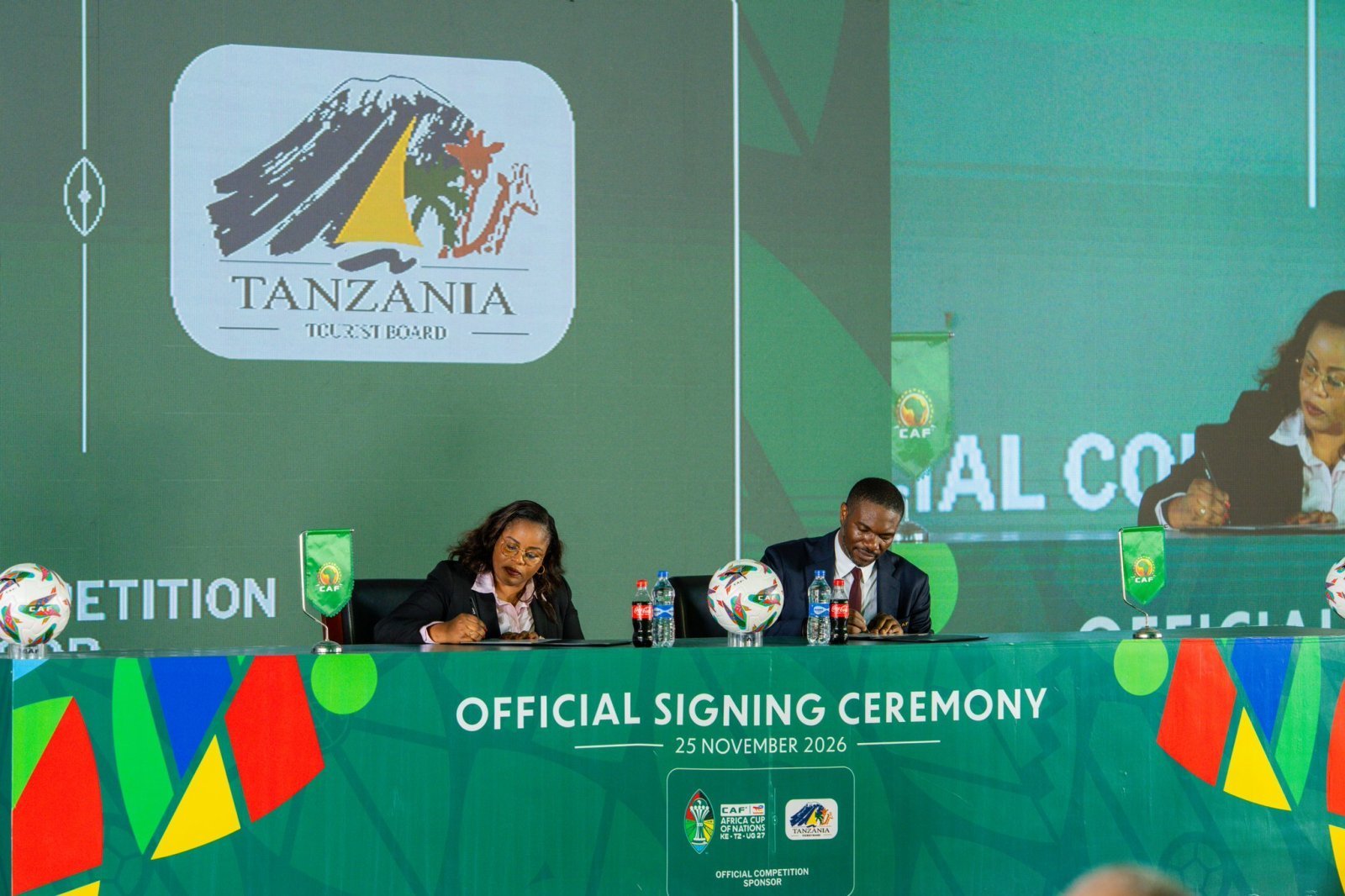
The Tanzania Tourist Board signed an agreement with the Confederation of African Football on 25 November to become an official sponsor of the 2027 Africa Cup of Nations. CAF also opened its tournament coordination office at the Julius Nyerere International Convention Centre, where the agreement was signed. The 24-team tournament is scheduled for 19 June to 17 July 2027 and will be the first AFCON staged across three countries.
The sponsorship gives Tanzania a way to market itself to people who may never attend a match. The deal includes use of official branding and exposure on CAF broadcasts. CAF did not disclose the fee or specify how much airtime Tanzania is guaranteed. The Dar es Salaam office serves a separate purpose: coordinating preparations across all three hosts. Its location does not determine who gets the opening match or final.
Tanzania: three match locations, three reasons to stay
Tanzania’s Prime Minister’s Office lists Dar es Salaam, Arusha and Zanzibar as match locations. That gives operators three ways to extend a football trip: food and cultural tours in Dar es Salaam, safari extensions from Arusha, and beach and heritage stays in Zanzibar. Tourist Board Director-General Thereza Mugobi named the Serengeti, Kilimanjaro and Zanzibar among the attractions the board wants to showcase. Tanzania recorded 2.29 million international tourist arrivals and US$4.41 billion in tourism earnings in 2025, according to its official visitor survey. Those figures reflect the existing market, not AFCON's expected demand.
The opportunity is not limited to selling a full safari. A supporter on a tight budget or travelling between fixtures may be more willing to add a guided half-day trip, a food tour or one more hotel night. Selling at several price points gives smaller operators a way to participate. The trade-off is that packages covering more than one match location must leave enough time for transfers, ferries or flights, particularly when supporters are booking around a fixed kick-off.
Kenya: Nairobi can win the short stay
Kenya’s venue plans concentrate its fixtures in Nairobi, at the Raila Odinga International Stadium at Talanta Sports City and the Moi International Sports Centre at Kasarani. As of 25 November, CAF had not announced an equivalent sponsorship with the Kenya Tourism Board. That is a difference in publicly announced marketing rights, not evidence that Kenya will attract fewer fans or earn less. Kenya welcomed about 2.7 million international visitors in 2025, according to its tourism ministry.
One city lets supporters use the same hotel for several fixtures and gives operators room to sell short experiences around kick-off times. Nairobi can also capture spending from visitors who enter or leave the region through Kenya even if they attend matches elsewhere. For the Kenyan coast and safari destinations outside the capital, the opportunity depends on selling onward trips. A busy month in Nairobi will not automatically fill rooms in Mombasa.
Uganda: early promotion gives Hoima a chance to share the gains
Uganda’s tourism board secured official destination sponsor rights on 30 October. CAF explicitly listed broadcast, digital and in-stadium promotion for the Explore Uganda brand. Uganda also pitched sports tourism to international travel buyers at the World Travel Market in London in November. Its venue plans cover Kampala and Hoima, where Hoima City Stadium already hosted Uganda’s 14 November qualifier against Botswana. That is useful operating experience, though it does not establish readiness for finals crowds. Uganda’s tourism ministry reported more than 1.6 million international arrivals and UGX 5.8 trillion in tourism earnings in 2025.
Hoima gives Uganda a chance to spread hotel, restaurant and transport spending beyond Kampala. Whether visitors stay overnight will depend on room availability and reliable transfers. Longer wildlife trips will be easier to sell before a team’s first fixture or after its last. Uganda is also due to host a regional tourism expo alongside its Pearl of Africa Tourism Expo in May 2027, giving operators a chance to put multi-country packages in front of buyers before kick-off.
The three hosts need to make the borders work
Officials are developing a joint AFCON visa for Tanzania, Kenya and Uganda. It remains a proposal. The existing East African Tourist Visa covers Kenya, Uganda and Rwanda, not Tanzania. Even with a common tournament visa, a second-country trip will still depend on workable flight and coach schedules, predictable border procedures and enough time between matches. Until entry rules and fixtures are published, operators have good reason to keep cross-border bookings flexible.
How to tell if the investment paid off
A full hotel is good news for its owner, but it does not show how much new business AFCON created. Some rooms would have sold anyway. Some regular visitors may avoid busy dates. And one supporter can account for several match tickets and border crossings. A credible assessment should count extra visitor-nights against a normal June and July, track spending outside stadiums and show how much procurement reached local businesses. It should also separate the cost of sponsorship and promotion from wider spending on transport, policing and venue operations.
For businesses, the next milestones are the fixture list, including the opener and final, and the start of ticket sales. After the tournament, the numbers worth publishing are how many people came because of AFCON, how long they stayed and where they spent. That is how the three hosts will know whether football delivered a busy month or helped build a market they can sell to again.
 Uchumi360
Business Intelligence
Uchumi360 covers business, investment, and economic policy across East, Central, and Southern Africa.
For the serious reader
You read to the end. That places you in a small group.
Uchumi360 is built for readers who demand precision over speed, structure over sentiment, and analysis that holds uncomfortable conclusions rather than softening them. If this work sharpens how you think about Africa's economy, help us keep building the infrastructure behind it.
Institutional Partners
Commission intelligence. Shape the conversation.
Uchumi360 works with development finance institutions, investment firms, sovereign bodies, and strategic organisations across the coverage region. Institutional partnership unlocks:
- Commissioned sector and country intelligence reports
- Branded research series under your institution's authority
- Exclusive data briefings for internal strategy teams
- Speaking and editorial presence at Uchumi360 events
- Co-published investment outlooks for your markets
Support Our Work
Independent analysis has a cost. Help us bear it.
Uchumi360 does not carry advertising. It does not take editorial direction from sponsors. Every article is produced without commercial compromise. Your contribution funds the reporting, research, and editorial infrastructure that keeps this analysis free from influence.
Secure checkout: One-time and monthly support are processed securely. Add payment credentials to enable checkout here.
Stay Connected
Keep up with every new insight.
Follow our latest analysis, policy coverage, and market intelligence as soon as it is published. If you need something specific, reach out directly and we will point you to the right research.
