
Zanzibar’s Nungwi Fire Puts Mandatory Travel Insurance to the Test
Ready
More than 20 hotels offered rooms after 183 tourists were evacuated. What guests can claim depends on which inbound policy they held. Businesses in Nungwi face repair bills with December approaching.
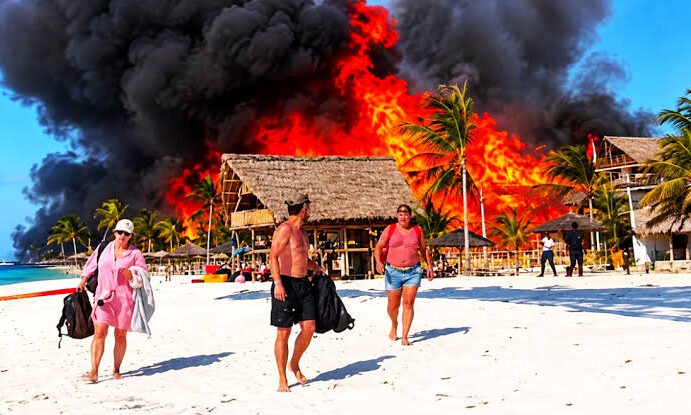
A fire that broke out at Makofi Hotel on Saturday, 21 November, affected six hotels, four restaurants and about 40 shops in Nungwi, on the northern coast of Unguja. Zanzibar’s Minister for Tourism and Antiquities, Dr Nasra Nassor Omar, said 183 tourists were evacuated and moved to hotels in Mchangani and Matemwe. No deaths or tourist injuries were reported. Some hotel workers were injured.
More than 20 hotels offered free accommodation, according to the Zanzibar Commission for Tourism. Some guests lost passports and belongings, and the tourism ministry said it was working with embassies to help replace travel documents. Guests still faced questions about who would pay to replace belongings or change flights, and whether they could recover money for bookings they could no longer use. By Monday, the number of Nungwi claims filed or paid under either inbound policy remained publicly unverified.
Which insurer handles a claim in Nungwi
Zanzibar introduced mandatory inbound travel insurance on 1 October 2024. Mainland Tanzania began implementing its own requirement on 1 October 2026. For visitors subject to the requirement, the insurer is generally determined by where they first enter Tanzania. A visitor who enters through Dar es Salaam and takes a ferry to Zanzibar would ordinarily hold a National Insurance Corporation (NIC) policy. A visitor who enters Tanzania directly through Zanzibar would ordinarily hold a Zanzibar Insurance Corporation (ZIC) policy.
A valid policy ordinarily serves for both destinations on the same journey. ZIC’s transition notice also recognises valid ZIC cover bought and fully paid for before 1 October 2026 for the same insured journey, including when it begins on the mainland. For guests affected by the fire, the insurer named on the certificate handles requests for assistance under the terms of the policy it issued.
What ZIC’s published schedule covers
ZIC’s 2024 benefits schedule, published by Tanzania’s embassy in Japan, classifies emergency accommodation and travel arrangements as “service only”. This provides help arranging a room. A guest seeking reimbursement for a replacement hotel would need a separate applicable benefit. The schedule lists up to US$50,000 for eligible emergency medical treatment, with separate provisions for medically necessary evacuation and an extended stay when a traveller is unfit to fly for medical reasons.
The schedule offers up to US$400 for eligible theft, loss or damage while baggage is in an airline’s custody. A suitcase destroyed in a hotel room falls outside that provision. The schedule lists consular referral as a service and gives no stand-alone reimbursement benefit for passport replacement fees, unused hotel nights or a missed flight. The policy wording issued to each traveller governs any claim.
What NIC says about passport and luggage losses
NIC’s October 2026 benefit summary, published by Tanzania’s embassy in Egypt, lists up to US$500 for eligible emergency replacement of a passport or driving licence. It separately lists ceilings of US$1,000 for checked-in luggage and US$500 for luggage damage, loss or robbery. NIC’s brochure uses a lost passport as an example. Its website also highlights assistance when important travel documents are stolen.
The public summaries leave open whether a passport or belongings destroyed in a hotel fire qualify. The mainland regulations define loss of luggage in relation to baggage upon entry into mainland Tanzania and leave the specific benefits and limits to the issued policy. A traveller seeking payment for a new flight or extra nights while awaiting documents would need to check those expenses separately with NIC.
What affected travellers can document
Guests can notify the insurer named on their certificate and ask what evidence it requires and which expenses need advance approval. ZIC lists inbound@zic.co.tz for inbound claims. NIC lists +356 2248 0218 as its 24-hour claims and assistance number. Written confirmation from the hotel, an itemised list of losses, booking records and receipts can help document what happened and what it cost.
Guests who lost passports can contact their embassy or consulate about emergency travel documents. They can also ask the hotel, booking platform or tour operator about a refund or replacement for unused nights, transfers or excursions under the booking terms. Travellers with separate insurance can check whether it covers belongings outside airline custody or interruption of a trip already underway.
The losses behind the property count
North Unguja’s district administrative secretary reported four damaged rooms at Z Hotel and damage to the kitchen and restaurant at Sand Beach. A tour operator told Interfax on Sunday that Z Hotel was reopening and gave a different room count, saying five had been lost. The Citizen also noted differences between the properties cited by the district and the ministry. By Monday, public reporting still gave no district-wide total for rooms out of service, jobs affected or the cost of repairs.
A hotel may be able to sell some rooms while repairing its kitchen, though refunds and payroll can fall due before bookings recover. A shop that lost stock and fittings may have to pay rent and replace inventory before it takes in another shilling. Even premises that escaped the fire can lose customers when nearby hotels close or move their guests elsewhere. Some visitor spending may stay in Zanzibar while shifting away from the businesses in Nungwi that would normally receive it.
Zanzibar’s Office of the Chief Government Statistician counted 100,729 international visitor arrivals across the archipelago in December 2025, compared with 72,833 in November. December also drew more visitors than November in 2024. Businesses that stay closed into December risk missing part of a busier business period. The scale of that loss in Nungwi will depend on local bookings, how many businesses stay closed and when they reopen.
Commercial fire insurance can pay for insured buildings, contents or stock. A landlord’s building cover and a tenant’s stock cover insure different assets. Recovering lost gross profit during a closure typically requires business interruption cover that responds to the event. An undamaged shop that authorities close off could make a claim if its policy includes a denial-of-access extension and the closure meets the terms. A claim against a hotel for a guest’s lost belongings would depend on the facts and whether the hotel was legally liable.
Omar said the government would consider rehabilitation and reconstruction support after safety assessments. The Zanzibar Investment Promotion Authority said it was ready to help assess the damage and facilitate assistance to affected investors. The initial announcements gave no funding amount, eligibility criteria or reopening timetable. Whether any support reaches tenants and small traders will depend on who qualifies and which costs it covers, including the cost of replacing stock and equipment.
What investigators need to establish
Omar said preliminary findings pointed to a bread oven at Makofi Hotel. The Associated Press reported on Monday that the investigation continued. Officials described a fire moving quickly among closely spaced buildings with palm-thatched roofs. Three fire stations took part in the response, according to the district administration, and the blaze took about three hours to bring under control. The Zanzibar Association of Tourism Investors said equipment at one property helped contain the blaze before fire engines arrived.
Section 8(1) of Zanzibar’s Fire Brigade and Rescue Act of 1999 requires plans for new business premises to be submitted for fire-safety review before construction. It provides for inspection after construction and makes a fire-safety certificate a condition of operation. The tourism commission called for sprinklers in thatched-roof buildings, while Omar called for more hydrants. The public reports leave the inspection and certification status of individual properties unresolved.
Fires hit several tourism properties in Paje in 2023 and destroyed a hotel in nearby Kendwa in 2024. In Nungwi, inspection records and the brigade’s response log could show whether alarms and suppression equipment worked, whether engines could reach the affected properties and which hydrants were usable. Those findings would help determine what individual operators can fix and where the district needs shared infrastructure.
 Uchumi360
Business Intelligence
Uchumi360 covers business, investment, and economic policy across East, Central, and Southern Africa.
For the serious reader
You read to the end. That places you in a small group.
Uchumi360 is built for readers who demand precision over speed, structure over sentiment, and analysis that holds uncomfortable conclusions rather than softening them. If this work sharpens how you think about Africa's economy, help us keep building the infrastructure behind it.
Institutional Partners
Commission intelligence. Shape the conversation.
Uchumi360 works with development finance institutions, investment firms, sovereign bodies, and strategic organisations across the coverage region. Institutional partnership unlocks:
- Commissioned sector and country intelligence reports
- Branded research series under your institution's authority
- Exclusive data briefings for internal strategy teams
- Speaking and editorial presence at Uchumi360 events
- Co-published investment outlooks for your markets
Support Our Work
Independent analysis has a cost. Help us bear it.
Uchumi360 does not carry advertising. It does not take editorial direction from sponsors. Every article is produced without commercial compromise. Your contribution funds the reporting, research, and editorial infrastructure that keeps this analysis free from influence.
Secure checkout: One-time and monthly support are processed securely. Add payment credentials to enable checkout here.
Stay Connected
Keep up with every new insight.
Follow our latest analysis, policy coverage, and market intelligence as soon as it is published. If you need something specific, reach out directly and we will point you to the right research.
