

Kariakoo Market Reopening: A Structural Boost to Tanzania’s Economy and East Africa’s Trade Integration
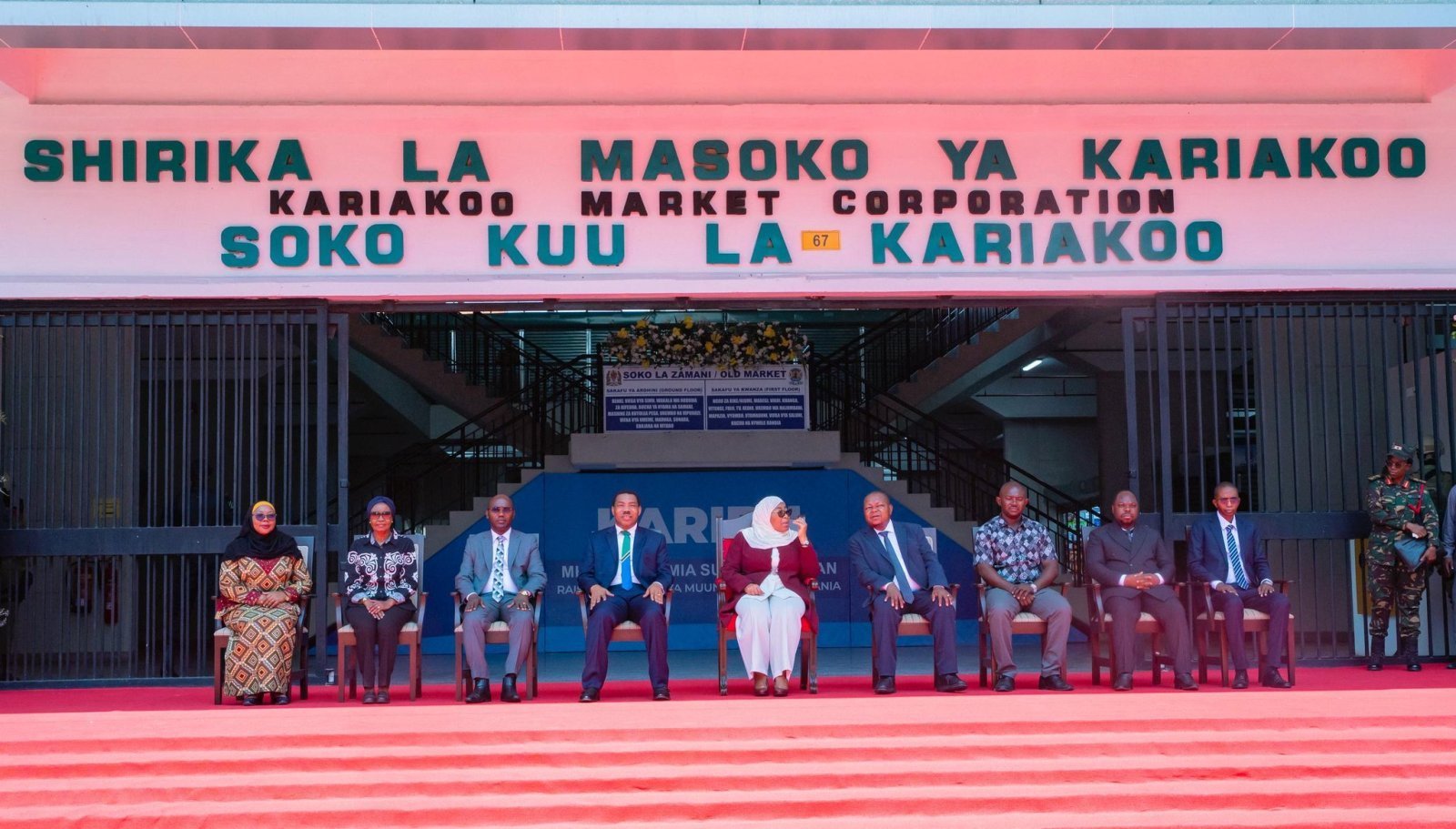
Kariakoo Market is not just a rebuilt structure. It is a structural economic intervention. Its reopening signals a shift toward trade formalisation, lower transaction costs, and stronger regional integration, positioning Dar es Salaam as a more competitive commercial hub for Tanzania and East Africa.
On February 4, 2026, President Samia Suluhu Hassan presided over the official reopening of Kariakoo Main Market in Dar es Salaam, unveiling not just bricks and mortar, but a redesigned hub of economic coordination with implications far beyond the local retail economy. What is unfolding at Kariakoo isn’t simply the rebirth of one of Tanzania’s oldest markets, it is a structural intervention with measurable economic consequences: formalising trade, expanding regional commerce, and unlocking productivity in the informal sector that dominates East African trade.
This is the analytical case of why Kariakoo matters, and why its success could matter for regional integration, GDP growth, and business dynamism.
The Scale and Economic Significance of Kariakoo
Kariakoo is not an average urban market. It is a central node in Tanzania’s domestic distribution network and a de facto regional hub for East African trade flows. Before the 2023 fire that severely damaged much of the original structure, Kariakoo handled tens of thousands of traders and acted as a supply distribution point for goods moving into inland regions of Tanzania, as well as into Uganda, Rwanda, Burundi, and the Democratic Republic of Congo.
Economically, the market serves multiple functions:
- Wholesale and Retail Linkage: It connects producers (often smallholder farmers) with retail chains and informal traders.
- Price Discovery: Local price signals for staple goods often originate here, influencing prices in upcountry markets.
- Employment Centre: Tens of thousands of Tanzanians earn incomes directly through stalls, warehousing, logistics, and supporting services (transport, financing, packaging).
- Regional Gateway: Given Dar es Salaam’s port logistics prominence, Kariakoo is an inland commercial extension of TECs (Trade and Economic Corridors), linking Port of Dar es Salaam throughput into East and Central Africa.
Estimates (pre-2023) suggested economic throughput in the hundreds of billions of Tanzanian shillings annually. While precise national accounts data is limited, market activity clearly contributed to domestic GDP at both the formal and informal layers.
Reopening as Structural Policy: Beyond Reconstruction
The articles from Mwananchi and Daily News state President Samia instructed reforms focused on operations, efficiency, and integration. Let’s unpack the economic logic behind those directives:
1. Formalisation of Trade and Tax Base Expansion
One of the repeated themes from the President’s remarks is the need for transparent and formalised revenue collection, from stall rents to levies.
This is economically significant because:
- It expands the tax base without raising rates. Informal trade, which often escapes documentation, becomes part of official economic measurement.
- With digital systems for payment and data capture, the state gains real-time visibility into economic activity, improving fiscal forecasting and reducing leakage.
- Formal receipts increase access to financial services for traders (credit, savings).
Fiscal effect estimate (illustrative):
If just 30% of previously informal traders are formalised and each pays an annual levy at, say, TZS 300,000, this could increase municipal revenue by tens of billions of shillings per year without broad tax hikes.
2. Efficiency and Transaction Cost Reduction
Markets operate on margins. Informal markets are inherently transaction-cost intensive due to:
- inefficient logistics
- security and storage fees
- time costs from congestion and poor layout
Modern market infrastructure, including better warehousing, loading zones, digital transactions, and organised logistics nodes can reduce transaction costs significantly.
A 5–10% reduction in operating costs for a trader earning a 20% margin translates directly into increased real income. Scaled across thousands of traders, this lifts economic welfare measurably.
3. Data-Driven Market Intelligence
Kariakoo’s redesign incorporates data systems for tracking volumes, prices, and flows. This is crucial:
- Traders can make inventory decisions based on real demand signals rather than speculation.
- Upcountry markets and processors can align supply with actual consumption patterns.
- Regional buyers can benchmark Tanzanian wholesale prices without excessive uncertainty.
In trade economics, reducing information asymmetry increases allocative efficiency, raising total factor productivity in the sector.
Implications for Regional Trade Integration
Tanzania’s reopening of Kariakoo plays directly into East Africa’s regional trade agenda:
Dar es Salaam as a Regional Freight and Commercial Hub
The Port of Dar es Salaam is one of the region’s busiest gateways. More effective inland distribution nodes like Kariakoo:
- Reduce dwell time between port receipt and market distribution.
- Shorten supply chains for goods moving to Uganda, Rwanda, and beyond.
- Encourage foreign investors to use Tanzanian corridors rather than bypassing them.
If Tanzania increases throughput by 10–15% through these efficiencies, it could capture market share from alternative corridors such as Mombasa or Dar’s competitors.
Trade Diversion vs. Trade Creation
Kariakoo’s efficiency gains could lead to:
- Trade creation: more goods flowing regionally because costs fall.
- Trade diversion: Kampala or Nairobi markets could lose some wholesale dominance if traders prefer Dar’s lower costs and volume availability.
This is not zero-sum, but it does shift economic geography.
Stakeholder Impact Assessment
Institutional Investors and Development Banks
They now see a credible execution model: infrastructure tied to governance reform. This reduces risk premiums on future urban infrastructure projects.
Small and Medium Enterprises
Lower transaction costs and better market data improve competitiveness and growth prospects. MSMEs in logistics, storage, and financing stand to gain the most.
Everyday Consumers
More efficient wholesale distribution often translates into:
- lower retail prices
- more consistent supply of essentials
- reduced price volatility
This is especially important for low-income households for whom food accounts for a large share of expenditure.
Risks and Forward Outlook
Kariakoo’s success is not automatic. Key risks include:
- Regulatory capture: If reform enforcement weakens, formalisation could become a burden rather than a benefit.
- Policy inconsistency: Future administrations must maintain digital revenue systems and competitive stall allocation to avoid rent seeking.
- Regional policy misalignment: Unless border processes and trade facilitation keep pace, physical market improvements alone won’t maximise regional gains.
Yet these risks are manageable. The central economic challenge, reducing transaction costs and integrating informal trade into the larger economy, is addressed directly by the reforms.
A Macro Step in Urban Economics
Kariakoo represents more than a reopened market. It is evidence that:
- Institutional design matters as much as infrastructure investment.
- Informal sectors can be formalised without dislocation if managed technically.
- Urban markets when modernised are economic multipliers, not relics.
For Tanzania and the wider East African region, Kariakoo is a test case in how structural reforms combined with physical investment can yield productivity gains, increase fiscal capacity, and strengthen regional economic integration.
This is not mere rehabilitation. It is economic architecture.