
Nigeria Is Africa’s Economic Giant. Why Can’t It Keep the Lights On?
Ready
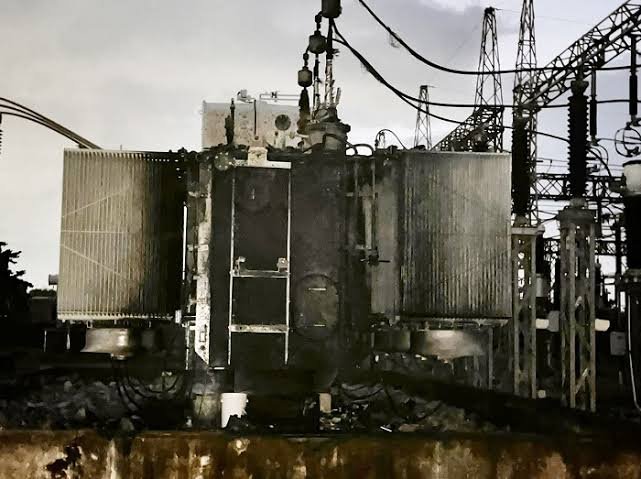
Nigeria is Africa’s economic giant, but its electricity system is becoming a serious constraint on the country’s industrial ambitions. While Egypt, South Africa, Ethiopia, Tanzania, Kenya and the Democratic Republic of Congo are expanding generation capacity, improving reliability or positioning electricity as a foundation for industrial growth, Nigeria continues to struggle to convert its enormous energy resources and installed generation capacity into dependable power. The result is an economy where businesses increasingly have to generate their own electricity, absorbing costs that should instead be funding production, investment and expansion. The question is no longer whether Nigeria has enough energy resources. The question is whether it can build an electricity system capable of turning those resources into economic power.
Nigeria’s electricity crisis becomes much more revealing when it is placed beside the power strategies of South Africa, Egypt, Tanzania, Ethiopia, Kenya and other major African economies. Nigeria is not simply a country that produces too little electricity. It is a country with a large installed generation base that consistently fails to convert that capacity into dependable electricity for businesses and households. In April 2026, Nigeria had 13,625 MW of installed grid connected generation capacity, yet only 4,286 MW was available for dispatch on average. The plant availability factor was just 31 percent, while 4,048 MW of that available capacity was actually utilised. The distinction is fundamental because installed capacity tells us what a power system theoretically possesses, whereas available capacity tells us what an economy can actually use. Nigeria therefore has a power system that looks considerably larger on paper than it feels in the real economy.
This is where the Nigerian story begins to look less like a simple infrastructure deficit and more like a competitiveness problem. A manufacturer that cannot depend on the national grid has to purchase diesel, install generators, maintain backup systems and absorb the cost of keeping those systems running. A hospital has to protect critical equipment against interruptions. A data centre needs alternative generation and storage. A cold chain operator cannot afford to lose refrigeration because the grid has failed. The private sector consequently builds a parallel electricity system on top of the public one, transferring a large part of the cost of unreliable infrastructure from the state to businesses and consumers. Nigeria's economic potential may be enormous, but every additional naira spent compensating for unreliable electricity is a naira that cannot be invested in production, expansion, employment or technology.
The comparison with South Africa is particularly instructive because South Africa demonstrates that even a much larger and more sophisticated electricity system can become an economic liability when generation assets deteriorate and institutional weaknesses accumulate. Eskom's prolonged crisis produced years of load shedding that damaged manufacturing, mining, retail and investor confidence, but the country has recently demonstrated that the trajectory can be reversed. Eskom reported a sharp improvement in operational performance during 2025, with significantly fewer days affected by power cuts and a return to profitability after a major loss the previous year. The lesson for Nigeria is not that South Africa has solved its electricity problem permanently. It has not. The more important lesson is that improving the performance of existing generation, maintenance, transmission and distribution infrastructure can have an economic impact just as significant as constructing new power stations. Nigeria's immediate challenge is therefore not simply to add megawatts. It is to make the megawatts it already possesses reliably available to the economy.
Egypt chose capacity as a foundation for economic expansion
Egypt provides a different model. Rather than allowing electricity supply to become a persistent constraint on economic expansion, the country embarked on an aggressive programme of generation investment that dramatically increased available power. Egypt now operates one of Africa's largest electricity systems, and its development strategy has increasingly connected electricity investment with new cities, industrial zones, infrastructure and large-scale economic projects. The significance of this approach is not merely that Egypt can generate more electricity than it once could. It is that the state has treated electricity as a prerequisite for economic expansion and attempted to build supply ahead of demand.
That principle is particularly relevant to Nigeria because the two countries have similar ambitions to support large populations, industrial activity and infrastructure development, yet electricity reliability remains a much more persistent constraint in Nigeria. An investor choosing where to establish an energy-intensive manufacturing operation does not evaluate only the size of the consumer market. The investor evaluates whether production can continue at night, whether electricity costs can be forecast, whether backup systems will be required and whether the national system can support expansion five or ten years after the factory is built. A large market becomes significantly more attractive when its infrastructure can support production at scale.
Tanzania is entering the next phase of the electricity race
Tanzania offers perhaps the most interesting East African comparison because the country has recently added an enormous amount of generation capacity relative to the size of its existing electricity system. The 2,115 MW Julius Nyerere Hydropower Project represents a structural increase in Tanzania's generation capability and gives the country a substantially larger electricity base from which to pursue industrial expansion. The strategic importance of the project lies not simply in the volume of electricity it can generate, but in the economic question that now follows its completion: whether Tanzania can create enough productive demand to turn that electricity into manufacturing, mineral processing, agricultural value addition and new commercial activity.
That is a fundamentally different problem from Nigeria's current challenge. Nigeria is struggling to make a significant share of its installed capacity reliably available. Tanzania has been expanding its generation base and now has to ensure that the additional electricity becomes productive economic capacity. The distinction matters because electricity only becomes an economic asset when it is connected to activities that create value. A power station can increase national generation statistics, but factories, mines, processing plants, logistics facilities and digital infrastructure are what turn electricity into jobs, exports and higher productivity. Tanzania's next policy challenge is therefore to ensure that its new power supply does not simply produce more electricity, but produces a larger economy.
Ethiopia is turning electricity into a strategic economic asset
Ethiopia has taken the electricity question even further. According to Ethiopian Electric Power, the country's installed generation capacity increased from 4,462 MW to 9,752 MW over the seven years to 2026, while its transmission network expanded to more than 21,000 kilometres. This expansion has been driven principally by hydropower, complemented by geothermal, wind and solar generation, and the country is increasingly positioning itself as a regional electricity supplier rather than simply a country trying to satisfy domestic demand.
The Grand Ethiopian Renaissance Dam is the most visible expression of that strategy, with an installed capacity of 5,150 MW. But the broader significance is the development of an electricity system capable of supporting domestic industrialisation while creating the possibility of electricity exports to neighbouring countries. Ethiopia's geography gives it major hydropower potential, but geography alone does not build an electricity industry. The country has had to invest in generation, transmission and regional interconnection in order to turn that natural advantage into an economic asset. Nigeria has a different resource base, particularly its enormous natural gas reserves, but the underlying principle is the same: resources only become a competitive advantage when institutions and infrastructure can convert them into reliable energy.
A recent academic assessment of Africa's electricity trajectory reinforces the scale of this shift. The study projects substantial increases in African electricity production through 2030 and identifies the Democratic Republic of Congo, Nigeria and Egypt among the countries expected to add the largest amounts of future electricity production. It projects an additional 195,891 GWh of production for the DRC, 92,175 GWh for Nigeria and 76,601 GWh for Egypt between 2021 and 2030, while Ethiopia is projected to add 47,247 GWh and South Africa 39,283 GWh. The important point is that Africa is not standing still. Countries are building generation capacity, expanding transmission systems and competing to determine where future industrial activity will locate.
Kenya demonstrates another path
Kenya's electricity strategy is different again. Rather than relying predominantly on large thermal generation, Kenya has built a system in which renewable sources account for a very large proportion of installed capacity, with geothermal power playing an especially important role. The country's Ministry of Energy currently reports 3,309 MW of installed capacity against peak demand of 2,514 MW, illustrating that Kenya has built a generation base with some headroom above current peak demand. The challenge now is to keep expanding the system as electricity demand grows and new economic activities require increasingly large and reliable supplies.
Kenya's position is significant for Nigeria because it shows that the quality and structure of an electricity system matter alongside its total size. Kenya does not have Nigeria's enormous natural gas reserves or Nigeria's population, yet its electricity strategy has been closely tied to the development of renewable resources in which the country has a comparative advantage. Geothermal energy in particular has given Kenya a dependable domestic generation source that is relatively insulated from some of the fuel supply challenges affecting thermal systems. The lesson is not that Nigeria should copy Kenya's generation mix. Nigeria's resource base is different. The lesson is that every country needs to identify its most reliable domestic energy resources and build an electricity system around them rather than allowing generation, transmission and distribution policy to evolve as disconnected projects.
The DRC may become Africa's most consequential power story
The Democratic Republic of Congo introduces an even larger possibility. The country possesses extraordinary hydropower potential along the Congo River, and planned projects associated with the Inga complex could eventually transform both the country's domestic electricity system and regional power markets. The 2026 Nature Communications study identifies the DRC as the country projected to add the largest amount of electricity production between 2021 and 2030, driven overwhelmingly by hydropower projects including the planned Grand Inga and Inga III developments.
The DRC therefore demonstrates the difference between possessing energy resources and building an energy economy. Its hydroelectric potential is enormous, but the economic value will depend on transmission, financing, governance, industrial demand and regional electricity markets. If those pieces come together, electricity could become one of the foundations of Congolese industrialisation and regional trade. If they do not, the country will continue to possess extraordinary theoretical potential without converting it into productive capacity. Nigeria faces a less extreme version of the same problem. It has resources and installed infrastructure, but the conversion mechanism remains weak.
The African electricity race is becoming a race for industrialisation
The significance of these comparisons extends beyond electricity. Africa's next phase of economic competition will increasingly be determined by which countries can provide reliable power to the activities that generate higher productivity. Manufacturing requires continuous electricity. Mining requires enormous quantities of electricity. Data centres require power around the clock. Modern agriculture increasingly depends on irrigation, refrigeration and processing. Electric mobility requires charging infrastructure. Mineral refining and processing require significantly more electricity than simply exporting raw minerals. Even the growth of digital services ultimately depends on physical infrastructure that requires dependable energy.
This changes the meaning of electricity policy. The question is no longer simply how many households can be connected to the grid, although access remains fundamental. The larger economic question is how much productive activity the electricity system can support at a competitive cost. A country can increase electricity connections without creating an industrial economy. It can build power stations without creating factories. It can increase installed capacity without increasing reliable supply. The real measure is whether electricity allows businesses to produce more, operate longer, invest with greater certainty and compete in international markets.
Nigeria is therefore facing competition from countries that may have smaller economies, smaller populations or fewer natural resources but are increasingly building electricity systems around their economic strategies. Ethiopia is expanding generation and transmission while seeking regional electricity markets. Tanzania has added a major hydropower project and now has an opportunity to accelerate industrial demand. Kenya has developed one of the continent's strongest renewable electricity systems. Egypt has invested heavily in generation capacity to support infrastructure and industrial expansion. South Africa is attempting to restore reliability after years of electricity shortages. The DRC is preparing for the possibility of becoming one of the world's most important hydropower producers if its major projects are realised.
Nigeria cannot afford to interpret these developments as unrelated national projects. They are part of a wider African competition for productive capacity.
Nigeria's biggest advantage is also its biggest frustration
Nigeria's position is particularly frustrating because the country possesses many of the ingredients required for a much larger electricity economy. It has substantial natural gas reserves, large solar potential, hydropower resources, a huge domestic market and an entrepreneurial private sector capable of creating demand for electricity if reliable supply becomes available. Its electricity problem therefore cannot be explained simply by a lack of natural resources.
The more difficult explanation is institutional. The electricity chain has to work from fuel supply through generation, transmission, distribution, metering, billing and payment. If a gas plant cannot obtain fuel, its installed capacity is irrelevant. If a transmission line cannot carry the electricity, generation becomes stranded capacity. If distribution companies cannot collect enough revenue, networks deteriorate. If tariffs do not support investment, capital leaves. If consumers cannot trust the service, they resist paying more. Every weakness reinforces another weakness.
That is why Nigeria's April 2026 figure is so important. A 13,625 MW installed capacity with only 4,286 MW available for dispatch is not simply evidence that Nigeria needs more power plants. It is evidence that the country needs a better functioning electricity system. The first objective should be to increase the percentage of existing capacity that can reliably reach consumers, while simultaneously expanding generation and transmission ahead of future demand.
The investment opportunity is hidden inside the failure
For investors, this creates one of the largest infrastructure opportunities on the continent. Nigeria does not need investment only in conventional generation. It needs investment across the entire electricity value chain, including transmission, distribution, embedded generation, commercial and industrial solar, battery storage, gas infrastructure, metering, mini grids and energy management systems. The regulatory framework is also evolving. NERC's recent publications show continuing work on metering, commercial performance, grid codes and state-level electricity regulation, indicating that the market is moving towards a more differentiated electricity structure.
This could become one of the most important developments in Nigeria's energy sector because the country is simply too large and economically diverse for every electricity problem to be solved through one centralised national model. Industrial Lagos has different requirements from a rural community in northern Nigeria. A mining operation has a different electricity profile from a hospital. A data centre requires a different reliability standard from a household. A large industrial park can potentially support its own generation and storage infrastructure while remaining connected to the national system. The future Nigerian electricity market is therefore likely to become more complex, more decentralised and more commercially differentiated.
That is not necessarily a weakness. It could become the mechanism through which Nigeria finally begins to match electricity supply with economic demand.
Nigeria's power problem is now an African competitiveness problem
The uncomfortable conclusion is that Nigeria cannot judge its electricity performance by comparing today's system with yesterday's system. It has to compare itself with the systems being built by the countries competing for tomorrow's investment.
A Nigerian factory does not care that Nigeria has more natural gas than Kenya if it cannot obtain reliable electricity. An international manufacturer does not invest because Nigeria has a larger population than Tanzania if the cost of operating the factory is higher. A data centre does not choose a country because its installed generation capacity looks impressive on paper. Investors ultimately care about dependable power, predictable costs, infrastructure quality and the ability to expand.
This is why Nigeria's electricity crisis should be treated as an industrial policy emergency rather than a utility sector inconvenience. Countries that solve their electricity problems will gain an advantage in manufacturing, mining, processing, digital infrastructure, and services. Those that fail will increasingly find themselves importing the very goods and technologies that could have been produced domestically.
Nigeria remains one of Africa's most consequential economic markets. Its population, natural resources, entrepreneurial capacity and geographic position give it enormous potential. But potential does not compete. Productive capacity does.
The African electricity race is therefore already underway. South Africa is rebuilding reliability. Egypt has built capacity at scale. Tanzania has opened a new generation chapter with JNHPP. Ethiopia is rapidly expanding generation and transmission. Kenya is building around renewable resources. The DRC is positioning itself around extraordinary hydropower potential. Nigeria has the resources and market to be one of the continent's biggest electricity powers, but its system must first learn to turn installed megawatts into dependable megawatts.
Nigeria does not need to become Africa's biggest power producer to become its biggest industrial economy. It needs to become one of Africa's most reliable electricity producers, because the factories, mines, data centres, and industries of the future will follow dependable power.
 Uchumi360
Business Intelligence
Uchumi360
Business Intelligence
Uchumi360 covers business, investment, and economic policy across East, Central, and Southern Africa.
For the serious reader
You read to the end. That places you in a small group.
Uchumi360 is built for readers who demand precision over speed, structure over sentiment, and analysis that holds uncomfortable conclusions rather than softening them. If this work sharpens how you think about Africa's economy, help us keep building the infrastructure behind it.
Institutional Partners
Commission intelligence. Shape the conversation.
Uchumi360 works with development finance institutions, investment firms, sovereign bodies, and strategic organisations across the coverage region. Institutional partnership unlocks:
- Commissioned sector and country intelligence reports
- Branded research series under your institution's authority
- Exclusive data briefings for internal strategy teams
- Speaking and editorial presence at Uchumi360 events
- Co-published investment outlooks for your markets
Support Our Work
Independent analysis has a cost. Help us bear it.
Uchumi360 does not carry advertising. It does not take editorial direction from sponsors. Every article is produced without commercial compromise. Your contribution funds the reporting, research, and editorial infrastructure that keeps this analysis free from influence.
Secure checkout: One-time and monthly support are processed securely. Add payment credentials to enable checkout here.
Stay Connected
Keep up with every new insight.
Follow our latest analysis, policy coverage, and market intelligence as soon as it is published. If you need something specific, reach out directly and we will point you to the right research.
