
Tanzania's 34 Airlines Remain Banned From EU Skies as 12 African Countries Face Restrictions Dating Back Years
Ready
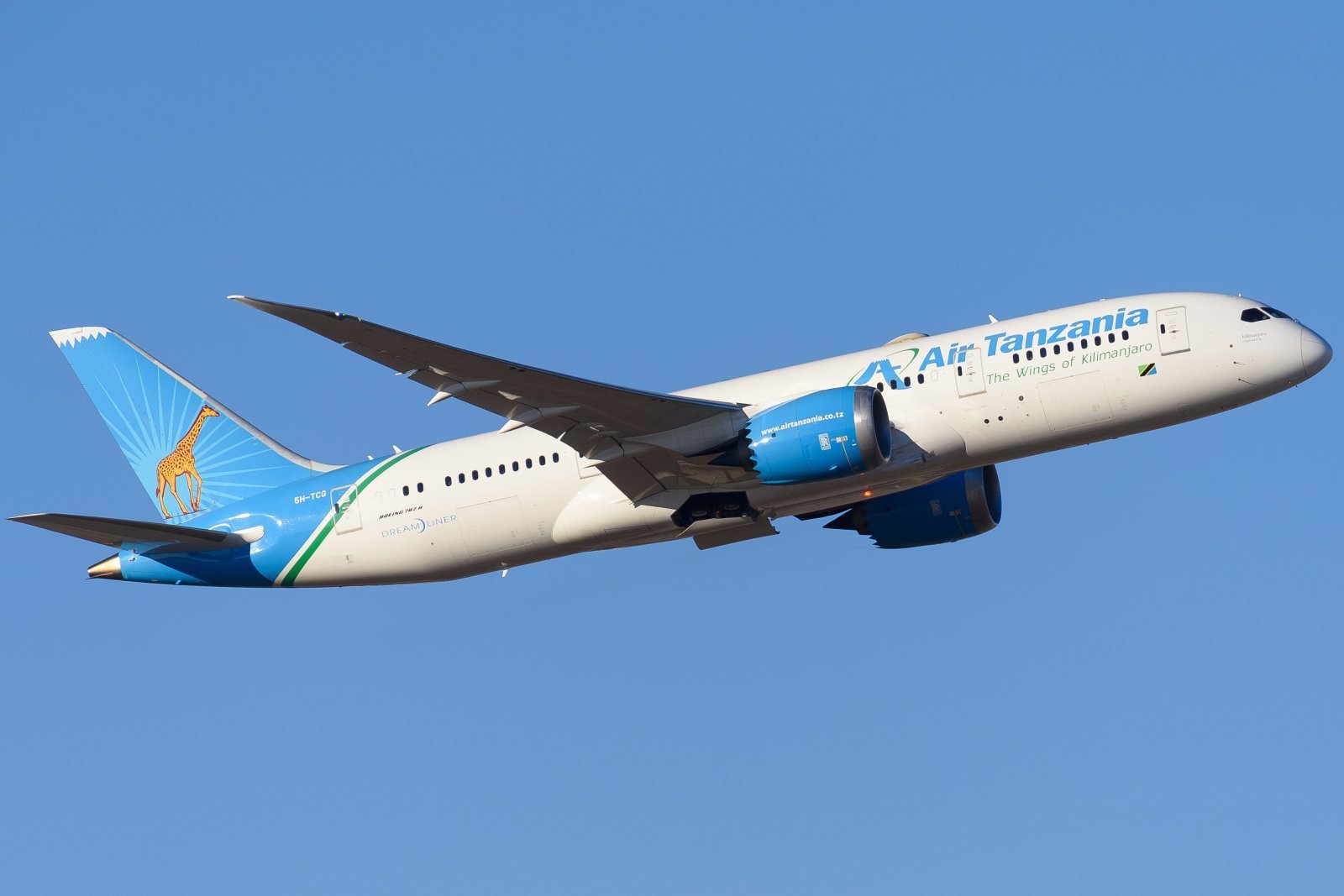
Tanzania's 34 named airlines, including Air Tanzania and Precision Air, remain prohibited from operating in European Union airspace under restrictions extended to all Tanzanian certified carriers in June 2025. The European Commission's latest Air Safety List, issued on June 9, 2026, retains countrywide restrictions affecting 12 African nations, while individual airlines from Algeria and Zimbabwe are separately banned. Although the list has attracted renewed media attention in November, Tanzania's restrictions began with Air Tanzania in December 2024 and are not a new EU decision. Uchumi360 examines the timeline, all 14 affected African countries, the regulatory deficiencies behind the bans and their implications for aviation development and tourism.
The European Union continues to prohibit 34 Tanzanian airlines, including Air Tanzania and Precision Air, from operating in its airspace under aviation safety restrictions first extended to all Tanzanian carriers in June 2025. Tanzania is among 12 African countries subject to restrictions covering their nationally certified airlines, while individual operators from Algeria and Zimbabwe are separately banned. The restrictions have attracted renewed attention following reports published in November 2026, although the European Commission's latest update was issued on June 9 and did not introduce a new ban on Tanzania. Uchumi360 examines the history of the restrictions, all affected African countries and the regulatory deficiencies that continue to limit their access to European aviation markets.
Tanzania remains among 12 African countries whose nationally certified airlines are barred from operating in European Union airspace because of aviation safety oversight deficiencies, with 34 Tanzanian operators named in the EU's latest published Air Safety List, including the national carrier Air Tanzania, Precision Air and several companies serving the country's tourism and domestic aviation markets. However, the restrictions being reported across African media in November 2026 are not new. Air Tanzania was individually prohibited from operating in the EU in December 2024, and the European Commission extended the restriction to all airlines certified in Tanzania in June 2025.
The latest European Commission update, issued on June 9, 2026, retained Tanzania and 11 other African countries under restrictions linked to weaknesses in the supervision of aviation operators. The principal changes involved removing all airlines certified in Kyrgyzstan from the list and adding Air Express Algeria because of identified safety shortcomings. No new countrywide ban against Tanzania was announced in that update, although Tanzanian airlines remained prohibited from operating in the EU.
The distinction matters because recent headlines describing a European ban against African airlines can create the impression that a fresh decision has been taken against the continent's aviation industry. The European Commission has maintained its EU Air Safety List since 2006, periodically adding or removing airlines and countries following assessments of compliance with international aviation safety requirements.
For Tanzania, the continuing restrictions are consequential for a country investing in aviation infrastructure, expanding its national airline and seeking to increase international tourism and commercial connectivity. They also raise a regulatory question: whether aviation growth is being matched by sufficient institutional capacity to supervise aircraft operations, airworthiness and compliance with international standards.
Tanzania's Ban Began With Air Tanzania in December 2024
The European Commission first added Air Tanzania to its Air Safety List on December 13, 2024, after the European Union Aviation Safety Agency identified safety concerns that resulted in the airline being denied Third Country Operator authorisation. That authorisation is required for commercial air operators from outside the EU seeking to operate services to, from or within the Union.
At the time, the decision concerned Air Tanzania individually rather than every airline licensed by the Tanzania Civil Aviation Authority (TCAA). The Commission said the action followed concerns identified during EASA's assessment and called for corrective measures to bring the operator into compliance with international aviation safety requirements.
The restriction widened six months later. On June 3, 2025, the European Commission added all airlines certified in Tanzania to the EU Air Safety List, alongside carriers certified in Suriname. The Commission attributed the countrywide decision to deficiencies in national aviation oversight, including shortages of qualified personnel, ineffective supervision of flight operations and airworthiness, and shortcomings in compliance with international standards.
This was a substantial change in regulatory scope. Rather than restricting one airline following an individual safety assessment, the EU concluded that the country's aviation oversight arrangements were insufficient to assure compliance across its certified operators.
The Commission's June 2026 review retained those restrictions. Its legal annex names 34 Tanzanian aviation companies, including Air Tanzania, Precision Air, Auric Air, Coastal Travels, Flightlink, Air Excel and several operators involved in charter services, tourism aviation, balloons and other specialised operations.
The inclusion of an airline on the list does not necessarily establish that every aircraft operated by that company has failed an individual safety inspection. Countrywide restrictions arise partly because the EU considers the responsible national aviation authority unable to provide sufficient assurance that its operators comply with international standards. The distinction is particularly relevant to Tanzania because the restriction applies across companies with different fleets, services and operating arrangements.
Twelve African Countries Face Countrywide Restrictions, With Algeria and Zimbabwe Separately Affected
The European Commission's June 2026 update identifies 12 African countries whose certified airlines are subject to countrywide operating prohibitions. Angola is included with two named exceptions, while Liberia and Sierra Leone remain under blanket restrictions despite the absence of individually named operators in the list.
Separately, the EU prohibits Air Express Algeria and Air Zimbabwe, bringing the number of African countries with at least one affected airline to 14. Algeria and Zimbabwe must not be presented as countries whose entire aviation industries are banned.
| African country | Scope of EU restrictions | Airlines individually named |
| Tanzania | All nationally certified carriers | 34 |
| DR Congo | All nationally certified carriers | 13 |
| Sudan | All nationally certified carriers | 12 |
| Libya | All nationally certified carriers | 10 |
| Angola | All except two exempted operators | 7 |
| Republic of Congo | All nationally certified carriers | 5 |
| Equatorial Guinea | All nationally certified carriers | 2 |
| Eritrea | All nationally certified carriers | 2 |
| Djibouti | All nationally certified carriers | 1 |
| São Tomé and Príncipe | All nationally certified carriers | 1 |
| Liberia | All nationally certified carriers | 0 |
| Sierra Leone | All nationally certified carriers | 0 |
| Algeria | Air Express Algeria only | 1 |
| Zimbabwe | Air Zimbabwe only | 1 |
| Total | 12 countrywide cases plus 2 individual cases | 89 |
Source: European Commission Implementing Regulation (EU) 2026/1317, Annex A, published June 10, 2026. Counts refer to individually named airlines in the regulation, rather than the total number of companies prohibited under each country's blanket restriction.
Figure 1 | African Airlines Individually Named in EU Restrictions.  Source: European Commission June 2026 Air Safety List. Liberia and Sierra Leone are subject to countrywide restrictions but have no individually named airlines. Operator counts do not establish fleet size or the number of active international routes.
Tanzania has the highest number of individually named airlines among the affected African countries, followed by the DRC and Sudan. This does not establish that Tanzania has the least safe aviation industry on the continent or the greatest number of aviation accidents. The number of named operators is influenced by the number of carriers holding national certification and the way they are listed under the EU's countrywide restrictions.
The continent's aviation market also extends well beyond the 14 affected countries. Airlines certified in countries such as Kenya, Ethiopia, Rwanda, Uganda, South Africa, Egypt and Morocco are not subject to the blanket prohibitions identified in the June 2026 list. Their individual eligibility to operate in Europe remains subject to applicable authorisations and safety requirements.
Why the EU's June 2026 Update Is Being Reported as New in November
The renewed attention follows coverage of the EU Air Safety List by African news organisations on November 18, 2026, including Kenya's Tuko, which published a breakdown of the 12 countries subject to countrywide restrictions and the airlines named in the European regulation.
The underlying Commission announcement, however, is dated June 9, 2026. It marked the 48th update of a regulatory list established two decades earlier, and its main changes concerned Kyrgyzstan and Algeria. The restrictions affecting Tanzania and most of the other listed African countries were already in place.
Timeline | How Tanzania's EU Restriction Developed
- 13 December 2024
- Air Tanzania is individually added to the EU Air Safety List after EASA identifies safety concerns and declines its Third Country Operator authorisation.
- 3 June 2025
- The European Commission extends the ban to every airline certified in Tanzania, citing deficiencies in national aviation oversight.
- 9 June 2026
- The EU publishes its 48th Air Safety List update. Tanzania remains restricted, while Kyrgyzstan's airlines are removed and Air Express Algeria is added.
- 18 November 2026
- African media reports draw renewed attention to the existing restrictions, including the 34 named Tanzanian operators.
Globally, the June 2026 update left 154 airlines prohibited from operating in the EU. Of these, 126 were certified in 16 countries where the Commission identified inadequate national safety oversight. Another 22 Russian carriers and six individual airlines from other countries were separately banned because of identified safety deficiencies. Two additional airlines, Iran Air and North Korea's Air Koryo, were subject to specific operational restrictions rather than complete prohibitions.
The figures show that the EU Air Safety List is a wider international regulatory mechanism, although African countries account for a substantial share of the jurisdictions subject to countrywide restrictions.
The Economic Implications for Tanzania's Aviation and Tourism Industries
The continued restrictions create a regulatory limitation for Tanzanian airlines seeking to establish services into the European Union, one of the international markets relevant to the country's tourism and commercial connectivity.
Tanzania has invested in expanding its national carrier and upgrading airports, while its tourism industry depends heavily on international air connections to destinations including Kilimanjaro, Zanzibar and Dar es Salaam. European tourists and businesses can continue travelling to Tanzania using airlines that meet the necessary operating requirements, including carriers certified outside the affected countries. The EU list does not amount to a prohibition on European airlines flying to Tanzania or a ban on tourism travel.
Its economic consequences are therefore more specific. Tanzanian certified airlines cannot independently operate the prohibited services in the EU while they remain listed. This limits their direct access to European aviation markets and may affect future route planning, commercial partnerships and international expansion ambitions.
The scale of any financial losses cannot be established from the EU list alone. Such an assessment would require information about planned European routes, traffic demand, affected partnerships and the operating revenues that airlines could realistically have generated. Because the restrictions began before November 2026, describing them as a sudden new disruption to existing European services would be misleading.
The restrictions also extend beyond the national airline. Tanzania's aviation market includes companies serving safari tourism, domestic destinations, charter operations, medical transport and other specialised services. Although many of those businesses primarily operate within Tanzania and the wider region, they are included in the EU list because of the regulatory status of the country that certifies them.
There is a broader institutional cost associated with the restrictions. Airlines seeking to compete internationally depend on confidence in the regulatory authority responsible for certification, safety supervision and enforcement. Deficiencies identified by external regulators can constrain commercial opportunities even for companies whose operations are concentrated outside the affected market.
For Tanzania, the distinction between airport infrastructure investment and regulatory capacity is therefore consequential. Expanding terminals, acquiring aircraft and increasing routes can support growth, but international aviation access also depends on qualified inspectors, effective oversight procedures, maintenance supervision and demonstrable compliance with recognised safety standards.
How Tanzania and Other African Countries Can Have the Restrictions Lifted
The European Commission's approach is based on aviation safety standards developed principally through the International Civil Aviation Organization. Its decisions are informed by technical assessments involving the European Union Aviation Safety Agency, national authorities and aviation safety experts from EU member states.
Where a prohibition results from weaknesses in national oversight, improvements must be demonstrated at the regulatory level, alongside compliance by individual operators. These may include sufficient qualified personnel, effective inspections, reliable enforcement procedures and oversight of aircraft airworthiness and operational practices.
The EU's June 2026 decision to remove Kyrgyzstan's airlines provides an example of restrictions being lifted following improvements in national aviation safety supervision. The Commission explicitly recognised the country's progress in strengthening oversight, demonstrating that inclusion on the list does not necessarily represent a permanent prohibition.
Tanzania's challenge is therefore to secure recognition that the deficiencies identified in 2024 and 2025 have been adequately corrected. The June 2026 update confirms that its airlines remained restricted at the time, but does not by itself establish every corrective action undertaken by the Tanzania Civil Aviation Authority since the original decision.
The same distinction applies across the affected African countries. Restrictions linked to institutional oversight cannot be assessed solely through the performance or investment plans of one airline. The responsible civil aviation authorities must demonstrate that their certification and supervision systems satisfy the applicable standards.
Angola's two exempted operators also show that restrictions can distinguish between companies within an affected jurisdiction. TAAG Angola Airlines and Heli Malongo are excluded from the country's blanket restriction in the June 2026 list, while other Angolan certified airlines remain prohibited.
For Tanzania, the central development since December 2024 has been the widening of restrictions from one national airline to the entire group of operators certified by its regulator. The June 2026 review maintained that position, and the November media coverage has brought renewed attention to an unresolved regulatory matter rather than announcing a new European sanction.
The relevant question now is whether the technical deficiencies identified by European aviation authorities have been corrected sufficiently to support removal from the list. Until the Commission makes such a determination, Tanzania's 34 named carriers remain subject to the restrictions first imposed across the country's aviation industry in June 2025.
 Uchumi360
Business Intelligence
Uchumi360 covers business, investment, and economic policy across East, Central, and Southern Africa.
For the serious reader
You read to the end. That places you in a small group.
Uchumi360 is built for readers who demand precision over speed, structure over sentiment, and analysis that holds uncomfortable conclusions rather than softening them. If this work sharpens how you think about Africa's economy, help us keep building the infrastructure behind it.
Institutional Partners
Commission intelligence. Shape the conversation.
Uchumi360 works with development finance institutions, investment firms, sovereign bodies, and strategic organisations across the coverage region. Institutional partnership unlocks:
- Commissioned sector and country intelligence reports
- Branded research series under your institution's authority
- Exclusive data briefings for internal strategy teams
- Speaking and editorial presence at Uchumi360 events
- Co-published investment outlooks for your markets
Support Our Work
Independent analysis has a cost. Help us bear it.
Uchumi360 does not carry advertising. It does not take editorial direction from sponsors. Every article is produced without commercial compromise. Your contribution funds the reporting, research, and editorial infrastructure that keeps this analysis free from influence.
Secure checkout: One-time and monthly support are processed securely. Add payment credentials to enable checkout here.
Stay Connected
Keep up with every new insight.
Follow our latest analysis, policy coverage, and market intelligence as soon as it is published. If you need something specific, reach out directly and we will point you to the right research.
