
100 Changemakers Reveal How Tanzania’s Next Economy Is Being Built
Ready
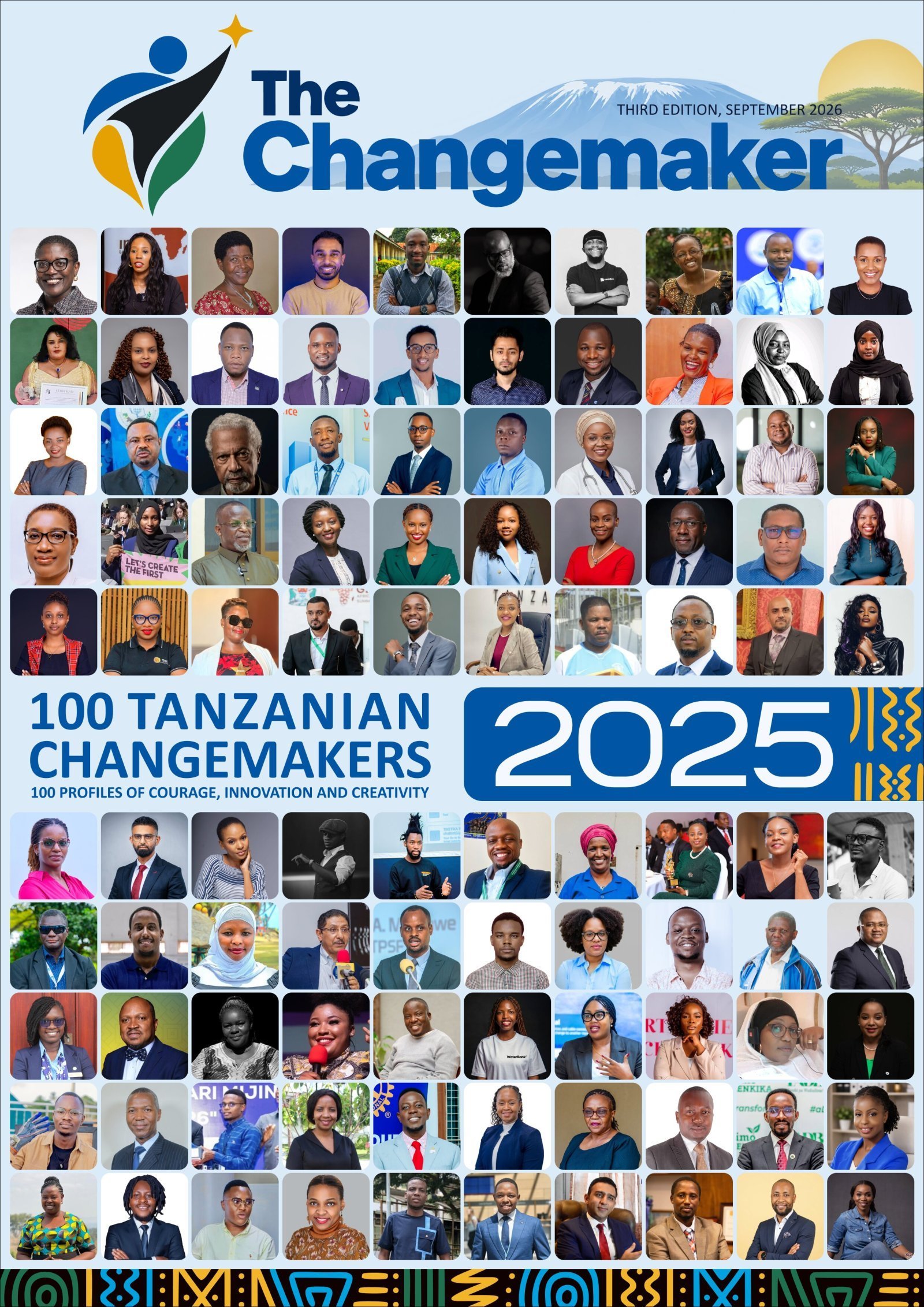
The 2025 edition of 100 Tanzanian Changemakers brings together entrepreneurs, corporate leaders, technologists, researchers, health professionals, development practitioners, journalists and creatives whose work is shaping different parts of Tanzania’s economy. The publication profiles people such as Deogratius Aloyce Massawe, Sameer Hirji, Benjamin Fernandes, Mpanju Elpidius, Abdulmajid Nsekela, Yahya Rashid Puyaga, Brighita Faustin, Fahad Awadh, Lilian Makoi and Dr Victoria Kisyombe, alongside innovators working in artificial intelligence, climate intelligence, healthcare, research and the creative industries. The list is not ranked. Its value lies in the range of economic problems represented by the people featured. Read as a single document, it provides a picture of an economy being built through payments, manufacturing, agricultural processing, finance, technology, research, healthcare and creative enterprise.
DAR ES SALAAM — Tanzania’s emerging economy is being built by people working on problems that rarely appear together in the same economic report.
The 2025 edition of 100 Tanzanian Changemakers, published by Serengeti Bytes, a leading public relations, technology, and communications agency in Tanzania with operations in Rwanda and Uganda, profiles 100 Tanzanians contributing to the country’s evolving economy and society. The publication covers business and entrepreneurship, technology and innovation, nonprofits and development, research and academia, media, sports, arts and entertainment, health and wellbeing, and governance and public leadership. It does not rank the individuals. Instead, it documents their work across different fields, from building companies and developing financial technology to conducting scientific research, improving healthcare, supporting farmers, and building creative businesses.
The result is a document that can be read as more than a collection of profiles. The people featured occupy different points in Tanzania’s productive system. Deogratius Aloyce Massawe works around private sector representation. Sameer Hirji is building payment infrastructure. Benjamin Fernandes has taken a Tanzanian financial technology company into cross border payments. Mpanju Elpidius is developing aquaculture. Yahya Rashid Puyaga is building engineering capacity around mining. Brighita Faustin works with sunflower farmers and processing. Lilian Makoi is applying data and artificial intelligence to personal finance. Dr Victoria Kisyombe has spent years working around women’s access to capital.
Taken together, the profiles show an economy where the traditional sectors remain central but where new business models are increasingly being built around the gaps between them. Agriculture is being connected to processing. Mining is creating demand for local engineering. Banking is being combined with technology and financial education. Research is being connected to commercialisation. Healthcare is being connected to data and artificial intelligence. The list's most useful contribution is therefore not identifying 100 important people. It is showing the variety of problems around which Tanzanians are building organisations and businesses.
Why does the list begin with private sector institution building?
The first profile belongs to Deogratius Aloyce Massawe, chief executive of the Tanzania Private Sector Foundation. His story is different from that of an entrepreneur building a consumer product because his work is centred on the conditions under which other businesses operate. The magazine describes his role through private sector advocacy, government engagement and efforts to improve the investment and business environment. It calls this “a different form of changemaking,” placing institution building alongside conventional entrepreneurship.
That framing sets up one of the publication's strongest themes. Economic activity depends not only on companies producing goods and services, but also on institutions that connect those companies to government, finance, regulation and markets. The profile of Oscar Kisanga makes a similar argument from the perspective of the Tanzania Chamber of Commerce, Industry and Agriculture, where his work is presented around private sector advocacy, access to finance, agricultural value chains and support for business growth. Simon Shayo brings the same institutional question into mining, with his profile focused on connecting companies, government and policymakers around the country's mineral sector.
The three profiles point to different versions of the same economic function. Massawe works at the level of the private sector's relationship with government. Kisanga works around business representation and commercial development. Shayo works around mining and investment. None of them is presented simply as a company founder, yet their work affects the environment in which companies invest, produce and expand.
What does Selcom tell us about the changing economics of payments?
Sameer Hirji's profile moves the story from institution building into economic infrastructure. The magazine traces Selcom's evolution from a technology and payment solutions company into a wider financial services platform connecting consumers, merchants, institutions and businesses. Between 2025 and 2026, it says Selcom opened Experience Centres in Kigamboni, Mwananyamala, Mwanza, Tunduma, Tanga and Mbeya, while a partnership with Visa introduced Pay by Link for merchants.
The profile describes payment systems as part of the infrastructure through which businesses collect revenue, manage transactions and participate in a digital economy. That places Selcom's story within a wider change in Tanzania's commercial structure. Payments are no longer simply a banking service. They increasingly sit inside retail, small business management, online commerce and other activities that depend on the ability to move money quickly between customers and businesses.
Benjamin Fernandes represents a different stage of the same financial transition. The NALA founder is profiled through the company's movement from remittances toward cross border payments and its enterprise payment platform, Rafiki. The magazine describes NALA's expansion into the United Kingdom and the United States and its continued development of payment infrastructure. The underlying story is about a Tanzanian founded company moving from a consumer financial problem into a wider piece of the infrastructure required for international commerce.
Can Tanzania’s financial system finance the businesses trying to grow?
Several profiles suggest that access to finance remains one of the central constraints around entrepreneurship. Faiz Arab is profiled through financial solutions intended to help entrepreneurs access capital, while Ester Manase is presented through investment banking, financial education and work around investment decisions. The magazine describes Arab's work as part of a shift toward “financial solutions that can help them grow, invest and create employment opportunities.”
Dr Victoria Kisyombe's profile takes the question into women's economic participation. Her work is described through financial mechanisms designed to help women acquire productive assets, with the magazine recounting a model that supported women in agriculture and other income generating activities. The profile describes access to finance not simply as a question of receiving a loan, but as a question of whether households and entrepreneurs can acquire assets that generate income over time.
CRDB Bank chief executive Abdulmajid Nsekela and Stanbic Bank Tanzania executive Derick Lugemala represent the institutional side of the same issue. Nsekela's profile covers banking, financial inclusion and regional expansion, while Lugemala's focuses on financial management, entrepreneurship support and the role of banks in financing businesses. The publication describes Lugemala's work through “financial solutions designed to support Tanzania's growing businesses,” placing commercial banking within the wider question of productive enterprise.
The profiles do not establish that finance has solved Tanzania's capital constraints. They show that the issue remains sufficiently important for financial access, financial literacy and entrepreneurship support to appear repeatedly across the list.
What happens when agriculture moves beyond the farm?
Agriculture produces some of the clearest examples of the publication's wider economic argument. Mpanju Elpidius is profiled through My Fish Tanzania, which grew from fish farming into an integrated aquaculture business. The magazine traces the enterprise from its early operations in Mwanza to expansion involving larger ponds, hatchery activity, processing and plans for wider production.
The profile of Brighita Faustin follows a different agricultural route. Her work with OBRI Africa centres on sunflower farmers, aggregation and processing. The magazine reports that the organisation had reached more than 11,000 farmers and was working to connect production to markets and processing. Its central argument is that farmers can receive more value when production is connected to processing, quality standards and reliable markets rather than remaining at the raw commodity stage.
Fahad Awadh's YZ Agro represents another move up the value chain. His profile describes a company that began with agricultural production and moved into processing, including cassava based products. Martha Fabiano Matia is similarly profiled through sunflower processing, with her company working with farmers and turning sunflower seed into cooking oil. Edith Mshiu's Freshpack focuses on post harvest management, while Diana Orembe's NovFeed uses biotechnology to convert fish waste into agricultural inputs.
The pattern is consistent. The economic opportunity is increasingly being pursued after the farm gate. Processing, packaging, storage, logistics, biotechnology and market access determine how much value remains within the agricultural economy. The profiles of these entrepreneurs show Tanzanian businesses attempting to occupy those missing links.
What does local engineering around mining say about industrialisation?
Engineer Yahya Rashid Puyaga provides one of the clearest industrial stories in the publication. His company, ESAP, operates in mining engineering and services, and the magazine says the company launched a Mobile Manufacturing Unit in Geita in June 2026 to manufacture explosives closer to mining operations. It presents the development as part of a broader effort to increase local content and retain more economic value around Tanzania's mining industry.
The profile also says the company had invested more than TZS 700 million in the unit and had expanded its technical workforce. Those figures are claims contained in the publication and are not independently verified in the article. What can be observed from the profile itself is the direction of the business: instead of limiting participation in mining to extraction and service contracts, ESAP is attempting to manufacture a specialised product closer to the point of use.
Ally Edha Awadh's profile reaches the energy sector through Lake Oil, while Seif A. Seif's profile covers manufacturing, transport and logistics through the Super Group of Companies. The magazine presents Seif's business history as an example of Tanzanian capital moving across several productive sectors rather than remaining concentrated in a single activity.
These profiles place industrialisation in practical terms. It is not only about attracting a large factory. It is also about whether Tanzanian businesses can build the engineering, logistics, processing, manufacturing and distribution capabilities that surround major industries.
Why does technology appear across so many economic sectors?
The technology and innovation section shows that digital activity is increasingly embedded in ordinary economic functions. Careen Joel Mwakit... is profiled through climate intelligence and the use of geospatial data and artificial intelligence. Kalebu Gwalugano works around artificial intelligence and business automation. Jumanne Mtambalike is presented through entrepreneurship and technology platforms, while Tukay Thomas is profiled through technology applied to transport and traffic problems.
Other profiles bring the same tools into finance and administration. Lilian Makoi is associated with Mipango and the use of data and artificial intelligence to help people manage financial behaviour. Gabriel Mashenene is profiled through KodTrack and tax administration technology. John Haule is presented through Swahili language digital tools for small businesses, while Henry Bukuru works on business software covering inventory, sales and operational management.
The important point is not the number of technology companies. It is where the technology is being applied. Payments, tax collection, financial management, transport, climate information and business operations are all areas where information can alter costs and productivity. The Changemakers profiles show technology moving into these functions rather than existing as a separate industry serving only technology users.
Can entrepreneurship create value from Tanzania’s natural resources?
Lilian Lawrence Munisi's profile takes the question into natural products and consumer manufacturing. Through Bonututu Butter, she is building a business around African natural resources, with the magazine describing the company's work around shea products and the creation of a consumer brand. The profile argues that value can be created by moving from raw materials into processed products with branding, quality control and distribution.
Leandra Lymo's Refixit offers another example. Her business combines traditional landscape and building techniques with contemporary design, while the publication describes the company's expansion into international markets. Hellen Dausen's Nyau Essence grew from handmade soaps based on botanical ingredients into a broader business with retail products and plans for digital distribution.
These stories sit alongside agriculture, mining and energy because they involve the same economic question: how much value can be retained between the raw resource and the final customer? The answer depends on processing, design, technology, intellectual property, distribution and access to markets. The Changemakers profiles provide individual examples of businesses attempting to capture those stages.
Where does logistics fit into the emerging economy?
David Mulokozi and Misana Manyama illustrate the role of logistics in connecting different parts of the economy. Mulokozi is profiled through Mat Super Brands and its expansion in transport and logistics, while Manyama's TUTUME is presented as a logistics company working to move goods between businesses and customers across Tanzania and into regional markets.
The economic function is straightforward but often underappreciated. Production has limited value if goods cannot reach markets at an acceptable cost. Manyama's profile describes TUTUME's development around problems involving fragmented transport systems, delayed deliveries and inefficient distribution. Mulokozi's profile similarly places transport within employment, mobility and commercial activity.
The presence of logistics entrepreneurs alongside manufacturers, farmers, banks and technology companies makes the list more revealing. They are parts of the same chain. A processor needs raw materials delivered. A manufacturer needs components. A retailer needs inventory. A farmer needs access to markets. A digital business still depends on physical movement when goods are involved.
What does the list say about women entering Tanzania’s productive economy?
Women feature across almost every category rather than being confined to a dedicated entrepreneurship section. Gudila Kimati is profiled through Maggy Dress Up and a fashion business that developed from personal experience into a commercial enterprise. The magazine describes her journey from making clothing for herself to developing a business with customers beyond her immediate network.
Martha Fabiano Matia, Brighita Faustin, Diana Orembe, Lilian Makoi, Ester Manase and Victoria Kisyombe represent very different sectors, but their profiles all involve economic participation beyond conventional employment. Matia is working in agricultural processing. Faustin is working with farmers and value chains. Orembe is working in biotechnology. Makoi is building financial technology. Manase works in investment banking and financial education. Kisyombe has built financial mechanisms around women and productive assets.
The pattern changes the way the gender question appears in an economic publication. It becomes less about representation as an abstract objective and more about the sectors in which women are already creating companies, financial products, technologies and institutions.
Why does the publication include research, health and culture alongside business?
The decision to include research and academia, health and wellbeing, media, and sports, arts and entertainment makes the publication broader than a conventional business directory. The category structure itself covers business and entrepreneurship, technology and innovation, non profits and development, research and academia, media, sports, arts and entertainment, health and wellbeing, and governance and public leadership.
That breadth is reflected in individual profiles. Professor Fortunata Makene is associated with energy, renewable technologies and materials science. Professor Evelyne Isack Mbede is profiled through geological research. Professor Saudin Mwakaje works around intellectual property, technology transfer and commercialisation. In healthcare, Dr Sang'udi Sang'udi is profiled through cancer detection and health technology, while Dr Ali Khatau is associated with diabetes education and technology.
The creative economy receives the same treatment. Abdulrazak Gurnah is profiled through literature and Tanzania's international cultural identity. Lorna Mashiba is presented through contemporary art and Rang Gallery. Zuhura Senge appears through poetry, writing and performance, while Abigail Chams represents music and international performance. The publication therefore treats knowledge, health and culture as parts of the wider economy of skills, intellectual property, professional services and international markets.
What does the full list reveal about Tanzania’s next economic phase?
The strongest argument in 100 Tanzanian Changemakers is hidden in the connections between the profiles. Sameer Hirji is building payment infrastructure while Benjamin Fernandes is building cross border payment systems. Mpanju Elpidius is developing aquaculture while Brighita Faustin and Fahad Awadh are building agricultural value chains. Yahya Rashid Puyaga is attempting to deepen local manufacturing around mining, while Ally Edha Awadh operates within the petroleum supply chain. Lilian Makoi and Faiz Arab work around financial access, while Professor Saudin Mwakaje works around moving knowledge toward commercial use.
These are different businesses and professions, but they share a common characteristic. They are operating around constraints inside Tanzania's existing economy. Payment access, finance, agricultural processing, local manufacturing, logistics, healthcare, technology and knowledge transfer are all areas where the ability to solve a practical problem can become an economic opportunity.
The list should not be interpreted as proof that these sectors are already delivering large scale economic outcomes. It is a publication of profiles, not a national economic survey, and many of the performance figures contained in individual profiles come from the organisations or individuals being profiled. Its value is different. It records who is attempting to build capacity in these areas and what kinds of solutions they are pursuing.
That makes the 100 profiles useful as a snapshot of Tanzania's emerging productive class. Some are building companies that already operate at scale. Others are developing younger businesses. Some are working inside large institutions. Others are researchers, professionals or creatives building new markets around specialised skills. Their economic weight is not identical, but their stories collectively show where new activity is forming.
The publication's own framing is simple. It describes the changemakers as people shaping Tanzania's narrative “not only locally but also on global stages.” The more interesting economic reading is that many of them are trying to make Tanzania's domestic economy more capable of producing, processing, financing, moving, researching and selling more of what it creates.
The future of an economy is rarely visible in one balance sheet. Sometimes it is visible in the people already building the missing pieces.
FAQ
What is the 100 Tanzanian Changemakers publication? It is a Serengeti Bytes publication profiling 100 Tanzanians across business, technology, development, research, media, health, creative industries and public leadership. The publication presents the individuals without a ranking or inherent order.
Who are some of the business figures featured? The business section includes Deogratius Aloyce Massawe, Sameer Hirji, Benjamin Fernandes, Mpanju Elpidius, Derick Lugemala, Simon Shayo, Abdulmajid Nsekela, Oscar Kisanga, Yahya Rashid Puyaga, Ally Edha Awadh and Seif A. Seif, among others. Their profiles cover private sector advocacy, payments, financial technology, aquaculture, banking, mining, energy, manufacturing and logistics.
Does the list rank the 100 people? No. The publication presents the people across categories rather than assigning them a first, second or third position. The numbering attached to individual profiles functions as part of the publication's presentation and does not establish a ranking of economic or social impact.
Which agricultural entrepreneurs are featured? The publication includes Mpanju Elpidius in aquaculture, Brighita Faustin in sunflower value chains, Fahad Awadh in agricultural processing, Martha Fabiano Matia in sunflower processing, Edith Mshiu in post harvest management and Diana Orembe in biotechnology and fish waste processing. Their profiles cover different stages between primary production and final markets.
Which technology and financial technology figures are included? The publication includes people working across artificial intelligence, digital payments, financial technology, business software, climate intelligence and other applications of technology. Among the profiles are Sameer Hirji, Benjamin Fernandes, Lilian Makoi, Faiz Arab and other technology and finance practitioners whose work connects digital tools with commercial and financial activity.
Why does the publication include researchers, health professionals and creatives? The publication treats economic and national development as broader than company formation. Its categories include research and academia, health and wellbeing, media, sports, arts and entertainment, alongside business and technology. That structure allows the publication to document people creating knowledge, specialised services, intellectual property and professional markets as well as conventional businesses.
What is the economic value of reading the list as a whole? The profiles provide a qualitative picture of people working on constraints across Tanzania's economy, including finance, agricultural processing, local manufacturing, logistics, technology, healthcare and knowledge transfer. It is not a substitute for national economic statistics, but it provides a human and institutional view of the businesses, organisations and professional capabilities being developed around those sectors.
 Uchumi360
Business Intelligence
Uchumi360
Business Intelligence
Uchumi360 covers business, investment, and economic policy across East, Central, and Southern Africa.
For the serious reader
You read to the end. That places you in a small group.
Uchumi360 is built for readers who demand precision over speed, structure over sentiment, and analysis that holds uncomfortable conclusions rather than softening them. If this work sharpens how you think about Africa's economy, help us keep building the infrastructure behind it.
Institutional Partners
Commission intelligence. Shape the conversation.
Uchumi360 works with development finance institutions, investment firms, sovereign bodies, and strategic organisations across the coverage region. Institutional partnership unlocks:
- Commissioned sector and country intelligence reports
- Branded research series under your institution's authority
- Exclusive data briefings for internal strategy teams
- Speaking and editorial presence at Uchumi360 events
- Co-published investment outlooks for your markets
Support Our Work
Independent analysis has a cost. Help us bear it.
Uchumi360 does not carry advertising. It does not take editorial direction from sponsors. Every article is produced without commercial compromise. Your contribution funds the reporting, research, and editorial infrastructure that keeps this analysis free from influence.
Secure checkout: One-time and monthly support are processed securely. Add payment credentials to enable checkout here.
Stay Connected
Keep up with every new insight.
Follow our latest analysis, policy coverage, and market intelligence as soon as it is published. If you need something specific, reach out directly and we will point you to the right research.
