
68.8 Percent of Tanzanians Have No Education Beyond Primary School. A New NBS Survey Confirms the Scale of the Human Capital Gap That Vision 2050 Must Close.
Ready
The NBS Household Energy Consumption Survey 2023 confirms that 68.8 percent of Tanzanians aged five and above have only primary education as their highest attainment level, 21.1 percent reached secondary, and 5.8 percent tertiary or above. Kenya's 2019 Population and Housing Census shows secondary education as the modal category at 39.7 percent, primary-only at 34.6 percent, and combined post-secondary including certificates and diplomas at approximately 14 percent. Tanzania's secondary attainment rate is nearly half Kenya's. Tanzania's post-secondary attainment rate is less than half Kenya's. Tanzania's primary-only rate is nearly double Kenya's. The Ataraxis Global Outsourcing Talent Index 2026 ranks Kenya 11th globally against Tanzania's 100th, with CEO George Atuahene identifying talent availability, driven directly by educational attainment depth, as the primary differentiating variable. Tanzania's FYDP IV targets TVET enrolment rising from 415,131 to 591,446, university enrolment at 361,257, and the Higher Education for Economic Transformation project at TZS 127.9 billion, with the student loan fund at TZS 1,115.3 billion the second-largest individual project in the entire National Development Plan. Whether these investments close the attainment gap at the pace Vision 2050's USD 1 trillion economy requires is the human capital question whose answer the NBS and KPHC data now makes possible to ask precisely.Tanzania cannot build Vision 2050's economy with a workforce whose majority completed its education at Standard Seven, while its nearest regional competitor has nearly twice the share of its population with secondary qualifications and more than twice the post-secondary depth.
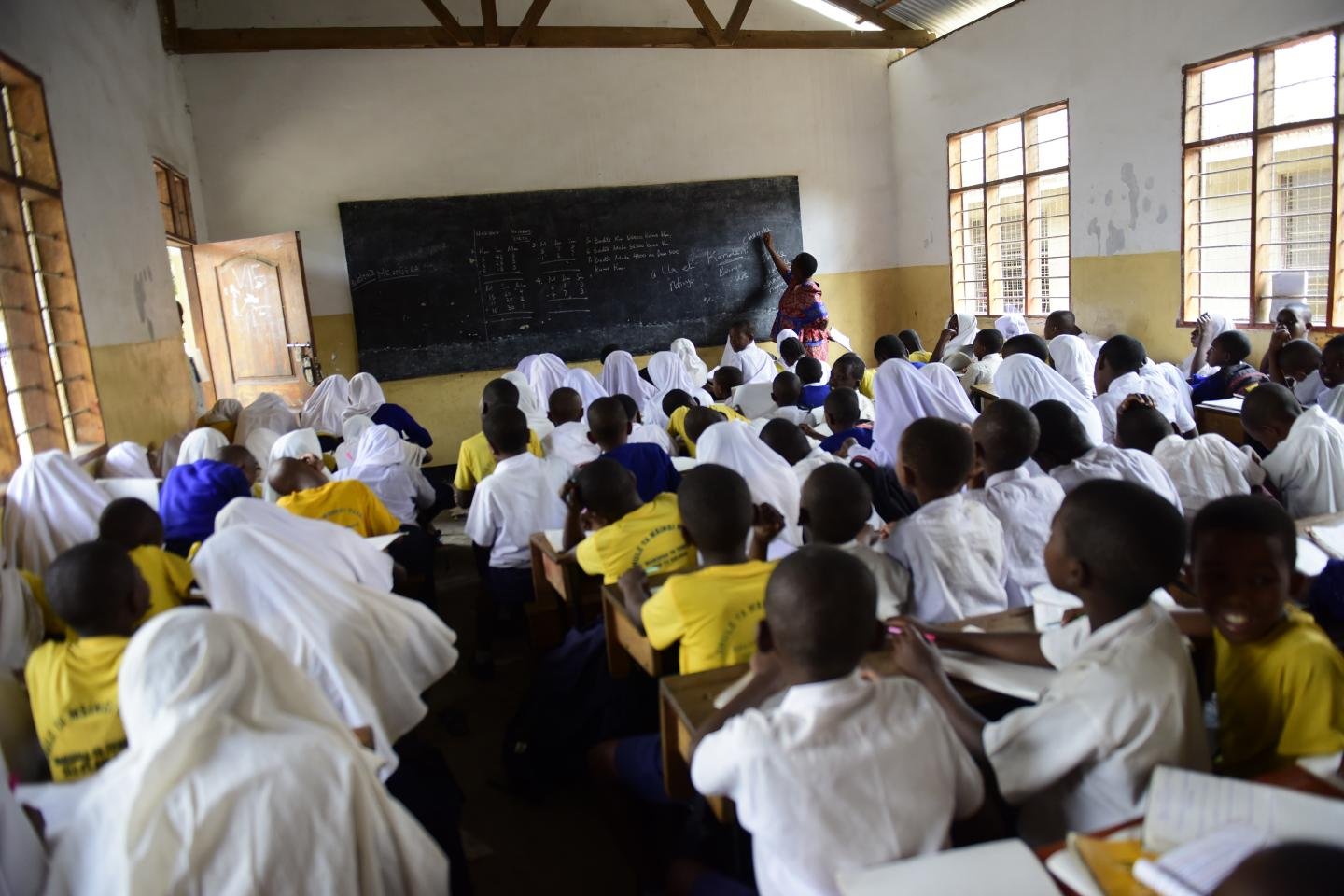
DAR ES SALAAM — Tanzania has made one of sub-Saharan Africa's most significant expansions of primary education access over the past two decades. The NBS Household Energy Consumption Survey 2023 documents the result: 68.8 percent of Tanzanians aged five and above have attained primary education as their highest educational level.
The same data documents what comes next with equal precision. Just 21.1 percent reached secondary education. Only 5.8 percent attained tertiary, university, or other higher levels.
For a country whose Vision 2050 targets a USD 1 trillion economy built on manufacturing, technology, and high-productivity services, the gap between the educational attainment of the current adult population and the workforce those ambitions require is among the most consequential development challenges in the national planning framework.
The Kenya comparison, drawn from the 2019 Population and Housing Census, makes that gap impossible to express in abstract terms.
The Kenya comparison that makes the gap impossible to ignore
Tanzania and Kenya share the same East African geography, the same EAC membership, comparable GDP growth trajectories over the past decade, and the same colonial education legacy. They do not share a workforce educational attainment profile, and the gap between them has direct and measurable economic consequences.
Kenya's 2019 Population and Housing Census shows that secondary education is the single most common highest education level among Kenyans aged five and above, reached by 39.7 percent of the population. Primary education, the modal category for Tanzania at 68.8 percent, is reached by only 34.6 percent of Kenyans as their highest level. University and college attendance sits at 8.9 percent, with a further 5.1 percent holding certificates or diplomas, bringing Kenya's combined post-secondary attainment to approximately 14 percent against Tanzania's 5.8 percent tertiary figure.
The side-by-side comparison across the two countries is stark.
Tanzania's secondary attainment is 21.1 percent. Kenya's is 39.7 percent. Kenya's rate is nearly double Tanzania's. Tanzania's tertiary attainment is 5.8 percent. Kenya's combined post-secondary including certificates and diplomas is approximately 14 percent. Kenya's rate is more than double Tanzania's. Tanzania's primary-only attainment is 68.8 percent. Kenya's is 34.6 percent. Tanzania's rate is nearly double Kenya's.
These are not marginal differences explained by data methodology or survey design. They describe two countries whose workforces sit in categorically different educational brackets despite being direct neighbours, economic partners, and members of the same regional bloc competing for the same international investment, technology sector development, and professional services growth.
One methodological note the comparison requires. The Kenya data is from the 2019 Population and Housing Census. The Tanzania data is from the NBS Household Energy Consumption Survey 2023. These are different instruments, different years, and slightly different population definitions. The gap is large enough that methodological differences do not change the directional conclusion. A precise apples-to-apples comparison would require Tanzania's 2022 Population and Housing Census education attainment data disaggregated to the same level of detail, which NBS's TISP portal is expected to publish in full. When that data is released at district level, it will allow a more precise comparison both between Tanzania and Kenya and within Tanzania across its 184 districts. What the available data already shows is sufficient to make the argument.
What 68.8 percent means for the economy Tanzania is trying to build
Primary education provides literacy, numeracy, and foundational learning. It was designed as the beginning of an education journey, not its conclusion. The distinction matters economically because the industries Vision 2050 identifies as growth drivers, advanced manufacturing, digital services, financial sector expansion, and technology-enabled agriculture, require workforce capabilities that primary education alone does not produce.
A textile factory needs sewing operators who can be trained on the job from a primary education base, but it also needs quality control technicians, maintenance engineers, production supervisors, and logistics coordinators whose roles require secondary and vocational education. A software company needs computer science graduates. A commercial bank needs financial analysts. A pharmaceutical manufacturer needs laboratory technicians. A mining company needs geologists and equipment engineers.
If 68.8 percent of the adult population has no education beyond primary school, the supply of these skills is constrained by the pipeline rather than by demand. TISEZA can approve 900 manufacturing projects annually. Those projects can only employ the workers whose education and skills the national education system has produced. The investment approvals and the human capital whose presence makes them productive are not the same decision. One is made in a government office. The other accumulates over fifteen years of post-primary education and training.
The Ataraxis data that connects education to competitiveness
The most direct available evidence connecting Tanzania's educational attainment gap to its economic competitiveness is the Ataraxis Global Outsourcing Talent Index 2026, whose methodology Uchumi360 analysed in June 2026 with data confirmed by CEO George Atuahene.
The index ranks Kenya 11th globally in outsourcing attractiveness. It ranks Tanzania 100th. The gap between those two positions is not explained primarily by English proficiency, though that is a contributing factor. Atuahene was explicit: talent availability, driven directly by tertiary and vocational education depth, is what separates Kenya from Tanzania in the index. Kenya's talent score in the Ataraxis methodology is 50 against Tanzania's 40. That 10-point difference reflects a workforce whose educational depth allows Kenya to supply the analyst, programmer, accountant, and manager roles that outsourcing clients require at scale, while Tanzania's shallower post-secondary base constrains the available supply.
The NBS and KPHC data now makes clear why that talent gap exists. A country where 39.7 percent of the population has secondary education and 14 percent has post-secondary qualifications produces a deeper professional workforce than one where 21.1 percent has secondary and 5.8 percent has post-secondary education. The index is measuring the output of an education system whose inputs the census data documents.
The outsourcing sector is one industry. The same talent depth dynamic applies to every knowledge-intensive sector that Tanzania's Vision 2050 targets. Financial services, technology, professional advisory, healthcare, and advanced manufacturing all require workers whose educational attainment is above primary level. The countries that attract those sectors are the ones with the workforce depth to staff them. The education attainment gap between Tanzania and Kenya is a direct explanation for the investment location gap between Dar es Salaam and Nairobi that Tanzanian policymakers observe and discuss without always connecting to its most fundamental cause.
Every industrialised country raised attainment before it industrialised
The countries whose development trajectories Tanzania most frequently references as models have one consistent feature: they raised workforce educational attainment alongside and in advance of industrial investment, not as a lagging consequence of it.
South Korea's secondary education completion rate exceeded 90 percent before the chaebol-driven industrial expansion of the 1970s and 1980s reached its peak. The factories came because the workers were educationally prepared for them. China invested heavily in technical colleges and vocational institutions through the 1990s and 2000s, directly preceding the manufacturing export surge whose scale made China the world's factory. The curriculum was calibrated to what the factories needed. Vietnam linked vocational education curricula to the specific skill requirements of export manufacturing investors whose factories it was recruiting, producing the technically trained workforce those investors required before they committed capital.
Each country understood a principle that Tanzania's educational attainment data makes urgent: factories do not merely require workers. They require workers whose education has prepared them for what factories need. A production line operator needs mathematics. A quality control inspector needs analytical reasoning. A maintenance technician needs applied physics and mechanical understanding. None of these capabilities are reliably produced by a system where 68.8 percent of the adult population stopped at Standard Seven.
Rwanda's trajectory is the most directly comparable regional case. Rwanda's investment in education as a percentage of its national budget consistently exceeds Tanzania's allocation. Rwanda's secondary completion and tertiary enrolment rates, while they began from a lower post-genocide base, have risen faster than Tanzania's over the comparable period. Rwanda's technology sector, professional services, and financial centre development, anchored by the Kigali International Financial Centre, reflect the human capital investment whose returns are now visible. Rwanda at 7.0 percent GDP growth in 2025 is growing faster than Tanzania at 5.9 percent, and part of that differential is the workforce quality that higher educational attainment produces.
The pipeline Tanzania is building and whether it is fast enough
Tanzania's FYDP IV is building the education pipeline whose expansion the attainment data demands. TVET enrolment is targeted at 591,446, up from 415,131. University enrolment is targeted at 361,257. The Higher Education for Economic Transformation project receives TZS 127.9 billion. The student loan fund at TZS 1,115.3 billion is the second-largest individual project in the entire National Development Plan, larger than most infrastructure allocations, reflecting an explicit policy recognition that higher education financing is a development investment rather than a social expenditure.
These targets represent genuine investment at meaningful scale. The question is whether the pace of attainment improvement they imply is sufficient for the economic transformation Tanzania is simultaneously trying to accelerate.
A student who enters secondary school in 2026 and completes a university degree will enter the labour market in approximately 2034. The manufacturing investors approving projects at TISEZA today, the technology companies evaluating Dar es Salaam as a regional headquarters location, and the financial services firms considering whether to expand in Tanzania or Kenya are making decisions now, based on the workforce available now, not the one that the FYDP IV's education investments will produce in eight to twelve years. The investment pipeline and the human capital pipeline operate on different timescales. Closing the gap requires that the education investments accelerate faster than the economy's demand for the skills they produce.
What the data means for the next policy cycle
Tanzania's education budget allocation of approximately 3.7 percent of the national budget, documented in the context of the school postcode analysis Uchumi360 published earlier in this series, is the fundamental constraint whose relaxation is the precondition for accelerating the attainment improvement the NBS data demands. Against Kenya's 27.4 percent education budget share, Botswana's 25 percent, and even Rwanda's sustained higher allocation, 3.7 percent is insufficient to move the 68.8 percent primary-only figure at the pace Vision 2050 requires.
The student loan fund's TZS 1,115.3 billion addresses tertiary financing. It does not address the secondary school completion rate whose improvement is the necessary precondition for tertiary enrolment expanding. A student who does not complete secondary school does not enrol in university regardless of how generous the student loan terms are. Secondary completion is the bottleneck that precedes and determines the tertiary attainment rate. Free secondary education's TZS 10.3 billion FY2026/27 allocation is directionally correct and materially insufficient for the scale of the secondary completion challenge the attainment data describes.
The NBS survey confirms what the school postcode article in this series documented from the quality dimension: Tanzania's education system has largely succeeded at access and has not yet succeeded at progression. Getting children into primary school was the first generation's achievement. Getting them through secondary school and into tertiary or vocational education is the second generation's challenge. The country that Kenya has become, with secondary education as the modal attainment level and 14 percent post-secondary qualification rate, did not arrive there by accident. It arrived there through sustained and prioritised investment in educational progression over multiple decades.
Tanzania has the growth rate, the infrastructure investment momentum, and the institutional capacity to make that same journey. What the NBS data confirms is that the journey has not yet been made at the required pace, and that the economic cost of its deferral is visible in the competitiveness gap that every comparative regional data point documents.
The 68.8 percent is not a fixed number. It is the result of decisions made in previous budget cycles. What it becomes by 2035 depends on decisions being made in this one.
 Uchumi360
Business Intelligence
Uchumi360
Business Intelligence
- - National Bureau of Statistics Tanzania, Household Energy Consumption Survey 2023
- Educational attainment data: 68.8 percent primary only, 21.1 percent secondary, 5.8 percent tertiary and above
- Available at nbs.go.tz
- - Ataraxis Management, 2026 Global Outsourcing Talent Index
- George Atuahene CEO
- Tanzania gross tertiary enrolment ratio 7.83 percent as binding constraint on talent availability
- Available at ataraxismgmt.com
- - Uchumi360, "Kenya World 11th Best Outsourcing Destination," June 2026
- Ataraxis Index full analysis
- Available at uchumi360.com
- Tanzania National Development Plan 2026/27
- TVET target 591,446, university 361,257, HEET TZS 127.9 billion, student loan TZS 1,115.3 billion, free secondary TZS 10.3 billion
- Available at planning.go.tz
- - Tanzania Ministry of Finance, FY2026/27 Budget Speech
- Education budget allocations
- Available at mof.go.tz
Uchumi360 covers business, investment, and economic policy across East, Central, and Southern Africa.
For the serious reader
You read to the end. That places you in a small group.
Uchumi360 is built for readers who demand precision over speed, structure over sentiment, and analysis that holds uncomfortable conclusions rather than softening them. If this work sharpens how you think about Africa's economy, help us keep building the infrastructure behind it.
Institutional Partners
Commission intelligence. Shape the conversation.
Uchumi360 works with development finance institutions, investment firms, sovereign bodies, and strategic organisations across the coverage region. Institutional partnership unlocks:
- Commissioned sector and country intelligence reports
- Branded research series under your institution's authority
- Exclusive data briefings for internal strategy teams
- Speaking and editorial presence at Uchumi360 events
- Co-published investment outlooks for your markets
Support Our Work
Independent analysis has a cost. Help us bear it.
Uchumi360 does not carry advertising. It does not take editorial direction from sponsors. Every article is produced without commercial compromise. Your contribution funds the reporting, research, and editorial infrastructure that keeps this analysis free from influence.
Secure checkout: One-time and monthly support are processed securely. Add payment credentials to enable checkout here.
Stay Connected
Keep up with every new insight.
Follow our latest analysis, policy coverage, and market intelligence as soon as it is published. If you need something specific, reach out directly and we will point you to the right research.
