
Tanzania Is Betting On Science Instead of Cheap Labour. Vision 2050 Signals a Quiet Economic Revolution.
Ready
Tanzania's Long Term Perspective Plan 2026/27–2050/51 signals a different bet, one that gets considerably less attention than the trillion-dollar economy target but may matter more over the plan's 25-year horizon. Running throughout the document is a consistent emphasis on building an economy driven by science, technology, research, innovation and knowledge, not primarily by labour cost. If implemented as written, this represents one of the more significant shifts in Tanzania's development philosophy since independence.
Cheap labour always has a competitor willing to go lower. Tanzania's Vision 2050 makes a quieter, harder bet instead: science, research and knowledge as the actual foundation of the economy. It's the least discussed part of the plan and possibly the most consequential.
For decades, developing countries competed on one advantage above all others: cheap labour. Factories relocated to wherever wages were lowest, governments promoted abundant labour as their competitive edge, and industrialisation largely meant producing more at lower cost than whoever the country was competing against.
Tanzania's Long Term Perspective Plan 2026/27–2050/51 signals a different bet, one that gets considerably less attention than the trillion-dollar economy target but may matter more over the plan's 25-year horizon. Running throughout the document is a consistent emphasis on building an economy driven by science, technology, research, innovation and knowledge, not primarily by labour cost. If implemented as written, this represents one of the more significant shifts in Tanzania's development philosophy since independence.
The competitive rules have changed
The global economy no longer rewards cheap labour the way it once did, largely because manufacturing itself has changed. Factories increasingly run on robotics, automation, artificial intelligence, advanced materials and digitally integrated production systems. Services have become knowledge-intensive. Agriculture is becoming precision agriculture. Mining is becoming data-driven. Even industries traditionally associated with manual labour now depend on engineers, software developers, technicians, researchers and data analysts to remain competitive.
The countries winning this competition currently are the ones investing heavily in knowledge rather than defending a labour-cost advantage that erodes as soon as a cheaper competitor appears. Vision 2050 reads as a recognition of that shift rather than a continuation of the older model.
Knowledge treated as infrastructure, not a social priority
Science and technology don't appear as an isolated sector within the plan. They run across discussions of industrialisation, digital transformation, productivity, education, research, innovation and competitiveness, positioned as a foundation for growth rather than an activity confined to universities and research institutes.
That's a meaningful distinction. Most national development plans treat education as a social priority, something government funds because citizens deserve it. Vision 2050 increasingly treats education and research as economic infrastructure, comparable in function to roads or electricity rather than sitting in a separate social spending category.
Universities as economic institutions, not just credentialing bodies
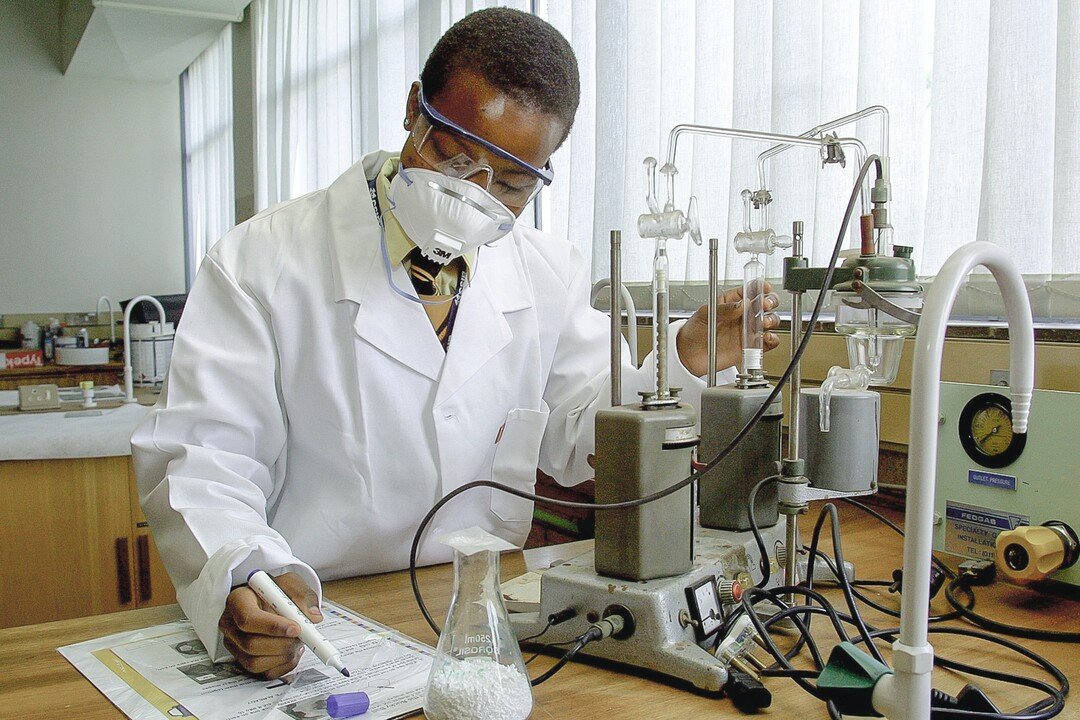
One of the plan's stronger signals is a changing expectation of higher education. Universities are expected to produce innovation, not simply graduates. Research institutions are expected to generate technologies that improve agriculture, manufacturing, healthcare, mining, logistics and digital services, with skills development increasingly tied to industrial competitiveness rather than public sector employment as the default destination for graduates.
That's a real departure from how success in higher education has traditionally been measured. University performance under this model gets judged not only by degrees awarded, but by the knowledge those institutions actually contribute to economic transformation, a considerably harder and slower metric to move.
Innovation folded into investment policy
The Investment, Infusion and Innovation strategy reinforces this direction directly. The plan argues attracting investment alone isn't sufficient; investment needs to transfer technology, strengthen domestic capability and stimulate innovation within Tanzania rather than existing as a purely financial transaction.
That reframes what makes a foreign investor valuable. Capital alone stops being the primary draw. Investors become valuable because they bring new production methods, technical expertise, research partnerships and industrial knowledge alongside the money, which folds innovation directly into investment policy rather than treating it as a separate downstream goal.
Technology as a capability across every sector
The emphasis on science extends well past laboratories. Agriculture is expected to become more productive through research and modern technology. Manufacturing is expected to adopt advanced production systems. Mining increasingly relies on geological modelling, automation and mineral processing technology. Logistics depends on digital platforms and intelligent transport systems. Healthcare is becoming more data-driven. Financial services keep moving toward digital platforms.
Technology functions as a cross-cutting capability layered across every sector in this framing, rather than existing as a standalone industry competing with the others for attention and budget.
The competition for talent, not just capital
The largest implication of this strategy may concern people rather than technology itself. Countries succeeding in knowledge-based industries compete aggressively for scientists, engineers, researchers, entrepreneurs and highly skilled workers, because infrastructure alone doesn't create innovation. Talent does.
That puts Tanzania's education system, technical colleges, universities and research institutions at the centre of national competitiveness over the coming decades in a way infrastructure spending alone can't substitute for. Producing more graduates matters. Producing graduates capable of solving actual industrial problems matters considerably more, and it's a harder outcome to engineer through policy alone.
Why cheap labour has a ceiling
The decision to emphasise science over labour cost reflects a specific economic reality: competing on low wages alone eventually hits its limit, because there's always another country willing to go lower. Economies that depend entirely on cheap labour tend to struggle to raise incomes over time precisely because productivity stays low, and low productivity is what cheap labour competitiveness is built on in the first place.
Knowledge economies follow a different trajectory. They create higher-value products, develop proprietary technology, export expertise rather than just goods, and retain a larger share of global value chains instead of capturing only the assembly margin. Vision 2050 appears designed to move Tanzania toward that second model gradually, rather than treating it as an eventual upgrade once the labour-cost model runs its course.
The slowest investment in the plan
Roads take years to build. Railways take years. Ports take years. A scientific culture takes decades, and it can't be delivered through a construction contract the way physical infrastructure can. Building it requires sustained investment in education, laboratories, universities, industry partnerships, intellectual property systems and entrepreneurial finance, none of which produces visible progress on the timeline infrastructure does.
That makes science one of the longest-horizon investments contained in Vision 2050. It may also end up being one of the most valuable, precisely because it's the hardest for competing countries to replicate quickly once it's genuinely established.
The Uchumi360 insight
The countries dominating tomorrow's economy won't necessarily be the ones with the cheapest workers. They'll be the ones with the most capable workers. Vision 2050 suggests Tanzania has recognised that knowledge functions as a form of infrastructure in its own right. Roads move goods. Electricity powers factories. Science creates industries that didn't previously exist. Countries that invest seriously in all three rarely stay poor for long, and Tanzania's plan is a bet that it can become one of them.
FAQ
How does Vision 2050 treat science and technology differently from previous plans? As economic infrastructure integrated across industrialisation, productivity and competitiveness discussions, rather than as a standalone education or social policy chapter.
What's expected to change about universities under this model? They're expected to generate innovation and industrially relevant research, not just award degrees, with success increasingly measured by economic contribution rather than graduate numbers alone.
How does this connect to the 3I strategy? The Investment, Infusion and Innovation framework treats technology transfer and domestic innovation as conditions for valuable investment, not a separate goal pursued after capital arrives.
Why can't cheap labour sustain long-term growth? Because there's always a lower-cost competitor, and economies built on cheap labour tend to keep productivity low, which limits how far incomes can rise over time.
 Uchumi360
Business Intelligence
Uchumi360
Business Intelligence
Uchumi360 covers business, investment, and economic policy across East, Central, and Southern Africa.
For the serious reader
You read to the end. That places you in a small group.
Uchumi360 is built for readers who demand precision over speed, structure over sentiment, and analysis that holds uncomfortable conclusions rather than softening them. If this work sharpens how you think about Africa's economy, help us keep building the infrastructure behind it.
Institutional Partners
Commission intelligence. Shape the conversation.
Uchumi360 works with development finance institutions, investment firms, sovereign bodies, and strategic organisations across the coverage region. Institutional partnership unlocks:
- Commissioned sector and country intelligence reports
- Branded research series under your institution's authority
- Exclusive data briefings for internal strategy teams
- Speaking and editorial presence at Uchumi360 events
- Co-published investment outlooks for your markets
Support Our Work
Independent analysis has a cost. Help us bear it.
Uchumi360 does not carry advertising. It does not take editorial direction from sponsors. Every article is produced without commercial compromise. Your contribution funds the reporting, research, and editorial infrastructure that keeps this analysis free from influence.
Secure checkout: One-time and monthly support are processed securely. Add payment credentials to enable checkout here.
Stay Connected
Keep up with every new insight.
Follow our latest analysis, policy coverage, and market intelligence as soon as it is published. If you need something specific, reach out directly and we will point you to the right research.
