
Tanzania and Nigeria Are Nearly the Same Size, but Tanzania Could Reach 118 Million People by 2050 as Nigeria Shows the Cost of Growth Without Planning
Ready
Tanzania covers about 947,300 square kilometres compared with Nigeria’s 923,770 square kilometres, yet Tanzania has roughly 70 million people while Nigeria has more than 237 million. Tanzania’s population has already increased from 12.3 million in 1967 to around 70 million and NBS projects it could reach 118.1 million by 2050, while the United Nations expects it to at least double between 2024 and 2054. Nigeria’s experience shows how rapid demographic and urban growth can overwhelm housing, transport, electricity, public services and productive job creation when planning moves more slowly than population. Tanzania still has a planning window, but its cities, labour market and infrastructure must begin preparing for a country that could contain almost twice as many people within one generation.
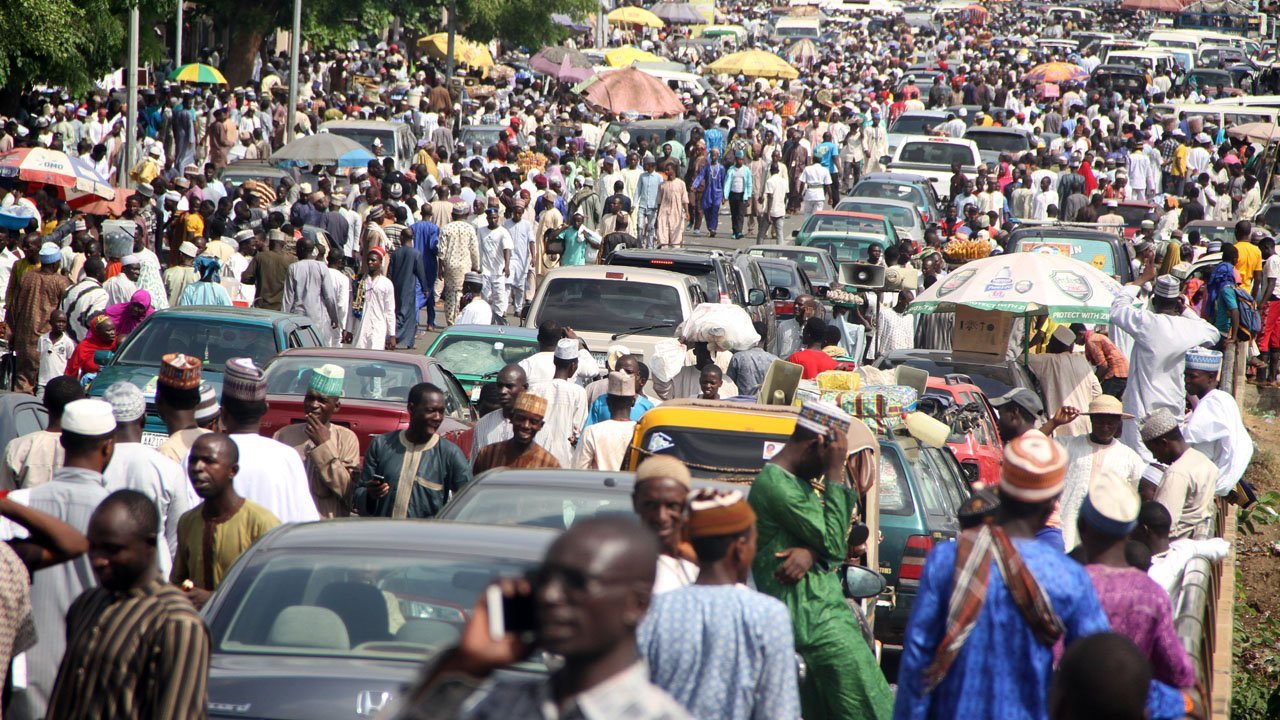
Tanzania and Nigeria occupy almost the same amount of land, but they currently contain radically different numbers of people. Nigeria covers approximately 923,770 square kilometres, while Tanzania covers about 947,300 square kilometres, a difference of barely 2.5 percent, yet Nigeria now has roughly 237.5 million people compared with about 70.5 million in Tanzania. Nigeria consequently has more than 250 people for every square kilometre of land, compared with roughly 75 in Tanzania, while close to two thirds of Nigerians now live in urban areas compared with slightly more than one third of Tanzanians.
The comparison becomes more important when Tanzania’s demographic trajectory is added. Tanzania had only 12.3 million people at the 1967 census, rising to 17.5 million in 1978, 23.1 million in 1988, 34.4 million in 2002, 44.9 million in 2012 and 61.7 million in 2022. The National Bureau of Statistics now projects the population at around 70 million in 2026 and approximately 118.1 million by 2050, meaning that within the span of one human lifetime Tanzania will have moved from a country of 12 million people to one approaching 120 million. NBS found that population growth accelerated to 3.2 percent annually between 2012 and 2022 and warned that, if that pace were maintained, the population would double in approximately 22 years.
The United Nations is even more explicit about the long term direction. Its World Population Prospects 2024 identifies Tanzania among only nine places whose populations are likely to at least double between 2024 and 2054, and projects that Tanzania could enter the world’s ten most populous countries by the end of the century.
That is where Nigeria becomes relevant to Tanzania, because Nigeria has already travelled much further along the demographic road Tanzania is now entering. Nigeria had approximately 45 million people in 1960. By 1990 it had about 97 million, by 2000 it had 126 million, by 2010 about 167 million and by 2025 approximately 237.5 million. In sixty five years, therefore, Nigeria added almost 192 million people without adding any land, while cities, electricity systems, housing, schools, roads, sanitation networks and labour markets were required to expand at corresponding speed.
Nigeria’s difficulty has not been population growth by itself. A large population can create a vast internal market, a deep labour force and an attractive base for manufacturing and services when productivity, infrastructure and human capital expand with it. The problem arises when the population and the productive economy begin moving at different speeds, leaving millions of additional workers, commuters, households and consumers dependent on infrastructure and industries that were designed for a much smaller country. Tanzania still has time to avoid that mismatch, but the demographic numbers indicate that the period for doing so is much shorter than it appears.
Nigeria Shows What Happens When Cities Grow Faster Than Planning
Nigeria’s urban transformation illustrates the danger most clearly. The World Bank estimates that Nigeria’s urban population expanded from fewer than 7 million people in 1960 to more than 128 million by 2024, while another 140 million urban residents could be added by 2050. Around 70 percent of the population is expected to live in cities by then. The Bank’s assessment of Nigerian cities identifies unchecked spatial expansion, large infrastructure deficits, housing shortages, informal settlements, inadequate drainage, poor sanitation, weak transport systems and limited municipal capacity among the central consequences of urban growth that has repeatedly moved faster than infrastructure investment and land use planning.
Nearly half of Nigeria’s urban population now lives in slums according to the same World Bank analysis, a result that did not appear suddenly when the country crossed 200 million people. It accumulated gradually as millions of households arrived in cities where formal housing, roads, drainage, electricity and employment were not expanding at the same rate. Lagos, Kano, Ibadan and other metropolitan areas continued generating enormous economic activity, but the productivity gains that dense cities can produce were diluted by congestion, informal housing, unreliable electricity and inadequate services.
Tanzania is currently much less urbanised, but it is moving in the same demographic direction. Only 6.4 percent of Tanzanians lived in urban areas in 1967. The proportion reached 13.8 percent in 1978, 23.1 percent in 2002, 29.6 percent in 2012 and 34.9 percent in 2022. The number of urban residents rose from fewer than 800,000 people in 1967 to more than 21.5 million in 2022, while NBS expects approximately half of the population to be urban between the 2040s and early 2050s if current trends continue.
The significance is not simply that Dar es Salaam will become larger. Tanzania will require substantially more urban infrastructure in Dodoma, Mwanza, Arusha, Mbeya, Morogoro, Tanga and the secondary cities that will absorb future population growth. Roads, water, wastewater treatment, electricity distribution, schools, hospitals, waste management, public transport and affordable housing have to be constructed before settlement patterns become difficult and expensive to reverse.
Dar es Salaam already provides an early warning. The World Bank has described the city’s urbanisation as occurring against major infrastructure deficits, inadequate planning, insufficient resources and fragmented governance, with flooding and mobility problems reducing the economic benefits that should normally come from urban concentration.
The planning challenge is therefore measured in decades rather than annual budgets. Infrastructure built in 2045 cannot retroactively correct every settlement, road reserve and drainage mistake made during rapid expansion in the 2020s.
Tanzania’s Population Is Growing Faster Than Its Supply of Productive Jobs
The second Nigerian warning concerns employment. Nigeria now has around 3.5 million people entering its labour force every year, according to the World Bank, but the economy has struggled to generate enough high productivity employment to absorb them. The Bank identifies weak job creation, infrastructure constraints and limited entrepreneurial opportunities as persistent barriers even as Nigeria remains one of Africa’s largest economies.
Tanzania has not yet reached that scale, but the structural problem is already visible. The World Bank’s latest Tanzania Economic Update argues that formal job creation is not keeping pace with the increase in the working age population. An earlier 2026 assessment found that Tanzania was creating roughly one new formal sector job for every 13 young people reaching working age, illustrating how demographic expansion can outpace the formal economy even during periods of strong GDP growth.
The 2025 Integrated Labour Force Survey makes the same point from another direction. Informal employment reached 95.7 percent, while Tanzania’s 2025 Informal Sector Survey found that 23.7 million people were engaged in informal sector employment and that 64.3 percent of households had at least one member participating in informal economic activity. Agriculture, forestry and fishing accounted for more than half of informal operators.
This does not mean informal activity is economically useless. Tanzania’s informal sector generates substantial output and remains one of the country’s primary mechanisms for absorbing labour. The problem is productivity. If every year adds hundreds of thousands of workers primarily into low capital agriculture, petty trade and individual enterprises with limited equipment, finance and technology, the economy can create work without creating income quickly enough to raise living standards.
This is the central demographic test facing Tanzania. GDP growth of 6 percent sounds strong in isolation, but population growth close to 3 percent means the amount of economic expansion available per person is considerably smaller. Tanzania grew by 5.9 percent in 2025 and the World Bank forecasts growth of 6.1 percent in 2026, but it also warns that the country’s central employment challenge is the shortage of productive, better paying jobs and the slow growth of formal businesses.
A rapidly growing population therefore raises the growth rate Tanzania needs merely to keep living standards improving. The larger the population becomes, the more classrooms, clinics, houses, electricity connections, jobs and transport capacity must be added every year before the country has improved anything on a per person basis.
Nigeria Became a Large Economy Without Becoming Rich Per Person
The geographic comparison also exposes another lesson about headline economic size. Nigeria’s GDP reached approximately $291 billion in 2025 according to World Bank data, compared with roughly $90 billion for Tanzania. Nigeria’s economy is therefore more than three times Tanzania’s size, but Nigeria also has more than three times Tanzania’s population. Current dollar GDP per person was approximately $1,224 in Nigeria in 2025, while Tanzania was around $1,319 according to World Bank data.
These figures should not be used as direct measures of household welfare because exchange rates, price levels and statistical methods affect current dollar GDP, but they illustrate an important structural point. A country can become economically enormous in aggregate simply because it contains hundreds of millions of producers and consumers while still generating relatively little output per person.
Nigeria demonstrates that scale alone is not development. A population of 237 million creates a large market, but it also requires an economy capable of producing enough electricity, food, housing, transport, education, healthcare and productive employment for 237 million people. When those systems lag behind population growth, national GDP can increase while households remain under severe pressure.
The World Bank estimates that despite Nigeria’s recent macroeconomic reforms and stronger growth, more than 60 percent of Nigerians were living below the national poverty line in 2025, while infrastructure gaps in electricity, transport and logistics continued constraining productivity and domestic market integration.
Tanzania should pay attention to this distinction because its demographic dividend will not arise automatically from having more people. A larger population becomes an economic advantage when those people are healthy, educated, connected to infrastructure and employed in activities that produce progressively more value. Without that productivity growth, population becomes a denominator that continually dilutes improvements in aggregate GDP.
Tanzania Will Need to Build Services at a Pace It Has Never Attempted Before
The infrastructure implications of Tanzania’s population projections are substantial. NBS estimates that the population could reach 118.1 million by 2050, almost twice the 2022 census count. Its demographic analysis estimates that meeting the resulting demand for healthcare alone could require approximately 26,541 dispensaries by 2050 compared with 7,734 in 2022, while the number of nurses required could rise to more than 124,000 from approximately 47,500.
The same arithmetic applies to classrooms, universities, water systems, roads and electricity. If Tanzania adds nearly 50 million people between the middle of this decade and 2050, infrastructure cannot merely expand gradually. Much of the physical country required in 2050 has yet to be built.
This is why demographic planning has to become central to public investment. A new road should not be dimensioned only for today’s traffic. A water system cannot be designed only for the population currently occupying an urban district. Industrial zones have to anticipate the labour force that will exist in 2040, while city plans need road reserves, public transport corridors and utility networks before settlement makes them prohibitively expensive.
Nigeria’s experience demonstrates what happens when governments spend decades retrofitting infrastructure into cities whose populations have already exploded. Land acquisition becomes more expensive, informal settlements become politically and socially difficult to relocate, transport corridors become congested before mass transit arrives and public authorities spend increasing amounts correcting earlier failures rather than preparing for future growth. Tanzania’s advantage is that much of this future urbanisation has not yet happened.
Planning Has to Move Beyond Dar es Salaam
There is another lesson Tanzania should draw before its population reaches 100 million: concentrating too much economic activity in one metropolitan area creates costs that become increasingly difficult to reverse.
Nigeria’s economic geography is heavily influenced by Lagos, whose extraordinary concentration of finance, industry, ports, commerce and population has produced immense productivity while also creating congestion, housing pressure, informality and infrastructure demand on a scale that public investment has struggled to match.
Dar es Salaam already performs a similarly dominant role within Tanzania, although at a much smaller scale. It is the country’s commercial centre, largest port, principal corporate location and largest urban labour market. Continued population growth without a deliberate strategy for secondary cities risks concentrating even more people and businesses there because workers move toward the places where jobs already exist and companies move toward the places where customers, infrastructure and skilled labour are concentrated.
Dodoma, Mwanza, Arusha, Mbeya, Morogoro, Tanga and other cities therefore need to be understood as instruments of national economic planning rather than simply regional administrative centres. If industry, universities, logistics, housing and commercial services are distributed across several productive cities, Tanzania can absorb future population growth without reproducing the extreme pressure that megacity concentration creates.
The same argument applies to infrastructure corridors. SGR, ports, highways, electricity transmission and industrial parks should progressively create economic nodes where jobs can emerge outside Dar es Salaam. Population planning and industrial planning must therefore become the same conversation because people will move toward whichever locations offer productive employment.
A Demographic Dividend Has to Be Manufactured
Tanzania’s population remains exceptionally young, with WorldData placing the average age at about 18.8 years, even younger than Nigeria’s 19.4 years.
That age structure is often described as a demographic dividend, but the term is frequently used too casually. Youth itself is not a dividend. Millions of young people become an economic advantage only when the economy can educate them, keep them healthy and place them into increasingly productive employment. Otherwise the same demographic structure produces pressure on schools, housing, employment, transport and public finances.
Nigeria demonstrates both sides of this equation. Its huge youth population supports one of Africa’s largest consumer markets and has helped create globally competitive industries in fintech, entertainment, telecommunications and digital services, but the economy still struggles to absorb millions of new workers each year. Those two outcomes can exist simultaneously.
Tanzania therefore has no reason to view population growth principally as a problem that should be stopped. The policy objective is to ensure that economic capacity grows faster than demographic demand. Productivity per worker must rise, cities must become more efficient, agriculture must employ fewer people while producing more output, manufacturing and services must absorb labour, and infrastructure must be constructed ahead of settlement rather than after congestion has already become permanent.
Tanzania Still Has Something Nigeria No Longer Has: Time Before Maximum Pressure
Nigeria now has more than 237 million people occupying roughly 924,000 square kilometres. Tanzania has around 70 million people occupying roughly 947,000 square kilometres. The physical geography is almost identical, but the demographic pressure is not yet remotely the same. That difference is Tanzania’s planning window.
The country can still reserve urban transport corridors before they are fully settled, build planned satellite cities before housing shortages become extreme, expand electricity before demand overwhelms the network, modernise agriculture before tens of millions more people require jobs, develop secondary cities before Dar es Salaam becomes disproportionately dominant and create industrial capacity before the next generation enters the labour force.
By 2050, Tanzania’s official population projection reaches 118 million. By then the difference between good and poor planning will already be visible in the geography of cities, the quality of employment, housing costs, traffic congestion, electricity demand, food production and the capacity of public services.
The comparison with Nigeria is therefore useful because Tanzania does not need to wait until it has 200 million people to discover which problems accompany population growth that moves faster than economic infrastructure. Nigeria’s experience is already available: rapidly expanding cities can become economically powerful while remaining deeply inefficient, a huge domestic market can coexist with low output per person, and a young population can become difficult to absorb when formal job creation and productive investment move too slowly.
Tanzania’s demographic expansion is already underway. The population has grown almost sixfold since 1967 and is likely to add tens of millions more people over the next quarter century. The planning decision facing the country is whether those people arrive inside an economy and urban system that has been expanded in anticipation of them, or whether Tanzania spends the second half of this century trying to retrofit infrastructure, jobs and services into a demographic reality that was visible decades in advance.
 Uchumi360
Business Intelligence
Uchumi360 covers business, investment, and economic policy across East, Central, and Southern Africa.
For the serious reader
You read to the end. That places you in a small group.
Uchumi360 is built for readers who demand precision over speed, structure over sentiment, and analysis that holds uncomfortable conclusions rather than softening them. If this work sharpens how you think about Africa's economy, help us keep building the infrastructure behind it.
Institutional Partners
Commission intelligence. Shape the conversation.
Uchumi360 works with development finance institutions, investment firms, sovereign bodies, and strategic organisations across the coverage region. Institutional partnership unlocks:
- Commissioned sector and country intelligence reports
- Branded research series under your institution's authority
- Exclusive data briefings for internal strategy teams
- Speaking and editorial presence at Uchumi360 events
- Co-published investment outlooks for your markets
Support Our Work
Independent analysis has a cost. Help us bear it.
Uchumi360 does not carry advertising. It does not take editorial direction from sponsors. Every article is produced without commercial compromise. Your contribution funds the reporting, research, and editorial infrastructure that keeps this analysis free from influence.
Secure checkout: One-time and monthly support are processed securely. Add payment credentials to enable checkout here.
Stay Connected
Keep up with every new insight.
Follow our latest analysis, policy coverage, and market intelligence as soon as it is published. If you need something specific, reach out directly and we will point you to the right research.
