

Why Tanzanians Prefer Informal Savings Groups
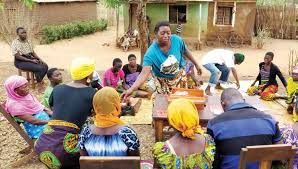
These grassroots, citizen-driven financial systems are deeply embedded in Tanzania’s social and economic fabric, particularly in rural and peri-urban areas, where formal banking infrastructure is limited.
The Deep Roots of Informal Finance in Tanzania
Even as mobile money, microfinance institutions, and commercial banks expand rapidly, millions of Tanzanians continue to rely on informal savings groups locally known as VICOBA, Upatu, and SACCOS as their primary financial lifeline. These grassroots, citizen-driven financial systems are deeply embedded in Tanzania’s social and economic fabric, particularly in rural and peri-urban areas, where formal banking infrastructure is limited.
But why do these informal systems thrive despite the availability of formal financial services? Why do Tanzanians trust them more than banks? And how can the government integrate them into the broader economic ecosystem without undermining their community-based strengths?
1. Trust: The Foundation of Informal Savings Models
Trust is the currency that sustains informal finance. Tanzanians often trust their neighbors, friends, or community groups far more than distant bank branches.
Why Informal Groups Are Trusted
- Transparent governance: Decisions are made openly during group meetings, creating accountability.
- Social enforcement: Members are socially obliged to honour commitments, reducing misuse of funds.
- Cultural familiarity: Practices are rooted in local traditions and social norms.
- Predictable payouts: Structured contribution and payout cycles build reliability.
Contrast with Formal Banks
- Banks are often perceived as expensive, with fees for transactions and account maintenance.
- They are bureaucratic, requiring paperwork and strict procedures.
- Lending to low-income groups is slow or inaccessible, leaving many excluded.
Example: In Dodoma, market women in VICOBA groups trust each other to contribute daily or weekly, knowing the funds will be distributed fairly, while banks remain distant and cumbersome.
2. Accessibility and Simplicity
For many Tanzanians, formal banking is complicated and costly. Opening an account often requires:
- National ID documents
- Minimum balances
- Travel to bank branches
- Proof of employment or income
In contrast, informal groups require nothing more than joining and contributing, making them instantly accessible to:
- Market vendors
- Boda boda drivers
- Smallholder farmers
- Youth groups
- Micro-entrepreneurs
Impact: These groups democratize access to finance, allowing people excluded from formal banking to save, borrow, and invest in their livelihoods.
Example: A small vegetable trader in Mwanza can start contributing to an Upatu group immediately and access lump-sum payouts for business expansion or school fees.
3. Flexible Lending Rules
Informal groups are flexible and adaptive, unlike banks that require collateral or rigid eligibility criteria.
How Loans Are Granted
- Based on personal knowledge of members
- Contribution history and active participation in meetings
- Group consensus and peer evaluation
Repayment Flexibility
- Terms are negotiable
- Payments can be adjusted according to seasonal income fluctuations
Significance: This flexibility is crucial for low-income households in agriculture, small trade, or informal services, who experience seasonal and irregular earnings.
Example: A farmer in Kilimanjaro can take a loan before the planting season and repay after the harvest, a practice that formal banks rarely accommodate.
4. Cultural and Social Benefits
Informal savings groups provide more than financial services. They are social institutions that strengthen community cohesion:
- Emotional support during hardship
- Networking for business collaboration
- Mutual aid for weddings, funerals, or medical emergencies
- Collective decision-making and shared responsibility
Impact: These social benefits are not available through banks, making informal groups central to both economic and community life.
5. High Returns and Immediate Liquidity
Many VICOBA and SACCOS groups offer returns higher than formal bank interest rates, and payouts are predictable and immediate.
Uses of Payouts
- School fees for children
- Farming inputs and agricultural expansion
- Stocking business inventory
- Meeting household emergencies
Example: A boda boda operator in Dar es Salaam can use lump-sum payouts from Upatu to repair his motorcycle or purchase fuel, directly supporting his livelihood.
6. Challenges: Mismanagement, Fraud, and Lack of Regulation
Despite their benefits, informal savings groups face risks:
- Lack of legal protection
- Poor recordkeeping
- Misappropriation of funds
- Internal conflicts
Policy Consideration: Formalization and regulation must enhance safety while preserving community trust mechanisms, rather than imposing rigid structures that destroy organic group dynamics.
7. The Future: Digital VICOBA and Hybrid Financial Systems
Fintech is gradually integrating informal savings groups into digital platforms, creating hybrid financial systems.
Emerging Innovations
- Digital recordkeeping: Reduces errors and enhances transparency
- Mobile contributions: Allows members to contribute remotely
- Digital credit scoring: Enables access to larger loans based on contribution history
- Bank linkages: Connects groups to formal financial institutions for savings, insurance, or investment products
Impact: These hybrid models preserve social cohesion while expanding financial inclusion, bridging the gap between informal and formal finance.
Example: NMB’s digital VICOBA platform allows rural members to contribute via mobile money and access microloans without traveling to the branch.
Conclusion: Informal Savings Are an Opportunity, Not a Weakness
Informal savings groups are not a barrier to development they are an asset. They embody trust, social cohesion, and grassroots financial literacy.
Tanzania should modernize and integrate informal groups into the formal financial system, leveraging digital tools and regulatory support while preserving their community-driven nature. By doing so, informal finance can accelerate financial inclusion, stimulate local businesses, and strengthen economic resilience for millions of Tanzanians.
