
Ruto lands in Kigali Carrying a Thesis, Not Talking Points
Ready
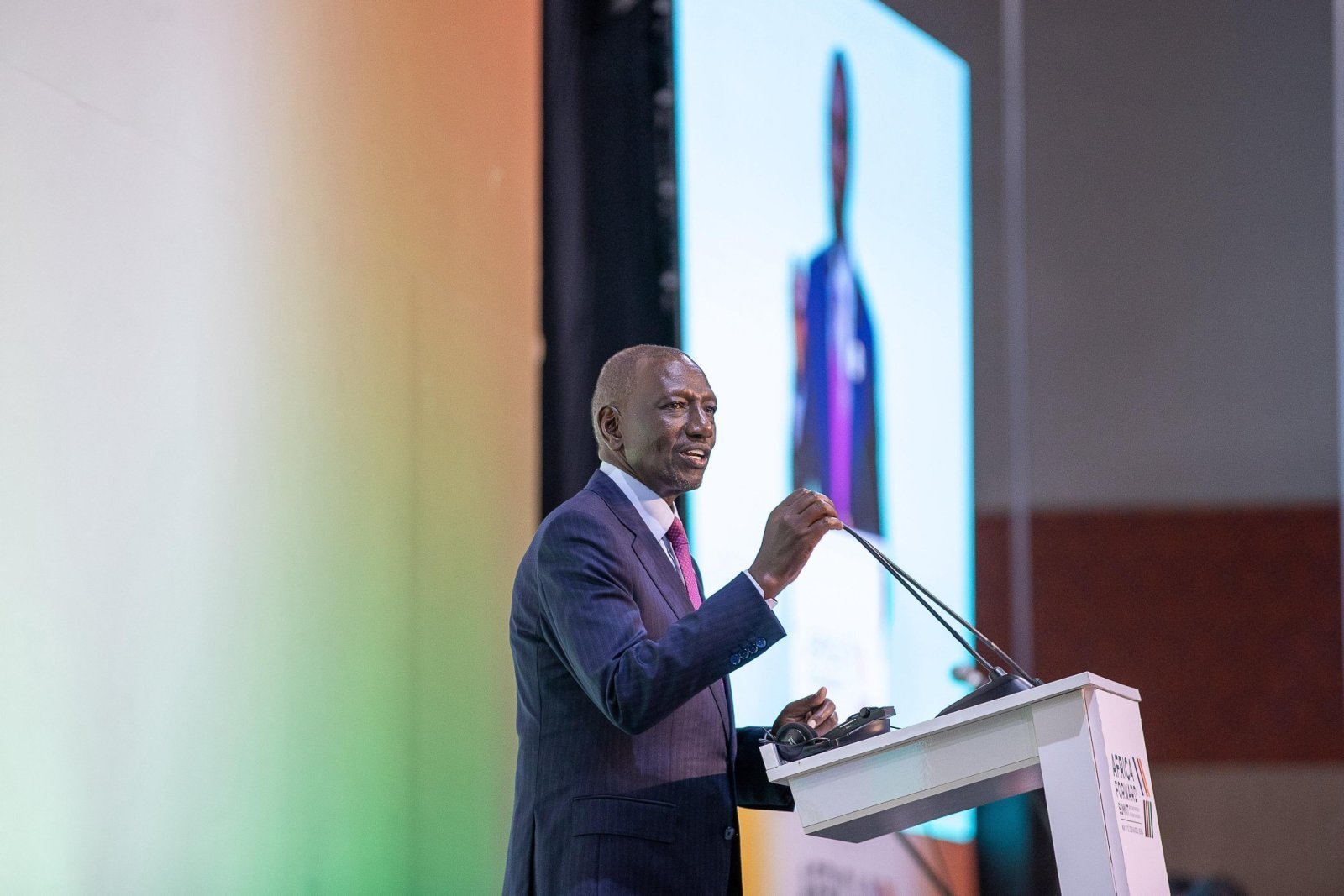
African leaders have long acknowledged the continent's financing gap while continuing to depend on external capital; Ruto is pushing a structural alternative. Speaking at the Africa Forward Summit in Nairobi before arriving at the Africa CEO Forum 2026 in Kigali, he pointed to $4 trillion in African domestic savings sitting idle and argued the case for redirecting pension assets, central bank reserves, and development finance into infrastructure that makes AfCFTA functional. Kenya's National Infrastructure Fund is his proof of concept, and the consistency of his message across both summits signals a programme, not a speech.
President William Ruto arrived in Kigali on Wednesday ahead of the Africa CEO Forum 2026, flying in directly from Nairobi where, alongside French President Emmanuel Macron, he co-hosted the Africa Forward Summit on 11 and 12 May.
At that summit, he put the numbers on the table: Africa holds more than $4 trillion in long-term domestic savings, including over $1 trillion in pension and insurance assets and more than $500 billion in central bank reserves. The argument he built around those figures was not rhetorical. He declared that the era in which Africa's development was principally framed through aid, dependency, and unsustainable borrowing must give way to a new paradigm grounded in investment, domestic resource mobilisation, and partnerships built on sovereign equality.
His critique of the existing financial architecture was equally direct. He argued that African countries continue to face disproportionately high borrowing costs, constrained access to concessional financing, and distorted risk perceptions frequently disconnected from economic realities, with bias embedded in global credit rating systems raising the cost of capital and discouraging long-term productive investment.
Kenya is not waiting for that system to reform itself. Ruto cited Kenya's National Infrastructure Fund and the proposed Sovereign Wealth Fund as tools aimed at raising capital locally and internationally for major infrastructure projects estimated at KSh5 trillion over the next decade. He also backed the proposed New African Financial Architecture and Development framework, which seeks to align African capital through pension systems, development banks, and private investment into strategic sectors across the continent.
The AfCFTA sits at the centre of his infrastructure logic. His position, stated in Nairobi and carried into Kigali, is that Africa cannot trade effectively with itself while its economies remain physically and digitally disconnected. That argument arrives at a forum where the push for accelerated AfCFTA implementation is particularly pointed, as the continent confronts persistent logistics bottlenecks, tariff barriers, and poor transport connectivity that continue to limit intra-African trade relative to Europe and Asia.
In Kigali, Ruto is expected to participate in a presidential panel, meet with leading investors to explore areas of potential collaboration, and sit down with the Financial Times for an interview. The forum, held at the Kigali Convention Centre on 14 and 15 May, is running under the theme "The scale imperative: Why Africa must embrace shared ownership," with discussions centred on cross-border cooperation, shared investment models, and the development of continental-scale African enterprises capable of competing globally.
The sequence matters. The forum follows just days after the Africa Forward Summit in Nairobi, signalling a wider movement in which African governments are working to align political leadership with private capital amid slowing global demand for commodities, rising debt stress, and heightened competition for strategic resources. Ruto is the clearest thread running through both rooms, and the consistency of his message across both is itself a signal, this is no longer conference positioning. It is a declared programme.
 Uchumi360
Business Intelligence
Uchumi360
Business Intelligence
Uchumi360 covers business, investment, and economic policy across East, Central, and Southern Africa.
For the serious reader
You read to the end. That places you in a small group.
Uchumi360 is built for readers who demand precision over speed, structure over sentiment, and analysis that holds uncomfortable conclusions rather than softening them. If this work sharpens how you think about Africa's economy, help us keep building the infrastructure behind it.
Institutional Partners
Commission intelligence. Shape the conversation.
Uchumi360 works with development finance institutions, investment firms, sovereign bodies, and strategic organisations across the coverage region. Institutional partnership unlocks:
- Commissioned sector and country intelligence reports
- Branded research series under your institution's authority
- Exclusive data briefings for internal strategy teams
- Speaking and editorial presence at Uchumi360 events
- Co-published investment outlooks for your markets
Support Our Work
Independent analysis has a cost. Help us bear it.
Uchumi360 does not carry advertising. It does not take editorial direction from sponsors. Every article is produced without commercial compromise. Your contribution funds the reporting, research, and editorial infrastructure that keeps this analysis free from influence.
Secure checkout: One-time and monthly support are processed securely. Add payment credentials to enable checkout here.
Stay Connected
Keep up with every new insight.
Follow our latest analysis, policy coverage, and market intelligence as soon as it is published. If you need something specific, reach out directly and we will point you to the right research.
