
Somalia Wants to Fly Again After 35 Years. Only One State Airline in the Region Has Actually Cracked the Model.
Ready
Somalia's July 2025 revival of Somali Airlines, its first flag carrier in 34 years, sits inside a much larger pattern across Eastern Africa's state-owned aviation sector. Ethiopian Airlines posted a record $9.1 billion in revenue for fiscal 2025/26, up 20%, while remaining wholly state owned, the clearest success story in African state aviation. Kenya Airways, 48.9% government-owned, returned to profitability in 2024 only to post a KSh17.9 billion pre-tax loss in 2025. Air Tanzania and Uganda Airlines are both pursuing aggressive fleet expansion, Uganda signing a $985 million Boeing order in June 2026, while Rwanda has built a smaller but genuinely international network around Kigali. Sudan, Burundi, Madagascar, Mozambique, Zambia and Zimbabwe illustrate, in different ways, how hard it is to turn a national airline into a commercially sustainable business rather than a subsidised symbol.
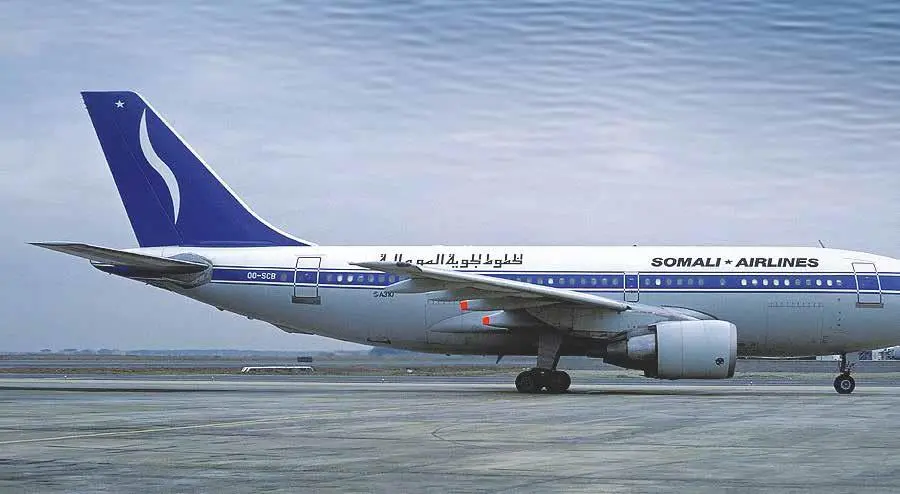
MOGADISHU — Somalia announced on 28 July 2025 that it had purchased two Airbus A320-200 aircraft, sourced from Lima Holding Group, to revive Somali Airlines, silent since the airline ceased operations in 1991 following the collapse of the Somali state. Transport and Civil Aviation Minister Mohamed Farah Nuuh said the aircraft would be operational within two months and targeted relaunch by the end of 2025; more than a year later, the carrier remains in the preparation phase, a reminder that reviving a flag carrier takes considerably longer than acquiring the aircraft.
That gap between announcement and operation is itself a useful lens for the rest of the region. Eastern Africa has produced both the most successful state-owned airline in Africa and some of the clearest examples of how expensive a national carrier can become without one.
Eastern Africa's State Airline Landscape
| Country | National Carrier | State Position | Approx. Fleet | Current Position |
| Ethiopia | Ethiopian Airlines | 100% state owned | ~150 | Continental leader |
| Kenya | Kenya Airways | 48.9% government | ~37 | Regional carrier under restructuring |
| Tanzania | Air Tanzania | 100% state owned | 16 | Rapid expansion |
| Rwanda | RwandAir | 100% state owned | ~13 | International growth |
| Uganda | Uganda Airlines | 100% state owned | 6 | Expansion phase |
| Mauritius | Air Mauritius | State controlled | ~10 | Established international carrier |
| Mozambique | LAM Mozambique Airlines | State controlled, restructuring | Ageing fleet | Recovery and restructuring |
| Madagascar | Madagascar Airlines | Majority state owned | 5 active ATRs | Domestic restructuring |
| Seychelles | Air Seychelles | 100% state owned | Small regional fleet | Tourism-focused |
| Zambia | Zambia Airways | 55% government, 45% Ethiopian Airlines | 2 | Small regional carrier |
| Burundi | Burundi Airlines | 92% government | Small fleet | Emerging regional carrier |
| Sudan | Sudan Airways | 100% state owned | Very small | Recovery after war |
| Zimbabwe | Air Zimbabwe | State owned | Small fleet plus leased | Rebuilding international network |
| Somalia | Somali Airlines | Government owned | 2 A320s | Preparing for relaunch |
Fleet figures are indicative rather than directly comparable, since airlines report owned, leased and grounded aircraft differently.
Ethiopian Airlines: The Benchmark Nobody Else Has Matched
No comparison of Eastern African state airlines can start anywhere else. Ethiopian Airlines is wholly state owned yet operates with a commercial discipline that has made it Africa's largest airline group by a wide margin. The group reported $9.1 billion in revenue for fiscal 2025/26, up 20% on the previous year, transporting 20.7 million passengers and 897,000 metric tons of cargo, even as conflict in the Middle East forced longer, costlier routing and an Ebola outbreak in the DRC weighed on regional traffic. The airline does not disclose profit figures, but added nine aircraft during the year and confirmed plans for a further order of up to 16 freighter aircraft.
Ethiopian's advantage isn't aircraft count. It's that the country built an aviation industry around the airline, aircraft maintenance, pilot training, cargo, catering and airport infrastructure, rather than treating the carrier as a standalone transport company. The clearest evidence is the new Bishoftu hub outside Addis Ababa, planned as Africa's largest airport with four runways, two terminals and aprons for 270 aircraft; its initial phase is designed for 60 million annual passengers and targeted for completion around 2030, according to the airline's own July 2026 briefing, though earlier statements had pointed to a narrower 2027 completion window for parts of the project. Most governments in the region treat their national airline as an airline. Ethiopia treats aviation as an economic sector.
Kenya Airways: The Regional Giant That Ran Into Its Balance Sheet
Kenya Airways represents the other side of the story. The carrier built Nairobi into a major regional aviation hub and became one of Africa's best-known international airlines, but expansion, debt and operational problems produced a severe, prolonged financial crisis. The Kenyan government now owns 48.9% of the company, a lender consortium holds another major stake, and KLM retains 7.8%. The airline returned to pre-tax profitability in 2024 after more than a decade of losses, then recorded a KSh17.9 billion pre-tax loss in 2025. It's still targeting fleet expansion, from roughly 37 aircraft toward 60 by 2030 and 100 by 2035, proof that a large network alone does not guarantee a healthy airline.
Air Tanzania: Building an Aviation Gateway, Not Just an Airline
Air Tanzania, wholly state owned, has taken the most aggressive fleet expansion path among the region's smaller carriers, operating Boeing 787s, a 767 freighter, Airbus A220s, 737 MAX 9s and Dash 8s by 2026. It carried more than 1.07 million passengers between July 2025 and March 2026, up 22.4% year on year, generating roughly TZS 501.6 billion in revenue, with its network expanding to 33 destinations by March 2026, up from just four in 2015/16. For 2026/27, ATCL is targeting TZS 1.09 trillion in passenger and cargo revenue. Tanzania isn't just restoring a flag carrier. It's trying to turn Dar es Salaam into a larger regional aviation gateway, a strategy that carries real risk: widebody aircraft require high utilisation, and fleet growth this fast can outpace the passenger and cargo demand needed to sustain it.
RwandAir: A Small Domestic Market, Built for International Connectivity
RwandAir, 100% government owned, has built its strategy around international connectivity rather than domestic scale, a necessity given Rwanda's small home market. Kigali's geography lets it connect East, Central and Southern Africa while reaching Europe, the Middle East and Asia, closely tied to Rwanda's wider ambition to position Kigali as a business, tourism and conference hub. Its challenge is the mirror image of Ethiopian's advantage: generating enough traffic from a small domestic base to sustain an increasingly international network.
Uganda Airlines: The Boldest Bet Relative to Its Size
Uganda Airlines returned to the skies in 2019, wholly government owned, after its predecessor's collapse. Its fleet remains small, but in June 2026 Uganda signed an agreement with Boeing for 10 new aircraft worth approximately $985 million, an extraordinary financial commitment for a carrier still building its commercial base. The logic is straightforward: Uganda wants Entebbe to capture regional transit traffic currently routed through Nairobi and Addis Ababa. The risk is equally straightforward, aircraft can arrive faster than the passengers needed to fill them.
Air Mauritius: A National Airline Tied to a National Economic Model
Air Mauritius, publicly listed but state controlled through Air Mauritius Holdings and direct government ownership, serves a country whose economic model depends on international tourism, financial services and mobility. Its model shows how a national airline can make sense when it's inseparable from a clearly defined national economic strategy, but also how it can't be evaluated apart from the tourism economy it exists to serve.
LAM Mozambique: What Happens When Restructuring Isn't Enough
LAM is one of the region's clearest examples of keeping a national airline alive without solving its underlying weaknesses. Historically overwhelmingly state owned, the government began restructuring its ownership and financing in 2025-2026, bringing in state-owned companies including Hidroeléctrica de Cahora Bassa, CFM and EMOSE as stakeholders, alongside a subsidy of roughly 255.4 million meticais in 2025. Mozambique's new civil aviation master plan itself identifies LAM's ageing fleet, weak profitability and growing competition as structural problems still requiring reform, the same question Somalia will eventually have to answer: who pays when the national airline can't pay for itself?
Air Seychelles, Madagascar Airlines, Zambia Airways, Burundi Airlines, Sudan Airways, Air Zimbabwe
The remaining carriers each illustrate a distinct, smaller-scale model. Air Seychelles, wholly state owned, exists because tourism is the country's economic backbone; it flies to Johannesburg, Mauritius, Colombo and Abu Dhabi while maintaining frequent Mahé-Praslin domestic service, with two Airbus A321XLRs due from 2028. Madagascar Airlines, majority state owned, suspended international operations in 2023 to focus on domestic connectivity across the country's difficult terrain, running primarily five ATR aircraft, a fundamentally different mission from continental ambition. Zambia Airways, relaunched in 2021, split ownership 55% government and 45% Ethiopian Airlines, a genuinely interesting model that brings outside operational expertise directly into the ownership structure rather than attempting a solo rebuild. Burundi Airlines, 92% government owned since its 2021 creation, remains tiny, arguably rationally so, if its strategy stays focused on efficient regional connectivity rather than long-haul ambition. Sudan Airways, wholly state owned, returned to the skies in January 2026 with a very small operational fleet after the war that began in 2023 forced operations to shift toward Port Sudan, a fundamentally different challenge from expansion, preserving connectivity through crisis. And Air Zimbabwe, also state owned, resumed direct Harare-London service in July 2026 after more than a decade's absence, using an Airbus A330 under an ACMI arrangement with Spain's Plus Ultra Airlines, a model that shows how a state carrier can restore an international route without buying an expensive widebody outright.
The Real Comparison Isn't Fleet Size
Counting aircraft misses the actual pattern. The most successful state airlines in the region have built an economic system around aviation rather than a single transport company: Ethiopian Airlines with maintenance, training, cargo, catering and airport infrastructure; Kenya Airways tied to Nairobi's role as a regional business centre; RwandAir tied to Kigali's tourism and conference ambitions; Air Tanzania developed alongside Tanzania's wider trade and tourism strategy; Uganda betting on Entebbe as a competing gateway; Air Seychelles inseparable from island tourism. These are national connectivity strategies wearing an airline's shape, not merely airlines.
The harder lesson is that very few governments have actually replicated Ethiopian's institutional model, even though most have tried to replicate its ambition. State ownership alone explains nothing; Ethiopian Airlines has stayed commercially oriented despite full state ownership, while Kenya Airways, also state-linked, posted a multi-billion-shilling loss in the same year Ethiopian posted a record. Uganda's $985 million aircraft order, Tanzania's expanding fleet and Somalia's two A320s all show governments willing to put capital into aviation. The harder question, the one that actually determines outcomes, is what happens after the aircraft land: whether routes get run as businesses with disciplined utilisation and real demand, or simply as assets a government is proud to own.
What Somalia Should Take From All of This
Somalia has one real advantage: it can study everyone else's outcomes before repeating their mistakes. It doesn't need twenty aircraft, routes to every continent, or an attempt to become the next Ethiopian Airlines. It needs a commercially disciplined carrier that does four things well: connects Somalia to its large diaspora, links Somali businesses to regional markets, feeds traffic to international partners already flying into Mogadishu, and gradually builds aviation capability inside the country.
Somalia has already cleared one real institutional hurdle, regaining control of its airspace and achieving IATA Category 1 status in January 2023, a genuine regulatory foundation most aviation revivals lack at the outset. The test still ahead is commercial, not symbolic. A national airline can represent sovereignty. Sovereignty doesn't pay for jet fuel, and Eastern Africa's last decade shows exactly how expensive that lesson can get for a government that skips it.
FAQ
Why is Somalia reviving its national airline now, after 34 years? The government announced the purchase of two Airbus A320-200 aircraft in July 2025 as part of a broader push to rebuild national institutions and infrastructure, including a new airport near Mogadishu, following Somalia's 2023 recovery of full control over its own airspace and IATA Category 1 certification.
Which East African state airline is the most financially successful? Ethiopian Airlines, by a wide margin. It posted a record $9.1 billion in revenue for fiscal 2025/26, remaining wholly state owned while operating with commercial discipline that most of the region's other national carriers haven't matched.
Why did Kenya Airways lose money in 2025 despite returning to profit in 2024? The airline posted a KSh17.9 billion pre-tax loss in 2025, illustrating how a large international network and heavy debt load can offset even a prior year's profitability, part of a longer pattern of financial volatility at the carrier.
What makes Ethiopian Airlines different from other state-owned African carriers? Ethiopia built an aviation industry around the airline, investing in maintenance, pilot training, cargo, catering and airport infrastructure, including the new Bishoftu hub, rather than treating the national carrier as a standalone transport business.
Is buying more aircraft enough to build a successful national airline? No. Uganda's $985 million Boeing order, Tanzania's expanding fleet and Somalia's two A320s all show governments willing to invest capital in aircraft; the harder, unresolved question for each is whether they can generate enough passenger and cargo demand to make those aircraft commercially productive.
What should Somalia prioritise as it rebuilds Somali Airlines? Regional connectivity and disciplined commercial operations before scale: reliable routes to Nairobi, Addis Ababa, Djibouti, Jeddah and Dubai, connecting the Somali diaspora and regional trade, rather than attempting to compete immediately with Ethiopian Airlines' continental network.
 Uchumi360
Business Intelligence
Uchumi360
Business Intelligence
Uchumi360 covers business, investment, and economic policy across East, Central, and Southern Africa.
For the serious reader
You read to the end. That places you in a small group.
Uchumi360 is built for readers who demand precision over speed, structure over sentiment, and analysis that holds uncomfortable conclusions rather than softening them. If this work sharpens how you think about Africa's economy, help us keep building the infrastructure behind it.
Institutional Partners
Commission intelligence. Shape the conversation.
Uchumi360 works with development finance institutions, investment firms, sovereign bodies, and strategic organisations across the coverage region. Institutional partnership unlocks:
- Commissioned sector and country intelligence reports
- Branded research series under your institution's authority
- Exclusive data briefings for internal strategy teams
- Speaking and editorial presence at Uchumi360 events
- Co-published investment outlooks for your markets
Support Our Work
Independent analysis has a cost. Help us bear it.
Uchumi360 does not carry advertising. It does not take editorial direction from sponsors. Every article is produced without commercial compromise. Your contribution funds the reporting, research, and editorial infrastructure that keeps this analysis free from influence.
Secure checkout: One-time and monthly support are processed securely. Add payment credentials to enable checkout here.
Stay Connected
Keep up with every new insight.
Follow our latest analysis, policy coverage, and market intelligence as soon as it is published. If you need something specific, reach out directly and we will point you to the right research.
