
Dangote Has Chosen Kenya for a 700,000-Barrel Refinery. Tanzania Lost the Bid. The Question Worth Asking Is Why.
Ready
Dangote chose Kenya over Tanzania for a USD 15 to 17 billion, 700,000-barrel-per-day refinery because investors optimise complete supply chain systems, not individual assets. Kenya's port depth, pipeline network, and larger fuel market created agglomeration advantages Tanzania's upstream position could not overcome. Tanzania's challenge is not finding the next Dangote. It is closing the gap between owning strategic assets and offering the integrated platform that converts those assets into investment.
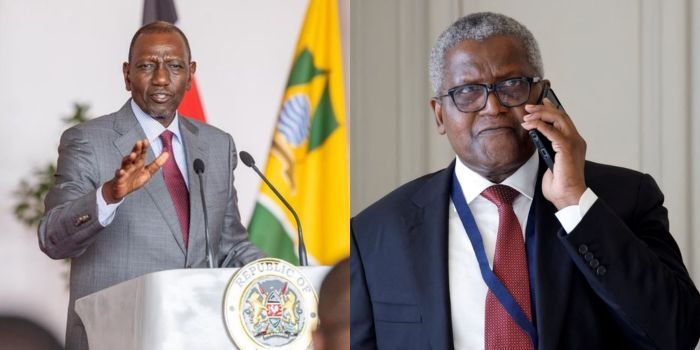
For months, East Africa watched an unusual contest. Would Aliko Dangote build the region's largest oil refinery in Tanzania or Kenya? The speculation is over. Dangote Industries has confirmed the 700,000-barrel-per-day facility will be built in Kenya, according to The Citizen. Kenya gets the refinery. Tanzania gets the lesson, if it chooses to take it.
What Dangote was actually buying
A refinery of this scale is not a fuel-processing facility. It is an anchor for an entire industrial cluster: storage terminals, pipelines, petrochemicals, engineering services, logistics, insurance, financial services, and the skilled workforce those functions require. Countries compete aggressively to host them because the downstream economic activity is worth multiples of the refinery itself.
The 700,000 barrels per day will serve Kenya, Tanzania, Uganda, South Sudan, and other regional markets while reducing East Africa's dependence on imported refined petroleum, according to The Citizen. That supply function is also a market-capture function. Whoever hosts the refinery captures the refining margin on every barrel consumed across the region.
Why Kenya won
Tanzania had the upstream logic. EACOP, the pipeline carrying Ugandan crude to the Indian Ocean, lands at Tanga. Proximity to crude supply seemed to make the location obvious.
It was not enough.
Dangote pointed to maritime practicality, stronger infrastructure, and larger market demand in explaining the decision. Speaking to the Financial Times, he was direct: "Kenyans consume more. It's a bigger economy." Mombasa's deeper port and Kenya's extensive pipeline network, already the primary distribution system for petroleum products reaching Uganda, Rwanda, South Sudan, and eastern DRC, created a complete logistics system that Tanga cannot yet match.
This is agglomeration in action. Once a logistics network reaches sufficient scale, every additional investment reinforces the network rather than competing with it. Investors are not choosing a location. They are choosing a system. Kenya's system, built on decades of petroleum import and distribution infrastructure, was more developed.
Kenya also competed on credibility
Geography explains part of the decision. Industrial policy explains the rest.
The Kenyan government committed seed capital through its National Infrastructure Fund and signalled sustained political support for the project, according to Business Daily. An investment worth USD 15 to 17 billion, per the Financial Times, requires confidence that regulatory conditions, infrastructure commitments, and political alignment will hold over decades, not just through the next election cycle. That confidence is often worth more than a tax incentive.
Governments compete for investments by projecting credibility. Kenya projected it more convincingly than Tanzania did in this instance.
Tanzania's actual problem
Tanzania's loss here is not a resource problem. It has more than 57 trillion cubic feet of proven natural gas reserves, EACOP's terminal, an expanding port at Dar es Salaam, and the SGR Central Corridor. These are genuine strategic assets.
The gap is between owning assets and offering a platform. Assets sit in the ground or on a map. Platforms function: they integrate ports, pipelines, regulation, financing, and market access into a system that lowers cost and reduces uncertainty for investors making irreversible long-term commitments.
Tanzania has the inputs. It has not yet assembled them into the kind of integrated investment environment that made Kenya's pitch more compelling.
The uncomfortable version of that observation is that this is not the first time. The pattern of Tanzania attracting significant resource interest without capturing the downstream industrial value is consistent enough to be structural rather than circumstantial.
What East Africa gets regardless
A refinery anywhere in East Africa reduces the region's collective dependence on imported refined products. Every year, governments spend billions importing diesel, petrol, and aviation fuel from the Middle East, India, and Europe, draining foreign exchange and exposing economies to geopolitical and shipping disruptions. Kenya's refinery addresses that vulnerability regionally, not just domestically.
The risk is that regional integration produces industrial concentration: one country captures the refining margin while neighbours remain consumers. That outcome is not inevitable, but it requires Tanzania, Uganda, and Rwanda to actively develop downstream capabilities rather than assuming regional proximity to the refinery translates into industrial spillovers.
The question Tanzania needs to answer
Dangote's decision is one data point. The pattern it fits is the more important object of analysis.
Capital moves toward complete systems. Tanzania's next decade of industrial strategy should be evaluated against that principle. The SGR, the port expansion, the gas reserves, and the EACOP terminal are individually significant. The question is whether they are being integrated into a platform that changes what investors conclude when they model an East African industrial investment.
If the answer is not yet, the next Dangote will reach the same conclusion as this one.
FAQ
Why did Dangote choose Kenya over Tanzania? Three factors: Mombasa's deeper port, Kenya's established petroleum pipeline and distribution network, and Kenya's larger domestic fuel consumption. Dangote was optimising a complete supply chain, not just proximity to crude. Kenya's integrated logistics system was more developed.
What is the refinery's capacity? 700,000 barrels per day, making it the largest proposed refinery in East Africa. It is expected to serve Kenya, Tanzania, Uganda, South Sudan, and other regional markets.
Does Tanzania still have a role in East African downstream oil? Yes. EACOP lands at Tanga, giving Tanzania a role in crude transit regardless of where refining occurs. Tanzania's natural gas reserves also position it as a future energy exporter. The gap is in integrated industrial platform development, not in resource endowment.
What is the investment value? USD 15 to 17 billion, according to the Financial Times.
What should Tanzania take from this decision? That owning strategic assets is not sufficient to attract strategic industrial investment. The gap between Tanzania's resource position and its investment capture rate is structural. Closing it requires integrating ports, logistics, regulation, and financing into a coherent platform rather than competing on individual project terms.
 Uchumi360
Business Intelligence
Uchumi360
Business Intelligence
Uchumi360 covers business, investment, and economic policy across East, Central, and Southern Africa.
For the serious reader
You read to the end. That places you in a small group.
Uchumi360 is built for readers who demand precision over speed, structure over sentiment, and analysis that holds uncomfortable conclusions rather than softening them. If this work sharpens how you think about Africa's economy, help us keep building the infrastructure behind it.
Institutional Partners
Commission intelligence. Shape the conversation.
Uchumi360 works with development finance institutions, investment firms, sovereign bodies, and strategic organisations across the coverage region. Institutional partnership unlocks:
- Commissioned sector and country intelligence reports
- Branded research series under your institution's authority
- Exclusive data briefings for internal strategy teams
- Speaking and editorial presence at Uchumi360 events
- Co-published investment outlooks for your markets
Support Our Work
Independent analysis has a cost. Help us bear it.
Uchumi360 does not carry advertising. It does not take editorial direction from sponsors. Every article is produced without commercial compromise. Your contribution funds the reporting, research, and editorial infrastructure that keeps this analysis free from influence.
Secure checkout: One-time and monthly support are processed securely. Add payment credentials to enable checkout here.
Stay Connected
Keep up with every new insight.
Follow our latest analysis, policy coverage, and market intelligence as soon as it is published. If you need something specific, reach out directly and we will point you to the right research.
