
Kenya Sets November 1 Drilling Date as Turkana Oil Project Moves Toward First Commercial Production
Ready
Kenya plans to begin drilling at the South Lokichar oil project on November 1, 2026, with Gulf Energy targeting first oil in December and initial production of 20,000 barrels per day before a later expansion to 50,000 barrels per day.
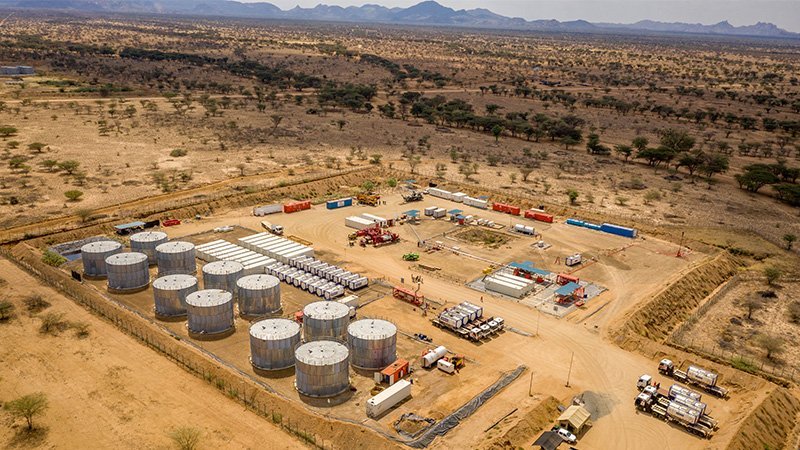
Kenya’s long delayed attempt to become a commercial oil producer is entering its most concrete phase since crude was first discovered in Turkana in 2012. Gulf Energy E&P BV SEZ, the company now leading development of the South Lokichar Basin, plans to begin drilling on November 1, 2026 after receiving a 1,500 horsepower GW70 onshore drilling rig at the Port of Mombasa. The rig, valued at more than US$20 million, arrived at Kilindini Port in late September from Duqm in Oman and is being prepared for transport to Turkana, where Gulf Energy is targeting first oil in December 2026.
The timing matters because Kenya has spent more than a decade trying to move South Lokichar from discovery into commercial development. The project has survived changes in ownership, repeated delays, infrastructure debates and uncertainty over whether the economics could support a full scale development. Gulf Energy’s revised plan is more incremental than earlier proposals. Rather than wait for a large export pipeline before production begins, the company intends to start with a smaller first phase built around Ngamia and Amosing, produce about 20,000 barrels per day and move crude to the coast by road or rail before scaling production later. Kenya’s Parliament says the second phase is expected to raise output to 50,000 barrels per day by bringing additional fields into production.
Gulf Energy Has Rebuilt The Project Around Earlier Cash Flow
The revised South Lokichar development plan reflects a basic economic constraint: Kenya cannot justify waiting indefinitely for every piece of large scale infrastructure to be built before monetising a resource that has already spent years underground. Gulf Energy’s first phase is designed around early production from the Ngamia and Amosing fields, with Parliament recording a target of 20,000 barrels per day and first oil in December 2026. Phase Two would bring in Twiga, Ekales, Agete and Etom and raise output to about 50,000 barrels per day from 2032. This is a smaller and more staged development path than the original vision built around a major crude export pipeline, but it reduces the amount of capital that must be committed before Kenya begins receiving production revenue.
The drilling rig now moving from Mombasa to Turkana is therefore more than another project milestone. It signals that the development has moved from planning documents into physical execution. Gulf Energy has leased the GW70 rig from Great Wall Drilling Company under a long term arrangement and has also contracted Baker Hughes for integrated well services and SLB for an early production facility, giving the first phase a clearer operational structure than previous iterations of the project. The South Lokichar development has been valued at roughly US$6 billion in its full form, but the first phase is explicitly structured to generate production and cash flow before the larger expansion is attempted.
Kenya Is Choosing Trucks And Rail Before A Pipeline
The absence of an export pipeline remains one of the project’s defining constraints. Earlier development concepts contemplated a crude oil pipeline from Lokichar to the coast, but the current plan envisages moving oil by road or rail to the Kenya Petroleum Refineries Limited facilities and then exporting it through Kipevu Oil Terminal II in Mombasa. Kenya’s Parliament has confirmed that the revised plan departs from the earlier Lokichar to Lamu pipeline model, while Gulf Energy’s second phase contemplates a much larger rail logistics operation once production reaches 50,000 barrels per day.
That choice improves speed but raises the importance of logistics costs. South Lokichar crude is waxy and can solidify at room temperature, meaning transport requires specialised heating and handling. Parliament’s review of the development plan specifically highlighted that technical constraint and noted that Phase Two could require about 155 rail wagons per day. Kenya is therefore attempting to solve an upstream development problem with a logistics system that must remain commercially viable over long distances from Turkana to the coast. The first phase will provide an early test of whether that system can move crude reliably and cheaply enough to support production before larger infrastructure is built.
The Resource Is Large, But Recoverable Volumes Matter More
The South Lokichar Basin has often been described using very large oil in place estimates, but those figures should not be confused with commercially recoverable reserves. Parliament’s 2026 review of the project cited a 2C resource base of 326 million barrels based on 41 wells and about 950 square kilometres of 3D seismic data. That is lower than some of the broader oil in place figures frequently used in public discussion, including estimates approaching 2.85 billion barrels. The distinction matters because the economic value of the project depends on how much crude can actually be produced commercially, not the total volume estimated to exist underground.
The revised plan is therefore structured around recoverable volumes rather than headline geology. Phase One is expected to focus on the most commercially attractive parts of Ngamia and Amosing, where development can begin with fewer wells and lower initial infrastructure requirements. Parliament says the first phase includes 48 wells and is intended to reduce development risk before a larger second phase. If production performance, oil prices and logistics economics support expansion, Gulf Energy can then bring additional fields into the project.
The Government’s Revenue Case Depends On Production Actually Starting
Commercial oil production would create a new revenue stream for Kenya, but the size of that benefit will depend on production volumes, oil prices, cost recovery and the Production Sharing Contract. Parliament’s review says profit oil is shared between government and the contractor after cost oil is deducted, with the split varying according to production. At lower levels, including the early phases of the project, the framework can produce a 50:50 division of profit oil before the government share rises at higher production levels.
That means the economic value of first oil is larger than the initial 20,000 barrels per day headline suggests. Production begins the process through which the government can recover revenue from a resource that has required years of exploration, negotiation and regulatory work. It also begins generating activity around transport, services, procurement, employment and local contracting in Turkana and along the route to the coast. The project’s lifetime fiscal contribution will still depend heavily on global crude prices and the cost of moving waxy oil across Kenya, but first production changes the project from a speculative asset into a revenue generating one.
Turkana Will Again Test Kenya’s Revenue Sharing And Local Content Framework
The social and political dimension will be as important as the engineering. Turkana has experienced long running debates over how oil revenues should be divided between the national government, county government and local communities, and those questions become more immediate once commercial production begins. Parliament has also kept environmental safeguards and waste management under scrutiny, noting concerns around field operations and the need for continued oversight as development expands.
Local content will also determine how much of the project’s value remains in the Kenyan economy. Gulf Energy’s Field Development Plan includes a long term local content plan, reflecting Petroleum Act requirements around Kenyan participation in goods, services, employment and skills. If local firms win meaningful contracts in transport, engineering, maintenance, catering, security and other services, the economic effect of the project can extend beyond government revenue and oil exports. If most specialised services remain imported, the local multiplier will be smaller.
Kenya Is Also Looking Beyond Crude Exports
The government’s wider ambition is to connect oil production to a larger domestic energy and industrial strategy rather than remain only an exporter of raw crude. Officials have discussed new refining capacity at the coast, including Lamu, as part of a longer term plan to reduce reliance on imported petroleum products and strengthen Kenya’s position in regional energy trade. That ambition remains separate from the first phase of South Lokichar, which is being developed around crude exports through Mombasa, but commercial production would make refinery economics easier to assess because Kenya would finally have a domestic feedstock stream rather than a purely theoretical one.
A refinery would still require its own financing, crude supply strategy and market case, and South Lokichar production alone would not automatically justify a large regional facility. At 20,000 or even 50,000 barrels per day, Kenya would remain well below the throughput required by many large modern refineries. Any future refinery would therefore likely depend on a combination of domestic crude, imported feedstock and regional markets. The immediate economic priority is more basic: establish reliable production, prove the logistics chain and demonstrate that the basin can generate commercial returns.
The Uchumi360 Insight
South Lokichar has spent years being discussed as Kenya’s future oil province. The arrival of the GW70 rig and the November 1 spud date give the project a more credible path into production than it has had for some time. The revised strategy is deliberately smaller, with 20,000 barrels per day in the first phase, truck or rail transport to the coast and expansion only after the early development proves itself. That makes the project less spectacular than the original pipeline led vision, but potentially more executable.
The critical test will come after drilling starts. Kenya still has to bring wells on stream, complete early production facilities, move waxy crude more than 800 kilometres to the coast and do so at a cost that leaves enough value for both the investor and the state. November 1 marks the beginning of that commercial test, not its conclusion.
FAQ
When will Kenya start drilling commercial oil in Turkana? Gulf Energy plans to begin drilling on November 1, 2026, in the South Lokichar Basin, with first oil targeted for December 2026.
How much oil does Kenya expect to produce? The first phase is designed to produce about 20,000 barrels per day, while a second phase is expected to increase production to around 50,000 barrels per day.
Who operates the South Lokichar oil project? The project is being led by Gulf Energy E&P BV SEZ, formerly Tullow Kenya BV, after Gulf Energy acquired the asset from Tullow.
How will Kenya transport the oil to the coast? The revised development plan envisages moving crude by road or rail to the Kenya Petroleum Refineries Limited facilities before export through Kipevu Oil Terminal II in Mombasa, rather than relying initially on a dedicated crude pipeline.
How much recoverable oil is in South Lokichar? Kenya’s parliamentary review cites a 2C resource base of about 326 million barrels. Larger oil in place figures are sometimes quoted, but those include volumes that may not be commercially recoverable.
Why has Kenya’s oil project taken so long? Commercial development has been delayed by ownership changes, financing requirements, infrastructure decisions, project economics and regulatory negotiations. The current phased plan reduces the amount of infrastructure required before first production and is intended to generate earlier cash flow.
 Uchumi360
Business Intelligence
Uchumi360
Business Intelligence
Uchumi360 covers business, investment, and economic policy across East, Central, and Southern Africa.
For the serious reader
You read to the end. That places you in a small group.
Uchumi360 is built for readers who demand precision over speed, structure over sentiment, and analysis that holds uncomfortable conclusions rather than softening them. If this work sharpens how you think about Africa's economy, help us keep building the infrastructure behind it.
Institutional Partners
Commission intelligence. Shape the conversation.
Uchumi360 works with development finance institutions, investment firms, sovereign bodies, and strategic organisations across the coverage region. Institutional partnership unlocks:
- Commissioned sector and country intelligence reports
- Branded research series under your institution's authority
- Exclusive data briefings for internal strategy teams
- Speaking and editorial presence at Uchumi360 events
- Co-published investment outlooks for your markets
Support Our Work
Independent analysis has a cost. Help us bear it.
Uchumi360 does not carry advertising. It does not take editorial direction from sponsors. Every article is produced without commercial compromise. Your contribution funds the reporting, research, and editorial infrastructure that keeps this analysis free from influence.
Secure checkout: One-time and monthly support are processed securely. Add payment credentials to enable checkout here.
Stay Connected
Keep up with every new insight.
Follow our latest analysis, policy coverage, and market intelligence as soon as it is published. If you need something specific, reach out directly and we will point you to the right research.
