
The New Gold Economy: How Mining Became One of Tanzania's Largest Growth Engines
Ready
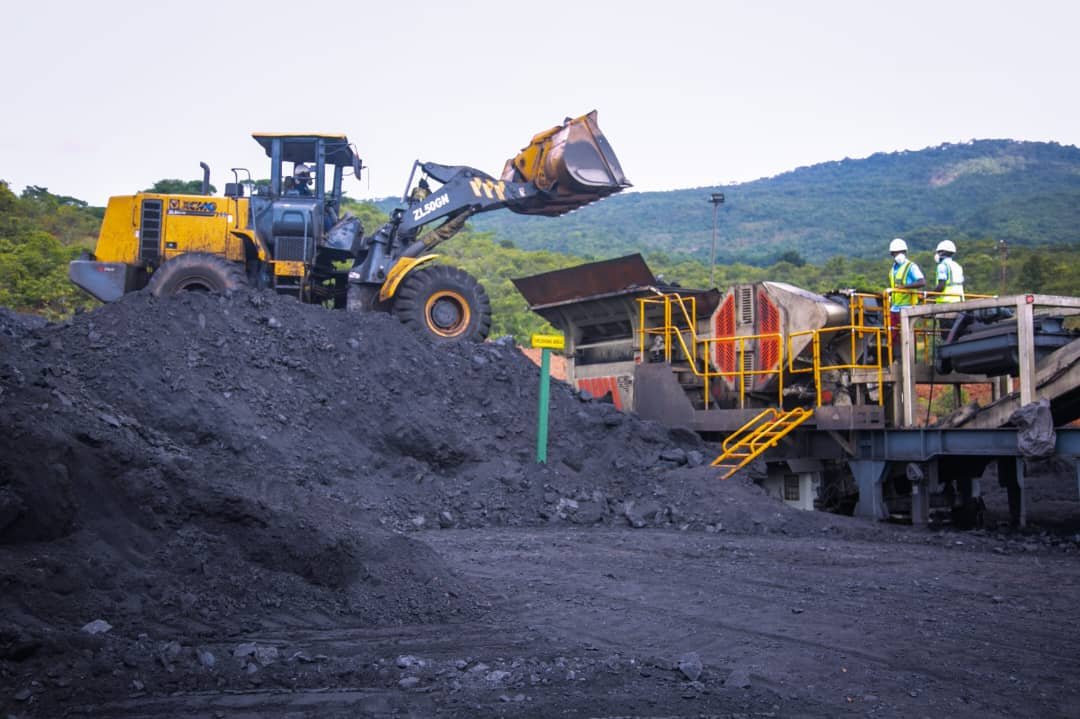
Tanzania's mining sector grew 9.4 percent in 2025, contributing 10.3 percent of GDP up from 7.8 percent in 2024, making it the third-largest sector. Mineral exports earned USD 5,401.9 million, approximately 52.5 percent of total goods exports. Mining received the largest foreign direct investment inflow at USD 442.2 million in 2024. The FY2026/27 plan targets mining growth of 8.44 percent in 2026 rising to 9 percent by 2030, and GDP contribution rising from 10.1 percent to 12.5 percent. Strategic priorities include graphite processing for battery anodes at Lindi and Mtwara, nickel and rare earth processing hub development in Dodoma, iron ore beneficiation at the Liganga deposit in Ludewa, and uranium development at Mkuju River where Rosatom launched a pilot facility in 2025. The Mchuchuma and Liganga complex is identified as a flagship programme anchor project expected to produce 3 million tonnes of coal and 2.9 million tonnes of iron annually. A dedicated mineral processing hub at Dodoma is designated as one of the seven flagship programmes. The plan also targets expanding geological survey coverage from 16 percent to at least 50 percent of Tanzania's land area by 2030. Tanzania has been mining gold and gemstones for decades. What is changing is the ambition to mine smarter, process domestically, and capture the value chain whose downstream products are worth multiples of the raw material.
DAR ES SALAAM — Tanzania's mining sector has become one of the economy's most dynamic growth engines, expanding 9.4 percent in 2025 and contributing 10.3 percent of GDP, up from 7.8 percent in 2024. The sector's acceleration reflects the combination of stable gold production, the beginning of commercial graphite, nickel, and industrial mineral development, and a government policy framework that has increasingly emphasised domestic beneficiation rather than raw material export.
Gold remains the anchor
Gold continues to dominate Tanzania's mineral economy. Total mineral export earnings of USD 5,401.9 million in 2025 are predominantly gold-driven, with gold accounting for the majority of the USD 10,262.9 million total goods export value. Tanzania is consistently ranked among Africa's top five gold producers, with large-scale operations including Barrick's Bulyanhulu, North Mara, and Buzwagi mines, Shanta Mining, and Endeavour Mining contributing to the export base.
The plan's data confirms gold's fiscal significance: the Bank of Tanzania's gold reserve accumulation programme purchased 17.64 tonnes valued at USD 2,616.77 million in the FY2025/26 period, confirming that gold production is generating enough domestic availability for the central bank to build strategic reserves alongside export earnings.
The new minerals entering the value chain
Beyond gold, the plan identifies four strategic minerals whose development is expected to drive mining's rising GDP contribution through 2030.
Graphite at Lindi and Mtwara is among the world's largest deposit concentrations. Tanzania's graphite reserves are in the battery-grade flake category whose demand the global EV battery supply chain is creating at pace. The plan's Dodoma minerals hub flagship programme specifically targets graphite processing infrastructure as an anchor investment, with the value capture argument that processed anode material commands several multiples of raw graphite's export price.
Nickel and rare earth minerals, concentrated in the Kabanga deposit in Ngara and rare earth occurrences across the country, are addressed in the plan through a dedicated Dodoma technology and minerals processing hub. The Kabanga nickel project road at TZS 1.5 billion in the FY2026/27 project list signals active development preparation.
Iron ore at the Liganga deposit in Ludewa, connected to the Mchuchuma coal complex in Njombe, is the subject of the flagship programme that has attracted the most recent private sector commitment: A1 Iron and Steel's TZS 600 billion Dodoma steel plant announced in mid-2026. The plan itself budgets TZS 330.58 million for the Liganga vanadium titanium project and TZS 495.65 million for the Mchuchuma coal project in FY2026/27, reflecting preparatory rather than construction-phase activity.
Uranium at the Mkuju River project in the south, where Rosatom launched a pilot facility in 2025 and where explored reserves exceed 44,000 tonnes, is positioned in the plan as both a domestic energy input for the proposed small nuclear power plant that President Samia confirmed at SPIEF 2026 and as a potential export commodity.
The beneficiation imperative
The plan explicitly states that Tanzania's minerals strategy is no longer primarily about extraction. It is about building smelters and refineries that process minerals domestically before export, capturing the value addition that currently accrues to importing economies. The plan targets attracting investment in mineral processing facilities, developing the Dodoma hub as a centre for technology and rare mineral processing, and expanding artisanal and small-scale mining formalisation as complementary supply-side development.
The A1 Iron and Steel Dodoma plant, the Tanzol Solar Manufacturing Complex's photovoltaic panels at Kwala, and the discussions with Rosatom on uranium processing are all specific expressions of this beneficiation strategy whose aggregate effect on mining's GDP contribution will determine whether the 12.5 percent target by 2030 is achievable.
 Uchumi360
Business Intelligence
Uchumi360
Business Intelligence
Uchumi360 covers business, investment, and economic policy across East, Central, and Southern Africa.
For the serious reader
You read to the end. That places you in a small group.
Uchumi360 is built for readers who demand precision over speed, structure over sentiment, and analysis that holds uncomfortable conclusions rather than softening them. If this work sharpens how you think about Africa's economy, help us keep building the infrastructure behind it.
Institutional Partners
Commission intelligence. Shape the conversation.
Uchumi360 works with development finance institutions, investment firms, sovereign bodies, and strategic organisations across the coverage region. Institutional partnership unlocks:
- Commissioned sector and country intelligence reports
- Branded research series under your institution's authority
- Exclusive data briefings for internal strategy teams
- Speaking and editorial presence at Uchumi360 events
- Co-published investment outlooks for your markets
Support Our Work
Independent analysis has a cost. Help us bear it.
Uchumi360 does not carry advertising. It does not take editorial direction from sponsors. Every article is produced without commercial compromise. Your contribution funds the reporting, research, and editorial infrastructure that keeps this analysis free from influence.
Secure checkout: One-time and monthly support are processed securely. Add payment credentials to enable checkout here.
Stay Connected
Keep up with every new insight.
Follow our latest analysis, policy coverage, and market intelligence as soon as it is published. If you need something specific, reach out directly and we will point you to the right research.
