
Rosatom Deepens Tanzania Nuclear Push From Uranium Mining to Future SMRs
Ready
Tanzania and Rosatom are expanding nuclear cooperation beyond the Mkuju River uranium project into workforce development, STEM engagement and discussions on small modular reactors, floating nuclear power units and a possible large nuclear plant in the 2030s.
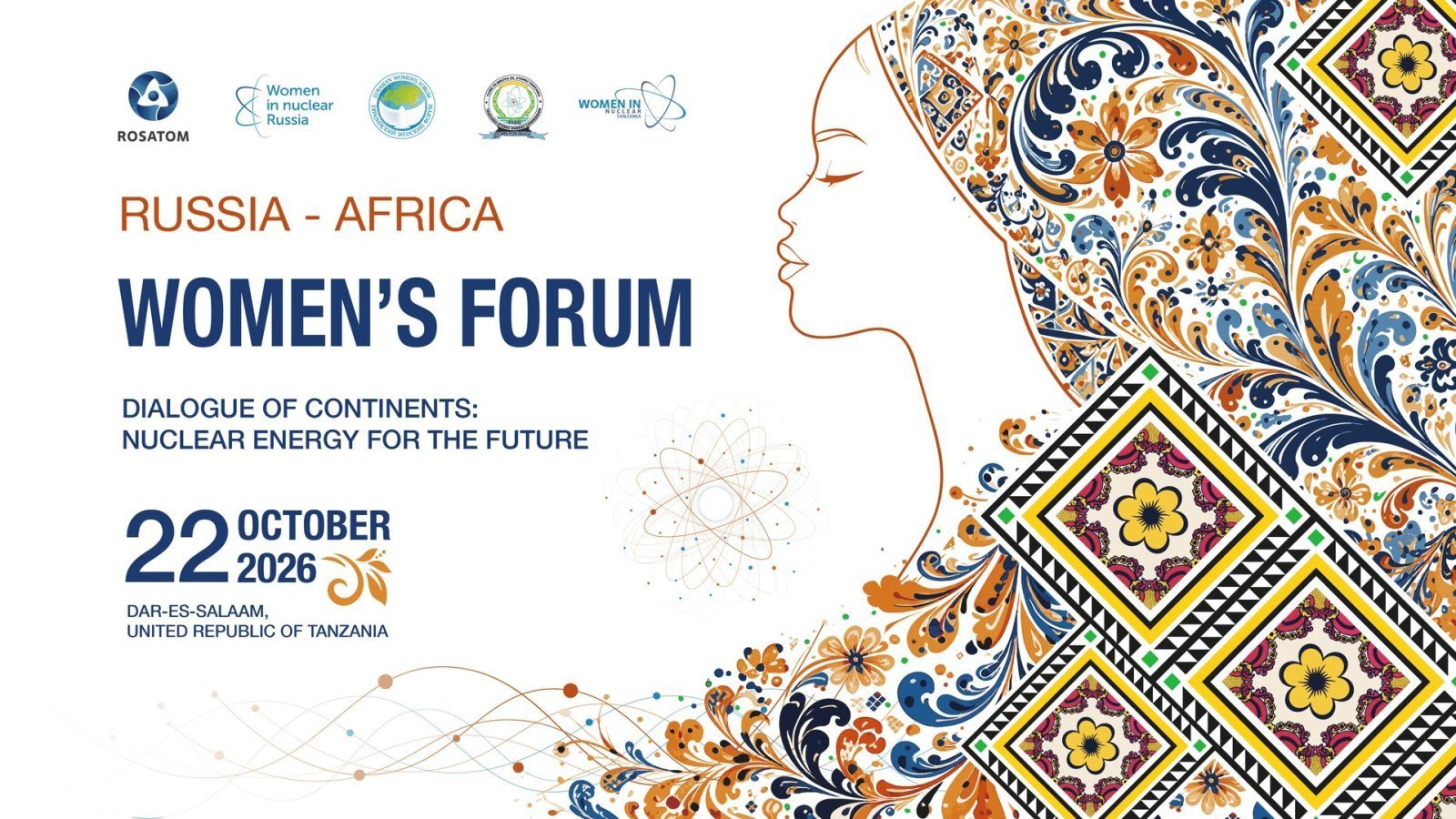
Tanzania’s nuclear relationship with Russia is moving into a broader phase that now combines uranium mining, workforce development, nuclear science, professional exchange and discussions around future nuclear power technologies. On 22 October 2026, Dar es Salaam will host the Russia Africa Women’s Forum, Dialogue of Continents: Nuclear Energy for the Future, at Crowne Plaza Dar es Salaam by IHG. The forum is being organised by WiN Tanzania and the Association of Women in Nuclear Russia, with support from the Tanzania Atomic Energy Commission, WiN Africa, Rosatom State Corporation, the Council of the Eurasian Women’s Forum and the International Council for the Support and Development of Women in Industry and Technology. The immediate agenda is focused on women professionals, workforce development, nuclear medicine, mining and STEM education, but the forum is taking place against a much larger backdrop: Rosatom is already involved in developing the Mkuju River uranium project in Ruvuma, while Tanzania and Russia are also discussing small modular reactors, floating nuclear power units and the possibility of a large scale nuclear power plant in the 2030s.
Why Is Dar es Salaam Hosting a Russia Africa Nuclear Forum?
The forum will bring together experts from Tanzania, Russia and other African countries representing government institutions, industry, academia and professional communities across North, East, Central and Southern Africa. Discussions will focus on the role of women in nuclear energy, nuclear medicine and mining, alongside workforce development and efforts to encourage school and university students to pursue science, technology, engineering and mathematics. Particular attention will be given to professional advancement for women working in science and technology driven industries and to programmes being implemented by governments and businesses to support women’s participation.
Professor Najat Mohamed, President of WiN Tanzania and Director General of the Tanzania Atomic Energy Commission, framed the forum around both international cooperation and the need to build a future workforce. “The development of nuclear energy requires strong international cooperation among women professionals, as well as consistent engagement with the younger generation,” she said. She added that platforms such as the Russia Africa Women’s Forum allow women experts from different countries to exchange experience, demonstrate successful career paths to students and “inspire greater interest in careers in the nuclear industry.”
That workforce emphasis is central to the way the forum is being presented. The event is not only about participation in an existing industry. It is also about preparing a new generation of professionals for a sector that Tanzania is exploring more seriously. Rosatom is supporting international youth engagement through initiatives including Atoms Empowering Africa, Global HackAtom and Icebreaker of Knowledge, which are designed to connect students with peers and industry experts and show how scientific knowledge is applied in practice.
Why Is Women’s Participation Becoming Part of Nuclear Cooperation?
The press release places women’s professional networks at the centre of international nuclear cooperation rather than treating them as a secondary social issue. Alexandra Ryabykh, Head of the Association of Women in Nuclear Russia and the Rosatom Women’s Community, said these networks are becoming increasingly important to the development of high technology industries.
“Women’s professional networks are becoming an increasingly important instrument for international cooperation and the development of high technology sectors of the economy,” she said. Ryabykh added that the forum in Tanzania would bring together expertise from Russia and African countries, help identify areas for future cooperation and support the development of new joint initiatives through the International Council for the Support and Development of Women in Industry and Technology.
The release also points to the career of Marina Starovoitova as an example of women’s advancement in the nuclear sector. In August 2025, she was appointed captain of the nuclear powered icebreaker Yamal, becoming, according to the release, the world’s first woman to hold such a position. Her career is presented as an example for young people, particularly girls considering STEM careers, of the kinds of leadership opportunities available in highly technical industries.
How Far Has Tanzania’s Nuclear Relationship With Rosatom Already Advanced?
The most concrete part of the relationship is the Mkuju River uranium project in Ruvuma Region. Rosatom subsidiary Mantra Tanzania Ltd. is developing the project, which the release describes as one of Africa’s largest uranium projects, with an estimated resource base of 58,500 tonnes of uranium. A pilot processing plant was launched at the site in July 2025 to test extraction and processing technologies ahead of development of the main production complex.
The main project is scheduled to be commissioned in 2029 and is expected to have an annual production capacity of up to 3,000 tonnes of uranium. If the project advances according to the schedule described in the release, Tanzania’s relationship with Rosatom will have a substantial mining component before any nuclear power project reaches the implementation stage. The significance is that cooperation is not beginning from abstract policy discussions. It is already tied to a specific uranium development with a stated resource base, pilot processing operations and a production timetable.
Is Tanzania Looking Beyond Uranium Mining?
Yes, according to the release. Tanzania and Russia are also exploring cooperation on nuclear energy technologies. In June 2026, President Samia Suluhu Hassan confirmed Tanzania’s interest in working with Russia to develop small modular reactors and floating nuclear power units. Rosatom Director General Alexey Likhachev also indicated that a large scale nuclear power plant could be considered in the 2030s, depending on the successful development of Tanzania’s nuclear sector.
Those statements place Tanzania’s nuclear discussions on two tracks. The first is resource development through uranium mining. The second is potential future use of nuclear technologies inside Tanzania itself. The release does not say that Tanzania has approved a nuclear power plant, selected a site, agreed financing or reached a final investment decision. What it establishes is that discussions have moved beyond mining and now include several possible forms of nuclear power generation.
Why Do Small Modular Reactors and Floating Nuclear Units Matter in the Discussion?
The release does not provide technical details about the proposed small modular reactors or floating nuclear power units, so it would be premature to draw conclusions about size, cost, location or deployment. What is clear is that Tanzania has expressed interest in both technologies as part of its broader cooperation with Russia. Their inclusion indicates that the bilateral conversation is not limited to one conventional nuclear power model.
The reference to a possible large scale nuclear power plant in the 2030s also shows that the cooperation being discussed has both near term and longer term dimensions. Uranium mining is already under development, workforce and professional exchange are being expanded now, while nuclear power technologies remain part of a future agenda dependent on how Tanzania’s nuclear sector develops.
Why Is Workforce Development Appearing So Early?
The forum’s agenda suggests that workforce development is being treated as part of the foundation of Tanzania’s nuclear ambitions rather than something to be addressed after infrastructure is built. The press release repeatedly links the future of nuclear energy to scientific education, professional networks, technical careers and the involvement of young people.
Professor Mohamed’s comments make that sequencing explicit. Her emphasis is not only on what women professionals can contribute today, but also on creating interest among students who may eventually work in the industry. The forum is therefore positioned as part of a longer term effort to build familiarity, skills and professional capacity alongside the physical development of nuclear related projects.
Rosatom’s youth programmes reinforce the same approach. Atoms Empowering Africa, Global HackAtom and Icebreaker of Knowledge are cited as examples of programmes intended to expose students to nuclear science, international peers and industry experts. In the context of Tanzania’s expanding relationship with Rosatom, these initiatives suggest that education and workforce development are being developed alongside mining and technology discussions.
What Does the Mkuju River Project Mean for the Wider Partnership?
Mkuju River gives the Tanzania Russia nuclear relationship a tangible industrial base. The project links Rosatom directly to uranium development in Tanzania through Mantra Tanzania Ltd., while the wider relationship now extends into professional exchange, youth engagement and discussions on future power generation.
The release presents this as a continuum rather than a collection of unrelated activities. Uranium mining provides the resource dimension, the women’s forum provides a professional and institutional platform, youth programmes provide a skills pipeline, and discussions on small modular reactors, floating units and a possible large nuclear plant create the longer term energy dimension.
That progression is why the Dar es Salaam forum deserves attention beyond its event programme. It is taking place at a moment when nuclear cooperation between Tanzania and Russia is becoming broader and more structured.
Is Tanzania Moving Toward a Full Nuclear Sector?
The press release points in that direction, but it does not establish that Tanzania has committed to building one. What it shows is an expanding set of activities that together resemble the early architecture of a wider nuclear sector: uranium mining, technical processing, regulatory involvement through the Tanzania Atomic Energy Commission, international professional cooperation, youth engagement and discussions about future power technologies.
The Mkuju River project is the most advanced element because it already has a pilot processing facility and a stated commissioning target for the main production complex in 2029. Nuclear power remains at the discussion stage, but the range of technologies under consideration has widened.
The importance of the Russia Africa Women’s Forum is therefore partly symbolic and partly practical. It places Tanzania at the centre of a conversation about nuclear skills and cooperation while the country is simultaneously advancing one of Africa’s major uranium projects and considering what role nuclear technology may eventually play in its own energy future.
Tanzania’s relationship with Rosatom is no longer confined to a mining project. It now spans uranium extraction, professional networks, STEM development and discussions about future reactors. The emerging question is whether Tanzania’s nuclear relationship with Russia will stop at exporting uranium, or eventually extend into generating nuclear power at home.
FAQ
What is the Russia Africa Women’s Forum in Dar es Salaam? It is a nuclear energy forum scheduled for 22 October 2026 that will bring together professionals from Tanzania, Russia and other African countries to discuss nuclear energy, nuclear medicine, mining, workforce development and STEM careers.
Who is organising the forum? The forum is organised by WiN Tanzania and the Association of Women in Nuclear Russia, with support from the Tanzania Atomic Energy Commission, WiN Africa, Rosatom and several other organisations.
What is the Mkuju River uranium project? It is a uranium project in Tanzania’s Ruvuma Region being developed by Rosatom subsidiary Mantra Tanzania Ltd. The release puts its resource base at 58,500 tonnes of uranium.
When is Mkuju River expected to begin full production? The main production complex is scheduled to be commissioned in 2029 with annual capacity of up to 3,000 tonnes of uranium.
Is Tanzania planning nuclear power projects with Russia? The release says Tanzania has expressed interest in small modular reactors and floating nuclear power units. Rosatom has also indicated that a large scale nuclear plant could be considered in the 2030s.
Has Tanzania approved a nuclear power plant? The press release does not say that a final nuclear power project has been approved. It describes discussions and future possibilities rather than a final investment decision.
 Uchumi360
Business Intelligence
Uchumi360
Business Intelligence
Uchumi360 covers business, investment, and economic policy across East, Central, and Southern Africa.
For the serious reader
You read to the end. That places you in a small group.
Uchumi360 is built for readers who demand precision over speed, structure over sentiment, and analysis that holds uncomfortable conclusions rather than softening them. If this work sharpens how you think about Africa's economy, help us keep building the infrastructure behind it.
Institutional Partners
Commission intelligence. Shape the conversation.
Uchumi360 works with development finance institutions, investment firms, sovereign bodies, and strategic organisations across the coverage region. Institutional partnership unlocks:
- Commissioned sector and country intelligence reports
- Branded research series under your institution's authority
- Exclusive data briefings for internal strategy teams
- Speaking and editorial presence at Uchumi360 events
- Co-published investment outlooks for your markets
Support Our Work
Independent analysis has a cost. Help us bear it.
Uchumi360 does not carry advertising. It does not take editorial direction from sponsors. Every article is produced without commercial compromise. Your contribution funds the reporting, research, and editorial infrastructure that keeps this analysis free from influence.
Secure checkout: One-time and monthly support are processed securely. Add payment credentials to enable checkout here.
Stay Connected
Keep up with every new insight.
Follow our latest analysis, policy coverage, and market intelligence as soon as it is published. If you need something specific, reach out directly and we will point you to the right research.
