
Rwanda Signs Simultaneous Fuel Import Deals With Kenya and Tanzania. The Northern and Central Corridors Are Now Competing for the Same Landlocked Market.
Ready
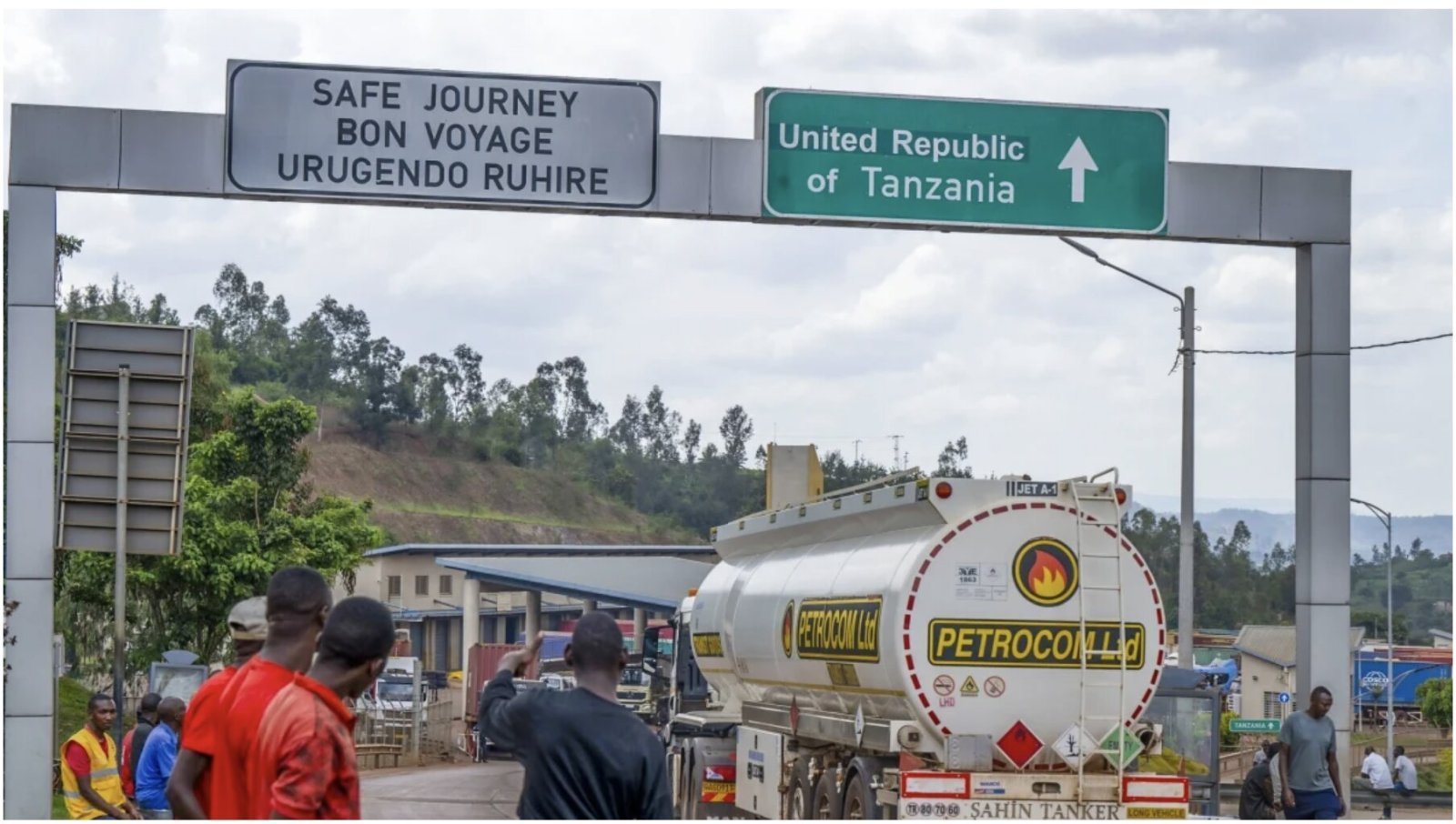
Rwanda imports all its petroleum overland from either Mombasa or Dar es Salaam, leaving it exposed to single-corridor disruptions. Within days of each other, it signed government-to-government fuel frameworks with both Kenya and Tanzania, projecting a twelvefold increase in Northern Corridor volumes while simultaneously expanding Tanga access. The dual structure gives Rwanda negotiating leverage over both routes and directly intensifies the competition between the Northern and Central corridors for landlocked East African market share.
KIGALI — Rwanda has moved simultaneously on two fuel supply fronts, signing petroleum import agreements with Kenya and Tanzania within days of each other in late June and early July 2026, establishing structured government-to-government frameworks through both of East Africa's main transit corridors at the same time.
The sequencing is not coincidental. Rwanda imports all its petroleum overland and has historically depended on a private-sector-dominated supply chain that leaves it exposed to pricing volatility and logistics disruptions. The new agreements replace that exposure with state-backed arrangements on both routes simultaneously, which gives Kigali something it has not previously had: a formal basis for playing the Northern and Central corridors against each other.
The Kenya deal: Northern Corridor volumes set to rise twelvefold
Rwanda and Kenya signed three agreements on June 29 to 30: a Memorandum of Understanding, a tripartite pact, and a transport and storage deal. The framework establishes formal government-to-government fuel import arrangements channelling a larger share of Rwanda's petroleum needs through Kenya's Northern Corridor, with enhanced use of the Kenya Pipeline Company network, KPC storage facilities, and the Port of Mombasa.
Rwanda's state-owned entities will partner with Oman's OQ Trading for bulk procurement under the arrangement. The projected volume increase is striking: annual fuel throughput through the corridor is expected to rise from approximately 42,000 cubic metres in 2025 to over 500,000 cubic metres. The first shipment, designated RNEC 001, is expected between September 4 and 6, 2026.
Rwanda's Minister of Trade and Industry Antoine Marie Kajangwe cited stable supply, competitive pricing, and expanded regional trade as the primary objectives, noting that the framework also opens the possibility of Rwanda eventually re-exporting petroleum products to neighbouring markets as storage capacity expands.
The Tanzania deal: Tanga as a second gateway
Almost simultaneously, Rwanda signed an agreement involving the Rwanda National Energy Company and Gulf Bulk Petroleum Tanzania Limited to expand imports through the Port of Tanga, complementing the Dar es Salaam route Rwanda has used under the Central Corridor. The Tanga arrangement is designed to diversify supply sources and improve logistics resilience amid domestic fuel price pressure Rwanda has faced in recent months.
The deal reinforces Tanzania's position as a transit hub even as the Kenya agreements direct significant new volume northward. For Tanzania, the Tanga arrangement matters beyond its immediate volume because it establishes a second Tanzanian entry point for Rwandan imports, reducing the Central Corridor's dependence on Dar es Salaam as its sole competitive asset.
What this means for the corridor competition
Rwanda's dual signing is a direct intervention in the competition between East Africa's two main transit corridors. The Northern Corridor through Mombasa and the Central Corridor through Dar es Salaam have historically competed for landlocked market share on the basis of tariffs, transit times, border efficiency, and logistics reliability. Rwanda has now formalised its position as a market that both corridors will actively compete to serve, with government-level agreements anchoring volumes on each route.
For Kenya, the deal boosts utilisation of KPC infrastructure and deepens a bilateral trade relationship that has been expanding across multiple sectors in 2026. For Tanzania, the Tanga deal specifically is worth watching: Tanga has historically been a secondary port relative to Dar es Salaam, and structured Rwandan fuel volumes through it would meaningfully change its commercial profile.
For the East African Community more broadly, the agreements demonstrate what government-to-government trade frameworks can achieve where private-sector supply chains have created vulnerability. Analysts have noted their potential contribution to EAC integration and AfCFTA trade architecture, though execution, infrastructure maintenance, and the translation of supply agreements into actual pump price improvements for Rwandan consumers will determine whether the deals deliver their stated objectives.
Minister Kajangwe emphasised Rwanda's readiness, citing experienced traders and expanding storage capacity as key enablers for both import growth and the longer-term re-export ambition.
Uchumi360 will continue monitoring the rollout of these agreements, including volume data as RNEC 001 is delivered in September, the impact on Rwanda's domestic fuel pricing, and the broader implications for Northern and Central Corridor competitiveness.
FAQ
Why did Rwanda sign fuel deals with both Kenya and Tanzania at the same time? Rwanda imports all petroleum overland and has historically relied on a private-sector-dominated supply chain that creates pricing and logistics vulnerability. Signing government-to-government frameworks with both corridor countries simultaneously gives Rwanda structured supply on both routes and formal leverage to negotiate competitive terms from each.
What is the Northern Corridor and how does it differ from the Central Corridor? The Northern Corridor runs from the Port of Mombasa through Kenya to Rwanda, Uganda, and eastern DRC. The Central Corridor runs from Dar es Salaam and Tanga through Tanzania to Rwanda, Burundi, Uganda, and Zambia. Both compete for landlocked East and Central African transit cargo. The Rwanda fuel deals are the latest expression of that competition.
What volumes are involved in the Kenya deal? Annual fuel volumes through the Northern Corridor are projected to rise from approximately 42,000 cubic metres in 2025 to over 500,000 cubic metres under the new framework. The first shipment is expected September 4 to 6, 2026.
What role does OQ Trading play? OQ Trading, an Oman-based commodity trading firm, will partner with Rwanda's state-owned entities for bulk petroleum procurement under the Kenya framework. Its involvement brings international commodity market expertise into what was previously a fragmented private-sector supply chain.
Could Rwanda become a petroleum re-exporter? Minister Kajangwe indicated that expanding storage capacity and structured import volumes create the conditions for Rwanda to eventually re-export petroleum products to neighbouring markets. This remains a medium-term ambition rather than an immediate objective, and it depends on volume growth, storage infrastructure development, and regulatory frameworks that are not yet fully in place.
 Uchumi360
Business Intelligence
Uchumi360
Business Intelligence
Uchumi360 covers business, investment, and economic policy across East, Central, and Southern Africa.
For the serious reader
You read to the end. That places you in a small group.
Uchumi360 is built for readers who demand precision over speed, structure over sentiment, and analysis that holds uncomfortable conclusions rather than softening them. If this work sharpens how you think about Africa's economy, help us keep building the infrastructure behind it.
Institutional Partners
Commission intelligence. Shape the conversation.
Uchumi360 works with development finance institutions, investment firms, sovereign bodies, and strategic organisations across the coverage region. Institutional partnership unlocks:
- Commissioned sector and country intelligence reports
- Branded research series under your institution's authority
- Exclusive data briefings for internal strategy teams
- Speaking and editorial presence at Uchumi360 events
- Co-published investment outlooks for your markets
Support Our Work
Independent analysis has a cost. Help us bear it.
Uchumi360 does not carry advertising. It does not take editorial direction from sponsors. Every article is produced without commercial compromise. Your contribution funds the reporting, research, and editorial infrastructure that keeps this analysis free from influence.
Secure checkout: One-time and monthly support are processed securely. Add payment credentials to enable checkout here.
Stay Connected
Keep up with every new insight.
Follow our latest analysis, policy coverage, and market intelligence as soon as it is published. If you need something specific, reach out directly and we will point you to the right research.
