
Aliko Dangote Did Not Build Africa's Largest Industrial Conglomerate by Thinking Small. He Built It by Refusing to Import What Africa Could Produce.
Ready
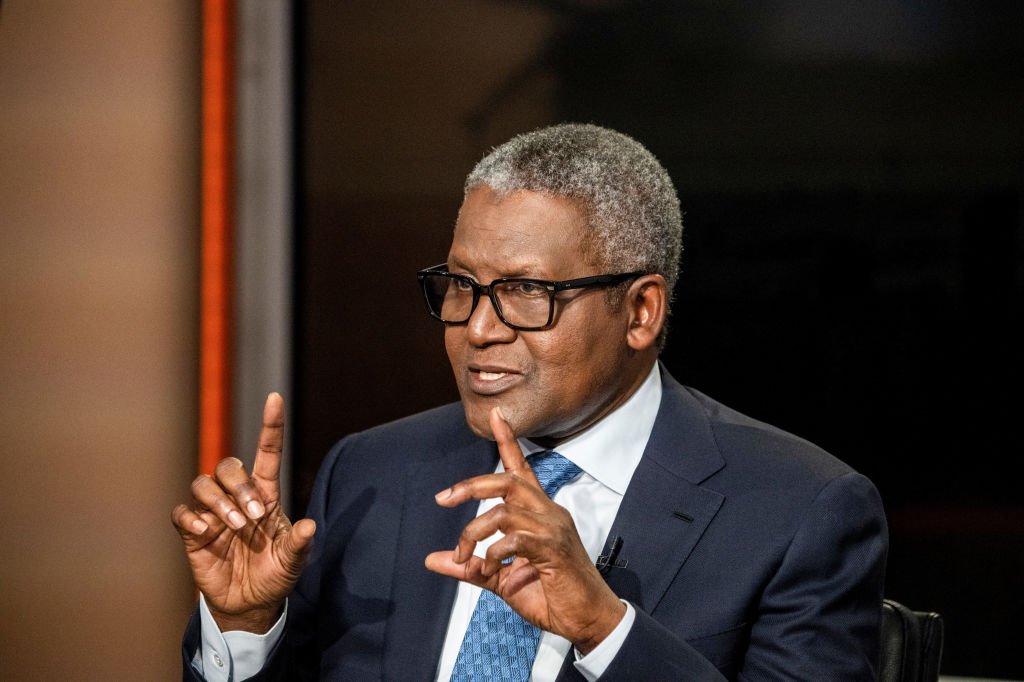
Aliko Dangote, founder and CEO of the Dangote Group, described the commercial logic that built Africa's largest industrial conglomerate in terms whose directness makes them the most precise available articulation of the industrialisation argument that Uchumi360's series has been making across East, Central, and Southern Africa. Backward integration, producing what Africa imports rather than continuing to import it, is the commercial model. Discipline and reinvestment, never paying dividends from wholly owned companies since the group's inception, is the financial model. Patient capital whose horizon matches the industrial investment cycle rather than the trading cycle is the financing model. The USD 20 billion Dangote Refinery, which processed crude at 661,000 barrels per day after years of obstruction by the import mafia whose billion-dollar subsidy economics the refinery was designed to displace, is the proof of concept. The USD 45 billion capital deployment plan from 2026 to 2030, targeting USD 100 billion in revenue and USD 30 billion in EBITDA against a current USD 3 billion EBITDA base, is the ambition whose scale reflects the opportunities that Dangote says he never knew existed until he was deep enough into industrial production to see them. This article extracts the industrial argument from Dangote's account of his own business and situates it within the East and Central African context that Uchumi360's series has documented across Tanzania, Kenya, Uganda, Rwanda, the DRC, Zambia, and Mozambique. Dangote is not an inspiration story. He is an industrial argument. The difference is that inspiration asks you to believe in yourself. An industrial argument asks you to build a factory.
Aliko Dangote started with four trucks of cement in Lagos in 1978. He did not begin with the vision of what the Dangote Group would become. He began with the discipline to identify what Africa was importing that Africa could produce, and the clarity to understand that the commercial model whose execution would eventually build Africa's largest industrial conglomerate was not trading but backward integration.
"I first of all look at what do we need as people," Dangote told Nicolola Tangan, CEO of the Norwegian Sovereign Wealth Fund. "What is it that we supposed to be producing and we're importing? So we do what you call backward integration, which means what we are importing now we produce it."
The conversation, whose substance covers the origins of the Dangote Group, the construction of the world's largest single-train refinery, a USD 45 billion capital deployment plan through 2030, and Dangote's assessment of Africa's industrial opportunity, is the most direct available articulation by a practising African industrialist of the argument that Uchumi360's series has been making across East, Central, and Southern Africa for the past year: that Africa's wealth creation opportunity is concentrated in the gap between what the continent currently does with its resources and what it could do with them, and that closing that gap requires factories, not apps.
The commercial logic that built the empire
Dangote's commercial logic is simple enough to state in a single sentence and difficult enough to execute that 67,000 workers spent years building its most dramatic expression. Africa imports things it consumes. The entrepreneur who produces those things domestically captures the import margin, reduces the foreign exchange outflow, improves supply reliability, and creates the industrial employment whose wage income builds the consumer market that further industrial investment requires.
"We are now producing things that when you wake up as a human being every morning you must use part of what we produce," Dangote said. Cement. Sugar. Fertiliser. Petroleum products. Polypropylene. The list of Dangote Group products maps directly to the import categories whose domestic production Africa has historically deferred while paying the import price and the foreign exchange cost that deferral imposes continuously.
The discipline whose maintenance built the financial foundation for that industrial expansion is equally direct. From the Dangote Group's inception, wholly owned companies have never paid dividends. "We have never ever paid any dividend," Dangote said. "Companies that are wholly owned by Dangote Industries, they are not listed, we never ever take a dime out of the company." Every profit generated by the business has been reinvested into the next industrial investment whose scale the accumulated capital enables. The result is a group whose EBITDA reached USD 3 billion in 2025 and whose target of USD 30 billion by 2030 reflects the compounding that patient reinvestment generates when the underlying industrial assets are producing at the scale that the market demands.
That financial discipline is the specific mechanism that most entrepreneurship discourse celebrates in the abstract while failing to describe in the operational terms that make it replicable. Dangote describes it in operational terms: sell the holiday homes in the United States and the United Kingdom because owning property elsewhere creates the temptation and the obligation to spend time there rather than building the business. "My life is very simple. Wherever I go, I use hotels, I pay. When I leave, nobody will call me and say I have a burst pipe or something is wrong." The discipline is not motivational rhetoric. It is a specific set of decisions about what to own, what to sell, and where to direct the capital that every profitable business generates but that most entrepreneurs redirect toward consumption before the industrial investment cycle that compounding returns requires has completed.
The refinery as industrial proof of concept
The Dangote Refinery is the most precisely documented proof of concept available for the backward integration argument whose logic applies across every import category that African economies currently pay the import price to supply. Nigeria has produced crude oil for more than six decades and imported refined petroleum products for most of that period, paying the foreign exchange cost of importation and the subsidy cost whose annual total Dangote estimates at approximately USD 10 billion, while the Nigerian population queued for fuel during Christmas holidays in a country sitting on some of the world's largest hydrocarbon reserves.
The refinery's construction required Dangote to build infrastructure that Nigeria's existing industrial base could not supply: a port capable of handling 3,000-tonne modular equipment pieces, roads connecting the site to the logistics network, a water treatment facility covering 30 hectares processing 440 million litres daily, and the management capability to coordinate 67,000 workers simultaneously during a period that included COVID disruptions, naira devaluation from 156 to 1,900 against the dollar, and sustained obstruction from what Dangote describes as the import mafia whose billion-dollar economics the refinery was designed to displace.
"When we started, the exchange rate of naira was 156. We even got up to 1,900. But we still went ahead," Dangote said. The financial model that sustained the construction through those conditions required African institutional capital rather than the Western financing that the project's scale might have suggested as the natural source. "We got a lot of support from African Finance Corporation, Zenith Bank, Access Bank, UBA and couple of some of the local banks, but of course we also have a very good relationship with Standard Bank of South Africa and at the beginning Standard Chartered Bank of UK."
The refinery has now processed crude at 661,000 barrels per day. Fertiliser from the adjacent plant is oversold through mid-July at USD 850 per tonne against a pre-Middle East crisis price of USD 400. Polypropylene is selling at USD 3,000 per tonne in the UK against a previous USD 900, and Dangote's plant is the only thing preventing Nigeria's plastic manufacturing industry from shutting down entirely due to supply unavailability. Aviation fuel from the refinery is oversold through mid-July at 20 million litres daily production. The backward integration argument is not theoretical. It is operational, and its operational results are producing the financial returns that the USD 45 billion capital deployment plan through 2030 will be funded from.
What the Dangote model reveals for East and Central Africa
The specific elements of the Dangote Group's commercial model whose application to East and Central Africa's industrial development Uchumi360's series has been documenting are not simply the ambition of the investments but the specific mechanisms whose combination produces industrial transformation rather than impressive construction activity.
Backward integration as the selection criterion for new investments identifies the import categories whose domestic production captures the largest available margin at the smallest additional infrastructure cost given existing industrial assets. Tanzania's fertiliser opportunity, which domestic natural gas feedstock from the approximately 57 trillion cubic feet of proven reserves documented by Tanzania Petroleum Development Corporation could supply at costs substantially below the import price of the approximately USD 4 billion in nitrogen fertilisers that Africa imports annually according to African Fertilizer and Agribusiness Partnership data, is the East African expression of the backward integration logic that Dangote applied to Nigerian petroleum products. Tanzania processes less than 10% of its fruits and vegetables domestically according to Tanzania Investment Centre data. Uganda processes a fraction of its agricultural output before export. Kenya imports the majority of its pharmaceutical needs despite having 35 or more local drug formulation firms. Each of these gaps is a Dangote-style backward integration opportunity whose identification is straightforward and whose execution requires the patient capital, the reinvestment discipline, and the obstruction tolerance that Dangote's account of the refinery's construction documents with unusual precision.
The obstruction tolerance dimension deserves specific attention because the import mafia dynamic that Dangote describes in the Nigerian petroleum context is not Nigeria-specific. Every African import category whose domestic production would displace a profitable import business generates resistance from the traders, shippers, and allocation holders whose economics the domestic production threatens. Tanzania's edible oil importers, Uganda's cement importers, Kenya's pharmaceutical importers, and the DRC's finished goods importers all represent commercial interests whose disruption backward integration produces and whose resistance backward integration must survive to deliver the transformation its economics promise. Dangote's account of five years of land obstruction, currency devaluation, and sustained commercial pressure is not a cautionary tale. It is the operational reality description that industrial entrepreneurs across the region need to internalise before committing to the industrial investment whose completion requires surviving the obstruction that its success will generate.
Why Dangote calls himself more aggressive now than in his youth
The interview's most counterintuitive moment is Dangote's response to a question about whether he is more patient now than when he was younger. "To tell you the truth, let me be very honest with you. I'm more aggressive now. Because I've seen a lot of opportunities that I've never ever knew that they exist."
The opportunities he lists are the same ones that Uchumi360's series has documented as the structural case for East and Central African industrial investment: critical minerals whose processing Africa does not control, arable land whose agricultural productivity Africa has not maximised, young population whose labour force Africa has not yet absorbed into industrial employment, and gas reserves whose domestic utilisation Africa has not yet prioritised over export orientation. "Africa controls about 60% of the world's critical minerals. We have young energetic population. We have the most arable land in the world. 60% of the arable land of the world is there. And the minerals that we have we're not actually processing any one of them. So the opportunities are enormous."
The aggression is not temperamental. It is the response of an industrialist who understands compounding to the realisation that the industrial opportunities available in Africa are larger than the capital and time available to pursue them. "If you think big, you grow big. When you think small, you don't grow at all." The distinction he draws between thinking big and thinking too big is the distinction between knowing the market you are operating in well enough to size the investment correctly and committing capital to markets you do not understand well enough to manage through the inevitable construction and operational challenges whose navigation requires the knowledge that only industrial experience generates.
"It's like myself and any of the staff, 10 of the top most staff, when you wake them late at night they will tell you the process of each and every part of our business." The industrial knowledge is the competitive advantage. The capital is the instrument. And the legacy whose pursuit is now driving Dangote more than the wealth whose accumulation his earlier career required is the industrialisation of Africa whose demonstration effect attracts the foreign investment that African industrialists pioneering the proof of concept will eventually be joined by.
"My legacy will be that I'm one of the ones that actually pioneered the industrialisation of Africa. That's my focus, to make sure that Africa produces what we consume."
That sentence is the industrial argument. It is also the Uchumi360 series in eleven words.
FAQ
What is backward integration and why is it the core of the Dangote commercial model? Backward integration means producing domestically what an economy currently imports rather than continuing to pay the import price and the foreign exchange cost that importation imposes. Dangote described the logic directly: identify what Africa needs and is importing, then produce it. Applied to cement, sugar, fertiliser, petroleum products, and polypropylene, this model has built Africa's largest industrial conglomerate whose EBITDA reached USD 3 billion in 2025 against a target of USD 30 billion by 2030.
How did Dangote finance the USD 20 billion refinery? Through a combination of internally generated funds and African institutional capital including the African Finance Corporation, Zenith Bank, Access Bank, UBA, Standard Bank of South Africa, and Standard Chartered Bank. The naira's devaluation from 156 to 1,900 against the dollar during construction forced greater reliance on external financing than the original plan anticipated, but the project continued because the financial institutions backing it had confidence in Dangote's delivery track record and the market fundamentals that the refinery was designed to serve.
What is the import mafia and how did it obstruct the refinery? The import mafia Dangote describes consists of traders, shippers, and subsidy allocation holders whose economics depended on Nigeria continuing to import refined petroleum products rather than refining domestically. Their obstruction included five years of land access denial and sustained commercial pressure whose total effect added years and billions of dollars to the project timeline and cost. Dangote describes the obstruction without bitterness and with the observation that it has now been displaced: the refinery is operating and the import economics it was designed to disrupt have been disrupted.
Why does Dangote say he is more aggressive now than when he was younger? Because industrial production reveals opportunities that trading does not. The visibility of Africa's critical minerals, agricultural land, gas reserves, and demographic dividend that industrial operations provide is larger than the visibility that commodity trading provides, and the realisation that those opportunities are larger than the capital and time available to pursue them produces the aggressive urgency that Dangote describes as his current operational posture rather than the patience that his earlier career required.
What is the relevance of the Dangote model for East and Central African entrepreneurs? The backward integration logic applies directly to every import category that East and Central African economies currently pay the import price to supply. Tanzania's fertiliser opportunity using domestic natural gas feedstock, Uganda's petroleum products opportunity, Kenya's pharmaceutical manufacturing gap, and the DRC's finished goods import dependence are all expressions of the same commercial logic that Dangote applied to Nigerian cement and petroleum products. The execution requires patient capital, reinvestment discipline, and the obstruction tolerance that Dangote's refinery account documents, and the returns it generates compound at the rate that industrial production's margin over raw commodity export or import distribution provides.
 Uchumi360
Business Intelligence
Uchumi360
Business Intelligence
- Aliko Dangote, interview with Nicolola Tangan, CEO Norwegian Government Pension Fund Global
- All direct quotations cited from this interview transcript
- Tanzania Petroleum Development Corporation, natural gas reserve data
- Approximately 57 trillion cubic feet proven reserves
- Available at tpdc.go.tz
- African Fertilizer and Agribusiness Partnership, Africa nitrogen fertiliser import bill data
- Approximately USD 4 billion annually
- Tanzania Investment Centre, agro-processing data
- Less than 10% of fruits and vegetables processed domestically
- Available at tic.go.tz
- Pharmaceutical Society of Kenya, pharmaceutical market data
- Available at psk.or.ke
- African Finance Corporation, project financing documentation
- Available at africafc.org
- Standard Bank South Africa, Dangote Group financing relationship
- Available at standardbank.com
- Standard Chartered Bank, financing relationship documentation
- Available at sc.com
- Dangote Industries, refinery operational data
- 661,000 barrels per day processing capacity, 20 million litres per day aviation fuel production cited from interview
- Uganda Bureau of Statistics, agricultural processing and export data
- Available at ubos.org
- Kenya National Bureau of Statistics, pharmaceutical import data
- Available at knbs.or.ke
- DRC Institut National de la Statistique, finished goods import data
- Available at ins-rdc.org
- Zambia Statistics Agency, import composition data
- Available at zamstats.gov.zm
- Rwanda Development Board, industrial investment data
- Available at rdb.rw
- African Export-Import Bank, African Trade Report 2024
- Intra-African trade data
- Available at afreximbank.com
Uchumi360 covers business, investment, and economic policy across East, Central, and Southern Africa.
For the serious reader
You read to the end. That places you in a small group.
Uchumi360 is built for readers who demand precision over speed, structure over sentiment, and analysis that holds uncomfortable conclusions rather than softening them. If this work sharpens how you think about Africa's economy, help us keep building the infrastructure behind it.
Institutional Partners
Commission intelligence. Shape the conversation.
Uchumi360 works with development finance institutions, investment firms, sovereign bodies, and strategic organisations across the coverage region. Institutional partnership unlocks:
- Commissioned sector and country intelligence reports
- Branded research series under your institution's authority
- Exclusive data briefings for internal strategy teams
- Speaking and editorial presence at Uchumi360 events
- Co-published investment outlooks for your markets
Support Our Work
Independent analysis has a cost. Help us bear it.
Uchumi360 does not carry advertising. It does not take editorial direction from sponsors. Every article is produced without commercial compromise. Your contribution funds the reporting, research, and editorial infrastructure that keeps this analysis free from influence.
Secure checkout: One-time and monthly support are processed securely. Add payment credentials to enable checkout here.
Stay Connected
Keep up with every new insight.
Follow our latest analysis, policy coverage, and market intelligence as soon as it is published. If you need something specific, reach out directly and we will point you to the right research.
