
China Has Quietly Built a New Financial Corridor Across 19 African Countries. For East and Central Africa, the Implications Go Well Beyond Banking.
Ready
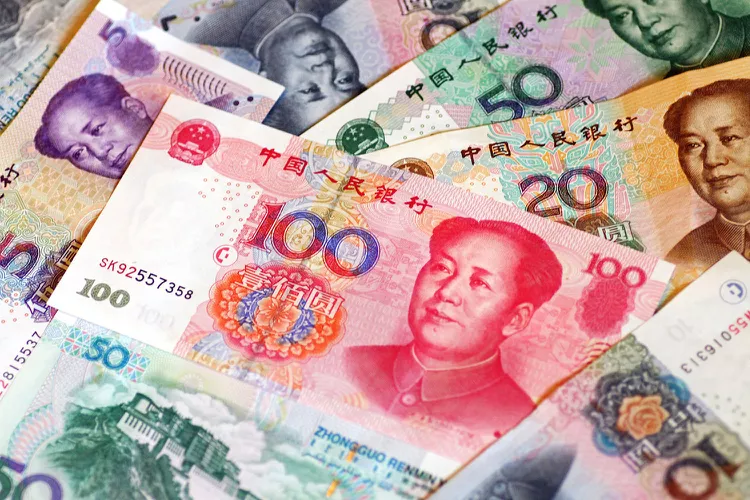
The People’s Bank of China has authorised Standard Bank Group and ICBC to jointly operate the Renminbi Clearing Bank of Africa, covering 19 African countries and providing direct RMB clearing access without the US dollar as intermediary. Five East and Central African countries are directly covered: Tanzania, Kenya, Uganda, South Sudan, and the DRC. Rwanda and Burundi are not in the network because Standard Bank does not operate banking subsidiaries there, but both are expected to benefit indirectly through correspondent banking relationships and regional trade corridors including the Port of Dar es Salaam and Port of Mombasa. The DRC is identified as a potential primary beneficiary given China’s dominance in Congolese copper and cobalt mining, both critical for EV and battery supply chains. The arrangement does not signal the decline of the US dollar, which remains the world’s dominant reserve currency. Its significance is strategic: China is assembling a complete commercial architecture across Africa, financing infrastructure, manufacturing equipment, investing in mining and industry, purchasing strategic resources, and now building the payment systems that support all of it. For East and Central Africa, trade is increasingly shaped not only by ports, railways, and highways but by the currencies and settlement networks that move money across the corridors those physical assets serve. China does not build a port and then leave. It builds the port, the railway connecting the port, the industrial park the railway serves, the bank financing the businesses in the park, and now the payment system those businesses use to settle transactions with Chinese counterparts. That is a complete commercial architecture. East Africa is inside it.
DAR ES SALAAM — China has quietly introduced one of the most significant changes to Africa’s financial landscape in recent years. While much of the public attention has focused on Chinese-financed ports, railways, and highways across the continent, Beijing is now investing in something more strategically durable: the financial infrastructure that moves money.
The People’s Bank of China has authorised Standard Bank Group and the Industrial and Commercial Bank of China to jointly operate the Renminbi Clearing Bank of Africa. The initiative provides RMB clearing services across 19 African countries, giving businesses direct access to China’s domestic financial system without relying on the United States dollar as an intermediary currency.
The network covers Angola, Botswana, Côte d’Ivoire, the Democratic Republic of the Congo, Eswatini, Ghana, Kenya, Lesotho, Malawi, Mauritius, Mozambique, Namibia, Nigeria, South Africa, South Sudan, Tanzania, Uganda, Zambia, and Zimbabwe. Together, these economies represent some of Africa’s largest financial markets, busiest trade corridors, and most strategically important commodity-producing regions, stretching from Southern Africa’s banking hubs to East Africa’s logistics gateways and Central Africa’s mineral-rich interior.
What the arrangement actually changes
Until now, most trade between African businesses and Chinese counterparts has required settlement in US dollars, even when neither party is American and neither transaction touches the US financial system. That arrangement imposes a measurable cost: currency conversion fees, correspondent banking charges, and exposure to dollar exchange rate movements that add friction and expense to every transaction.
The RMB clearing network removes that friction for covered countries. Businesses importing goods from China can settle transactions directly in RMB. Exporters selling agricultural products, minerals, and manufactured goods to Chinese buyers can receive payment through a more direct settlement path. The practical effects are faster settlement, lower transaction costs, and reduced foreign exchange risk on the China trade specifically.
For the 19 participating countries, the arrangement is an operational improvement to a trade relationship that already exists at significant scale. China is the world’s largest exporter of manufactured goods and one of Africa’s largest trading partners. It supplies machinery, industrial equipment, construction materials, electronics, and consumer goods across the continent. The financial infrastructure now catching up to that commercial relationship is not creating new trade. It is making existing and future trade less expensive to conduct.
For East and Central Africa specifically
Five countries in East and Central Africa are directly covered by the network: Tanzania, Kenya, Uganda, South Sudan, and the Democratic Republic of the Congo. For each, the implications are specific rather than generic.
Tanzania’s inclusion is significant given the depth of Chinese commercial engagement in the country. Chinese companies have financed the Standard Gauge Railway, the Julius Nyerere Hydropower Project, port infrastructure at Dar es Salaam, and industrial investments across TISEZA’s manufacturing parks. The volume of China-Tanzania trade whose settlement could shift to direct RMB clearing is substantial, and the Port of Dar es Salaam’s role as the Central Corridor gateway for landlocked neighbours means that some of the transaction volume cleared through Tanzanian institutions will relate to goods moving onward to Rwanda, Burundi, Zambia, Malawi, and the DRC.
Kenya’s inclusion reflects its position as East Africa’s largest financial market and the Northern Corridor’s primary logistics hub. Standard Bank’s Kenyan operations provide the banking infrastructure through which the clearing arrangement will function for Kenyan businesses and for transactions routed through Mombasa to landlocked hinterland markets.
Uganda’s inclusion is particularly timely given the East African Crude Oil Pipeline’s 82.6 percent completion as of April 2026. When Ugandan oil exports begin, Chinese energy companies and commodity traders will be among the potential counterparties, and direct RMB settlement would reduce the transaction cost of oil-for-goods trade whose structure often involves Chinese financing repaid in commodity flows.
South Sudan’s inclusion reflects Chinese investment in the oil sector there, where Chinese national oil companies have been among the most significant investors since independence.
The DRC: where the strategic stakes are highest
Among the 19 participating countries, the Democratic Republic of the Congo may become the arrangement’s most consequential beneficiary.
China is already the dominant foreign investor in the Congolese mining sector. The DRC exports vast quantities of copper and cobalt to China, both essential for electric vehicles, batteries, and renewable energy technologies whose global demand is accelerating. China’s own battery supply chain is the largest in the world, and Congolese cobalt is a primary input.
Direct RMB settlement between Congolese mining operations, commodity traders, and Chinese buyers would simplify financial transactions across one of the world’s most strategically important export industries. Lower transaction costs and faster settlement times improve the economics of a trade relationship already defined by scale. As competition for critical minerals intensifies globally, and it is intensifying, the financial systems supporting mineral trade become as strategically important as the mining operations themselves.
The DRC’s inclusion in the RMB clearing network should be read alongside China’s broader critical minerals strategy rather than as a standalone banking arrangement.
Rwanda and Burundi: indirect beneficiaries
Rwanda and Burundi are absent from the network because Standard Bank does not operate commercial banking subsidiaries in either country, a structural rather than strategic exclusion.
Both economies are nonetheless closely integrated into the regional trade and financial systems that the network serves. Imports arriving through Dar es Salaam or Mombasa frequently continue into Kigali and Bujumbura through established road and logistics corridors. Correspondent banking relationships between regional financial institutions mean that RMB settlement services available in Tanzania, Kenya, and Uganda can reach businesses in Rwanda and Burundi through those relationships.
As banks across the region expand RMB settlement capabilities, businesses in Kigali and Bujumbura are likely to gain indirect access to more efficient trade finance through the regional institutions that are directly covered. The economic impact of the clearing network is therefore likely to extend beyond the 19 participating countries in practice, even if the formal network does not.
What this means for East African financial integration
The announcement raises a question that EAC member states have been trying to answer through political agreement for years without reaching a commercial tipping point.
For years, the bloc has discussed increasing the use of local currencies in regional trade to reduce dollar dependence. Progress has been gradual. Most businesses continue to settle international transactions in dollars because the dollar’s liquidity, correspondent banking network, and universal acceptance make it the path of least resistance regardless of what policy statements say.
China is now offering a specific commercial alternative to the dollar on a specific and high-volume trade route. Unlike political agreements about local currency trade, the RMB clearing arrangement is backed by a commercial incentive: it is cheaper and faster for businesses whose primary international trade relationship is with China. If businesses save time and money by settling in RMB, adoption will expand without requiring government mandates or policy frameworks.
That is a different dynamic from the EAC’s local currency integration discussions, which have stalled partly because the commercial incentive for individual businesses to abandon dollar settlement has been insufficient to overcome the coordination costs of switching. The RMB arrangement does not face the same coordination problem because it is anchored to an existing and growing trade relationship rather than requiring businesses to build new relationships to benefit.
What this is and what it is not
The RMB clearing arrangement is not a signal that the US dollar’s global dominance is ending. The dollar remains the world’s primary reserve currency, the primary invoicing currency for international commodity trade, and the settlement currency for the vast majority of global financial transactions. That position will not be displaced by a clearing arrangement covering 19 African countries, however strategically significant those countries are.
The significance lies elsewhere, and it is worth being precise about where.
China has spent two decades building a complete commercial architecture across Africa. It finances infrastructure through policy bank lending. It constructs that infrastructure through state-owned enterprise contractors. It manufactures the equipment those projects require. It invests in the mining and industrial operations that infrastructure enables. It purchases the strategic resources those operations produce. And it is now building the payment systems, settlement networks, and financial infrastructure that support all of those commercial relationships simultaneously.
The Renminbi Clearing Bank of Africa is the financial layer of an architecture whose physical layer is already visible in every East African country: the SGR in Tanzania and Kenya, the dams under construction, the ports being expanded, the industrial parks being filled with Chinese-financed manufacturing investment.
Trade is shaped not only by the goods crossing borders but by the currencies and payment systems that move money across those borders. China understands this. The Renminbi Clearing Bank of Africa is the evidence that Beijing is building for the long term in Africa across every dimension of commercial engagement simultaneously.
For East and Central Africa, that is the announcement worth understanding.
FAQ
What is the Renminbi Clearing Bank of Africa? The Renminbi Clearing Bank of Africa is a joint initiative between Standard Bank Group and the Industrial and Commercial Bank of China, authorised by the People’s Bank of China, to provide RMB clearing services across 19 African countries. It allows businesses in those countries to settle trade transactions with Chinese counterparts directly in RMB without using the US dollar as an intermediary currency, reducing transaction costs, shortening settlement times, and lowering exposure to dollar exchange rate movements.
Which East African countries are covered by the RMB clearing network? Tanzania, Kenya, Uganda, and South Sudan are directly covered. The Democratic Republic of the Congo is also covered and is considered a primary strategic beneficiary given the scale of Chinese investment in Congolese copper and cobalt mining. Rwanda and Burundi are not formally included because Standard Bank does not operate banking subsidiaries in either country, but both are expected to benefit indirectly through correspondent banking relationships and regional trade corridors.
Why is the DRC particularly significant in this arrangement? The DRC is China’s most important African source of cobalt and copper, both critical for electric vehicles, batteries, and renewable energy technologies. China’s battery supply chain is the largest in the world and depends heavily on Congolese mineral supply. Direct RMB settlement between Congolese mining operations and Chinese buyers reduces transaction costs and settlement times on a trade relationship already defined by its strategic scale. As global competition for critical minerals intensifies, the financial systems supporting mineral trade become as strategically important as the mining operations themselves.
Does this mean the US dollar is losing its dominance in Africa? No. The US dollar remains the world’s primary reserve currency and the primary settlement currency for the vast majority of global financial transactions. The Renminbi Clearing Bank of Africa does not displace dollar dominance globally or even across all of Africa’s trade. Its significance is specific: it reduces the cost and friction of trade on the Africa-China corridor specifically, where the commercial volume is large enough to make direct RMB settlement commercially attractive. The dollar remains the dominant currency for trade with Europe, the United States, and most other regions.
What does this mean for East Africa’s own financial integration agenda? The EAC has been pursuing local currency trade integration for years with limited commercial traction, partly because the incentive for individual businesses to move away from dollar settlement has been insufficient. The RMB clearing arrangement offers a different model: a commercial incentive backed by a specific, high-volume trade relationship rather than a policy aspiration. If RMB settlement adoption grows organically because it is cheaper and faster for China trade, it demonstrates that financial integration driven by commercial incentive works faster than financial integration driven by policy agreement alone. That is a lesson the EAC’s own integration agenda could apply.
How does this fit into China’s broader strategy in Africa? China has spent two decades building a complete commercial architecture across Africa: infrastructure financing through policy banks, construction through state-owned enterprise contractors, equipment manufacturing, mining and industrial investment, commodity purchasing, and now financial settlement infrastructure. The Renminbi Clearing Bank of Africa is the financial layer of that architecture, connecting the physical investments China has made across the continent into a more complete commercial ecosystem. It reflects a long-term strategy rather than a single transactional decision.
 Uchumi360
Business Intelligence
Uchumi360
Business Intelligence
- People’s Bank of China, authorisation of Standard Bank Group and Industrial and Commercial Bank of China to jointly operate the Renminbi Clearing Bank of Africa
- Announcement details and participating country coverage
- Standard Bank Group, RMB clearing operations across Africa
- Available at standardbank.com
- Industrial and Commercial Bank of China Africa operations
- Available at icbc.com.cn
- Uchumi360, Tanzania SGR and infrastructure analysis, June 2026
- Available at uchumi360.com
- Uchumi360, East Africa public debt and infrastructure investment analysis, June 2026
- Available at uchumi360.com
- World Bank, DRC mining sector and cobalt export data
- Available at worldbank.org
- IMF, East Africa trade and financial integration data
- Available at imf.org
- Tanzania Ministry of Finance, FY2026/27 National Development Plan
- Chinese investment in SGR, JNHPP, and port infrastructure
- Available at mof.go.tz
- Uganda EACOP progress report, 82.6 percent completion April 2026
- Available at eacop.com
- EAC Secretariat, regional financial integration and local currency trade framework discussions
- Available at eac.int
Uchumi360 covers business, investment, and economic policy across East, Central, and Southern Africa.
For the serious reader
You read to the end. That places you in a small group.
Uchumi360 is built for readers who demand precision over speed, structure over sentiment, and analysis that holds uncomfortable conclusions rather than softening them. If this work sharpens how you think about Africa's economy, help us keep building the infrastructure behind it.
Institutional Partners
Commission intelligence. Shape the conversation.
Uchumi360 works with development finance institutions, investment firms, sovereign bodies, and strategic organisations across the coverage region. Institutional partnership unlocks:
- Commissioned sector and country intelligence reports
- Branded research series under your institution's authority
- Exclusive data briefings for internal strategy teams
- Speaking and editorial presence at Uchumi360 events
- Co-published investment outlooks for your markets
Support Our Work
Independent analysis has a cost. Help us bear it.
Uchumi360 does not carry advertising. It does not take editorial direction from sponsors. Every article is produced without commercial compromise. Your contribution funds the reporting, research, and editorial infrastructure that keeps this analysis free from influence.
Secure checkout: One-time and monthly support are processed securely. Add payment credentials to enable checkout here.
Stay Connected
Keep up with every new insight.
Follow our latest analysis, policy coverage, and market intelligence as soon as it is published. If you need something specific, reach out directly and we will point you to the right research.
