
Diageo Is Selling East Africa's Largest Beer Business. Asahi Is Paying USD 4.8 Billion for Over a Century of Brand Building.
Ready
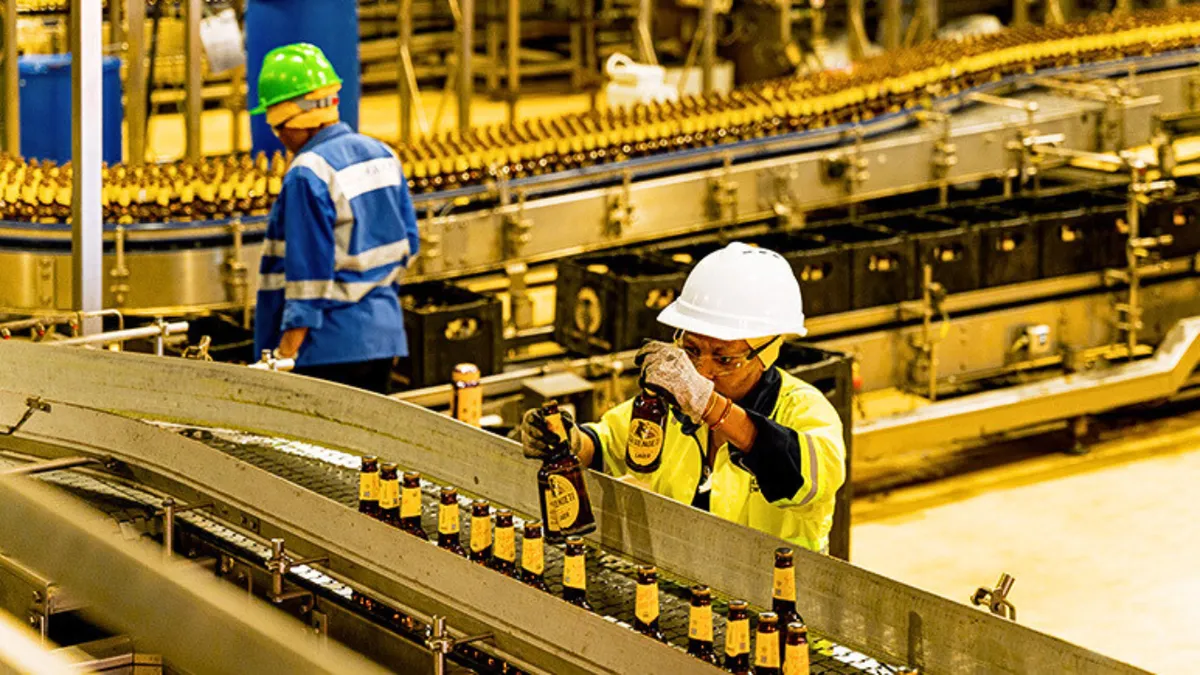
Diageo has agreed to sell its 100% shareholding in Diageo Kenya Limited, which holds a 65% stake in East African Breweries Limited, to Asahi Group Holdings of Japan at a USD 4.8 billion enterprise value, the largest Japanese beverage investment in Africa and the largest consumer sector transaction in East African recent history. EABL operates six subsidiaries: Kenya Breweries Limited producing Tusker, White Cap, Pilsner, and Guinness in Kenya; Uganda Breweries Limited producing Bell Lager, Club Pilsner, and Nile Special in Uganda; International Distillers Uganda Limited producing Uganda Waragi; Serengeti Breweries Limited producing Safari Lager and Kilimanjaro Premium Lager in Tanzania; UDV Kenya managing spirits production, import, and distribution; and East African Maltings Limited supplying malting barley across the group. The deal includes Diageo's 53.68% direct shareholding in UDV Kenya alongside the EABL stake. Local brands remain under EABL ownership. Long-term licensing agreements preserve EABL's production of Smirnoff, Captain Morgan, and Guinness. Asahi President Atsushi Katsuki confirmed the group will pursue sustainable growth while contributing to East African economic development, combining the established local portfolio with Asahi's international brands including Peroni, Grolsch, and Asahi Super Dry. Diageo Interim CEO Nik Jhangiani confirmed the sale accelerates the group's balance sheet strengthening toward its 2.5 to 3.0 times leverage ratio target through disposal of non-strategic assets. EABL's management, facilities, and local partner relationships remain unchanged. Diageo built six subsidiaries across three countries over a century. Asahi is paying USD 4.8 billion to own them and to participate in the consumer economy growth that East Africa's demographics, urbanisation, and rising household incomes are producing. That valuation is the most consequential market signal the East African consumer sector has received in a generation.
NAIROBI — Diageo has agreed to sell its 100% shareholding in Diageo Kenya Limited to Japan's Asahi Group Holdings in a transaction that values 100% of East African Breweries Limited at a USD 4.8 billion enterprise value and marks the first major Japanese brewing investment of this scale anywhere on the African continent.
The deal is larger than it appears from the headline transaction description. EABL is not a single brewery whose ownership is transferring between two multinational corporations. It is a six-subsidiary regional operation built across Kenya, Uganda, and Tanzania over more than a century of investment, brand development, and consumer relationship building whose combined asset base, market position, and brand equity the USD 4.8 billion enterprise value is pricing as the most compelling consumer sector platform currently available in East Africa.
The six subsidiaries and what each of them does
According to EABL's official corporate documentation, the group's diversity as a regional company is expressed through six subsidiaries whose combined operations span the full spectrum of the alcoholic beverage supply chain from malting barley input supply through brewing, distilling, and spirits distribution to the consumer market.
Kenya Breweries Limited is the group's foundational and largest subsidiary, anchoring the Kenyan market with the brand portfolio whose Tusker lager is East Africa's most recognised beer brand and whose White Cap, Pilsner, and locally produced Guinness extend the portfolio across the premium, mainstream, and stout categories whose combined market coverage gives Kenya Breweries the full-spectrum consumer brand position that single-category competitors cannot match. Kenya Breweries Limited has operated for over a century in a market whose consumer beer culture it has shaped as much as served, and whose brand loyalty across multiple generations of Kenyan consumers represents the intangible asset whose value the enterprise valuation is partly capturing alongside the physical production facilities, distribution infrastructure, and retailer relationships whose tangible reproduction cost is itself substantial.
Uganda Breweries Limited serves the Ugandan market whose consumer economy Uchumi360's coverage has documented through the Kiira Motors industrial investment, the SGR connectivity improvement, and the Kampala-Jinja Expressway's logistics transformation as one of East Africa's most consequential growth stories. Bell Lager, Club Pilsner, and Nile Special are the primary brands through which Uganda Breweries Limited serves the Ugandan consumer market whose urbanisation pace and demographic youth create the volume growth trajectory that a beverage company acquiring at EABL's valuation must see in the forward projections to justify the price.
International Distillers Uganda Limited is perhaps EABL's most strategically distinctive subsidiary and the one whose competitive position within its specific category most clearly illustrates the market entrenchment whose value the USD 4.8 billion acquisition price is partly reflecting. Uganda Waragi, the dominant local gin brand produced by International Distillers Uganda Limited, holds the kind of consumer brand position in Uganda's gin market that Tusker holds in Kenya's beer market: a nationally identified product whose association with cultural occasions, social settings, and consumer identity has accumulated across decades of consistent market presence into the brand equity whose displacement by a competitor without equivalent history would require the time and investment that the defensive moat the brand loyalty creates prevents from being economically rational. Acquiring International Distillers Uganda Limited is acquiring that defensive moat alongside the production infrastructure.
Serengeti Breweries Limited serves the Tanzanian market whose consumer economy is experiencing the most rapid industrial transformation in East Africa's current development cycle, with the Julius Nyerere Hydropower Project's energy provision, the SGR's logistics improvement, and the TISEZA's manufacturing investment approval pace collectively expanding the formal sector employment base whose wage income is the most direct driver of the consumer spending growth that the beer market reflects. Safari Lager and Kilimanjaro Premium Lager, Serengeti Breweries Limited's primary brands, carry the national identity that consumer brand building in Tanzania requires, with Kilimanjaro's brand association with Tanzania's most internationally recognised geographic symbol providing the marketing platform whose exploitation Asahi's brand management capability could extend into the export markets whose East African heritage positioning the Kilimanjaro name enables.
UDV Kenya Limited manages spirits production, import, and distribution across the region, holding the 53.68% direct Diageo shareholding and the 46.32% EABL shareholding whose combination gives EABL management control and full consolidation. The spirits distribution infrastructure that UDV Kenya manages is the commercial channel through which Diageo's global brands including Smirnoff, Captain Morgan, and Guinness reach the East African consumer market, and whose continued operation under the long-term licensing agreements that the transaction preserves provides the revenue relationship that Diageo retains following the equity sale.
East African Maltings Limited completes the group's vertical integration by supplying the malting barley whose quality and consistency is the upstream input whose control gives EABL the supply chain security that purchasing malted barley from external suppliers at market prices would not provide at the cost stability and quality assurance that large-scale brewing operations require. Vertical integration into the malting supply chain is the operational discipline whose presence distinguishes a regionally serious brewing operation from an assembly operation dependent on imported inputs, and whose value in the supply chain security it provides becomes most visible during the commodity price volatility periods that external input purchasing exposes an operation to.
What the transaction includes and what remains under EABL's ownership
The deal includes Diageo's 100% shareholding in Diageo Kenya Limited, which holds the 65% EABL stake, alongside Diageo's 53.68% direct shareholding in UDV Kenya. EABL maintains management control over UDV Kenya through its 46.32% holding and fully consolidates the business in its financial statements.
Local brands including Tusker, Bell Lager, Uganda Waragi, Safari Lager, Kilimanjaro Premium Lager, and the full portfolio of EABL's locally developed products remain under EABL's ownership and are not being sold as part of the Diageo equity transfer. This brand ownership structure ensures that the consumer relationships whose decades of cultivation are the commercial foundation of the market positions Asahi is acquiring remain with the operating entity that built them rather than transferring to a parent company whose geographic distance from the East African consumer would reduce the brand management effectiveness that proximity to the market enables.
Refreshed long-term licensing agreements allow EABL to continue producing Diageo's global brands including Smirnoff, Captain Morgan, and Guinness across the East African market, preserving the portfolio breadth that serves the full consumer spectrum from premium international spirits through mainstream beer to locally produced gin. The licensing revenue stream that these agreements generate for Diageo provides the continued East African market participation that the equity exit does not eliminate, reflecting the genuine commercial value of the East African market that the strategic portfolio rationalisation is not abandoning but restructuring around a licensing rather than equity model.
Asahi plans to retain EABL's full local brand portfolio while gradually introducing its international brands to East African consumers, with Peroni, Grolsch, and Asahi Super Dry representing the premium international segment whose introduction into the Kenyan, Ugandan, and Tanzanian markets targets the growing affluent urban consumer population whose imported and international-styled premium product consumption is expanding at the pace that urbanisation and income growth in Nairobi, Kampala, and Dar es Salaam are producing.
Why each party is making this transaction
Diageo Interim CEO Nik Jhangiani confirmed that the transaction delivers both significant shareholder value and accelerates the group's commitment to strengthening its balance sheet. "We remain committed to returning the Group to well within our target leverage ratio range of 2.5 to 3.0 times through disposals of non-strategic, non-core assets, alongside delivering positive operating leverage and tighter capital discipline," Jhangiani said. The characterisation of EABL as non-strategic and non-core reflects Diageo's portfolio evolution whose focus on premium global spirits, Johnnie Walker, Don Julio, Crown Royal, and the luxury spirits categories whose margin profile exceeds beer's economics, has repositioned the group's strategic centre of gravity away from the beer-heavy East African operation whose quality and market position are excellent but whose strategic fit with the premium spirits direction is limited.
Diageo's continued relationship with EABL through the licensing agreements preserves the brand revenue without the capital employed on the balance sheet whose reduction is the financial objective the disposal serves. The brewing assets, distribution infrastructure, and working capital that EABL requires to operate are Asahi's responsibility following the transaction rather than Diageo's, improving the return on capital employed metric that investor assessment of Diageo's financial performance focuses on.
Asahi President Atsushi Katsuki's statement provides the clearest articulation of why the USD 4.8 billion commitment makes strategic sense for the Japanese group. "This business is a high-quality, leading company in Kenya, Uganda, and Tanzania, with an unrivalled brand portfolio and marketing capabilities, state-of-the-art production facilities and strong market shares," Katsuki said. "Together with its excellent management team and employees, we will pursue sustainable growth and medium-to long-term enhancement of corporate value, while contributing to the development of the local economies."
The East African market entry at EABL's scale and market position provides Asahi with the established consumer platform whose organic replication from a standing start would require the decade of brand building and distribution network development that the USD 4.8 billion payment is avoiding. Asahi's existing geographic diversification through European acquisitions including Peroni and Grolsch and Australian operations through Carlton United Breweries established the template for market entry through acquisition of established local brands rather than imported brand imposition, and EABL's portfolio of deeply locally connected brands whose consumer relationships are measured in decades rather than years matches the acquisition profile that Asahi's diversification strategy has consistently targeted.
What the USD 4.8 billion valuation says about East Africa
The enterprise value at which the EABL transaction is being executed is the number whose significance for how East Africa is understood as a consumer investment destination extends beyond the beverage sector into the broader consumer economy assessment whose dynamics the beer and spirits market reflects most directly.
USD 4.8 billion for a six-subsidiary beverage operation across three East African countries implies a forward cash flow projection whose realisation depends on the East African consumer market growing at the pace and in the direction that Asahi's board assessed when approving the acquisition at the price whose justification rests on that growth assumption rather than on the current earnings multiple alone. A sophisticated Tokyo-listed multinational with access to the full range of global market alternatives and the financial analysis resources whose quality the scale of the commitment demands is communicating, through the USD 4.8 billion price, that East Africa's consumer economy is being valued at a scale that reflects the economic transformation whose documentation Uchumi360's 2026 coverage has been producing.
The SGR's logistics cost reduction improving manufacturing competitiveness and expanding formal employment. The Julius Nyerere Hydropower Project's energy provision enabling industrial investment at the one-factory-per-day pace that TISEZA's 2024 approval record confirmed. The mobile money infrastructure deepening financial inclusion across the income distribution that formal banking has not reached. The urbanisation accelerating across Nairobi, Kampala, and Dar es Salaam at the pace whose consumer market consequence is the expanding middle class whose spending patterns the beer market tracks most consistently. The demographic youth whose median age in Uganda and Tanzania creates the volume growth potential over the next two decades that a consumer brand company acquiring at today's valuation is pricing as the primary driver of the long-term return.
Asahi is not buying EABL's past. It is buying EABL's position in East Africa's future, and at USD 4.8 billion it is making the largest single consumer sector bet in East African investment history on the proposition that the future is worth the price.
What stays the same and what changes
EABL's management, facilities, and relationships with local partners and customers will remain unchanged under Asahi's ownership, both Katsuki and Jhangiani confirmed. The operational continuity that the management retention commitment ensures is not merely a reassurance to EABL's employees across Kenya, Uganda, and Tanzania. It is Asahi's acknowledgement that the institutional knowledge, market relationships, and consumer trust that the USD 4.8 billion price reflects are embedded in the organisation whose disruption would undermine the very assets the acquisition is designed to own.
For EABL's six subsidiaries and the thousands of employees, local partners, retailers, and community relationships whose connection to the group spans the century of its East African operation, the ownership change from a premium spirits-focused global group repositioning its portfolio toward its strategic core to a global beverage company whose explicit East African strategy is growth and market development represents the transition from the strategic periphery to the strategic centre. That transition from non-core to primary platform status is the most consequential change the transaction produces for the East African operations, because the investment, management attention, capital allocation, and strategic support that a primary growth platform receives from its parent consistently exceeds what a non-core asset in a portfolio rationalisation receives, regardless of the operating quality that the non-core asset demonstrates.
Diageo built six subsidiaries across three countries over a century of brand investment and consumer relationship development. Asahi is paying USD 4.8 billion to own them, to add its global portfolio to their local strength, and to participate in the consumer economy growth whose scale and pace East Africa's demographic, urbanisation, and income trajectory is producing at the moment when the infrastructure investment whose documentation has been Uchumi360's primary 2026 editorial focus is beginning to convert into the formal employment, household income growth, and consumer spending expansion that the beer and spirits market reflects before almost any other commercial indicator.
The valuation is the signal. Six subsidiaries across Kenya, Uganda, and Tanzania, valued at USD 4.8 billion by one of the world's most analytically sophisticated consumer goods acquirers, is East Africa's consumer economy receiving the market assessment whose scale confirms that the transformation whose infrastructure foundations are being built is being priced into global capital allocation decisions right now.
FAQ
What exactly is Diageo selling to Asahi? Diageo is selling its 100% shareholding in Diageo Kenya Limited, which holds a 65% stake in East African Breweries Limited, alongside its 53.68% direct shareholding in UDV Kenya. EABL operates six subsidiaries: Kenya Breweries Limited in Kenya, Uganda Breweries Limited and International Distillers Uganda Limited in Uganda, Serengeti Breweries Limited in Tanzania, UDV Kenya managing regional spirits, and East African Maltings Limited supplying malting barley across the group. The transaction values 100% of EABL at USD 4.8 billion enterprise value.
What brands does EABL own across East Africa? EABL's local brand portfolio includes Tusker, White Cap, and Pilsner in Kenya through Kenya Breweries Limited. Bell Lager, Club Pilsner, and Nile Special in Uganda through Uganda Breweries Limited. Uganda Waragi, the dominant Ugandan gin brand, through International Distillers Uganda Limited. Safari Lager and Kilimanjaro Premium Lager in Tanzania through Serengeti Breweries Limited. All local brands remain under EABL's ownership following the transaction and are not being sold to Asahi.
What happens to Guinness, Smirnoff, and other Diageo global brands in East Africa? Long-term licensing and refreshed agreements allow EABL to continue producing Diageo's global brands including Smirnoff, Captain Morgan, and Guinness, and to manage the import and distribution of Diageo's premium spirits portfolio across East Africa. Diageo retains the licensing revenue from these arrangements while transferring the equity and balance sheet obligations to Asahi.
Why is Asahi paying USD 4.8 billion for an East African beverage business? Because EABL is not a single brewery. It is a six-subsidiary regional operation with century-old brand equity, state-of-the-art production facilities, and dominant market positions across Kenya, Uganda, and Tanzania whose replication from a standing start would cost more than the acquisition price and take decades to achieve. Asahi's acquisition provides the established consumer platform whose combination with Asahi's global portfolio and distribution capabilities is the growth strategy whose financial return Asahi's board assessed as justifying the USD 4.8 billion commitment based on East Africa's consumer market growth trajectory.
What does the USD 4.8 billion valuation signal about East Africa's consumer economy? It signals that a sophisticated global acquirer with full access to alternative investments worldwide has assessed East Africa's consumer market growth trajectory and determined that USD 4.8 billion is justified for the largest beer and spirits platform across three of its largest economies. The valuation embeds Asahi's assessment of how urbanisation, demographic growth, rising household incomes, and formal employment expansion across Kenya, Uganda, and Tanzania will grow consumer spending over the next decade, making it the most consequential single market signal the East African consumer sector has received in a generation.
 Uchumi360
Business Intelligence
Uchumi360
Business Intelligence
- Diageo, official transaction announcement
- Sale of 100% shareholding in Diageo Kenya Limited, 65% EABL stake, 53.68% UDV Kenya stake to Asahi Group Holdings
- USD 4.8 billion enterprise value
- Nik Jhangiani statement
- Available at diageo.com
- Asahi Group Holdings, official transaction statement
- Atsushi Katsuki statement
- Available at asahigroup-holdings.com
- East African Breweries Limited, official corporate documentation
- Six subsidiaries: Kenya Breweries Limited, Uganda Breweries Limited, International Distillers Uganda Limited, Serengeti Breweries Limited, UDV Kenya Limited, East African Maltings Limited
- Available at eabl.com
- East African Breweries Limited, brand portfolio documentation
- Tusker, White Cap, Pilsner, Bell Lager, Club Pilsner, Nile Special, Uganda Waragi, Safari Lager, Kilimanjaro Premium Lager
- Available at eabl.com
- Asahi Group Holdings, European acquisitions documentation
- Peroni, Grolsch, Meantime brands
- Available at asahigroup-holdings.com
- Asahi Group Holdings, Carlton United Breweries Australia acquisition documentation
- Available at asahigroup-holdings.com
- World Bank, Kenya GDP per capita approximately USD 2,600, East Africa consumer market data
- Available at worldbank.org
- Gilead Teri, Director General TISEZA, Divya Briefing podcast, May 2026
- One factory per day 2024, over 900 projects 2025
- Tanzania Electric Supply Company, Julius Nyerere Hydropower Project data
- Available at tanesco.co.tz
- Tanzania Railways Corporation, SGR logistics and Kwala Dry Port data
- Available at trc.go.tz
- Kenya National Bureau of Statistics, consumer market and demographic data
- Available at knbs.or.ke
- Uganda Bureau of Statistics, consumer market and demographic data
- Available at ubos.org
- National Bureau of Statistics Tanzania, consumer market data
- Available at nbs.go.tz
- Rwanda Development Board, regional consumer market data
- Available at rdb.rw
- GSMA, East Africa mobile money and financial inclusion data
- Available at gsma.com
- African Development Bank, East Africa consumer economy research
- Available at afdb.org
- IMF, World Economic Outlook 2026
- East Africa GDP and growth data
- Available at imf.org
Uchumi360 covers business, investment, and economic policy across East, Central, and Southern Africa.
For the serious reader
You read to the end. That places you in a small group.
Uchumi360 is built for readers who demand precision over speed, structure over sentiment, and analysis that holds uncomfortable conclusions rather than softening them. If this work sharpens how you think about Africa's economy, help us keep building the infrastructure behind it.
Institutional Partners
Commission intelligence. Shape the conversation.
Uchumi360 works with development finance institutions, investment firms, sovereign bodies, and strategic organisations across the coverage region. Institutional partnership unlocks:
- Commissioned sector and country intelligence reports
- Branded research series under your institution's authority
- Exclusive data briefings for internal strategy teams
- Speaking and editorial presence at Uchumi360 events
- Co-published investment outlooks for your markets
Support Our Work
Independent analysis has a cost. Help us bear it.
Uchumi360 does not carry advertising. It does not take editorial direction from sponsors. Every article is produced without commercial compromise. Your contribution funds the reporting, research, and editorial infrastructure that keeps this analysis free from influence.
Secure checkout: One-time and monthly support are processed securely. Add payment credentials to enable checkout here.
Stay Connected
Keep up with every new insight.
Follow our latest analysis, policy coverage, and market intelligence as soon as it is published. If you need something specific, reach out directly and we will point you to the right research.
