
A USD 14 Billion African Billionaire Was Turned Away at a Cape Town Airport. Europeans on the Same Morning Walked In Without Visas.
Ready
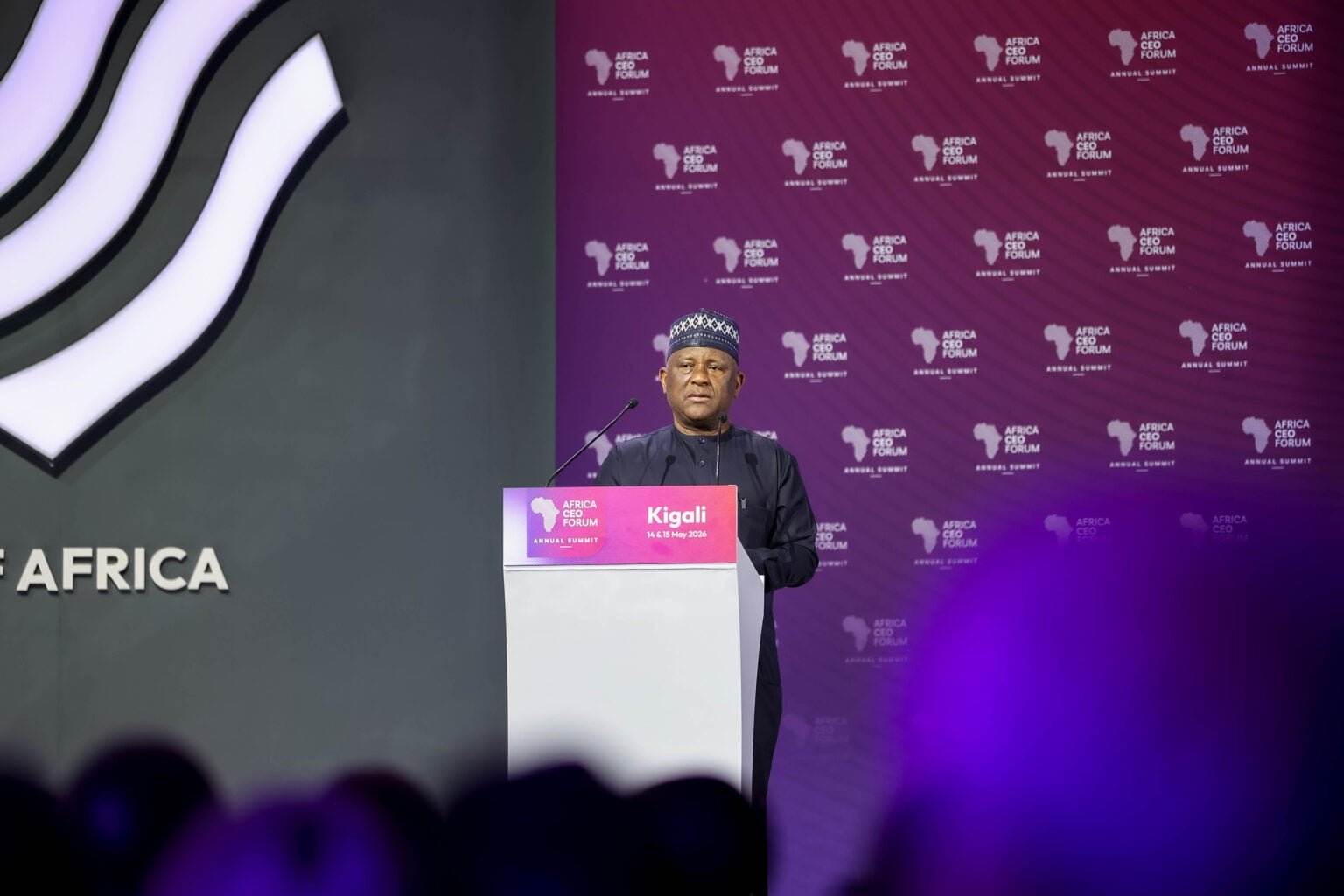
Speaking at the Africa CEO Forum Annual Summit in Kigali on Thursday, BUA Group founder Abdul Samad Rabiu disclosed that South Africa denied him entry in February 2025 because his visa had expired by one day, while passengers on three European flights that arrived simultaneously were admitted without any visa requirement. Rabiu, worth approximately USD 14 billion, took personal responsibility for the lapsed visa while making a structural argument: that the continent's visa architecture discriminates against Africans in Africa, and that the same asymmetry manifesting at immigration desks also manifests in the AfCFTA's uneven implementation, where some countries embrace the spirit of the agreement while others maintain administrative barriers and legacy import structures that prevent regional trade from functioning at the scale the framework promises. BUA Group's regional expansion, Rabiu said, has been actively frustrated by practical barriers in specific markets despite the AfCFTA framework's existence. His conclusion is direct: AfCFTA is not working as it should, and potential does not deliver outcomes, execution does. This article reports the disclosure, situates it within the broader free movement and regional integration debate across East, Central, and Southern Africa, and identifies the specific policy failures the Kigali forum is being asked to confront. The visa story is not about one billionaire's inconvenience. It is about a continent that has signed the most ambitious trade integration agreement in the world and still asks its own citizens for paperwork it waves for visitors from elsewhere.
KIGALI — Abdul Samad Rabiu, founder of BUA Group and one of Africa's wealthiest individuals, was denied entry into South Africa in February 2025 because his visa had expired by one day. Three international flights from Europe arrived at Cape Town airport at the same time. Every passenger on all three flights was admitted without presenting a visa.
Rabiu disclosed the experience on Thursday at the Africa CEO Forum Annual Summit in Kigali, during a session on Africa at scale: capital, policy, and the architecture of growth. The Nigerian billionaire, whose net worth is estimated at approximately USD 14 billion, was specific about the details.
"I left at night from Lagos to Cape Town. We arrived at six in the morning. As we arrived, we went to immigration. I tendered my passport, and the immigration officer looked at it and was like, where is your visa, and I said, my visa is there. Unknown to me, my visa had expired the day before."
Rabiu and his crew spent four hours at Cape Town airport attempting to resolve the situation before he was turned back to Lagos. He was there for the Mining Indaba, one of the continent's most significant mining investment forums.
"I do not have a problem with the fact that I was there without the visa and I was returned," he said. "I took full responsibility of that."
What he does have a problem with is the architecture that produced the asymmetry. "I had an issue with being an African in Africa, being turned away because I do not have a visa and foreigners from other continents were coming in and were allowed to enter without a visa. This must change."
The policy architecture behind the personal story
South Africa offers visa-free access to citizens of most European Union member states, the United Kingdom, and the United States, among many other non-African nations, under bilateral agreements whose commercial and diplomatic logic has historically prioritised tourism revenue and investor relations with Western economies. Citizens of most African countries, including Nigeria, require visas whose application process, documentation requirements, and processing timelines impose a transaction cost on intra-African movement that no equivalent cost is imposed on European visitors.
That asymmetry is not unique to South Africa. According to the African Development Bank's Africa Visa Openness Index, which tracks how freely Africans can move across African borders, the average African citizen requires a visa to enter approximately half of the continent's other countries, while citizens of European Union member states can access a substantially larger share of African countries without advance visa requirements. The index has shown improvement in recent years, driven partly by East African Community free movement arrangements and the Economic Community of West African States protocol, but the structural asymmetry that Rabiu described at Cape Town airport remains a feature of the continental policy landscape rather than an exception to it.
For East Africa specifically, the picture is mixed. The East African Community's Common Market Protocol establishes free movement of persons among the six member states of Tanzania, Kenya, Uganda, Rwanda, Burundi, and South Sudan, creating the region's most advanced free movement architecture. According to East African Community Secretariat implementation data, the protocol's practical implementation remains uneven, with border crossing procedures, documentation requirements, and processing times varying significantly across crossing points despite the formal free movement commitment. Rwanda has been among the continent's most deliberate free movement advocates, introducing visa-on-arrival access for all African citizens in 2018 according to Rwanda Development Board policy records, a unilateral decision that made Kigali the venue for a forum at which Rabiu's disclosure lands with particular contextual irony.
AfCFTA: the framework and the gap
Rabiu's immigration story was the opening of a broader argument about the African Continental Free Trade Area whose implementation he described from the perspective of an investor actively trying to use it. BUA Group, whose operations span cement, sugar, flour, oil, and port infrastructure across Nigeria and multiple African markets, has been expanding its regional footprint under the AfCFTA framework.
"At BUA Group, as we expanded our regional investment, we actively sought to supply several African markets under the AfCFTA framework," Rabiu said. "While some countries embraced the spirit of the agreement, others were less supportive in practice, with administrative barriers, legacy import structures limiting our ability to participate fully in regional trade."
His conclusion was unambiguous. "So really, AfCFTA is not working as it should."
The AfCFTA, which entered into force in January 2021 and covers a market of over 1.4 billion people across 55 countries according to AfCFTA Secretariat documentation, is the world's largest free trade area by number of participating countries. Its architecture is ambitious: the elimination of tariffs on 90% of goods traded between member states, the progressive liberalisation of services trade, and the creation of continental investment and intellectual property frameworks. Its implementation is, in Rabiu's characterisation, uneven in ways that actively frustrate the regional business expansion whose scale the framework is supposed to enable.
According to the African Export-Import Bank's African Trade Report 2024, intra-African trade as a share of total African trade remains below 20%, substantially lower than intra-regional trade shares in Europe, Asia, and North America, reflecting the combination of infrastructure gaps, non-tariff barriers, rules of origin complexity, and the administrative barriers that Rabiu specifically cited as constraining BUA Group's market penetration in specific AfCFTA member states. The framework's existence creates the legal architecture for regional trade. It does not automatically dismantle the legacy import structures, administrative procedures, and regulatory environments whose existence predates the AfCFTA and whose reform requires the political will and institutional capacity that the agreement's signatories have demonstrated unevenly.
The regional integration picture across East, Central, and Southern Africa
The gap between AfCFTA's promise and its implementation is visible across the Uchumi360 coverage geography in ways that make Rabiu's Kigali disclosure analytically precise rather than anecdotally specific. Tanzania's SGR extension toward Mwanza and Lake Victoria connectivity, whose USD 2.33 billion financing Standard Chartered arranged in April 2026 according to the bank's official announcement, is designed partly to reduce Central Corridor logistics costs for regional trade flows connecting the Indian Ocean to Rwanda, Burundi, Uganda, and the eastern DRC. The logistics infrastructure improvement creates the physical conditions for regional trade expansion that the AfCFTA framework is supposed to enable commercially. Whether that commercial enablement materialises depends on the customs procedure harmonisation, rules of origin implementation, and non-tariff barrier reduction that the EAC and AfCFTA frameworks promise and that Rabiu's experience suggests remain inconsistently delivered.
Kenya and Tanzania's bilateral summit in May 2026, documented in Uchumi360's coverage of the Ruto-Samia meeting in Dar es Salaam, produced commitments to eliminate non-tariff barriers by 31 May 2026 and to deepen bilateral trade toward a KSh 130 billion annual target. The specific deadline and specific target are analytically significant because they acknowledge the gap between the regional integration framework's formal commitments and its operational reality, and attempt to address it through bilateral urgency rather than relying on the multilateral AfCFTA implementation timeline whose pace has not matched its ambition.
Zambia's position within the Southern African regional trade architecture illustrates the same tension from a different angle. According to Zambia Statistics Agency trade data, Zambia's intra-African trade flows are concentrated in its immediate neighbours, particularly South Africa, Zimbabwe, and the DRC, with the AfCFTA's broader market access commitments not yet translating into the diversified regional trade relationships that a market of 1.4 billion people should theoretically support. Zambia's copper processing and manufacturing ambitions, whose realisation depends on regional market access for value-added copper products rather than raw ore export, require the AfCFTA implementation quality that Rabiu described as unevenly delivered.
Mozambique's regional trade position, whose improvement is central to the country's post-conflict economic recovery in Cabo Delgado, depends on the Southern African Development Community's trade facilitation and the AfCFTA's tariff reduction commitments translating into accessible market entry conditions for Mozambican agricultural and processed goods in regional markets. According to Instituto Nacional de Estatística de Moçambique trade data, Mozambique's export basket remains concentrated in extractive commodities, with the value-added agricultural and manufactured goods whose export would deepen productive complexity and create formal employment still facing the administrative barriers and legacy import structures that Rabiu described as active obstacles rather than resolved historical conditions.
What Kigali is being asked to confront
Rabiu's disclosure at the Africa CEO Forum carries particular weight because he is not an abstract advocate for continental integration but a practitioner whose organisation has encountered the implementation gap at both the immigration desk and the customs clearance window. His argument is not that the AfCFTA should not exist or that South Africa's visa policy is indefensible on its own terms. His argument is that the gap between the continent's formal integration commitments and its operational reality is large enough to frustrate the regional business expansion that the USD 14 billion African industrialist is actively trying to execute with African capital in African markets.
"Integration is what turns potential into scale," Rabiu said. "At the centre of it is the AfCFTA, a market of over 1.4 billion people across 55 countries. Its promise is clear: intra-Africa trade, regional value chains, and industrial scale that no single economy can achieve alone. Its potential does not deliver outcomes, execution does."
The Kigali forum is well-positioned to receive that argument. Rwanda's own free movement policy, whose visa-on-arrival for all African citizens makes it the continent's most accessible major economy for intra-African business travel, is a direct policy choice whose replication across the continent would change the immigration desk experience that Rabiu described at Cape Town airport. The EAC's Common Market Protocol's free movement architecture, imperfect in implementation but ambitious in design, is the most developed regional free movement framework on the continent and the reference point against which the AfCFTA's broader integration commitments should be measured.
The question Kigali's remaining sessions must answer is whether Rabiu's experience at Cape Town airport in February 2025 represents a legacy condition whose elimination the AfCFTA's implementation is progressively delivering, or a structural feature of the continental policy architecture whose change requires the political urgency that the billionaire standing at the immigration desk for four hours while Europeans walked past could not himself compel.
"This must change," Rabiu said. The forum is where that change gets designed. Whether it gets implemented is a different question, and the answer will be found not in Kigali but in the immigration halls, customs procedures, and trade administration offices of the fifty-five countries whose political commitment to African integration determines whether the AfCFTA delivers the scale it promises.
FAQ
What happened to Abdul Samad Rabiu at Cape Town airport? According to Rabiu's own account at the Africa CEO Forum Annual Summit in Kigali on Thursday, he arrived at Cape Town airport in February 2025 for the Mining Indaba after an overnight flight from Lagos and discovered that his visa had expired the day before. He and his team spent four hours at the airport attempting to resolve the situation before being turned back to Lagos. During those four hours, three international flights from Europe arrived and all passengers on those flights entered South Africa without presenting any visa.
Does Rabiu blame South Africa for turning him away? No. Rabiu explicitly took personal responsibility for the lapsed visa and said he does not dispute the decision on his own entry. His objection is to the asymmetry of the policy architecture: that South Africa requires visas of African citizens while offering visa-free access to European visitors, creating a situation in which an African billionaire is denied entry while European tourists walk through the same immigration hall without documentation.
Is free movement of Africans within Africa improving? According to the African Development Bank's Africa Visa Openness Index, improvement has been gradual, driven partly by the EAC Common Market Protocol's free movement architecture and the ECOWAS Protocol on Free Movement. Rwanda unilaterally introduced visa-on-arrival access for all African citizens in 2018 according to Rwanda Development Board policy records, making it the continent's most accessible major economy for intra-African business travel. But the structural asymmetry that Rabiu described, where African citizens face visa requirements that European visitors do not, remains a feature of the continental policy landscape.
What is Rabiu's specific criticism of the AfCFTA? BUA Group has been attempting to expand its regional operations across multiple African markets under the AfCFTA framework. Rabiu said that while some countries embraced the spirit of the agreement, others maintained administrative barriers and legacy import structures that prevented full participation in regional trade. He concluded that AfCFTA is not working as it should, citing personal experience of being actively frustrated in a specific market the group attempted to penetrate. His argument is that the framework's potential does not deliver outcomes without execution, and execution has been uneven across the 55 member states.
What would change the continental integration picture? According to Rabiu's Kigali presentation, integration is what turns potential into scale, and the AfCFTA's promise of intra-African trade, regional value chains, and industrial scale that no single economy can achieve alone requires consistent execution rather than selective implementation. Specific changes required include the elimination of visa requirements for African citizens travelling within Africa, the dismantling of administrative barriers and legacy import structures that maintain trade friction despite AfCFTA commitments, and the customs procedure harmonisation and rules of origin simplification that make regional trade operationally accessible for businesses attempting to supply multiple African markets from a single production base.
 Uchumi360
Business Intelligence
Uchumi360
Business Intelligence
Abdul Samad Rabiu, founder BUA Group, remarks at Africa CEO Forum Annual Summit, Kigali, session on Africa at scale: capital, policy, and the architecture of growth, 15 May 2026.
AfCFTA Secretariat, agreement documentation and member state coverage. Market of 1.4 billion people across 55 countries figure. Available at au-afcfta.org.
African Development Bank, Africa Visa Openness Index. Average African citizen visa requirement data and European comparator cited from AfDB annual Visa Openness Index. Available at afdb.org.
African Export-Import Bank, African Trade Report 2024. Available at afreximbank.com.
East African Community Secretariat, Common Market Protocol implementation data. Available at eac.int.
Rwanda Development Board, visa-on-arrival for all African citizens policy documentation, 2018. Available at rdb.rw.
Standard Chartered Bank, SGR financing announcement, 28 April 2026. Available at sc.com.
Zambia Statistics Agency, trade data and intra-African trade concentration. Available at zamstats.gov.zm.
Instituto Nacional de Estatística de Moçambique, export basket and trade composition data. Available at ine.gov.mz.
Kenya-Tanzania bilateral summit documentation, May 2026. Non-tariff barrier elimination deadline and KSh 130 billion trade target cited from Uchumi360's prior coverage of the Ruto-Samia Dar es Salaam summit.
South Africa Department of Home Affairs, visa-free access policy for EU, UK, and US citizens. Available at dha.gov.za.
BUA Group, corporate operations and regional expansion documentation. Available at buagroup.com.
Uchumi360 covers business, investment, and economic policy across East, Central, and Southern Africa.
For the serious reader
You read to the end. That places you in a small group.
Uchumi360 is built for readers who demand precision over speed, structure over sentiment, and analysis that holds uncomfortable conclusions rather than softening them. If this work sharpens how you think about Africa's economy, help us keep building the infrastructure behind it.
Institutional Partners
Commission intelligence. Shape the conversation.
Uchumi360 works with development finance institutions, investment firms, sovereign bodies, and strategic organisations across the coverage region. Institutional partnership unlocks:
- Commissioned sector and country intelligence reports
- Branded research series under your institution's authority
- Exclusive data briefings for internal strategy teams
- Speaking and editorial presence at Uchumi360 events
- Co-published investment outlooks for your markets
Support Our Work
Independent analysis has a cost. Help us bear it.
Uchumi360 does not carry advertising. It does not take editorial direction from sponsors. Every article is produced without commercial compromise. Your contribution funds the reporting, research, and editorial infrastructure that keeps this analysis free from influence.
Secure checkout: One-time and monthly support are processed securely.
Stay Connected
Keep up with every new insight.
Follow our latest analysis, policy coverage, and market intelligence as soon as it is published. If you need something specific, reach out directly and we will point you to the right research.
