
Africa’s Largest Economies by 2030: IMF Projects Egypt, South Africa and Nigeria to Lead as Ethiopia and Tanzania Expand
Ready
Africa's economic hierarchy is expected to change by 2030, with Egypt projected to become the continent's largest economy, South Africa and Nigeria competing for second place, and Ethiopia emerging as an increasingly consequential economic power. Tanzania, Kenya, Uganda and the Democratic Republic of Congo are also projected to expand, although Ethiopia's recent GDP rebasing could alter the IMF's rankings.
Africa's largest economies are projected to undergo substantial changes by 2030, with Egypt expected to lead the continent at approximately $612.8 billion in nominal gross domestic product (GDP), followed by South Africa at $577.3 billion and Nigeria at $542.2 billion, according to the International Monetary Fund's October 2026 World Economic Outlook database. The projections indicate that Africa's economic output will become increasingly distributed among major economies in North, West, East, Central and Southern Africa, with several countries expanding their measured output even as inflation, public debt, exchange rate movements and infrastructure constraints continue to affect their performance.
The IMF expects Algeria to remain Africa's fourth largest economy at approximately $338.2 billion by 2030, followed by Morocco at $260.9 billion and Ethiopia at $215 billion. Kenya is projected to reach $191 billion, while Angola and the Democratic Republic of Congo are expected to approach $167.3 billion and $158.4 billion respectively. Ghana and Côte d'Ivoire are also projected to exceed $150 billion, while Tanzania is forecast to reach approximately $138.6 billion, consolidating its position among the continent's larger economies.
The projections cover the value of goods and services produced at current market prices, converted into US dollars using estimated exchange rates. They are therefore sensitive to movements in national currencies, domestic inflation, global commodity prices and revisions to national economic accounts. They should not be interpreted as forecasts of real economic growth or direct measures of improvements in household living standards.
One major development has already complicated the rankings. On November 4, 2026, Ethiopia announced a 59.2% upward revision to the measured size of its economy for the 2024/25 fiscal year, following an extensive GDP rebasing exercise. Its government subsequently placed GDP at $210.7 billion for 2025/26, considerably above the corresponding figure in the IMF's October dataset. The revision has not yet been incorporated into the IMF's 2030 projections, raising the possibility that Ethiopia's future position could be substantially different from the currently published ranking.
Africa's 20 largest economies by 2030
Projected nominal GDP, US$ billions | IMF World Economic Outlook, October 2026
Africa's 15 largest projected economies in 2030, nominal GDP in current US dollars, rounded to one decimal place. 
| Rank | Country | GDP in 2030 |
| 1 | Egypt | $612.8B |
| 2 | South Africa | $577.3B |
| 3 | Nigeria | $542.2B |
| 4 | Algeria | $338.2B |
| 5 | Morocco | $260.9B |
| 6 | Ethiopia | $215.0B |
| 7 | Kenya | $191.0B |
| 8 | Angola | $167.3B |
| 9 | DR Congo | $158.4B |
| 10 | Ghana | $154.0B |
| 11 | Côte d'Ivoire | $153.6B |
| 12 | Tanzania | $138.6B |
| 13 | Uganda | $106.5B |
| 14 | Cameroon | $86.3B |
| 15 | Zimbabwe | $73.4B |
| 16 | Guinea | $69.0B |
| 17 | Tunisia | $66.7B |
| 18 | Zambia | $59.1B |
| 19 | Libya | $48.2B |
| 20 | Mali | $46.5B |
Source: IMF October 2026 World Economic Outlook, nominal GDP projections for 2030, rounded to one decimal place. Ethiopia's $215 billion figure reflects the IMF dataset before the country's November 2026 GDP rebasing. Rankings exclude countries without a comparable 2030 projection in the available series.
Egypt, South Africa and Nigeria will dominate Africa's economic output
The IMF's projections place Egypt, South Africa and Nigeria in a separate category from most other African economies. Together, their combined nominal GDP is expected to reach approximately $1.73 trillion by 2030, demonstrating the concentration of economic activity within a relatively small number of countries. Egypt would lead South Africa by approximately $35.5 billion, while South Africa would remain about $35.1 billion ahead of Nigeria.
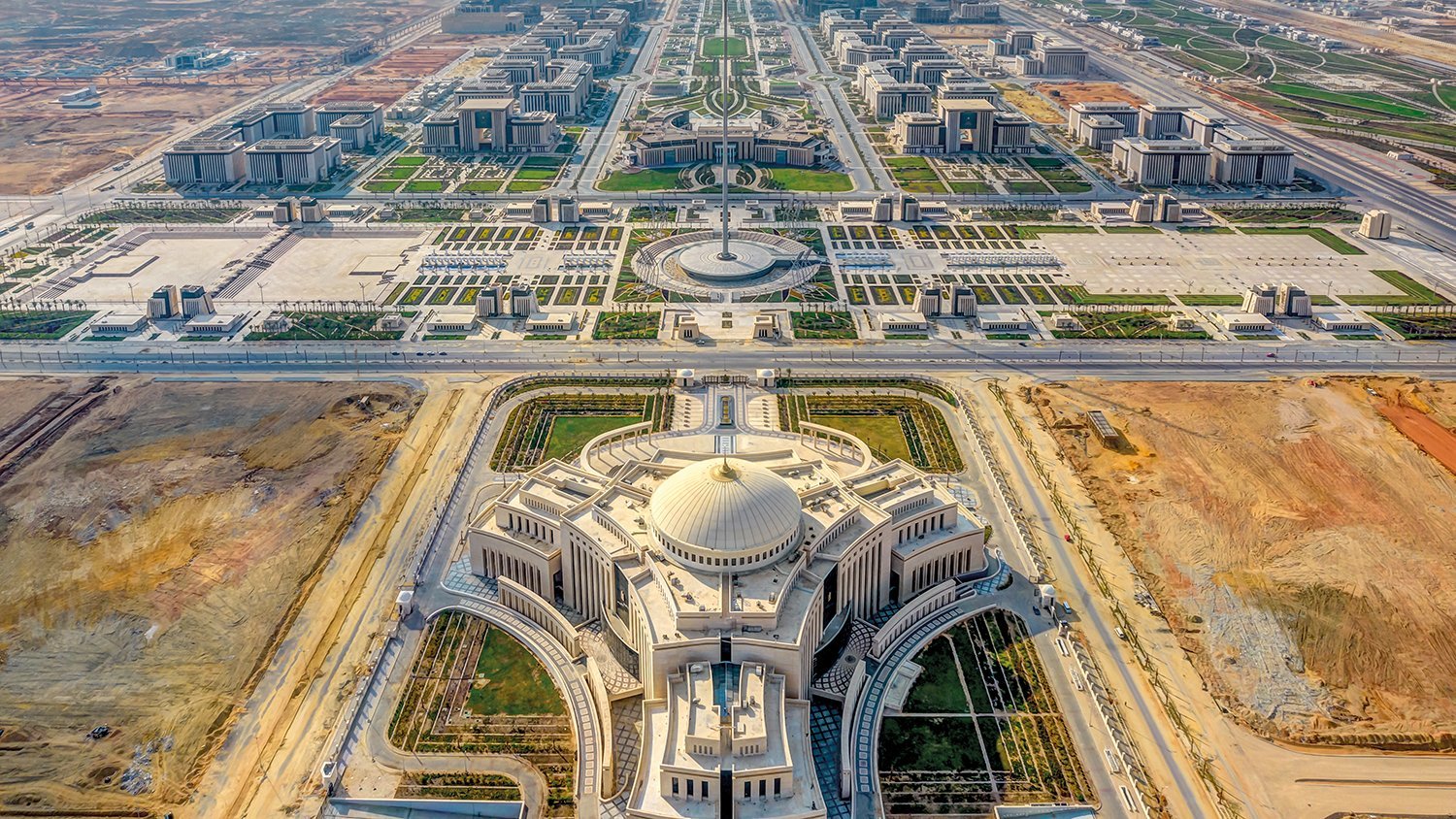
Egypt's projected rise to $612.8 billion reflects expectations of continued expansion in domestic production, services, manufacturing and investment. Its economic position is supported by a large domestic market, industrial capacity, the Suez Canal and established commercial connections with Europe, the Middle East and other African countries. However, Egypt's recent experience also demonstrates how exchange rate movements can significantly change the dollar valuation of an economy. Its future ranking will depend partly on currency stability and the country's ability to sustain investment while managing external financing requirements.
South Africa is projected to reach $577.3 billion despite a prolonged period of relatively weak economic growth. Its industrial base, sophisticated financial markets, mining industry and commercial infrastructure continue to support its position among Africa's largest economies. Johannesburg remains an important financial centre, while the country's manufacturing and mining industries maintain commercial relationships across Southern Africa and international markets. Electricity supply, freight railway performance, port efficiency and investment levels will influence whether South Africa meets the projected GDP figure.
Nigeria, Africa's most populous country, is forecast to reach $542.2 billion by 2030. The projection implies a substantial increase in its dollar-denominated economy from recent levels, although the pace of that expansion remains dependent on the naira, inflation, oil production, domestic investment and growth in nonoil activities. Nigeria's banking, telecommunications, agriculture, manufacturing and services sectors provide a substantial domestic production base, but persistent electricity shortages, transport costs and currency volatility continue to affect business operations.
The closeness of the projected figures for the three countries means their rankings remain susceptible to revision. A relatively modest change in exchange rate assumptions could alter the order, even without a corresponding change in real economic production. The IMF's forecasts are conditional estimates based on currently available information, rather than predetermined outcomes.
Ethiopia's GDP rebasing could redraw the 2030 rankings
Ethiopia presents the clearest example of how revisions to national accounts can change Africa's economic comparisons. The IMF's October 2026 database projects Ethiopia's nominal GDP at approximately $215 billion by 2030, placing it sixth on the continent, behind Morocco and ahead of Kenya. However, that projection was published before Ethiopia announced a comprehensive revision of its national accounts in November 2026.
The Ethiopian Ministry of National Strategy changed the base year used for calculating GDP from 2015/16 to 2024/25 and incorporated additional information from agricultural and business censuses, household surveys and administrative records. The exercise raised the measured size of the 2024/25 economy from 15.09 trillion birr to 24.03 trillion birr, representing an increase of approximately 59.2%. The government subsequently estimated GDP at $210.7 billion for 2025/26.
This development creates an important statistical discrepancy. Ethiopia's newly reported GDP for 2025/26 is already close to the IMF's previously published nominal GDP projection for 2030. However, the figures cannot be used to conclude that Ethiopia will exceed a particular GDP threshold by 2030, because the revised national accounts must first be incorporated into an updated forecasting framework.
Ethiopia, government estimate 2025/26
$210.7B
After November 2026 rebasing
Ethiopia, IMF projection 2030
$215.0B
Before rebasing was incorporated
These figures are based on different statistical releases and should not be interpreted as showing Ethiopia will experience almost no economic expansion between 2026 and 2030.
According to the Ethiopian Ministry of National Strategy, the rebasing incorporated previously under-represented economic activities, including informal mining, small manufacturing, private healthcare, hospitality, transport and digital financial services. The ministry reported real GDP growth of 7.7% for 2025/26 under the revised framework, explicitly distinguishing this production growth from the larger statistical adjustment.
Ethiopia's revised GDP also affects conventional measures of economic performance, including government revenue and public debt as shares of national output. A larger GDP denominator reduces these ratios mathematically, although it does not automatically increase government revenue, eliminate debt obligations or improve foreign exchange liquidity.
For investors, Ethiopia's future economic position will depend on the performance of its manufacturing sector, agricultural productivity, infrastructure investment, exchange rate management and ability to expand export earnings. Its large population creates considerable domestic market potential, but the extent to which this translates into higher incomes will depend on sustained productivity growth and employment creation.
Until the IMF incorporates the new Ethiopian figures into its international database, the currently published 2030 projection should be treated as a forecast based on superseded national accounts, rather than a reliable measure of the country's economic size under the revised framework.
East Africa's economic expansion will extend beyond Ethiopia
East Africa is expected to account for an increasing share of the continent's economic activity, with Kenya, Tanzania and Uganda all projected to record substantial increases in nominal GDP by 2030.
The African Development Bank's East Africa Economic Outlook 2026 identifies the region as one of Africa's faster growing economic areas, although the bank expects growth to moderate to 5.9% in 2026 amid higher energy costs, geopolitical uncertainty and pressure on international supply chains.
East African economies by 2030
Projected nominal GDP in US$ billions, IMF October 2026 dataset. Ethiopia uses the series predating its rebasing.
 Kenya is projected to maintain its position as the region's second largest economy under the existing IMF dataset, reaching approximately $191 billion by 2030. Nairobi's position as a commercial, financial and services centre gives Kenya a substantial advantage in regional corporate activity, technology investment and international business connections. However, fiscal consolidation, public debt servicing costs and the performance of domestic investment will influence the country's capacity to sustain growth.
Tanzania is projected to reach approximately $138.6 billion by 2030, compared with an IMF estimate of around $96 billion for 2026. The increase would represent a substantial expansion in nominal dollar output over four years, although it would reflect a combination of real economic growth, price developments and exchange rate assumptions.
The country's investment in electricity generation, ports, railways, roads and industrial development could support an increase in productive capacity, particularly if infrastructure spending translates into lower logistics costs and greater domestic manufacturing output. Tanzania's position as a gateway to landlocked markets, including Zambia, the Democratic Republic of Congo, Rwanda, Burundi, Uganda and Malawi, also provides opportunities for transport, logistics, warehousing and industrial services.
The $52.5 billion projected difference between Kenya and Tanzania in 2030 suggests that Tanzania is expected to narrow its nominal GDP gap with Kenya only gradually. Stronger real growth in Tanzania does not necessarily translate into faster expansion in US dollar terms if the two currencies experience different rates of depreciation.
Uganda is projected to reach $106.5 billion, becoming another East African economy expected to exceed the $100 billion threshold by 2030. The country's energy investments, including oil development projects associated with the Lake Albert basin and the East African Crude Oil Pipeline, could contribute to future output and export revenue, although production schedules, oil prices and the pace of investment will determine their actual contribution.
Rwanda is expected to reach approximately $24.5 billion and Burundi nearly $10 billion. Their smaller nominal economies reflect differences in population, production capacity, export composition and existing infrastructure, but both remain integrated into wider regional trade networks.
The combined projections reinforce East Africa's economic weight, particularly when Ethiopia's revised GDP and the substantial markets of Kenya, Tanzania and Uganda are considered. Nevertheless, the region's infrastructure investments will need to support higher domestic production and trade rather than merely expanding the capacity to import goods.
The Democratic Republic of Congo could become Central Africa's largest economic force
The Democratic Republic of Congo is projected to reach approximately $158.4 billion by 2030, placing it ninth among the continent's largest economies under the IMF's existing forecasts.
The country's economic expansion is closely connected to its substantial mineral resources, particularly copper and cobalt, which are central inputs in electricity infrastructure, industrial machinery, batteries and other technologies. The development of mining operations in southern Congo has increased the country's importance in international mineral supply chains.
However, the relationship between mineral exports and domestic economic development remains uneven. Large investments in mining can generate substantial export receipts while creating relatively limited employment compared with agriculture, manufacturing and services. Infrastructure constraints, electricity availability, transport costs, governance and security conditions influence how much additional value remains within the Congolese economy.
Cross border infrastructure linking mining production areas to ports in Tanzania, Angola and elsewhere could influence the country's economic development before 2030. The Dar es Salaam corridor, TAZARA railway and Lobito corridor are relevant to the movement of minerals and industrial inputs between Central Africa and international markets.
The IMF also projects Cameroon at approximately $86.3 billion by 2030. Together, the DRC and Cameroon illustrate the range of Central Africa's economic opportunities, from minerals and energy to agriculture, manufacturing and regional transport. Their relative performance will depend on investment conditions, political stability, infrastructure reliability and the development of domestic processing industries.
West Africa's economic outlook extends beyond Nigeria
Nigeria will remain West Africa's largest economy under the IMF's 2030 projections, but Ghana and Côte d'Ivoire are expected to strengthen their positions among the continent's major markets.
Ghana's nominal GDP is projected to reach approximately $154 billion by 2030, marginally ahead of Côte d'Ivoire at $153.6 billion. The small difference means their relative rankings are particularly sensitive to exchange rates and revisions to forecasts.
Ghana's economy is supported by gold, cocoa, oil, trade and services. Its capacity to maintain growth will depend partly on macroeconomic stability, debt management and investment in productive industries. Côte d'Ivoire, meanwhile, has developed considerable economic activity around agriculture, food processing, manufacturing, logistics and services, with Abidjan serving as a major commercial centre for French speaking West Africa.
Both countries have opportunities to increase the domestic processing of agricultural commodities and expand regional manufacturing. Cocoa provides an example of the constraints facing commodity producers: high export volumes do not necessarily generate proportionate value when much of the processing and consumer product manufacturing occurs outside the producing country.
The region's economic future will also depend on the performance of smaller economies, including Senegal, Guinea, Mali, Benin and Burkina Faso. Guinea's projected GDP of approximately $69 billion by 2030 reflects expectations of substantial economic activity in a mineral producing country, while Mali is projected to reach around $46.5 billion.
Security pressures across the Sahel, changing regional trade arrangements, public financing constraints and infrastructure limitations could influence actual outcomes. Consequently, larger projected GDP figures should not be interpreted as evidence that the underlying development challenges have been resolved.
North Africa retains a substantial share of the continent's output
North Africa is projected to remain a major centre of African economic activity, led by Egypt, Algeria and Morocco.
The IMF forecasts Algeria's GDP at approximately $338.2 billion by 2030, placing it fourth on the continent. Hydrocarbons remain central to the country's economy and external revenue, while the expansion of manufacturing, agriculture and other industries will influence its ability to diversify production.
Morocco is projected to reach $260.9 billion, consolidating its position among Africa's largest economies. Its manufacturing sector, including automotive production, aerospace activities, agricultural processing and export oriented industries, contributes to commercial integration with European markets. Investment in ports, logistics, renewable energy and industrial facilities could also support further growth.
Tunisia is projected at $66.7 billion, while Libya is forecast at approximately $48.2 billion. Their prospects remain sensitive to economic policy, investment conditions and, in Libya's case, oil production and political stability.
North Africa's geographic position provides opportunities for manufacturing and trade with Europe, the Middle East and the rest of Africa. The extent to which these opportunities generate additional output will depend on market access, industrial competitiveness, energy costs and logistics capacity.
Public debt, electricity and employment will shape the 2030 outcome
The IMF's projections suggest that many African economies will expand substantially before 2030, but nominal GDP growth alone will not determine whether the continent becomes more productive or prosperous.
The World Bank's October 2026 Africa Economic Update estimates that economic growth in Sub Saharan Africa will reach 4.3% in 2026, compared with 4.1% in 2025. It also reports that public debt has broadly stabilised around 57% of GDP, although elevated debt servicing costs continue to constrain public spending on infrastructure, education and healthcare.
Debt servicing affects the resources governments can allocate to productive investment. Countries facing substantial interest payments may struggle to expand electricity networks, maintain roads, improve public services or support industrial development, even when measured GDP continues growing.
Electricity supply remains another constraint. Manufacturing, mineral processing, refrigerated logistics, digital services and modern urban transport require dependable and competitively priced power. For countries pursuing industrialisation, additional installed generation capacity must be accompanied by adequate transmission, distribution and commercial arrangements that make electricity available to productive businesses.
Employment creation is equally relevant. Rapid population growth means that economic output must increase sufficiently to support rising labour force participation and higher productivity. A country can register strong aggregate GDP growth while experiencing only modest improvements in GDP per capita if population growth absorbs much of the increase in production.
The African Development Bank's November 2026 macroeconomic update projects continental growth averaging 4.6% in 2026 and 4.5% in 2027. These figures indicate continued expansion, but the development bank's projections also point to substantial differences in economic performance across African regions and countries.
The implications for 2030 are straightforward. Countries that expand production while improving electricity reliability, labour productivity, domestic savings and investment conditions will be better placed to convert economic growth into higher incomes. Economies heavily dependent on a limited number of commodities, or exposed to persistent currency depreciation and fiscal pressures, face greater uncertainty in their nominal dollar projections.
The African Continental Free Trade Area could influence growth beyond 2030
The African Continental Free Trade Area (AfCFTA) provides an institutional framework through which African economies could increase trade, expand industrial production and improve access to regional markets.
A World Bank assessment of AfCFTA estimates that deeper implementation of the agreement could increase African incomes substantially by 2035 and help lift as many as 50 million people out of extreme poverty. These estimates describe potential benefits under specified implementation scenarios rather than guaranteed gains or additions to the IMF's 2030 nominal GDP forecasts.
For countries such as Tanzania, Kenya, Uganda and the DRC, stronger regional trade could expand demand for manufactured goods, agricultural products, transport services and industrial inputs. West African economies could benefit from additional trade in processed agricultural commodities, while North and Southern African producers could expand manufacturing exports to markets across the continent.
However, trade agreements alone cannot eliminate the costs associated with unreliable electricity, congested ports, inefficient border procedures or poor transport connections. The benefits of AfCFTA will depend on how effectively participating countries remove practical barriers to commerce and improve the competitiveness of their businesses.
What Africa's 2030 GDP rankings will actually measure
The IMF's 2030 projections indicate a continent in which Egypt, South Africa and Nigeria remain the principal centres of nominal economic output, while Algeria, Morocco, Ethiopia, Kenya and several other economies account for an increasing proportion of production and commercial activity.
Ethiopia's November 2026 GDP rebasing demonstrates that the rankings are also affected by the quality and timing of national statistical measurement. Similar revisions elsewhere could alter the relative positions of countries without representing equivalent changes in actual production.
By 2030, Africa's economic development will therefore need to be evaluated using more than nominal GDP rankings. Real GDP growth, output per person, manufacturing productivity, investment, exports, government revenue and employment will provide a clearer assessment of how economic expansion is affecting businesses and households.
The projections establish the scale of economic activity the IMF expects countries to reach under its current assumptions. Whether those figures are achieved, and how much of the expansion translates into higher living standards, will depend on policy decisions, investment performance and economic conditions over the remaining four years.
 Uchumi360
Business Intelligence
Uchumi360 covers business, investment, and economic policy across East, Central, and Southern Africa.
For the serious reader
You read to the end. That places you in a small group.
Uchumi360 is built for readers who demand precision over speed, structure over sentiment, and analysis that holds uncomfortable conclusions rather than softening them. If this work sharpens how you think about Africa's economy, help us keep building the infrastructure behind it.
Institutional Partners
Commission intelligence. Shape the conversation.
Uchumi360 works with development finance institutions, investment firms, sovereign bodies, and strategic organisations across the coverage region. Institutional partnership unlocks:
- Commissioned sector and country intelligence reports
- Branded research series under your institution's authority
- Exclusive data briefings for internal strategy teams
- Speaking and editorial presence at Uchumi360 events
- Co-published investment outlooks for your markets
Support Our Work
Independent analysis has a cost. Help us bear it.
Uchumi360 does not carry advertising. It does not take editorial direction from sponsors. Every article is produced without commercial compromise. Your contribution funds the reporting, research, and editorial infrastructure that keeps this analysis free from influence.
Secure checkout: One-time and monthly support are processed securely. Add payment credentials to enable checkout here.
Stay Connected
Keep up with every new insight.
Follow our latest analysis, policy coverage, and market intelligence as soon as it is published. If you need something specific, reach out directly and we will point you to the right research.
