
Tanzania’s Informal Economy Generates TZS 88 Trillion and 36% of GDP
Ready
Tanzania’s informal sector generated TZS 88.1 trillion in value added in 2025, equivalent to 36.3 percent of GDP, while supporting nearly 24 million workers and 64 percent of households. The country's first nationwide informal sector survey estimates that informal activity generates more than one-third of GDP, showing that informality is one of the country’s largest economic systems rather than a marginal part of the economy.
Tanzania’s informal sector generated TZS 88.1 trillion in gross value added in 2025, equivalent to 36.3 percent of national GDP, providing one of the clearest official measurements yet of the scale at which economic activity takes place outside conventional formal business structures and showing that informality is not a peripheral feature of the economy but one of its largest operating systems.
The figure comes from the Tanzania Informal Sector Survey 2025, the first nationally representative survey of its kind covering both Mainland Tanzania and Zanzibar through a collaborative effort between the National Bureau of Statistics and the Office of the Chief Government Statistician. The survey was designed to measure informal sector employment, production, income, business structure, access to finance and the sector’s contribution to GDP, filling a long standing data gap around economic activity that is often poorly captured because enterprises operate with limited records, low levels of organisation and little or no formal registration.
According to the report, informal sector activities generated total gross output worth TZS 151.27 trillion in 2025, of which TZS 63.17 trillion represented intermediate consumption, leaving TZS 88.10 trillion in gross value added. The report estimates that this value added was equivalent to 36.3 percent of Tanzania’s GDP, with agriculture, forestry and fishing contributing TZS 56.8 trillion, wholesale and retail trade contributing TZS 11.1 trillion, transport and storage TZS 6.1 trillion and manufacturing TZS 3.5 trillion.
Those numbers change the way informality should be understood in Tanzania. The informal economy is often discussed primarily through the language of registration, taxation and compliance, yet the survey shows that it already carries a substantial share of national production, employment and household income. The more useful economic question is therefore not simply how quickly informal businesses can be moved into the formal sector, but how productivity, access to capital, technology, market integration and business resilience can be improved within a sector that is already deeply embedded in how the economy works.
Nearly 24 Million Tanzanians Work in the Informal Sector
The labour market scale is even larger than the GDP share suggests. The survey estimates that 23.66 million people aged 15 and above were engaged in informal sector employment in 2025, including 13.15 million men and 10.51 million women. About 63.7 percent of informal sector employment was located in rural areas, 27.6 percent in other urban areas and 8.7 percent in Dar es Salaam.
The report also shows that 64.3 percent of Tanzanian households had at least one member engaged in informal sector activity, while 44.5 percent of the working age population participated directly in the sector.
These figures mean the informal economy is central to household welfare and labour absorption. For millions of Tanzanians, it is not a temporary bridge into formal employment but the primary place where income is earned, businesses are established and household consumption is financed.
The structure of employment reinforces that point. Own account workers represented 71.7 percent of informal sector employment, while wage earners accounted for only 8.9 percent and unpaid family workers another 8.1 percent. Employers represented 5.8 percent. Women were considerably more likely to work as unpaid family workers, at 12.1 percent compared with 4.9 percent among men.
This is an economy dominated by self employment and household enterprise rather than conventional wage labour, which helps explain why informal sector policy cannot be designed using the same assumptions applied to formal companies with payrolls, audited accounts and established access to finance.
Agriculture Dominates the Informal Economy
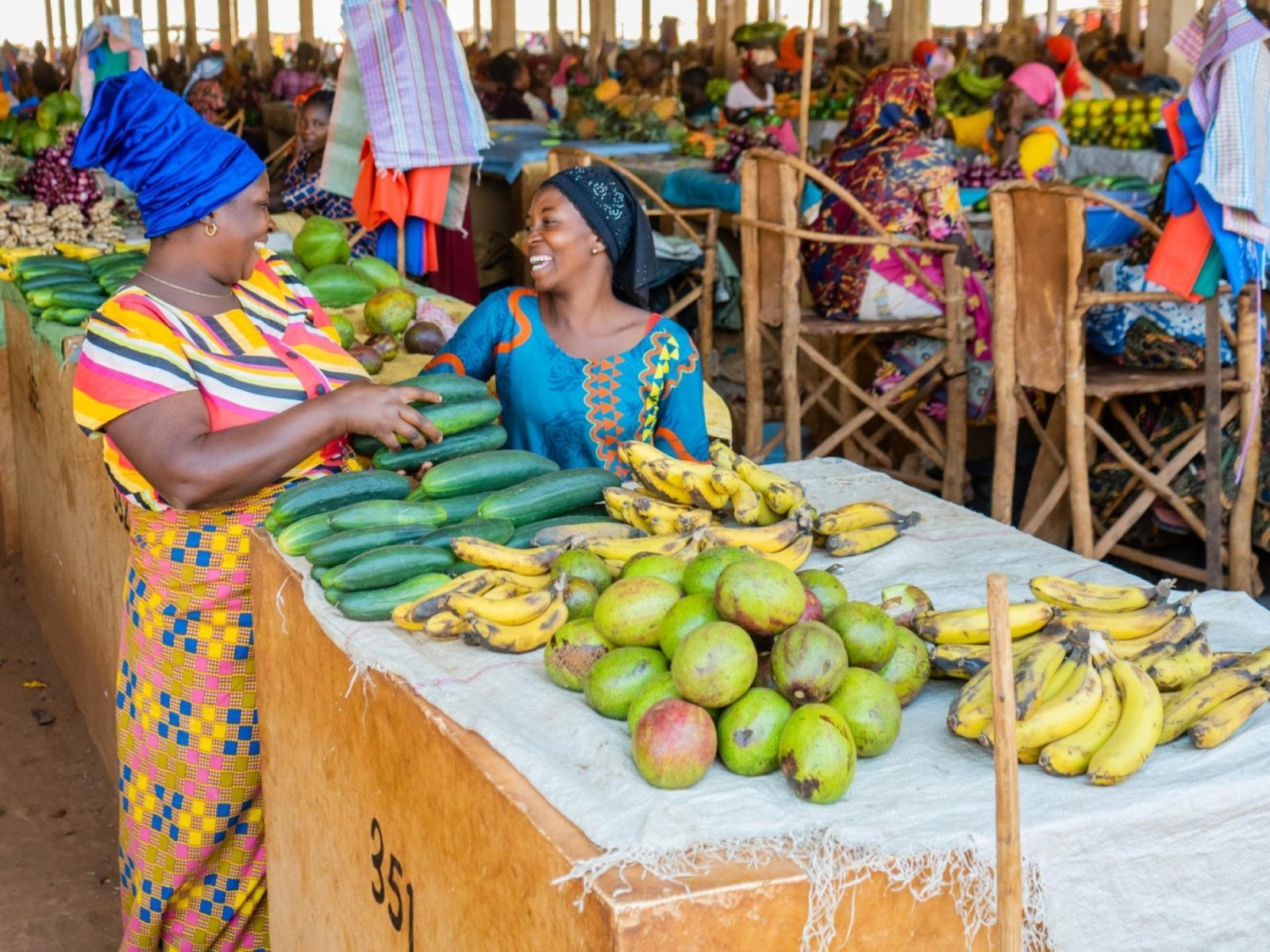
Agriculture, forestry and fishing sit at the centre of Tanzania’s informal economy. The sector accounted for 52.6 percent of informal operators and generated TZS 56.8 trillion in value added, far ahead of any other category. Wholesale and retail trade accounted for 18.7 percent of operators, accommodation and food services 7.9 percent and manufacturing 6.4 percent.
The dominance of agriculture means the performance of the informal economy is closely tied to productivity in farming, livestock, fishing and related activities. A large share of national informality is therefore not urban street vending or petty retail, even though those activities are highly visible. Much of it is embedded in rural production systems where households combine labour, land and small amounts of capital to produce for markets without operating through formal corporate structures.
The productivity differences between sectors are substantial. Average annual gross value added per person across the informal sector was TZS 3.7 million, but mining and quarrying generated TZS 11.7 million per person, transport and storage TZS 9.3 million and real estate TZS 9.1 million. Manufacturing generated TZS 2.6 million per person, while accommodation and food services produced only TZS 1.2 million.
This variation is important because it shows that informality itself does not determine productivity. Some informal activities generate significantly more value per worker than others, which means policy should differentiate between sectors rather than treating all informal enterprises as economically identical.
Most Informal Businesses Are One Person Enterprises
The ownership structure of the sector is overwhelmingly individual. The survey found that 94.2 percent of informal enterprises were owned and operated by individuals, while only 5.1 percent operated as ordinary partnerships between members of the same household and 0.6 percent as partnerships involving people from different households.
This explains part of the sector’s fragility. Individually owned businesses are easier to start and adapt, but they also tend to have thinner capital bases, weaker separation between household and business finances and less capacity to absorb shocks.
When the owner becomes sick, loses working capital or faces a market disruption, there may be no institutional structure capable of keeping the business operating. The same person often acts as owner, manager, salesperson, bookkeeper and worker, which limits the ability to specialise and scale.
The survey also found that personal ownership accounted for 69.7 percent of capital equipment, while 20.8 percent was rented and only 1.6 percent leased. Machinery and equipment were particularly likely to be personally owned.
This low use of leasing is economically significant because leasing can allow small businesses to use productive equipment without the large upfront capital required for ownership. A business that must purchase every machine, vehicle or tool outright will generally expand more slowly than one able to finance equipment through leases or other structured credit arrangements.
Informality Is Often a Labour Market Response, Not a Business Choice
The survey provides one of the clearest explanations of why people enter informal activity. The inability to find alternative employment was the largest single reason, cited by 33 percent of operators, while 24.3 percent said they entered the sector to generate additional income. Together, those two reasons accounted for about 57.4 percent of responses.
This means a large part of Tanzania’s entrepreneurship is driven by necessity rather than only by commercial opportunity.
That distinction matters because a person selling goods after failing to find paid employment and an entrepreneur deliberately launching a scalable business may both appear in the same informal sector statistics, but their financing needs, growth potential and policy requirements are very different.
Treating every informal operator as a future formal company can therefore produce weak policy. Some enterprises have the potential to scale, employ workers and enter larger value chains, while others function primarily as household income mechanisms in a labour market where formal wage opportunities remain limited.
The role of the informal sector as a labour absorber is especially important for young people. The survey identified 5.7 million informal sector operators aged between 15 and 35, with most concentrated in agriculture and trade and the majority holding only primary or secondary education.
For Tanzania’s demographic outlook, this suggests the informal economy will remain central unless formal employment expands much faster than it has historically.
The Sector Is Large but Capital Remains Thin
The economic scale of the informal sector contrasts sharply with the limited capital available to many operators.
Total current capital invested across informal businesses was estimated at TZS 16.27 trillion, equivalent to an average of just TZS 1.2 million per operator. Agriculture accounted for TZS 11.53 trillion of the total, while wholesale and retail trade accounted for TZS 1.62 trillion and transport and storage TZS 1.14 trillion.
The survey also estimated TZS 15.19 trillion in capital purchases and major repairs during the previous 12 months, with agriculture accounting for more than TZS 13.1 trillion.
These figures show that informal operators do invest, but the average capital available to individual businesses remains small relative to the scale of the sector.
The result is an economy capable of generating enormous aggregate value while many individual enterprises remain thinly capitalised.
That structure limits productivity because businesses with little capital have less ability to purchase machinery, carry inventory, invest in storage, adopt digital systems or expand into larger premises.
Productivity Is the Bigger Issue Than Formality
The most important economic question raised by the report is therefore not whether the informal sector is large. That is now established. The harder issue is why productivity per worker remains relatively low across much of the sector.
Average annual gross value added per person was TZS 3.7 million nationally. In agriculture, which dominates both employment and value added, the figure was TZS 4.2 million per person. Manufacturing generated TZS 2.6 million and wholesale and retail trade TZS 3 million.
These numbers help explain why employment in the informal sector can support livelihoods without necessarily producing rapid improvements in household incomes.
If millions of people remain concentrated in low capital activities with limited access to technology, formal finance and larger markets, the economy can add workers without producing a comparable increase in output per person.
Improving productivity would therefore have a larger long term effect than simply increasing registration.
A small manufacturer using better machinery, a farmer with irrigation and storage, a trader with working capital and inventory systems, or a transport operator with access to asset finance can generate more output without necessarily changing legal status immediately.
Formalisation Still Matters, but It Cannot Be the Only Objective
Formalisation has important benefits. Registration can improve access to finance, contracts, insurance, government procurement and larger commercial markets, while also expanding the tax base and improving business data.
The report’s structure, however, suggests that pushing formalisation without addressing the economics of small businesses could produce limited results. Many informal operators remain small because their revenues, capital and market access are small, not simply because they have chosen to avoid registration.
A business that cannot afford machinery or maintain reliable accounts may gain little from formal status unless access to finance, procurement and larger markets improves at the same time.
The survey itself was designed not merely to count informal businesses but to understand their production, employment, income, financing and operating conditions, reflecting the recognition that informality is an economic structure rather than only a regulatory category.
For policy, the more effective sequence may therefore be to increase productivity and commercial capacity while making registration cheaper and more useful.
The Informal Economy Is Also a Financial Market Opportunity
The size of the sector creates a significant opportunity for banks, microfinance institutions, insurers, mobile money providers, fintech companies and leasing firms.
More than 13.5 million informal businesses operate nationally, and the overwhelming majority are sole proprietorships.
That represents a large commercial market, but one that conventional banking models often struggle to serve because many operators lack audited financial statements, fixed collateral or consistent income documentation.
Alternative credit scoring, digital transaction histories, inventory finance, supplier credit and asset leasing could help bridge that gap.
The opportunity is especially large in agriculture and trade because these sectors account for most informal operators and a substantial share of output.
If financial institutions can design products around cash flow rather than only conventional collateral, the informal economy could become a much larger source of formal financial intermediation.
Rural Tanzania Carries Most of the Informal Employment Base
The geographical distribution also matters. Nearly two thirds of informal sector employment is rural, while Dar es Salaam accounts for less than 9 percent of the national total.
This means policies focused mainly on urban traders would miss most of the sector.
Rural informal businesses face different constraints, including weaker access to finance, transport, electricity, storage and larger markets. The infrastructure required to raise productivity in rural informality therefore includes roads, irrigation, energy, digital connectivity and market facilities as much as business registration systems.
Regional patterns also differ significantly. Dar es Salaam held the largest single share of Mainland informal employment at 8.9 percent, followed by Dodoma at 7 percent, while other regions had smaller but still substantial shares.
The informality challenge is therefore national, but the economic solutions will need to be sector and region specific.
TZS 88 Trillion Changes the Policy Conversation
The central finding of the Tanzania Informal Sector Survey 2025 is the scale itself.
A sector generating TZS 88.1 trillion in value added and accounting for 36.3 percent of GDP cannot be treated as a temporary layer waiting to disappear as the economy develops.
It is already one of Tanzania’s largest sources of production, employment and household income.
That does not mean informality should remain unchanged. Low productivity, weak record keeping, limited social protection, poor access to finance and thin capital remain major constraints.
But policy becomes more effective when it starts from the economy that exists rather than the economy policymakers would prefer to see.
Tanzania needs more formal firms, but it also needs more productive informal firms. It needs registration, but it also needs equipment finance, market access, technology, storage, digital payments and infrastructure. It needs a larger tax base, but it also needs businesses capable of generating enough surplus to pay taxes without undermining their survival.
The survey has now put a number on the informal economy. At TZS 88.1 trillion, the challenge is no longer proving that it matters. The challenge is raising the value created by the millions of people already working inside it.
 Uchumi360
Business Intelligence
- Ministry of Finance, National Bureau of Statistics, Ministry of Finance and Planning Zanzibar and Office of the Chief Government Statistician, Tanzania Informal Sector Survey 2025: Analytical Report, August 2026
Uchumi360 covers business, investment, and economic policy across East, Central, and Southern Africa.
For the serious reader
You read to the end. That places you in a small group.
Uchumi360 is built for readers who demand precision over speed, structure over sentiment, and analysis that holds uncomfortable conclusions rather than softening them. If this work sharpens how you think about Africa's economy, help us keep building the infrastructure behind it.
Institutional Partners
Commission intelligence. Shape the conversation.
Uchumi360 works with development finance institutions, investment firms, sovereign bodies, and strategic organisations across the coverage region. Institutional partnership unlocks:
- Commissioned sector and country intelligence reports
- Branded research series under your institution's authority
- Exclusive data briefings for internal strategy teams
- Speaking and editorial presence at Uchumi360 events
- Co-published investment outlooks for your markets
Support Our Work
Independent analysis has a cost. Help us bear it.
Uchumi360 does not carry advertising. It does not take editorial direction from sponsors. Every article is produced without commercial compromise. Your contribution funds the reporting, research, and editorial infrastructure that keeps this analysis free from influence.
Secure checkout: One-time and monthly support are processed securely. Add payment credentials to enable checkout here.
Stay Connected
Keep up with every new insight.
Follow our latest analysis, policy coverage, and market intelligence as soon as it is published. If you need something specific, reach out directly and we will point you to the right research.
