
World Bank: 811 Million Still in Extreme Poverty as Africa Becomes Global Epicentre
Ready
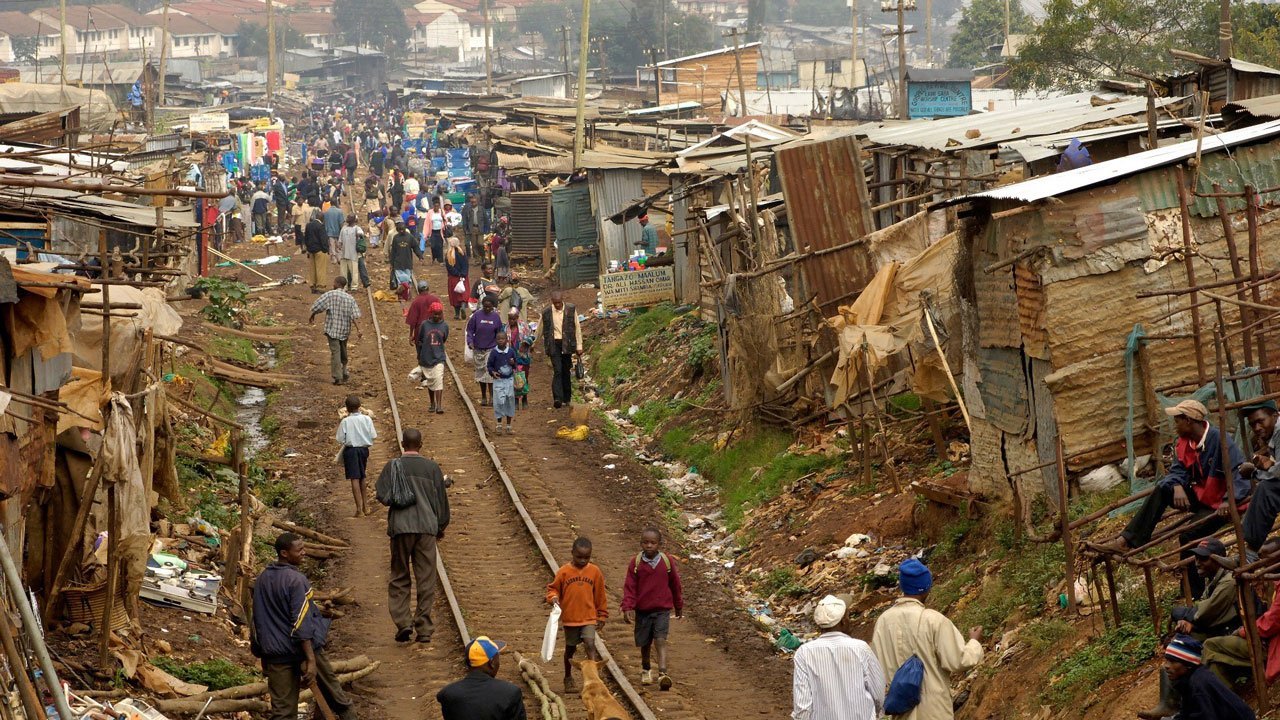
New World Bank research covering 154 economies finds that global extreme poverty has fallen by approximately 1.2 billion people since 2003, but progress has slowed sharply as deprivation becomes concentrated in Sub Saharan Africa, rural communities and fragile countries. The findings raise questions about why expanding education, urbanisation and economic growth have produced comparatively limited poverty reduction across African economies.
The number of people living in extreme poverty worldwide has fallen by approximately 1.2 billion over the past two decades, but the remaining poor are increasingly concentrated in Sub-Saharan Africa, rural communities and countries affected by conflict and institutional fragility, according to new World Bank research covering 154 economies and approximately 96% of the world's population.
The study, published on October 21, 2026, examines how extreme poverty changed between 2003 and 2024, including the geographic distribution, educational attainment, demographic characteristics and environmental exposure of people surviving on less than $3 a day in 2021 purchasing power parity terms. It finds that the global reduction in poverty has become increasingly uneven, with the substantial improvements achieved in earlier decades giving way to slower progress after 2013.
The paper, Beyond the Headcount: The Changing Geography and Composition of Global Poverty, 2003–2024, estimates that the number of people living below the international extreme poverty threshold declined from more than two billion in 2003 to approximately 781 million in 2024. However, the World Bank's separate Poverty, Prosperity, and Planet Report 2026, published on October 26, estimates that approximately 811 million people, equivalent to one in ten globally, remain in extreme poverty in 2026. The figures come from related but distinct analytical exercises and reference years.
Extreme poor globally, 2026
811M
Rural share, 2024
73%
Children's share, 2024
46%
Source: World Bank 2026 Poverty, Prosperity, and Planet Report and Beyond the Headcount research paper.
The research points to a widening difference between regions that have successfully translated economic and social development into higher household incomes and those where improvements in education and urbanisation have had much weaker associations with poverty reduction. East and South Asia achieved substantial improvements as populations moved towards cities, educational attainment increased and employment opportunities expanded. Sub Saharan Africa made progress in education and urbanisation, but recorded much smaller reductions in extreme poverty.
This difference has major implications for African economic policy. Governments across the continent have invested in schools, roads, electricity, housing and urban infrastructure, yet the World Bank's findings suggest that the expansion of these services cannot be assumed to produce equivalent increases in household income. The relationship depends on the availability of productive employment, the profitability of enterprises, agricultural productivity and the ability of economic growth to reach poorer communities.
The findings also challenge the assumption that poverty will continue declining automatically as countries become more urban and their populations attain higher levels of education. In many of the poorest economies, these changes have occurred without sufficient growth in the earnings of the households most exposed to deprivation.
Africa Is Becoming the Centre of Global Extreme Poverty
The geographic redistribution of global poverty is among the study's central findings. As East Asia and parts of South Asia reduced extreme poverty, a growing share of those still living below the international threshold became concentrated in Sub Saharan Africa.
An earlier World Bank analysis of the demographic composition of poverty found that rural Sub-Saharan Africa accounted for approximately 53% of the global extreme poor in 2023, despite representing only about 10% of the world's population. That share had increased from approximately 33% in 2013, demonstrating how the global geography of deprivation had changed over a decade.
The World Bank's 2026 flagship report provides a further indication of the concentration. More than half of the world's extremely poor people now live in just nine economies. By 2030, approximately 87% are projected to live in Sub-Saharan Africa, in fragile and conflict-affected situations, or in countries that fall into both categories. This is a combined classification, and the figure should not be interpreted as the projected share for Sub-Saharan Africa alone.
The growing concentration of extreme poverty in rural Sub-Saharan Africa Source: World Bank, How Has the Profile of Extreme Poverty Changed Over the Last Decade.
Shares reported in a separate World Bank analysis published in 2025. These figures are not the entire Sub Saharan African share, but specifically its rural population.
The shift reflects several overlapping economic and demographic conditions. In much of Sub Saharan Africa, population growth has remained relatively rapid, while productivity growth and the creation of better paying employment have not always been sufficient to increase income per person substantially. Conflict and instability have also disrupted agriculture, trade, investment and public services in several economies.
The persistence of poverty within neighbouring geographic areas is another concern. The new study finds that many districts and regions with high poverty rates in 2013 continued to record high rates in 2024. This clustering suggests that national economic growth can coexist with persistent deprivation in particular locations, especially where residents face limited infrastructure, weak market access and exposure to environmental shocks.
For eastern Africa, the findings are relevant to countries such as the Democratic Republic of the Congo, Uganda, Tanzania, Ethiopia and their neighbours, where the relationship between agriculture, urban employment, infrastructure and household income remains central to economic development. However, the study's global and regional findings should not be used to assign identical poverty trajectories to individual countries, whose survey results and economic circumstances differ.
Why More Education and Urbanisation Have Not Reduced African Poverty at the Same Rate
One of the study's most consequential findings concerns the weakening relationship between educational attainment, urbanisation and poverty reduction.
Between 2003 and 2013, economies that increased educational attainment, became more urban and reduced the number of dependants relative to working age adults generally experienced faster reductions in poverty. East Asia accounted for much of this pattern, supported by decades of industrial expansion, employment growth and rising labour productivity.
The World Bank reports that in East Asia, a one percentage point increase in the share of people with more than primary education or in the urban population was associated with an approximately ten percentage point reduction in extreme poverty in its cross country analysis. The corresponding relationship strengthened in South Asia after 2013.
Sub Saharan Africa recorded a substantially weaker relationship. Each percentage point increase in educational attainment or urbanisation was associated with less than one percentage point of poverty reduction between 2003 and 2013, increasing to only slightly above one percentage point between 2013 and 2024.
These are statistical associations rather than causal estimates. The results do not establish that moving an additional percentage point of a country's population into cities directly reduces poverty by a particular amount, or that the effect of schooling can be isolated from wider economic conditions. They show that countries experiencing comparable demographic and educational changes have recorded very different poverty outcomes.
The findings suggest that the economic opportunities available to educated and urban residents are central to understanding the difference.
A young person completing secondary school or university may have better qualifications than previous generations, but that improvement will not necessarily raise household income if formal employment opportunities remain scarce. Similarly, moving from a rural settlement into a city may improve access to services and commercial markets without producing a substantial increase in earnings when most available work remains informal and poorly paid.
This distinction is especially relevant to African countries where the expansion of education has increased the number of young people seeking employment faster than firms have created sufficiently productive jobs.
Urbanisation can also take place without a corresponding expansion of industry. Cities may grow because of natural population increases, migration from rural areas or the concentration of administrative and commercial activities, while manufacturing and other sectors capable of absorbing large numbers of workers expand more slowly.
Under these circumstances, households may exchange rural poverty for urban vulnerability. They gain access to larger labour markets but encounter expensive housing, transport, food and services. Employment may be available, but the income it generates can remain insufficient to support a household above the poverty threshold.
The World Bank's findings consequently place greater emphasis on the quality and productivity of economic activity. Education increases the potential productivity of workers, while urbanisation can improve access to markets and services. Whether those advantages produce higher incomes depends on investment, business growth, employment opportunities and the capacity of households to participate in productive economic activity.
The World's Poorest People Are Predominantly Rural, and Nearly Half Are Children
The demographic composition of global poverty provides another explanation for why progress has become more difficult.
According to the new World Bank working paper, approximately 73% of the world's extreme poor lived in rural communities in 2024, while children accounted for approximately 46%. These proportions indicate that extreme poverty remains concentrated among households whose livelihoods are frequently connected to agriculture, informal enterprises and economic activities with limited productivity.
For rural households, the problem often extends beyond access to employment. Smallholder farmers may work throughout the agricultural season but earn little because of low yields, limited irrigation, inadequate storage, expensive inputs and weak access to profitable markets. Even when production increases, households may receive only a small share of the final value of their products.
Agricultural productivity therefore remains central to poverty reduction in much of eastern Africa. Investments in irrigation, rural roads, electricity, storage, agricultural processing and market infrastructure can raise earnings if they allow producers to increase output, reduce losses and sell at better prices.
The high proportion of children living in extreme poverty introduces an additional constraint. Children generally depend on household income rather than earning their own living, meaning poverty reduction depends partly on the earning capacity of working age adults and the number of dependants each household supports.
A family with several children and limited income may remain below the poverty threshold even when one or more adults are economically active. Raising household earnings, improving access to healthcare and education, and reducing the costs associated with basic services can all influence whether children escape poverty.
The geographic concentration of poor rural households also makes service delivery more expensive. Populations dispersed across large areas require extensive infrastructure networks, while limited commercial activity can reduce the revenue available to finance those services. Governments must therefore balance investments that raise rural productivity with measures supporting access to markets and urban employment.
The World Bank's findings indicate that communities facing multiple disadvantages, including rural isolation, limited schooling, environmental risks and conflict, are becoming increasingly prominent among the remaining extreme poor. These conditions can reinforce one another, making poverty reduction more difficult even when a country's overall economy continues growing.
The World's Poor Are Working, but Their Jobs Pay Too Little
The World Bank's accompanying Poverty, Prosperity, and Planet Report 2026 identifies employment quality as a central constraint on poverty reduction.
The report finds that adults living in poor households are employed at rates only six percentage points below those in households above the poverty threshold. This means the difference between poor and nonpoor households cannot be explained principally by whether adults work. Many already participate in economic activity but earn insufficient income to escape poverty.
Poor workers are disproportionately concentrated in agriculture, household enterprises and other activities with low financial returns. Their earnings reflect productivity, access to capital, market conditions, business scale and the availability of alternative employment.
The report estimates that raising earnings among poor workers towards the levels achieved by comparable nonpoor workers could reduce extreme poverty by nearly half. Increasing employment rates in poor households to 75% of working age adults could reduce global extreme poverty by approximately one fifth, with much of the benefit reaching households closer to the poverty threshold.
These figures are modelled scenarios, not predictions of what a particular policy will accomplish. They nevertheless demonstrate why increasing earnings can have a greater effect on the deepest poverty than simply increasing the number of people classified as employed.
Potential reduction in global extreme poverty under World Bank employment scenarios Illustrative display of the World Bank's descriptions, “nearly half” and “roughly one fifth.” The 48% bar is an approximation for visualisation, not a separately published point estimate. The scenarios are distinct and their effects cannot simply be added together.
For African policymakers, this creates a different set of priorities from those associated with measuring development only through school enrolment, infrastructure construction or the number of registered enterprises.
A government can report increasing employment while poverty remains widespread if the additional jobs are concentrated in activities generating very low earnings. Similarly, growth in small businesses may contribute little to household prosperity when enterprises are unable to access financing, equipment, productive technology or larger markets.
The implication for economic policy is that employment programmes must consider wages and productivity alongside job creation. Improving the profitability of smallholder agriculture, supporting firms capable of expanding employment and enabling workers to move into higher earning activities could have a more direct effect on poverty.
The report also identifies women's participation in employment as an area with substantial potential. Closing employment gaps in poor households could increase the number of earners supporting household consumption, particularly where women face barriers to entering paid work.
However, more people working will not necessarily generate sustained poverty reduction unless economic opportunities provide adequate returns. The relationship between participation and earnings therefore remains central to the World Bank's assessment.
Economic Growth Alone Will Not Restore the Earlier Pace of Poverty Reduction
The World Bank's findings have implications for how African governments evaluate economic performance.
Gross domestic product measures the value of goods and services produced within an economy, but national growth rates do not establish how much household incomes have increased or how the benefits of expansion are distributed. A country can record strong growth through mining, infrastructure construction, telecommunications or capital intensive industries without creating sufficient employment or income for its poorest citizens.
The geographic concentration of extreme poverty makes this distinction more consequential. Where poverty persists in rural districts or areas affected by conflict, growth concentrated in major cities and commercial sectors may have limited immediate effects on poorer households.
The 2026 World Bank report estimates that approximately 811 million people remain in extreme poverty, a global poverty rate that has changed little since 2019. Had the pace of reduction achieved between 2000 and 2013 continued, the world would have approximately 243 million fewer people living in extreme poverty today.
The report also warns that without stronger growth in income per person, the number of people living in extreme poverty could be higher in 2030 than in 2026. To reduce global extreme poverty to 3% by 2050, the World Bank estimates that annual per capita growth would need to average approximately 4%, around twice the rate achieved over the preceding 25 years.
The challenge is therefore twofold. Economies need stronger productivity growth capable of supporting higher earnings, while the benefits of expansion must reach households currently excluded from profitable economic activity.
For eastern African countries, this places agricultural productivity, industrial employment, urban labour markets and the development of domestic enterprises at the centre of poverty reduction strategies. Investment in education and infrastructure remains necessary, but its economic value depends partly on whether people can translate those services into higher incomes.
There is also a fiscal dimension. Countries with limited domestic revenue face substantial demands to finance education, healthcare, infrastructure and social protection. When public investment fails to generate sufficient productive activity, governments may struggle to sustain expenditure while reducing reliance on borrowing and external assistance.
Poverty Is Becoming More Exposed to Conflict and Climate Risks
The new research also identifies geographic concentrations of poverty in areas affected by environmental vulnerability and institutional fragility.
According to the World Bank's 2026 flagship report, approximately 4.6 billion people live in areas exposed to major climate related hazards. Of these, 1.5 billion face high vulnerability because they lack adequate social protection or access to basic infrastructure.
For agricultural households, droughts, floods and other environmental shocks can destroy production, reduce livestock holdings, disrupt markets and increase food prices. Families living close to the poverty threshold may have limited savings or insurance to absorb such losses.
Conflict creates additional constraints by displacing populations, damaging infrastructure, reducing investment and interrupting trade. In fragile economies, administrative limitations can also make it harder to provide public services or collect the information required for effective poverty programmes.
These conditions help explain why the remaining global poor are increasingly concentrated in particular countries and regions. Where low productivity, conflict, inadequate infrastructure and environmental exposure overlap, poverty can persist even as surrounding economies record improvements.
The World Bank's research does not establish that any single one of these conditions causes the observed concentration. It does, however, show that policies directed towards populations facing several disadvantages may be necessary to achieve further reductions in poverty.
Africa's Next Development Challenge Is Converting Growth Into Household Income
The central implication of the World Bank's research is that the remaining challenge of extreme poverty differs from the circumstances that supported substantial reductions across East and South Asia.
Sub Saharan Africa has experienced improvements in educational access and urbanisation, but the economic opportunities associated with those changes have not produced comparable reductions in poverty. The concentration of deprivation among rural households, children and communities exposed to multiple risks makes further progress dependent on more targeted economic and social policies.
For African governments, the findings support closer examination of how economic growth reaches households. The number of kilometres of roads constructed, schools established or businesses registered provides information about development activity, but these indicators should be evaluated alongside changes in labour earnings, agricultural productivity, household consumption and the proportion of people escaping poverty.
The same reasoning applies to industrial development and urban expansion. Cities can accommodate growing populations without generating enough productive employment, while industrial projects can increase national output without employing large numbers of people. Their contribution to poverty reduction depends on their connection to local firms, labour markets and household incomes.
The research also provides a basis for more geographically targeted interventions. National averages can conceal districts where poverty has remained persistently high for more than a decade. Identifying those locations, understanding their economic conditions and directing appropriate investment towards them may produce different outcomes from distributing resources without reference to local poverty patterns.
The World Bank's latest evidence shows that global poverty reduction has already achieved substantial gains, but the remaining population is increasingly concentrated in places where earlier approaches have generated weaker results. For Sub Saharan Africa, the challenge is now closely connected to the quality of employment, the productivity of rural economies and the capacity of governments to ensure that economic expansion raises household incomes.
Africa's progress will increasingly be measured by whether the growth recorded in national accounts produces sustained improvements in the earnings and living conditions of the people who remain in extreme poverty.
 Uchumi360
Business Intelligence
Uchumi360 covers business, investment, and economic policy across East, Central, and Southern Africa.
For the serious reader
You read to the end. That places you in a small group.
Uchumi360 is built for readers who demand precision over speed, structure over sentiment, and analysis that holds uncomfortable conclusions rather than softening them. If this work sharpens how you think about Africa's economy, help us keep building the infrastructure behind it.
Institutional Partners
Commission intelligence. Shape the conversation.
Uchumi360 works with development finance institutions, investment firms, sovereign bodies, and strategic organisations across the coverage region. Institutional partnership unlocks:
- Commissioned sector and country intelligence reports
- Branded research series under your institution's authority
- Exclusive data briefings for internal strategy teams
- Speaking and editorial presence at Uchumi360 events
- Co-published investment outlooks for your markets
Support Our Work
Independent analysis has a cost. Help us bear it.
Uchumi360 does not carry advertising. It does not take editorial direction from sponsors. Every article is produced without commercial compromise. Your contribution funds the reporting, research, and editorial infrastructure that keeps this analysis free from influence.
Secure checkout: One-time and monthly support are processed securely. Add payment credentials to enable checkout here.
Stay Connected
Keep up with every new insight.
Follow our latest analysis, policy coverage, and market intelligence as soon as it is published. If you need something specific, reach out directly and we will point you to the right research.
