

From Middle Income to Trillion-Dollar Ambition: Can Tanzania Realistically Reach a $1 Trillion Economy by 2050?
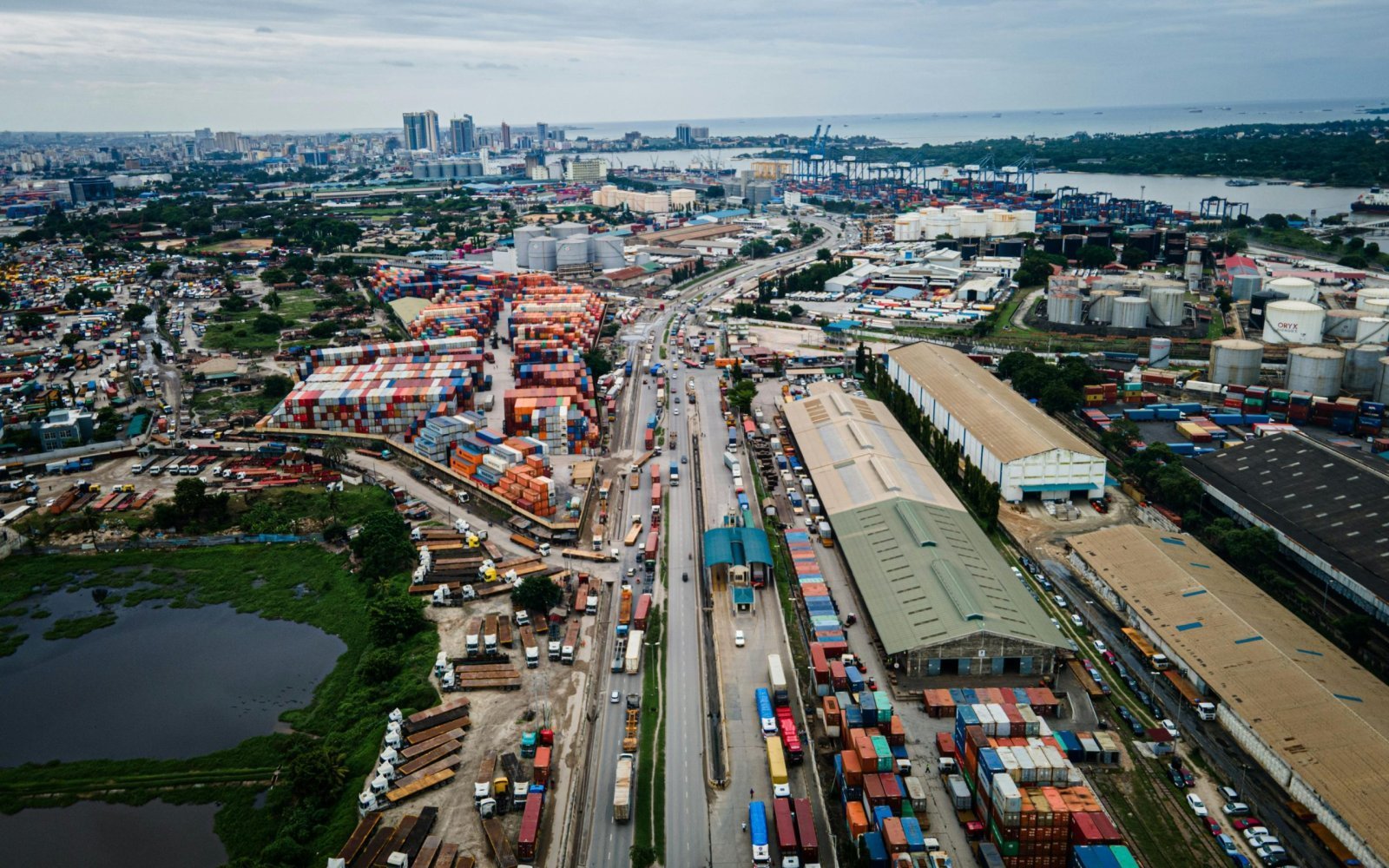
Tanzania’s ambition to build a one trillion dollar economy by 2050 is mathematically possible but structurally demanding. Sustained high growth will require deep industrialisation, export diversification, productivity gains and disciplined financing. The real question is not whether Tanzania can grow, but whether it can transform its economic structure fast enough to compound growth for 25 consecutive years.
Tanzania’s trillion-dollar ambition is mathematically possible. But it will require sustained structural transformation, not incremental growth.
The Fourth Five-Year Development Plan 2026/27–2030/31 positions itself as the first operational milestone toward Dira 2050 and anchors the ambition of building a US dollar one trillion economy by 2050. This is not symbolic language. It is a quantified national target.
The central question is simple: can the current economic structure realistically support that scale of expansion?
The Arithmetic of Ambition
Tanzania’s GDP today is roughly in the range of USD 80 to 90 billion. To reach USD 1 trillion by 2050, the economy must expand more than tenfold in approximately 25 years.
That requires sustained nominal growth of around 10 to 11 percent annually, depending on inflation and exchange rate stability. In real terms, this translates into consistent growth of roughly 7 to 8 percent per year over multiple decades, without major reversals.
This is difficult. But it is not unprecedented.
Several East Asian economies achieved comparable long-term growth trajectories through industrialisation, export expansion, productivity gains and capital deepening. The real issue is not whether it is possible in theory. The issue is whether Tanzania’s structural drivers align with that pathway.
What the Current Strategy Gets Right
The national strategy emphasises:
- Employment-centred industrialisation
- Private-sector-led growth
- Sectoral transformation across agriculture, manufacturing, mining, trade and logistics
- Digital transformation and science, technology and innovation
- Structured financing architecture and domestic resource mobilisation
These are the correct pillars for long-term structural expansion.
But ambition is not strategy. Strategy is about constraints.
Constraint One: Productivity
Over the past decade, Tanzania’s growth has been relatively stable, driven largely by capital accumulation and public infrastructure expansion. However, investment efficiency remains a concern. When each unit of capital generates limited output gains, growth becomes expensive and debt-sensitive.
A trillion-dollar economy cannot be built by simply adding more capital. It requires:
- Higher labour productivity
- Manufacturing value addition
- Technology absorption
- Improved capital efficiency
If productivity does not rise materially, growth will eventually slow under fiscal pressure.
Infrastructure creates capacity. Productivity multiplies it.
Constraint Two: Export Structure
A trillion-dollar economy must export at scale. Domestic demand alone cannot sustain that magnitude of output.
At present, Tanzania’s export basket remains concentrated in primary commodities and low value-added goods. To sustain long-term expansion, the country must shift toward:
- Processed agro-industrial goods
- Light and eventually medium manufacturing
- Mineral beneficiation
- Regional logistics services
- Maritime and blue economy revenue streams
Without export complexity upgrading, currency pressures will limit the scale of expansion.
Constraint Three: Employment Elasticity
The development agenda is explicitly employment-centred. That is strategically correct. Growth that does not generate broad employment risks social and political instability.
However, not all growth creates jobs. Extractive industries and capital-intensive infrastructure can expand GDP without proportionate labour absorption.
Tanzania must balance:
- Capital-intensive sectors such as mining and energy
- Labour-intensive sectors such as agro-processing and manufacturing
- Trade and logistics ecosystems that absorb urban labour
If GDP expands without meaningful job creation, inequality pressures could undermine long-term stability. Sustained high growth requires social cohesion.
Constraint Four: Financing Capacity
Structural transformation at this scale requires:
- Domestic savings mobilisation
- Deepened capital markets
- Pension and institutional fund participation
- Blended finance structures
- Efficient tax collection
With global borrowing costs elevated, reliance on external sovereign debt is constrained. A trillion-dollar trajectory will depend heavily on domestic capital formation and disciplined fiscal management.
Constraint Five: Governance and Execution Discipline
Sustained 7 to 8 percent real growth over decades requires:
- Coordinated industrial policy
- Clear sector prioritisation
- Performance-linked incentives
- Continuous monitoring and adaptive correction
Countries that achieved long-term structural transformation did so through disciplined execution, not policy announcements. Implementation coherence will determine whether ambition translates into results.
Structural Advantages Tanzania Holds
Tanzania possesses meaningful structural advantages:
- Strategic geographic position within EAC and SADC
- Access to Indian Ocean maritime routes
- Significant mineral endowments
- Expanding energy capacity
- Rapid urbanisation
- A young demographic profile
If leveraged coherently, these factors support sustained high growth potential.
The decisive variable is whether Tanzania can transition from infrastructure-led growth to productivity-led growth.
What Must Happen
For Tanzania to realistically approach a trillion-dollar economy by 2050, six structural shifts are essential:
- Manufacturing must increase its share of GDP and exports.
- Agriculture must be integrated into formal value chains.
- Logistics and trade corridors must become regionally dominant.
- Financial markets must deepen to fund domestic expansion.
- Governance must become data-driven and performance-based.
- Macroeconomic stability and currency credibility must be maintained.
If growth remains broad but shallow, the economy may double or triple in size. It will not expand tenfold. If transformation is deep, export-oriented and productivity-driven, the trillion-dollar ambition becomes plausible.
Final Assessment
The trillion-dollar target is not unrealistic. It is conditional.
Tanzania has demonstrated the ability to grow. The real test is whether it can compound growth at high levels for 25 consecutive years without systemic breakdown.
That requires discipline, productivity gains and institutional competence.
A trillion-dollar economy will not be built on optimism.
It will be built on structural transformation, measurable results and sustained execution.