

How China is Shaping Tanzania’s Infrastructure and Economy
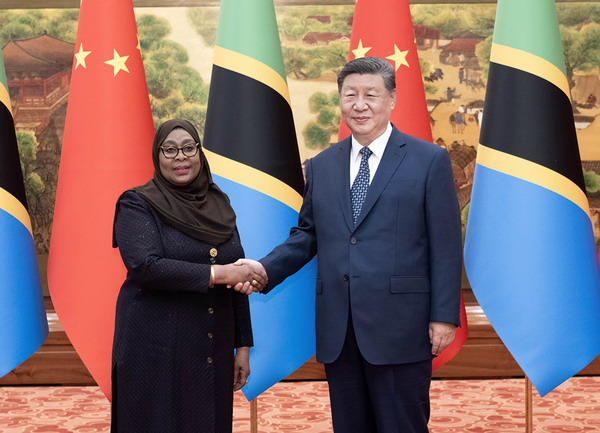
From ports, airports, and railways to hydropower plants, factories, and community health programs, China’s footprint is visible across the nation.
Tanzania and China share a deep and strategic partnership that has steadily evolved from historic ties into a modern cooperation framework that is reshaping Tanzania’s infrastructure, energy, health, and economic landscape. Through large-scale investments, technical support, and trade partnerships, China has become one of Tanzania’s most significant development partners.
Revitalizing Transport and Connectivity
One of the most iconic symbols of China–Tanzania friendship is the Tanzania–Zambia Railway (TAZARA), built in the 1970s. Today, efforts are underway to revamp and modernize this crucial link with support from China, Tanzania, and Zambia, ensuring it once again serves as a backbone for regional trade.
In addition, the Standard Gauge Railway (SGR) project has drawn Chinese participation in its construction, boosting Tanzania’s ambition to become a regional logistics hub. Equally significant is the expansion and modernization of Dar es Salaam Port, Tanzania’s busiest gateway, which is being upgraded with Chinese expertise to handle larger cargo volumes more efficiently.
Other landmark projects include the Msalato International Airport in Dodoma, designed to improve air connectivity and attract international investment, and the Magufuli Bridge, which strengthens road transport across key regions.
Energy and Industrial Growth
China’s role in Tanzania’s energy sector has been pivotal. The Rumakali Hydroelectric Power Station, jointly developed by TANESCO and China Gezhouba Group, will generate over 200 MW, boosting electricity supply for households, industries, and businesses.
Industrialization is another focal area. Chinese firms such as Wangkang Float Glass, Huaxin Cement (Maweni Limestone), and ceramic manufacturers are expanding Tanzania’s industrial base, reducing import dependence, and creating thousands of jobs. These investments strengthen the country’s capacity to add value locally and position Tanzania as a manufacturing hub in East Africa.
Agriculture and Rural Development
Agriculture remains the backbone of Tanzania’s economy, and Chinese support has extended to this sector through initiatives such as the Morogoro Region Agricultural Innovation Project, jointly run by China Agricultural University and Tanzania’s Institute of Rural Development Planning. The project focuses on improving maize and soybean production, processing, and value addition, giving smallholder farmers access to better techniques and markets.
Health, Education, and Social Development
Beyond infrastructure and energy, China has invested in people-centered development. The China–Zanzibar Schistosomiasis Control Cooperation Project is a flagship health program that strengthens disease elimination, community health education, and clean water access. Chinese medical teams continue to provide services in Tanzania, while Confucius Institutes promote cultural and educational exchange.
Tourism, Sports, and Cultural Cooperation
China’s commitment to Tanzania’s tourism and cultural heritage is reflected in the Ngorongoro Lengai Geopark Project, a multi-million-dollar initiative to build a geopark museum that preserves geological and cultural heritage while boosting sustainable tourism.
Meanwhile, Chinese contractors are building the Samia Suluhu Hassan Stadium in Arusha, a 30,000-seat sports facility that will host the Africa Cup of Nations 2027. This investment not only promotes sports but also reinforces Tanzania’s readiness for international events.
Shaping Tanzania’s Future Economy
The scale of Chinese cooperation demonstrates how deeply Beijing is shaping Tanzania’s economic trajectory. From ports, airports, and railways to hydropower plants, factories, and community health programs, China’s footprint is visible across the nation. These projects are not only transforming infrastructure but also opening new opportunities in trade, industrialization, and people-to-people connections.
As Tanzania continues to pursue its development agenda under Vision 2025 and beyond, the partnership with China stands as a cornerstone for unlocking economic potential and integrating the nation more deeply into regional and global value chains.
