

Tanzania Is Rated B+. The Rating Is Not the Problem. What It Is Measuring Is
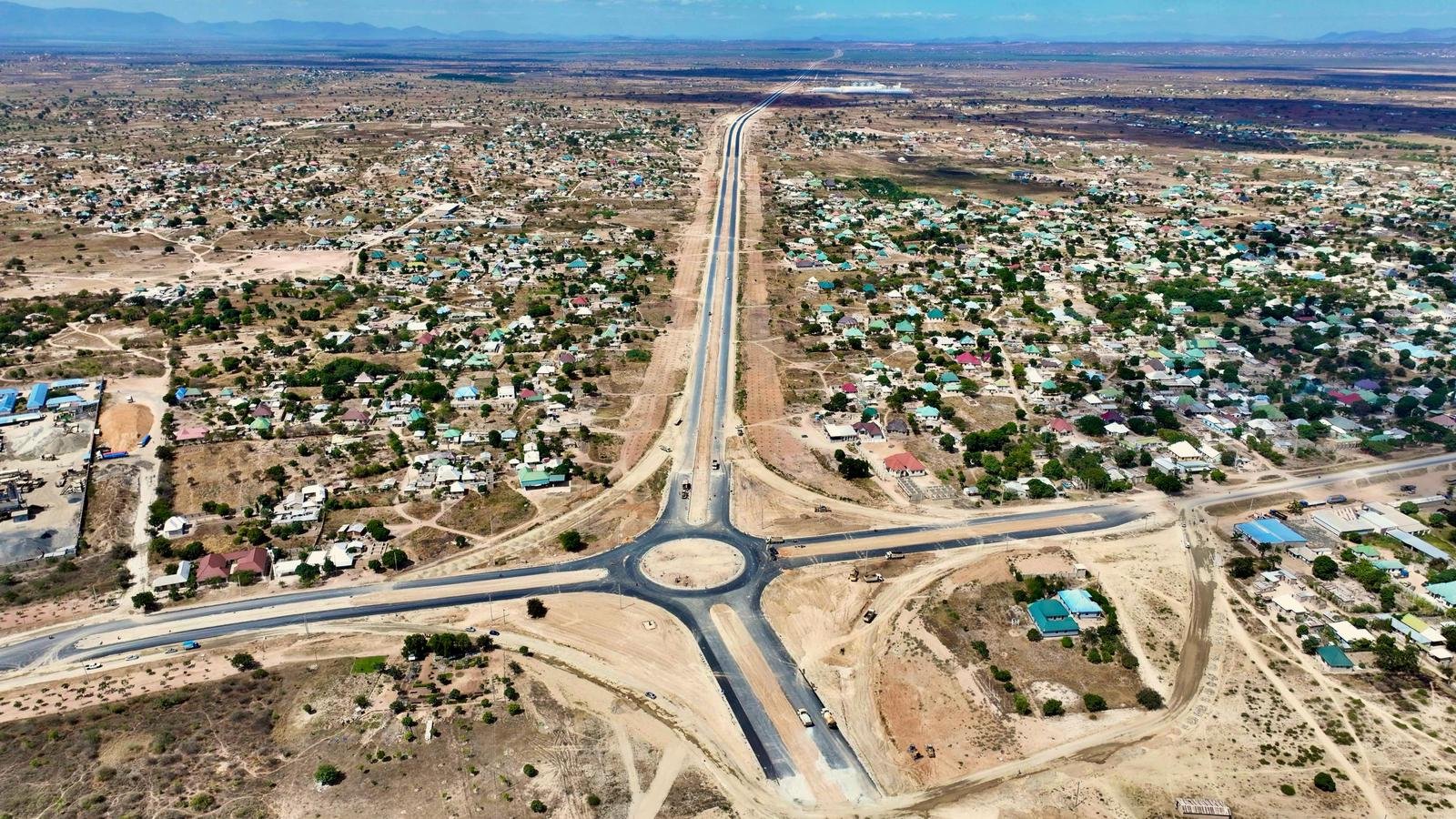
Fitch has affirmed Tanzania's long-term foreign currency rating at B+ with a stable outlook. Moody's assessment aligns broadly with this positioning. Both agencies describe an economy that is functioning without immediate imbalance. Neither describes an economy that is transforming at the structural depth required to move the rating higher. Understanding the distance between those two descriptions is more important for Tanzania's economic future than the rating itself.
What B+ Actually Means
Sovereign credit ratings are frequently misread in two directions simultaneously. Optimists read a stable outlook as validation of progress. Pessimists read a speculative-grade classification as evidence of fundamental weakness. Both readings miss the more precise and more useful interpretation that the ratings methodology actually provides.
Fitch's B+ with stable outlook is a statement about equilibrium. It says that Tanzania's economy is balanced at its current level of development without immediate risk of deterioration, and that the agency does not anticipate a near-term change in that assessment. It is not a statement that the economy is strong. It is not a statement that the economy is fragile. It is a statement that the economy is stable at a constrained level, and that the constraints holding it at that level are structural rather than cyclical.
This distinction matters enormously for policy and investment analysis. A cyclical constraint responds to the right stimulus at the right moment. Interest rate cuts, infrastructure spending, or export price improvements can lift an economy past a cyclical constraint within a fiscal cycle. A structural constraint does not respond to stimulus in the same way. It requires changes in the composition of the economy, in what it produces, how it finances itself, how productively it allocates capital, and how deeply its formal institutions reach into economic activity, before the rating agencies revise their assessment.
Tanzania's B+ rating tells you that the country's structural constraints are real, persistent, and not yet responding to the very significant activity that is visible in the investment data, the infrastructure pipeline, and the growth statistics. Fitch's methodology is explicit about the mechanism: sovereign creditworthiness is assessed across macroeconomic performance, structural features, public finances, and external finances, but the outcome is heavily influenced by the weakest element in the system. Improvements in strong dimensions do not override weakness in the binding constraint. Tanzania's binding constraints are structural, and they are the constraints that the rating is pricing.
The Investment Surge That Has Not Yet Moved the Rating
The most striking feature of Tanzania's current credit profile is the disconnect between the scale of investment activity and the absence of any rating improvement. Tanzania's Investment and Special Economic Zones Authority registered 915 investment projects in 2025 with approved capital of USD 10.95 billion, almost triple the USD 3.7 billion registered in 2021. The Julius Nyerere Hydropower Station has added 2,115 megawatts of generation capacity. The Standard Gauge Railway is extending westward from Dar es Salaam. The Panda Hill niobium project has been signed, bringing with it Tanzania's first ferroniobium smelter. LNG negotiations valued at USD 42 billion are in active progress. By the conventional metrics of investment activity, Tanzania is experiencing one of the most significant capital mobilisation periods in its history.
Fitch's rating has not moved. The reason is precise and worth stating directly. Rating agencies do not price approvals, announcements, or construction activity. They price outcomes. Specifically, they price the outcomes that affect the four dimensions of their assessment: macroeconomic performance, structural features, public finances, and external finances. Investment that has been approved but not yet deployed does not affect export capacity. A power plant under construction does not yet reduce the diesel import bill. A railway under extension does not yet lower logistics costs for manufacturers. An LNG project in negotiation does not yet generate fiscal revenue.
The translation from investment activity to measurable structural outcomes takes years, and it is not linear. Projects face delays, cost overruns, and execution gaps between the investment plan and the operational reality, as Uchumi360's analysis of Tanzania's mega projects documented in detail. The gap between Tanzania's approved investment pipeline and the structural outcomes that would shift its credit profile is the same gap that distinguishes the investment surge narrative from the structural transformation narrative. One describes what is being attempted. The other describes what has been achieved.
This is not a reason for pessimism about Tanzania's trajectory. It is a reason for precision about what the investment surge has delivered so far and what it will need to deliver before the external capital market's assessment of Tanzania's structural strength changes.
The External Account: The Binding Constraint the Rating Is Pricing
The most persistent pressure point in Tanzania's credit profile is its external account, and understanding why requires following the mechanics of the constraint through the investment cycle rather than simply noting that imports exceed exports.
Tanzania's development model is capital import-dependent at its current stage. The infrastructure investments that will eventually transform the economy, the hydropower stations, the railway, the industrial zones, the LNG facilities, all require imported capital goods, equipment, engineering services, and specialised materials that Tanzania does not currently produce domestically. Every dollar of investment in these projects generates a demand for foreign exchange to pay for the imported content of that investment. When investment accelerates, as it has dramatically in the 2023 to 2025 period, the foreign exchange demand associated with investment imports accelerates with it.
At the same time, Tanzania's export base is not expanding at a comparable pace. Gold exports from Barrick's and AngloGold's operations provide the largest single source of export foreign exchange. Tourism provides a second significant stream. Coffee, tea, cashews, and other agricultural commodities contribute. The combined export base is growing, but it is concentrated in a narrow range of commodities whose volumes and prices are determined primarily by factors outside Tanzania's control, and it is not expanding rapidly enough to match the foreign exchange demand that the investment surge is generating.
The consequence is a persistent current account deficit that must be financed by external capital inflows, whether in the form of FDI, concessional loans, commercial borrowing, or drawdown of foreign exchange reserves. As long as this structural imbalance persists, Tanzania remains dependent on the continued willingness of external capital providers to finance its development, and that dependency is precisely what the B+ rating reflects. An economy that can sustain its development model without external financing dependency is structurally stronger than one that cannot, and the rating gap between Tanzania's B+ and the investment-grade BBB threshold reflects the distance between Tanzania's current external account position and the position that investment-grade status requires.
The LNG project, when it eventually reaches production, will transform this picture. Tanzania's gas exports would generate substantial foreign exchange inflows and shift the external account from chronic deficit toward a position that could support the investment-grade assessment. The niobium ferroniobium smelter at Panda Hill will add a high-value manufactured export that earns more foreign exchange per tonne than raw mineral exports. The Julius Nyerere hydropower capacity reduces the diesel import component of power generation. Each of these developments is moving in the right direction. None of them has yet produced the external account improvement that rating agencies would need to see to justify an upgrade.
Fiscal Stability Without Fiscal Depth: The Revenue Mobilisation Gap
Tanzania's fiscal position presents a surface appearance of stability that the rating broadly validates. Debt levels, while growing, remain at manageable ratios. Acute debt distress of the kind that has affected Zambia, Ghana, and Kenya in recent years has not materialised. The fiscal framework has maintained a degree of discipline that supports the stable outlook.
The structural limitation beneath this stability is the revenue base. Tanzania's tax-to-GDP ratio remains substantially below the levels of its aspirational peer group and below the level that would allow the government to finance its own development agenda without continued dependence on external concessional and commercial financing. The informal economy that dominates housing, retail trade, agriculture, and a substantial proportion of manufacturing activity lies largely outside the tax net, not because Tanzania lacks tax legislation but because the formal institutional reach of the tax system does not yet extend effectively into the majority of economic activity.
This creates a fiscal model that is stable but not deep. The government can service its obligations and maintain basic service delivery at current revenue levels. It cannot finance the scale of public investment that its development agenda requires from domestic resources alone, and it cannot build the fiscal buffers that would allow it to absorb external shocks without recourse to additional borrowing. Every major infrastructure project that cannot be financed from domestic revenue requires external borrowing that adds to the debt stock and increases the debt service obligations that future revenues must meet.
The connection to the housing analysis Uchumi360 published is direct and precise. Tanzania's 90 percent self-built, informal housing sector represents not only a failure of the formal housing market but a specific and quantifiable fiscal gap. If 90 percent of housing construction is occurring outside the formal tax system, the government is not capturing the value added tax on construction materials, the income tax on construction labour, the stamp duty on property transactions, or the property taxes on the resulting assets that a formalised housing sector would generate. The formalisation of Tanzania's housing economy would not just improve housing outcomes. It would improve the fiscal position that the rating agencies are currently pricing as a structural constraint.
Financial System Depth: The Capital Allocation Gap
Uchumi360's detailed analysis of CRDB Bank and NMB Bank's FY2025 financial results documented a striking divergence between two institutions earning almost identical profits through fundamentally different financial models. CRDB generated negative operating cash flow of TZS 393 billion while growing its loan book by 34 percent, funded by TZS 1.1 trillion in net new external borrowings. NMB generated positive operating cash flow of TZS 1,581 billion, repaid TZS 72 billion of debt, and funded every obligation from internally generated cash.
That divergence between leveraged growth and organic compounding within Tanzania's banking sector is a microcosm of the same tension the rating agencies are pricing at the sovereign level. An economy whose financial system intermediates capital efficiently, directing it toward its most productive uses and generating the organic cash flow that sustains development without external dependency, is structurally stronger than one that achieves comparable growth through leveraged activity that relies on continued external financing. The CRDB-NMB divergence suggests that Tanzania's banking sector contains both models simultaneously, and the question of which model comes to dominate the sector's character over the next decade will significantly affect the depth of financial intermediation that the rating agencies identify as a structural constraint.
The broader financial system depth question extends well beyond the banking sector. Tanzania's capital markets are shallow relative to its economic size. The pension fund sector, while growing, does not yet allocate capital at the scale or efficiency that a deeper market would support. Insurance penetration is limited. The range of financial instruments available to businesses seeking growth capital, as Mrembo Naturals' experience documented, is narrow and expensive relative to what the investment surge Tanzania is attempting to sustain requires.
Financial system deepening is a multi-decade process that no single policy intervention can accelerate dramatically. But the trajectory matters for the rating. An economy whose financial system is becoming measurably more sophisticated, more accessible, and more efficient in capital allocation is demonstrating the structural improvement that rating agencies reward. An economy whose financial system remains stable but shallow is demonstrating the equilibrium at a constrained level that the current B+ rating reflects.
The Structural Features That Define the Ceiling
Fitch and Moody's convergence on Tanzania's rating position is analytically significant because it demonstrates that the constraint is not methodological. The two agencies use different frameworks, weight different variables differently, and apply different quantitative thresholds to their assessments. When they arrive at the same conclusion, the most parsimonious explanation is that the constraint they are both identifying is real.
The structural features that define the ceiling are identified consistently across both agencies' frameworks: income levels, institutional capacity, financial system depth, and governance quality. These variables move slowly because they reflect the accumulated investment in human capital, institutions, and economic complexity that economies build over decades, not the shorter-horizon capital investment cycles that drive project pipelines and growth statistics.
Tanzania's per capita income remains low relative to the peer group that occupies the investment-grade category. This is not simply a reflection of current poverty but a statement about economic complexity: low per capita income economies typically have narrower export bases, less diversified fiscal revenue, more limited domestic savings, and smaller buffers against external shocks than higher-income economies. Moving up the income ladder requires sustained productivity growth that translates into wage increases and consumption capacity, which in turn requires the industrial deepening, educational investment, and technological adoption that the current investment surge is beginning to address but has not yet delivered at the scale required to shift the income trajectory measurably.
Institutional quality and governance effectiveness are the variables most resistant to quantification but most important for the rating's long-term trajectory. Effective institutions, those that enforce contracts reliably, allocate public resources efficiently, regulate markets with competence, and provide the predictability that long-horizon investment requires, are what make the difference between investment that generates structural transformation and investment that generates activity without lasting economic deepening. Tanzania's institutional quality is improving on most measurable dimensions, but the pace of improvement relative to the investment ambition it is attempting to support is the variable that will determine whether the current investment surge eventually moves the rating or simply sustains the stable equilibrium at B+.
What an Upgrade Would Actually Require
Fitch's upgrade sensitivities provide the most direct available statement of what structural changes would be required to move Tanzania's rating higher, and they are worth taking seriously as a policy roadmap rather than simply as a technical rating threshold.
The agency references stronger foreign exchange reserves as a necessary condition for an upgrade. Reserves improve when exports grow faster than imports, when FDI inflows are sustained, and when the economy reduces its dependence on external borrowing for development financing. Each of Tanzania's major investment projects contributes to this trajectory if executed on schedule and if the value capture from those projects is structured to generate foreign exchange flows rather than simply foreign exchange expenditure during construction.
Improved macroeconomic credibility reflects the track record of monetary and fiscal policy that builds the confidence of external investors in Tanzania's ability to manage its economy through cycles without recourse to the debt restructuring or currency crises that have damaged other frontier market credit profiles. Tanzania's monetary policy credibility is solid by regional standards. Maintaining it through the inflationary pressures that the external shock analysis Uchumi360 documented will require the same discipline during difficult periods that has been demonstrated during more favourable ones.
Declining debt-to-GDP ratios require either faster nominal GDP growth that denominator effect reduces the ratio, or slower debt accumulation, or ideally both. The investment surge is building the assets that should eventually generate the GDP growth required for the denominator effect to work. Whether the debt accumulated during the construction phase can be serviced and gradually reduced from the revenues the completed assets generate is the fiscal arithmetic that the rating agencies are watching most closely.
None of these upgrade conditions are beyond Tanzania's reach. All of them require the structural transformation that the investment surge has initiated but not yet delivered.
The Honest Assessment
Tanzania's B+ rating is not a ceiling that external forces are imposing on an economy that has outgrown it. It is an accurate assessment of where Tanzania currently sits in the spectrum of structural economic development, and it is pointing precisely at the gaps that Uchumi360's analysis has documented across multiple dimensions of the economy.
The housing sector's 90 percent informality limits fiscal capture. The manufacturing sector's shallow base limits export diversification. The financial system's limited depth constrains capital allocation efficiency. The infrastructure investment surge is building the assets that could close these gaps, but the translation from construction activity to structural transformation takes time and requires execution quality that Tanzania's mega project delivery record suggests will be tested.
The stable outlook is earned. Tanzania is not deteriorating. The question the rating is asking is whether the current trajectory is sufficient to produce the structural transformation that would justify an upgrade, or whether it is producing a larger, more active version of the same structural economy that currently occupies the B+ band.
That question will be answered not by the next Tiseza investment registration report or the next infrastructure announcement, but by the composition of Tanzania's exports in 2030, the depth of its financial markets in 2030, the breadth of its formal tax base in 2030, and the efficiency of its institutions in translating the investment of the current decade into the structural complexity that investment-grade status requires.
The rating is not the problem. What it is measuring is.
_______________________________________________________________________________________
Sources: Fitch Ratings Tanzania Sovereign Rating Affirmation and Methodology Documentation. Moody's Tanzania Sovereign Assessment. IMF Tanzania Article IV Consultation 2024. World Bank Tanzania Economic Update 2024. Tanzania Investment and Special Economic Zones Authority Data 2025. Bank of Tanzania Monetary Policy Statements 2024 to 2025. Tanzania Revenue Authority Annual Report 2024. African Development Bank Tanzania Country Risk Assessment 2024. CRDB Bank and NMB Bank FY2025 Published Financial Statements.
_______________________________________________________________________________________
Uchumi360 covers business, investment, and economic policy across East, Central, and Southern Africa.
